Vermont Purchase and Use Tax Rate
Buying an ATV or UTV in Vermont, whether it's a shiny new machine from a dealer or a trusty used quad from a neighbor, inevitably brings up questions about taxes. Many folks get a knot in their stomach wondering about "sales tax," but in Vermont, it's typically referred to as the Purchase and Use Tax for vehicles. This guide is here to untangle that knot, explaining exactly how this tax works, what rate to expect, and when you'll need to pay it as you get ready to hit the trails.
Understanding Vermont's Purchase and Use Tax for ATVs and UTVs
Let's clear the air right away: Vermont doesn't have a traditional "sales tax" on vehicles in the way some states do. Instead, when you purchase an ATV or UTV, you'll be subject to what's known as the Purchase and Use Tax. This is Vermont's way of ensuring that all vehicles, regardless of where or how they were acquired, contribute a fair share to the state when they are brought into use on Vermont roads or registered for off-road trails. It's a one-time tax, not an annual fee, and it’s a crucial part of the process when you bring your machine into official use within the state.
The primary trigger for this tax isn't the moment you hand over cash or sign the financing papers. It's tied directly to the act of registering your ATV or UTV with the Vermont Department of Motor Vehicles (DMV). This means that even if you bought your machine months ago, perhaps from a private seller, you won't pay the tax until you go through the registration process. This can sometimes catch new owners off guard, especially if they haven't budgeted for it alongside the [Vermont ATV Registration Cost] and other initial expenses. It’s always best to be prepared and understand this upfront.
For many riders, especially those who are new to Vermont or buying their first off-road vehicle, the concept of a "use" tax can be a bit confusing. Think of it this way: the state wants to make sure that any vehicle being operated or "used" within its borders, that wasn't already taxed at sale within Vermont, pays its due. This prevents people from trying to sidestep taxes by purchasing out of state or through private sales where a traditional sales tax wouldn't be collected at the point of transaction. It keeps things equitable and ensures that everyone contributes to the state's coffers when they put a vehicle into service here.
How the Purchase and Use Tax Rate is Determined
When it comes to the actual amount you'll pay for Vermont's Purchase and Use Tax, it's calculated as a percentage of your ATV or UTV's purchase price or fair market value. Vermont's tax department establishes this percentage, and it's essential to check the official Vermont DMV website or contact them directly for the most current figures, as these rates can be adjusted. While I can't give you the exact current percentage due to not having live data, understand that it's a standardized percentage applied across the board.
The calculation itself is straightforward: you'll take the established percentage and multiply it by the "taxable value" of your machine. What determines this "taxable value" is where things can get a little nuanced, especially with used machines or private sales. Generally, the DMV will look at the actual purchase price you paid, as documented on a [Writing a Bill of Sale the Vermont DMV Accepts]. However, if the reported purchase price seems unusually low compared to the fair market value of the ATV or UTV – perhaps it was an amazing deal, or perhaps it wasn't – the DMV has the authority to assess the value based on an independent appraisal guide, like the NADAguides. This ensures that the tax is paid on a reasonable valuation of the vehicle, not just on a price that might have been arbitrarily low.
It's important to remember that this is not an ongoing tax that you pay every year. This is a one-time payment made at the point of your initial [Purchase and Use Tax at First Registration]. Once it's paid, and your machine is registered, you won't be charged this particular tax again for that same machine, unless you transfer ownership or there's a significant change. This one-time nature is a relief for many riders who might otherwise worry about an additional recurring cost on top of annual registration renewals like [Renewing a Vermont ATV Registration].
How the Tax Applies to Different Scenarios
The way you purchase your ATV or UTV in Vermont can slightly alter how and when you handle the Purchase and Use Tax. While the tax rate itself remains consistent, the process of paying it can vary.
Buying from a Vermont Dealer
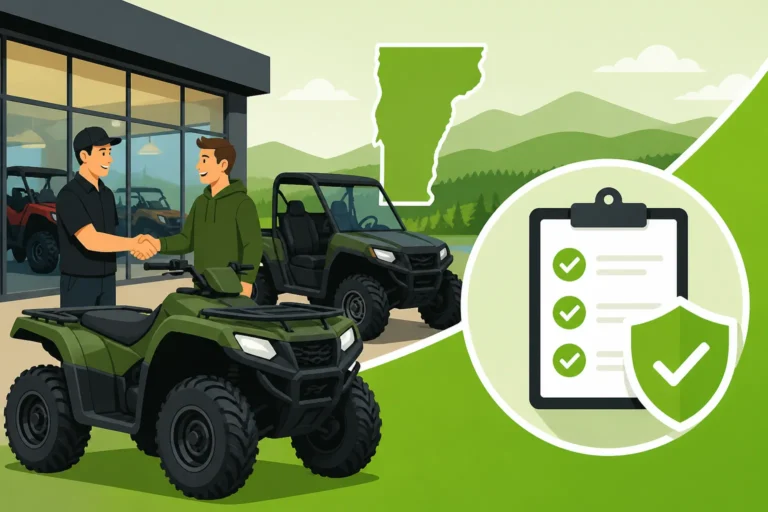
When you purchase a new or used ATV or UTV from a licensed dealer here in Vermont, the process is usually the smoothest for the buyer. Reputable dealerships are well-versed in Vermont's tax laws and typically handle the collection and remittance of the Purchase and Use Tax on your behalf. They'll include it in the total sale price, or itemize it on your invoice, and then forward the appropriate amount to the state.
This means you walk out of the dealership having already accounted for the tax, and your registration paperwork will reflect that. You won't have to worry about a separate payment to the DMV specifically for the Purchase and Use Tax when you go to register. The dealer essentially acts as an intermediary, making your life a lot easier. They'll also typically handle most of the initial [How to Register an ATV in Vermont] paperwork, simplifying the process considerably.
Private Sales in Vermont
This is where many riders encounter questions, as private sales don't have a dealer collecting taxes for you. If you buy an ATV or UTV from a private seller within Vermont, the responsibility for paying the Purchase and Use Tax falls squarely on you, the buyer. You'll pay this tax directly to the Vermont DMV when you go to register the machine in your name.
For a private sale, it's absolutely crucial to have a clear, accurate, and signed bill of sale. This document is your proof of purchase and will detail the price you paid, which the DMV will use to calculate your tax. You can find templates for a proper bill of sale online, and resources like LawDepot can be incredibly helpful for drafting a legally sound document that the Vermont DMV will accept. Without a solid bill of sale, the DMV might question the transaction and potentially use an estimated market value to calculate your tax, which could be higher than what you actually paid. Remember, transparency and good documentation are your best friends in a private sale. This is especially true when navigating [Vermont Registration After a Private Sale].
Purchasing Out-of-State
Thinking about snagging a great deal on an ATV or UTV in New Hampshire, New York, or even across the border in Quebec? That's totally fine, but don't assume you've dodged Vermont's Purchase and Use Tax. Even if you bought your machine elsewhere, you are still obligated to pay Vermont's Purchase and Use Tax when you bring it into Vermont and register it here. The state considers this a "use" of the vehicle within its borders that hasn't yet been taxed.
The process for [Vermont Registration for a Machine Bought Out of State] will involve you providing proof of purchase and the price paid, just like with a private sale. The DMV will then calculate the Purchase and Use Tax based on that information. If you paid sales tax in another state, Vermont may offer a credit for the amount of sales tax you paid to that other state, preventing you from being taxed twice on the same purchase. However, this isn't always a dollar-for-dollar match, and you'll need to provide clear documentation of the out-of-state tax payment. Always confirm the specifics with the Vermont DMV beforehand.
Gifts and Inherited Machines
Some of the most heartwarming ways to get an ATV or UTV are through a gift from a loved one or by inheriting one. The good news is that these scenarios can sometimes qualify for exemptions from the Purchase and Use Tax. If you receive an ATV or UTV as a genuine gift, especially within certain family relationships, you might not owe the tax. Similarly, if you inherit a machine, it might also be exempt.
However, even with gifts and inherited machines, proper paperwork is absolutely critical. For a gift, you'll likely need to complete a "gift affidavit" or similar document, clearly stating that no money or other consideration was exchanged for the machine. Again, platforms like LawDepot can provide templates for such affidavits, ensuring they meet legal standards. For an inherited machine, you'll need documents proving the inheritance, such as a will or probate court papers. Without this official documentation, the DMV might assume a sale took place and assess the tax. Always ensure you have all your ducks in a row for [Vermont Tax Exemption for a Gift] or [Vermont Registration for an Inherited ATV].
Avoiding Pitfalls and Ensuring Compliance
Nobody wants to deal with unexpected fees or delays when trying to get their ATV or UTV registered and ready for the trails. Understanding the nuances of the Purchase and Use Tax and how to navigate the process smoothly can save you a lot of headache.
Accurate Valuation
One of the most common pitfalls people encounter is related to the valuation of their ATV or UTV, especially in private sales. It might seem tempting to put a lower price on a bill of sale to reduce the Purchase and Use Tax. However, the Vermont DMV is quite adept at spotting unusually low valuations. They often cross-reference reported sale prices with established appraisal guides for off-road vehicles. If the price on your bill of sale seems significantly under market value for the make, model, and year of your machine, the DMV can, and often will, reject that valuation. Instead, they will use their own assessed fair market value, which could result in you paying more tax than you expected.
The best practice here is to be honest and transparent. Document the actual price paid on your bill of sale. If you truly got an incredible deal, be prepared to explain it, though the DMV's valuation will likely still prevail if there's a significant discrepancy. An accurate and fair valuation ensures a smooth registration process and prevents future complications.
Required Paperwork
Having the right documents in hand is half the battle when dealing with the Vermont DMV and the Purchase and Use Tax. Whether you're buying from a dealer, a private party, or bringing a machine in from out of state, you'll need specific paperwork to prove ownership and value.
Essential documents typically include:
- Bill of Sale: For private purchases, this is paramount. It should clearly state the buyer and seller's information, the date of sale, the vehicle identification number (VIN), and the agreed-upon purchase price. You can use resources like LawDepot to create a professional and compliant bill of sale.
- Title Certificate: If the ATV or UTV has a title (which is common for many newer machines and those registered in other states), this document proves legal ownership. The title should be properly signed over to you by the seller. For insights into this, see [Vermont Title for an Off-Road Vehicle].
- Manufacturer's Certificate of Origin (MCO): For brand new machines, the MCO is the original document of ownership from the manufacturer before the first title is issued.
- Proof of Prior Tax Payment: If you paid sales tax in another state, you'll need the receipt or documentation from that state to claim any potential credit against Vermont's Purchase and Use Tax.
- Ownership Affidavits: For gifted or inherited machines, an affidavit explaining the transfer of ownership without monetary exchange will be necessary. This helps the DMV understand why no purchase price is listed. [Filing an Ownership Affidavit at the Vermont DMV] provides more detail on this process.
Make sure all documents are legible, complete, and match the vehicle's VIN. The DMV clerks will meticulously review these as part of the [Proof of Ownership Vermont's DMV Will Accept] process before they can assess and collect the tax.
Penalties for Non-Compliance
It's tempting to think you might be able to fly under the radar without paying the Purchase and Use Tax, especially for a private sale or an older machine. However, Vermont takes its tax collection seriously. Attempting to register a machine without paying the applicable Purchase and Use Tax, or by providing false information regarding the purchase price or transfer, can lead to significant problems.
Penalties can include:
- Delayed Registration: Your registration will not be processed until the tax is correctly paid.
- Fines and Interest: The state can assess fines and interest on unpaid taxes, making the eventual payment significantly higher than the original amount.
- Legal Consequences: In more severe cases of intentional tax evasion, there could be legal repercussions.
It's simply not worth the risk. Paying the Purchase and Use Tax correctly and on time is a minor step in the grand scheme of enjoying your ATV or UTV, and it ensures you're a responsible operator on Vermont's trails.
Here’s a quick overview of how the tax might apply depending on your purchase scenario:
| Purchase Scenario | Tax Collected By | Documentation Needed (Examples) | Potential Exemptions? |
|---|---|---|---|
| Vermont Dealer Purchase | Dealer (remits to state) | Bill of Sale/Invoice, MCO/Title | No (tax included in sale) |
| Vermont Private Sale | Buyer (pays at DMV) | Bill of Sale (LawDepot), Title (if applicable) | No, unless gifted (requires affidavit) |
| Out-of-State Purchase | Buyer (pays at DMV) | Bill of Sale, Title, Proof of sales tax paid elsewhere (if any) | Yes, credit for out-of-state sales tax |
| Gift Transfer (Family) | N/A (no tax typically owed) | Gift Affidavit (LawDepot), Proof of relationship | Yes, if genuine gift per state rules |
| Inherited Machine | N/A (no tax typically owed) | Will, Probate documents, Affidavit of inheritance | Yes, if properly documented |
Understanding these details will help you navigate the process with confidence, ensuring you can quickly get your machine registered and ready for all the adventures Vermont has to offer.
Disclaimer
This article is for general informational purposes only and does not constitute professional advice. Laws, prices and regulations vary by location and change over time. Consult a qualified professional for guidance on your specific situation.