Vermont ASV Two-Year Registration at $211
Navigating the world of off-road vehicle registration in Vermont can feel like trying to find your way through a dense forest without a map. There are different classifications, varying fees, and what sometimes feels like a mountain of paperwork. For owners of All-Terrain Vehicles (ASVs), particularly the larger side-by-sides, understanding the two-year registration option – specifically the $211 cost – is crucial to enjoying Vermont’s incredible landscapes legally and without hassle. This guide aims to clear the fog, walking you through everything you need to know about registering your ASV for a two-year period in the Green Mountain State.
Understanding Vermont's ASV Classification: More Than Just a Name
When you talk about ATVs and UTVs, it's easy to lump them all into one category. But in Vermont, the Department of Motor Vehicles (DMV) makes a clear distinction, and it directly impacts your registration fees and requirements. It’s not just semantics; it’s about how your machine fits into the state’s legal framework for off-road vehicles.
Distinguishing ASVs from ATVs in Vermont Law
Many folks use "ATV" as a catch-all term for any recreational off-road vehicle. However, Vermont law is quite specific. A traditional ATV is often defined by its straddle seating, handlebar steering, and generally smaller size, designed for a single rider or perhaps a passenger with specific seating arrangements.
An ASV, on the other hand, typically refers to what many of us call a UTV or side-by-side. These machines are characterized by:
- Non-straddle seating: You sit in them, much like a car, rather than on them. This often means bucket seats or bench seating.
- Steering wheel: Just like a car, they have a steering wheel, not handlebars.
- Foot pedals: Accelerator and brake pedals are operated by foot.
- Increased size and weight: ASVs tend to be larger and heavier than conventional ATVs, often designed to carry multiple passengers (two, four, or even six) and more cargo.
Vermont's DMV often classifies these larger, multi-passenger machines as ASV Class A. This distinction isn't just for fun; it's a critical legal point that dictates everything from safety equipment requirements to, you guessed it, the cost of registration. If you're unsure whether your machine falls under the ATV or ASV classification, checking your owner's manual for specifications like width, weight, and seating type can offer clues. Ultimately, the DMV will make the final determination based on its criteria when you go to register. For a deeper dive into these specifics, check out [Vermont ASV Class A Registration Explained] and [Vermont ATV Versus ASV Classes]. It can save you a lot of headache before you even fill out a form.
Why Vermont Has Different Fee Structures for ASVs
The separate classification for ASVs isn't arbitrary; it reflects a difference in perceived impact and usage. Larger machines, designed for more passengers and often with greater carrying capacity, might be seen as having a different footprint on trails or roads, or perhaps even posing different safety considerations. This isn't to say one is inherently better or worse, but simply that the state has chosen to categorize them differently for regulatory purposes.
This distinction leads directly to different fee structures. For instance, a traditional ATV might have one registration fee, while an ASV Class A machine has another, often higher, fee. These fees contribute to the maintenance of Vermont's extensive trail system, administrative costs for the DMV, and enforcement efforts by wardens and local police. The logic is that larger machines, potentially used more intensively or requiring more robust trail infrastructure, might incur a higher fee to help offset those costs. So, while the sticker shock of a higher fee for your side-by-side might be real, understanding the legislative reasoning behind it can help put it in perspective. The way [How the ATV and ASV Classes Change Your Fee] affects your wallet is a common frustration, but it's built into the system.
The Benefits of Choosing a Two-Year ASV Registration
If you're anything like most off-road enthusiasts, you'd rather spend your time on the trails than in line at the DMV or fussing with paperwork. That's precisely where the two-year registration option for your ASV truly shines. It’s designed to offer a significant level of convenience and peace of mind that an annual renewal simply can’t match.
Convenience and Time Savings: Avoiding Annual Hassle
Think about it: how many times have you found yourself scrambling to renew a registration just as the riding season kicks into gear? Or worse, how often do you only realize your registration is expired when you’re already loaded up and on your way to a trailhead? The annual renewal cycle, while necessary, can be a source of constant low-level stress for many riders. Between remembering the exact expiration date, gathering paperwork, and either mailing it in or making a trip to the DMV, it eats into valuable time that you could be spending outdoors.
Choosing the two-year ASV registration option effectively cuts that hassle in half. Instead of two separate transactions and two separate sets of reminders, you handle it once for double the duration. This means one less deadline to track, one less envelope to mail, and one less potential trip to the DMV every other year. For busy individuals or families who are juggling multiple vehicles, boats, snowmobiles, and various registrations, consolidating this task can be a real game-changer. Imagine pulling your ASV out of storage in the spring, ready for an adventure, and knowing you still have a full season, or even two, before you need to think about registration again. It brings a significant sense of relief and lets you focus on the fun parts of owning an ASV. While [Vermont Registration Valid One Year] is always an option, the two-year period offers a clear advantage in terms of administrative ease.
Long-Term Planning for Your Vermont Off-Road Adventures
Beyond just saving you a trip or a stamp, a two-year ASV registration allows for better long-term planning of your off-road activities. Many riders in Vermont plan their season well in advance, whether it’s a series of weekend trips to the Northeast Kingdom, a week-long camping excursion with trail access, or simply knowing they’ll be hitting local town-designated routes regularly.
With a two-year registration, you can confidently map out your riding calendar without the looming thought of an expiring sticker. This is especially beneficial if your riding season spans across a traditional registration renewal period. You won’t find yourself in a situation where your registration is set to expire mid-tour, forcing you to cut your trip short or risk riding unregistered. It’s also incredibly useful for those who might store their machines for extended periods, perhaps during the winter months, and might genuinely forget about an annual renewal notice that arrives while the ASV is tucked away. [Buying a Two-Year Period Up Front] gives you that extended window of compliance and enjoyment. This consistency allows you to focus on the trails, the views, and the camaraderie, rather than bureaucratic deadlines.
Breaking Down the $211 ASV Two-Year Registration Fee
The number $211 is specific to Vermont's two-year registration for an ASV. It’s more than just a figure; it represents a commitment to the state’s off-road infrastructure and adherence to its regulations. Understanding what this fee encompasses, and what it doesn't, is crucial for budgeting and avoiding surprises.
What the $211 Covers and Why It's Structured That Way
The $211 fee is for two full years of registration for an All-Terrain Vehicle (ASV) classified by the Vermont DMV. This fee directly grants you the legal right to operate your ASV on designated public trails and town roads throughout Vermont, provided you meet all other requirements like possessing a [Vermont VASA Decal] for trail access. It covers the administrative costs associated with issuing your registration certificate and metal plate, and a portion contributes to the overall management and maintenance of the state's off-road riding opportunities.
When you look at it in comparison, the [Vermont ASV Registration at $108 a Year] for a single year, you'll notice that $211 for two years is not simply double the one-year fee, but a dollar less. This effectively means you're getting a very slight discount by committing to the two-year period, though the primary benefit is convenience, not significant cost savings. Unlike some other vehicle types or recreational machines where [Vermont Snowmobile Fees Split, ATV Fees Do Not] can be complicated, the ASV fee structure is quite straightforward: a flat rate for either one or two years. This predictability helps riders plan their expenses without trying to decipher complex pro-rated schedules.
It's really important to distinguish what this $211 doesn't cover. This fee is strictly for the registration itself. It does not include:
- Purchase and Use Tax: If you've just bought your ASV, particularly from a private seller or out-of-state, you'll likely owe [Vermont Purchase and Use Tax on an ATV]. This tax is calculated separately based on the purchase price and is due at the time of first registration.
- Title Fees: If your ASV requires a title (which many newer models do), there will be a separate fee for the [Vermont Title for an Off-Road Vehicle].
- Trail Access Decals (TAD): To ride on the vast network of VASA trails, you’ll need a separate [Vermont TAD: The Trail Access Decal Explained]. This is an additional annual fee paid to VASA, not the DMV, and is critical for legal trail riding.
- Insurance: Vermont mandates [Vermont ATV Insurance Requirements], but the premium for your liability insurance policy is a separate cost from registration.
Knowing precisely what the $211 covers helps you budget accurately and ensures you’re not caught off guard by additional fees at the DMV counter.
Other Potential Costs Beyond the Registration Fee
While the $211 covers your two-year ASV registration, it’s crucial to be aware of other expenses that might arise, especially if you’re registering a newly acquired machine or one brought into Vermont. These additional costs are separate from the registration fee but are often processed at the same time by the DMV, so it's wise to be prepared.
First and foremost is the Purchase and Use Tax. If you bought your ASV, whether from a dealer, a private seller, or brought it in from another state, Vermont will levy its [Vermont Purchase and Use Tax Rate] on the transaction. This tax is typically due at the time of your first registration in Vermont and is calculated as a percentage of the purchase price or appraised value. It can add a significant amount to your initial outlay, so don't overlook it in your budget. Remember, if you've already paid a similar sales tax in another state, you might be eligible for a credit, so bring proof of that payment.
Next, there's the title fee. Many newer ASVs, particularly those sold by dealerships, come with a Manufacturer's Certificate of Origin (MCO) and require a title. The fee for a [Vermont Title for an Off-Road Vehicle] is a separate, one-time charge. If you ever lose that title and need a [Vermont Replacement Title Cost], there's a fee for that too. Ensuring you have proper [Proof of Ownership Vermont's DMV Will Accept] is paramount. For those who bought their ASV privately, having a solid bill of sale is key. You can find reliable templates online, such as those offered by LawDepot, to ensure your bill of sale meets legal standards and includes all necessary information for the DMV.
Finally, while not a DMV fee, remember the VASA Trail Access Decal (TAD). This is a separate, annual decal required to ride on the VASA trail system, which makes up the vast majority of accessible public trails for ATVs and ASVs in Vermont. Even with a valid two-year registration, you cannot legally ride VASA trails without a current TAD. This ensures you're directly supporting the clubs and landowners who maintain these corridors. Factoring in the TAD, your insurance premiums, and any applicable taxes or title fees alongside the $211 registration will give you a complete financial picture for owning and operating your ASV in Vermont. If you ever need to transfer your registration to a new machine, there's also a modest [Vermont Registration Transfer for $10] fee, which is a good deal compared to a full new registration.
| Registration Type | Term | Fee (Approx.) | Additional Common Fees | Notes |
|---|---|---|---|---|
| Vermont ASV (Class A) | One Year | $108 | P&U Tax, Title Fee, VASA TAD | Common for those who prefer annual renewal. |
| Vermont ASV (Class A) | Two Years | $211 | P&U Tax, Title Fee, VASA TAD (x2) | Convenient, slightly cheaper/year. |
| Vermont ATV (Non-ASV) | One Year | $45 | P&U Tax, Title Fee, VASA TAD | For smaller, traditional ATVs. |
| Vermont ATV (Non-ASV) | Two Years | $90 | P&U Tax, Title Fee, VASA TAD (x2) | Double the one-year fee, also convenient. |
| Vermont Registration Transfer | N/A | $10 | (No P&U Tax or Title Fee usually) | For moving registration to a new machine. |
| Vermont Title Application | One-time | $27 | (No other fees usually) | Required for titled machines at initial registration. |
Navigating the Application Process for Your Two-Year ASV Registration
The registration process doesn't have to be daunting. With the right information and preparation, you can glide through it much like your ASV glides over a smooth trail. The key is knowing what to bring and what steps to follow to ensure a successful application for your two-year registration.
Gathering Your Essential Paperwork and Proof of Ownership
The absolute cornerstone of a smooth registration process is having all your ducks in a row when it comes to paperwork. There's nothing more frustrating than arriving at the DMV, waiting your turn, only to be told you're missing a crucial document and have to come back another day. It wastes your time and can delay your riding plans.
For any ASV registration in Vermont, and especially for a new registration or one from out-of-state, you'll need a specific set of documents. Think of this as your [Vermont Registration Paperwork Checklist]:
- Proof of Ownership: This is non-negotiable.
- If your ASV is new, you'll need the Manufacturer's Certificate of Origin (MCO). This is like the birth certificate for your machine.
- If you bought it used from a dealer, you'll typically have a bill of sale from the dealership and potentially the previous title.
- If you bought it from a private seller, you need a bill of sale from that individual. This document is critical. It should include the full names and addresses of both buyer and seller, the ASV's make, model, year, and Vehicle Identification Number (VIN), the purchase price, and the date of sale. A generic template might not cut it, so consider using a reputable service like LawDepot to generate a legally sound [Writing a Bill of Sale the Vermont DMV Accepts].
- If you're transferring an existing Vermont registration, you'll need the current registration certificate.
- For an inherited machine, specific probate or executor documents will be required. [Registering an ATV You Inherited in a Will] covers this in detail.
- Proof of Identity: A valid driver's license or state-issued ID.
- Proof of Vermont Residency: While [Vermont Charges Residents and Visitors the Same] for registration fees, if you're a new resident, you'll need to show proof of your Vermont address (e.g., utility bill, lease agreement). [Vermont ATV Registration for New Resident] might require specific documents.
- Odometer Reading: Be prepared to provide the current odometer or hour meter reading for your ASV.
- Application Form: The official Vermont DMV form (VD-119, Application for Motorboat, Snowmobile, All-Terrain Vehicle Registration and Title). You can often download this online and fill it out in advance, saving time at the DMV. You'll want to review the VD-119i instructions carefully for detailed guidance.
- Payment: Be ready with the $211 fee for the two-year registration, plus any applicable [Vermont Purchase and Use Tax on an ATV] or title fees. Acceptable payment methods usually include cash, check, money order, or credit/debit card, though this can vary by DMV location.
Having all these documents organized in a folder before you leave the house will significantly expedite your visit. [Proof of Ownership Vermont's DMV Will Accept] outlines the varying types of evidence the DMV will consider.
Step-by-Step Guide to Submitting Your ASV Registration
Once your paperwork is in order, the actual submission process is relatively straightforward. Vermont offers a few avenues for registration, but the most common are in-person or via mail.
- Complete the Application Form (VD-119): Download the form from the Vermont DMV website or pick one up at any DMV office. Fill out all sections accurately and completely, including your ASV’s details (make, model, year, VIN), your personal information, and clearly indicate that you are applying for a two-year ASV registration. Make sure to sign and date it.
- Gather Supporting Documents: As detailed above, compile your proof of ownership, identity, and any other required paperwork. If mailing, make copies of everything for your records.
- Calculate Fees: Determine your total cost: $211 for the two-year ASV registration, plus the [Vermont Purchase and Use Tax Rate] (if applicable for new purchases or out-of-state machines), and the [Vermont Title Application Steps] fee if your ASV requires one.
- Submission Options:
- In-Person: This is often the quickest way to get your registration processed and walk out with your temporary plate and registration certificate. Visit any Vermont DMV office during business hours. Be prepared for potential wait times, especially during peak seasons. Bring all original documents.
- By Mail: If you prefer to avoid a trip to the DMV, you can mail your completed application, copies of your supporting documents (never mail originals unless specifically requested and you have no other option), and a check or money order for the total fees to the address provided on the DMV website. Be aware that processing by mail will take longer.
- Receive Your Registration and Plate:
- If applying in-person, you’ll typically receive a temporary registration document and perhaps your plate on the spot. The official plate is often mailed [Where Vermont Mails Your New ATV Plate].
- If applying by mail, you will receive your registration certificate and plate in the mail. Be patient, as [Vermont ATV Registration Processing Time] can vary.
- Your metal plate will typically need to be mounted on the rear of your ASV.
Remember, if you’re a non-resident looking to ride in Vermont, the process for [Vermont ATV Registration for Nonresidents] is largely the same for ASVs – you’ll still need to register with the Vermont DMV to ride on town roads and state-designated routes, paying the same fees as residents. Taking the time to properly prepare your paperwork will make the process as smooth as possible, getting you back on the trails faster.
Essential Details and What Your ASV Registration Covers
Once you've navigated the paperwork and paid your fees, getting that shiny new registration and plate is a great feeling. But the process doesn't end there. Understanding what comes next, what your registration signifies, and your ongoing responsibilities as an ASV owner in Vermont is paramount to safe and legal riding.
What to Expect After Registration: Plate, Decal, and Expiration
After successfully registering your ASV for two years in Vermont, you'll receive a few key items:
- Registration Certificate: This is the official document proving your ASV is registered. It will list your machine's details, your information, and the expiration date. Always keep this with you when riding.
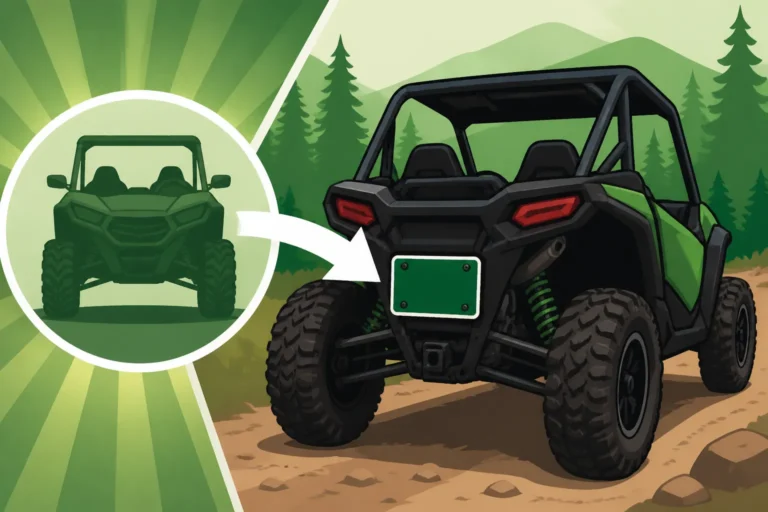
- Metal Plate: You'll be issued a distinct metal plate with a registration number. In Vermont, this plate is almost always required to be mounted on the rear of your machine. [Vermont ATV Plates and Where They Go] describes this in more detail. It needs to be securely fastened and visible, which can sometimes be a challenge with mud and trail debris. Maintaining its readability is not just good practice, it's a legal requirement.
- Expiration Date: For your two-year registration, the expiration date will be clearly marked on your certificate. It typically runs for two full years from the date of issuance or the end of the current registration period, expiring on the last day of a specific month. This long window is the primary benefit of paying the $211 up front. Mark this date on your calendar, set a reminder on your phone, or do whatever you need to ensure you don't accidentally let it lapse.
It's important to remember that while your ASV registration is valid for two years, your VASA Trail Access Decal (TAD) is typically an annual purchase, expiring on December 31st of each year, regardless of when you buy it. So, even with a valid two-year registration, you'll need to renew your TAD annually to access the VASA trail system. This is a common point of confusion for riders, especially visitors, so make sure to keep both up to date.
Riding Legally and Responsibly with Your New Registration
Having a valid two-year registration for your ASV is a critical first step, but it's just one piece of the puzzle for legal and responsible riding in Vermont. The Green Mountain State has a comprehensive set of regulations designed to ensure safety, protect landowners, and preserve the environment.
- Insurance: Vermont law mandates [Vermont Requires ATV Liability Insurance]. Before you even hit the trails, your ASV must be covered by an insurance policy that meets the state's minimum liability requirements. Carrying proof of this insurance is essential, as wardens or law enforcement may ask to see it.
- Safety Equipment: Every rider, regardless of age, must wear a helmet. [Vermont ATV Helmet Law for Every Rider] is strictly enforced. Other equipment, such as working headlights, tail lights, and a functional muffler, are also required, particularly if you plan to ride on designated town roads or after dark.
- Trail Access: As mentioned, your DMV registration alone does not grant you access to the vast network of VASA trails. You absolutely need a separate [Vermont TAD: The Trail Access Decal Explained]. This decal helps fund the maintenance and operation of the trails, which mostly traverse private land. Support for the VASA system is vital for continued access.
- Understanding Local Ordinances: While Vermont has statewide laws, individual towns have the authority to open or close their roads to ASVs and can set their own specific rules regarding curfews, speed limits, and designated routes. Always check local ordinances for the area you plan to ride. What’s legal in one town might not be in another.
- Landowner Permission: The vast majority of Vermont’s trails are on private land, generously opened by landowners. Always respect private property, stay on marked trails, and never trespass. Riding off-trail or on posted land can lead to serious [Vermont Trespass Law for Riders] penalties and jeopardize access for everyone.
Ignoring any of these requirements can lead to fines, your machine being impounded, or worse, serious accidents. [Vermont Penalties for Riding Unregistered] can be steep, so always double-check your registration, TAD, and insurance before every ride. For important legal forms like waivers for private land access if you're riding with friends on private property, resources like LawDepot can provide templates to ensure you're covered. Taking the time to understand and adhere to all these rules ensures a safer, more enjoyable experience for everyone and helps preserve the future of ASV riding in Vermont.
Disclaimer
This article is for general informational purposes only and does not constitute professional advice. Laws, prices and regulations vary by location and change over time. Consult a qualified professional for guidance on your specific situation.