Proof of Coverage in Your Pocket
A current insurance policy is only useful at a trail check if you can show that it covers the machine you’re riding. Vermont ATV and UTV riders need to understand what proof to carry, where to keep it, and how to check that coverage applies to trail use. A simple pre-ride routine can prevent confusion when a warden or officer asks for documentation.
What proof of coverage should you carry?
Vermont requires ATV and UTV riders to have liability insurance, so plan to carry proof whenever you ride. The document should make it possible to connect the coverage to you and the specific machine. A policy declaration page or insurance card may help, but the best document depends on what your insurer provides and what information it includes.
Before riding, check that your proof shows, or lets an official verify:
- The insurer or insurance provider
- The named insured
- The policy’s effective period
- The machine covered, ideally through its vehicle identification number or another clear identifier
- A way to contact the insurer or confirm the policy
A general auto insurance card may not identify an ATV or side-by-side. Likewise, a document showing that you have insurance for another vehicle does not by itself establish that the machine you’re riding is insured. For an overview of the state requirement, see Vermont ATV Insurance Requirements.
Ask your insurer for proof that is specific to your ATV or UTV. If the machine is listed by VIN, compare the number on the paperwork with the VIN on the machine. If the policy uses another identifier, make sure you understand how an officer or warden can confirm that the coverage applies.
| Proof or record | What it helps show | What to check |
|---|---|---|
| Insurance card | Insurer, policyholder, and policy period | Does it identify the ATV or UTV, or provide a way to confirm it? |
| Policy declarations | Coverage details and insured vehicles | Is the machine listed, and is the policy in force? |
| Digital insurer document | A convenient copy if you have your phone | Can you open it without a signal, and is a paper backup available? |
| Registration or trail decal | Registration or trail-access status | These are not proof of liability insurance |
| Proof for another vehicle | Coverage for the vehicle named on that document | It does not establish coverage for your ATV or UTV |
A registration certificate, plate, or Trail Access Decal (TAD) may be required for other reasons, but each serves a different purpose. Don’t treat one as a replacement for insurance proof. Vermont’s trail access requirements are separate; see Vermont Requires Registration Plus a TAD for how those obligations fit together.
Check that the policy covers the ride you plan to take
Possessing a policy document does not automatically mean the policy covers every machine, rider, or activity. ATV and UTV coverage can depend on the policy terms, the way the machine is used, and any exclusions. Review the actual policy rather than relying only on an insurance card or a quick verbal summary.
Confirm the machine is insured
If you recently bought, borrowed, or changed machines, confirm that the ATV or UTV is listed and that the policy is active. Don’t assume that coverage automatically moved from an old machine to a replacement. Ask the insurer how it handles a new purchase, a temporary loan, or a machine with multiple owners.
This matters especially when you ride a friend’s machine. The owner’s policy may be limited, may exclude certain riders, or may not cover the use you have in mind. Ask the owner to confirm coverage with the insurer rather than assuming that permission to ride includes insurance protection.
If you’re responsible for a machine with a lien, a rental fleet, or more than one owner, keep the insurance record consistent with the ownership and registration paperwork. The documents don’t have to be identical, but mismatched names or identifiers can prompt questions. Why Your Policy Must Name the Machine You Ride explains why machine-specific details matter.
Ask about trail and off-road use
A policy that covers a vehicle on roads may not cover it in the same way on trails or other off-road routes. Ask the insurer directly whether the policy applies to the riding you expect to do in Vermont, including travel on club corridors and any permitted road connections. Also ask whether there are limits based on who is operating the machine, where it is used, or whether it is rented or borrowed.
Read exclusions carefully. A policy may have conditions relating to racing, commercial use, certain types of terrain, or use outside a defined area. Don’t assume that “off-road vehicle” means every kind of recreational use is included. If the answer is unclear, request written clarification or an updated policy document. For examples of coverage concerns to ask about, see When Your Insurance Policy Excludes Trail Riding.
Be clear about the machine’s actual use when you apply for coverage. If you use it for work, rent it to others, or take it across a state or international border, say so. A policy arranged for occasional personal recreation may not fit a different use.
How to keep proof accessible on the trail
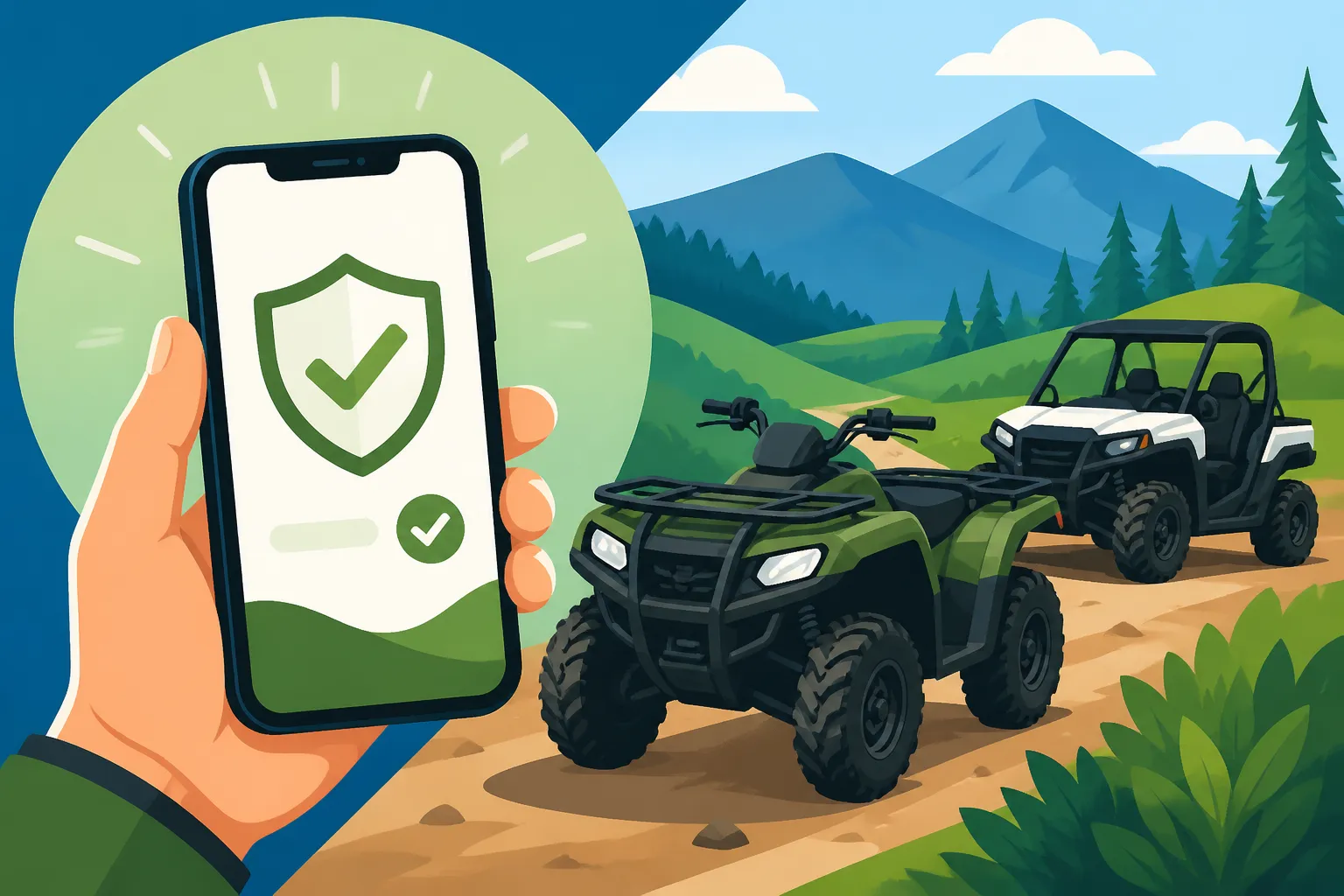
The goal is to have current proof available without exposing it to mud, rain, or loss. A paper copy is a dependable backup, while a digital copy can be useful if it is stored for offline access. Carrying both reduces the chance that a dead phone, damaged screen, or missing document turns a simple check into a problem.
A practical setup is to keep a folded paper copy in a waterproof pouch attached securely to the machine, and store a digital copy on your phone. If you use a phone, download or save the file so it can be opened without cellular service. Trail coverage can be unreliable, and an online-only document may not load when you need it.
You could also keep a second copy in your tow vehicle or with another adult in your group. That copy is a backup, not a substitute for having proof accessible while riding. If you carry a paper copy on the machine, protect it from water and vibration, and don’t place it where it can interfere with controls or be lost on a rough section. A small waterproof document pouch from an outdoor retailer, including Amazon, can help keep paperwork dry; choose a secure location that does not obstruct safe operation.
Before you leave, check that the copy is readable. A blurry photo or a document with a cropped policy period may not answer basic questions. Keep the full insurer contact information with it, but avoid carrying unnecessary personal documents that reveal more information than needed.
Use this short routine before each ride:
- Confirm the policy is active for the date of the ride.
- Match the document to the machine you will operate.
- Check that the policy covers the intended off-road or trail use.
- Save an offline digital copy and pack a legible paper backup.
- Keep proof accessible, dry, and separate from documents for other vehicles.
- Replace outdated copies when the policy, machine, or named insured changes.
The same routine is useful when riding with a group. Each machine should have its own applicable coverage and proof; one rider’s insurance document does not automatically document the rest of the group. Ask each owner to confirm coverage before the machines are unloaded.
What to do when you’re stopped or riding from out of state
If a warden or officer asks for insurance proof, provide the document calmly and make it easy to read. They may need to verify the policyholder, the policy period, or which machine is covered. If the paperwork does not make that clear, explain what the insurer provided and offer the insurer’s contact information. Don’t assume registration or a TAD answers an insurance question. For more on the documents that may be checked during a ride, see What a Trail Warden Checks.
If you discover that your proof is expired, belongs to a different machine, or is difficult to verify, pause and contact the insurer before continuing. A verbal assurance from a friend or a screenshot with missing details may not resolve the issue. If coverage cannot be confirmed, don’t ride the machine until you have corrected the problem.
Visitors should make the same checks before arriving in Vermont. A machine registered in another state or province may be recognized for certain purposes, but that does not necessarily settle the insurance question. Confirm that the policy covers the machine in Vermont and that you can show current proof. The state’s reciprocity rules are a separate issue; see Vermont Reciprocity for Out-of-State Machines.
For a rented machine, ask the rental operator who provides liability coverage, what the policy covers, and what proof the renter should carry. Don’t assume that a rental agreement is the insurance document. Keep any instructions or documentation the operator gives you accessible during the ride, and clarify whether the policy has conditions for passengers or particular routes.
A little preparation keeps the paperwork straightforward: use proof tied to the machine, check the policy’s actual coverage, and carry a readable copy that works without cell service. That gives you a better chance of answering a routine check promptly and spotting a coverage problem before you reach the trail.
Disclaimer
This article is for general informational purposes only and does not constitute professional advice. Laws, prices and regulations vary by location and change over time. Consult a qualified professional for guidance on your specific situation.