Who Has to Buy a Trail Access Decal
A Vermont registration plate does not automatically give an ATV or UTV access to the state’s organized trail network. If you plan to ride a VASA trail, the key question is whether the machine has a current Trail Access Decal, or TAD. Here’s who needs one, how out-of-state registration fits in, and what to check before you ride.
Who needs a Vermont Trail Access Decal
In general, each ATV or UTV that you ride on a designated VASA trail needs its own current TAD. The decal is tied to a machine, not to a rider: buying one for a household member’s vehicle does not cover your machine, and several riders taking turns on one machine do not each need a separate decal for it.
A Vermont registration and a TAD serve different purposes. Registration identifies the machine for legal operation under applicable rules; the TAD provides access to participating trails. Neither one substitutes for the other. If you plan to ride the VASA network, expect to need both unless a specific exception applies. See Vermont Requires Registration Plus a TAD for how the two requirements fit together.
| Your situation | Is a TAD generally needed? | What to check |
|---|---|---|
| Vermont-registered ATV or UTV on a designated VASA trail | Yes | The machine’s registration and current decal |
| Out-of-state-registered machine on a designated VASA trail | Yes | Home-state registration, Vermont’s reciprocity rules, and the visitor decal category |
| Several machines in one family or group | Yes, for each machine being ridden | Whether each machine has its own current decal |
| Machine used only on private land with the landowner’s permission | Not simply because it is an ATV or UTV | The owner’s rules and any other applicable requirements |
| Rental machine used on a VASA trail | The machine needs the required access decal | Confirm with the rental operator before departure |
| Machine used only on roads or other places, not VASA trails | Not solely for that use | Registration, road rules, and local access rules still apply |
The TAD is not a general permission slip for every place an ATV or UTV might go. It does not open a closed corridor, a private parcel where permission has been withdrawn, or a road that has not been designated for ATV use. Vermont’s trail network relies heavily on landowner permission, and access can change. Check the current route information before planning around a trail. For background, see Vermont Trails Closed Without a TAD and Vermont’s Trails Run on Private Land.
The decal also does not replace other obligations that may apply to the rider or machine. Registration, insurance, safety training for younger riders, equipment requirements, and local road rules are separate issues. A TAD does not make an otherwise prohibited ride legal.
Vermont residents, visitors, and multiple machines
Vermont residents who take a registered ATV or UTV onto a VASA trail generally need a TAD for that machine. Having a Vermont plate, a current registration card, or proof that the machine is insured does not by itself provide trail access.
Visitors should plan on needing a TAD too. Out-of-state registration may be recognized for purposes of meeting Vermont’s registration rules, but recognition is not the same as trail access. A visitor still needs to meet the trail system’s access requirement. See Vermont Out-of-State Machines Still Need a TAD for that distinction.
Vermont recognizes certain neighboring jurisdictions’ registrations under its reciprocity rules. That can help a visiting rider avoid registering the machine in Vermont just to ride, but it does not eliminate the TAD requirement for VASA trails. Check the current rules that apply to your home jurisdiction, including Vermont Recognizes Quebec Registrations, [Vermont Recognizes New Hampshire Registrations], and Vermont Recognizes Maine Registrations. Do not assume that a plate accepted for registration purposes automatically satisfies every access, insurance, or equipment rule.
If you are bringing more than one machine, treat each one as a separate unit for decal purposes. For example, a couple hauling two registered ATVs should check that both machines have the required access decals, even if they share one trailer, one registration address, or one account when purchasing. A family buying a second eligible machine should check whether a different decal category applies; see Vermont TAD for a Second Machine.
The practical rule is simple: identify every machine that will be ridden on a VASA corridor, then confirm that each has the correct current TAD. A decal for one quad does not transfer to another just because the same person owns both.
Rentals, decal periods, and what the TAD covers
If you rent an ATV or UTV, ask the rental operator whether the machine has a current TAD for the routes included in your ride. Do this before paying or setting out. The decal requirement attaches to the machine’s trail use, but the rental agreement and operator’s procedures determine who arranges it. Do not assume that a rental machine is automatically cleared for every trail. More detail is available in Vermont TAD for a Rented Machine.
A TAD gives access only under the conditions of the applicable trail system. It is not a statewide permit to ride anywhere, and it does not override a closure, a posted restriction, or a landowner’s decision to withdraw permission. The decal supports the organized trail network and its maintenance, but it is still the rider’s responsibility to stay on authorized routes, follow signs, and respect closures.
TADs have a defined validity period, so check the expiration date before traveling. A decal purchased late in the season may not remain valid for the next season. Confirm the current expiration rule and renewal process before relying on an older decal; Vermont TAD Expiration Date explains why checking the date matters.
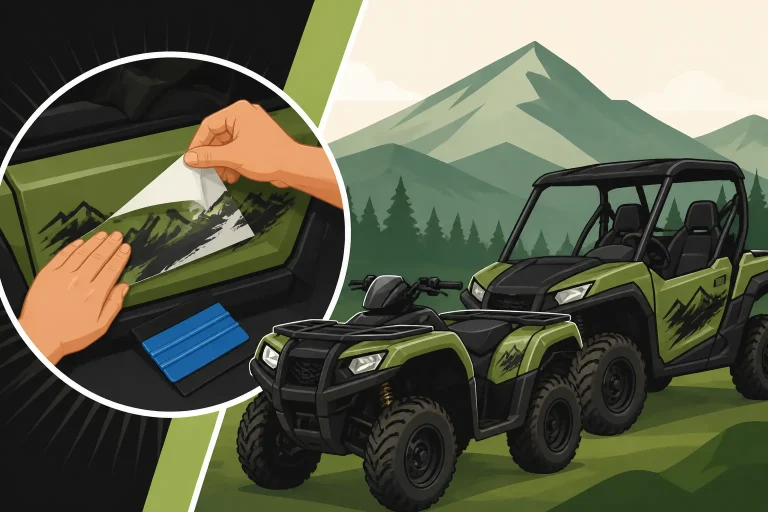
If your decal is damaged, missing, or no longer attached, do not assume that a receipt or a picture of an old decal will be accepted as a substitute. Check the current replacement process and the required placement. Follow the official placement instructions so the decal remains visible and secure during normal use. See Vermont TAD Placement on the Machine.
The amount charged can depend on the machine’s registration status and whether it is an additional machine or a visitor’s machine. Rates and purchase procedures can change, so confirm current figures with the program or participating club before ordering. If a club or seller helps you obtain a decal, make sure the decal category matches the machine you will ride.
How to check before you ride
A few checks before departure can prevent a wasted trip or an avoidable access violation:
- Identify the exact route. Confirm that it is an open VASA trail or corridor, rather than assuming every trail-looking road is available to ATVs.
- Check the machine’s registration. Make sure the registration is current and that any out-of-state registration qualifies under Vermont’s current reciprocity rules.
- Confirm a TAD for every machine. Check the decal category, its validity period, and that it is attached as required.
- Review separate rider requirements. Age-related training and supervision rules are not satisfied by a TAD. For young riders, see Vermont ATV Safety Course Required Under 18.
- Check conditions and closures. Trail status can change because of weather, maintenance, landowner requests, or seasonal restrictions. Ask the club responsible for the route if anything is unclear.
- Carry the required documents. Keep whatever registration, insurance, and training proof applies readily available, and follow any instructions for showing trail access.
If you are uncertain whether a machine qualifies for a particular decal category, or whether your home-state registration is accepted, ask before buying or traveling. Give the club or program the machine type, registration jurisdiction, and intended trail area. Specific details matter: a vehicle’s label as an ATV, UTV, side-by-side, or utility machine does not necessarily settle how it is classified for every rule.
The most reliable takeaway is that VASA trail access is separate from vehicle registration. Vermont residents and visitors alike should expect to need a current TAD for each machine they take onto a designated VASA trail, then verify that the route is open and that all other rules are met.
Disclaimer
This article is for general informational purposes only and does not constitute professional advice. Laws, prices and regulations vary by location and change over time. Consult a qualified professional for guidance on your specific situation.