Vermont Safety Course for an Adult
An adult planning to ride an ATV or UTV in Vermont may wonder whether a safety certificate is a legal requirement or simply a good idea. For adults, the answer is generally straightforward: age alone does not trigger Vermont’s youth course requirement. But training is only one part of preparing to ride, and it does not replace registration, trail access, insurance, or local rules.
Does an adult need a Vermont ATV safety course?
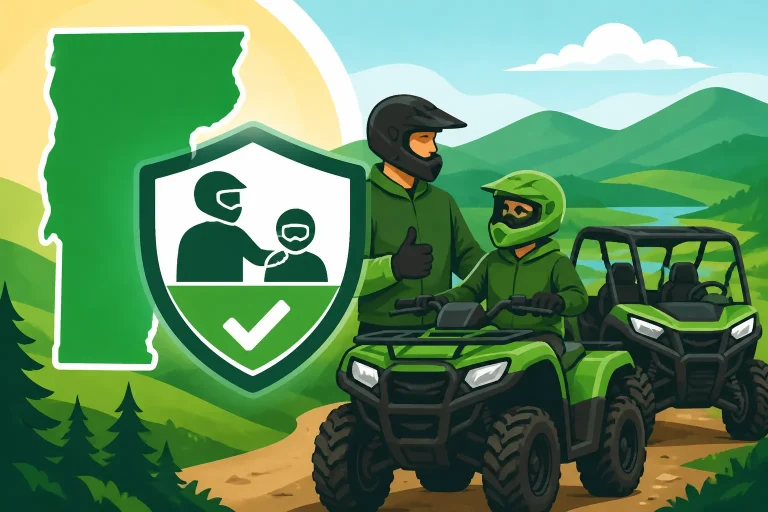
Vermont’s ATV safety-course requirement is aimed at riders under 18. An adult generally does not have to complete a course just to operate an ATV because of their age. That does not mean every adult can ride anywhere, or that a course certificate covers the other requirements that apply to a machine, a trail, or a particular riding situation.
The distinction matters for adults who are new to riding, returning after a long break, or visiting from another state. A safety course can help you understand safe operation and Vermont-specific expectations, but it is separate from permission to use a trail or road.
For a youth rider, the rules can depend on age and circumstances, including who is supervising. If you are riding with a young family member, do not treat your own adult status as a substitute for the child’s requirements. Review Vermont ATV Safety Course Required Under 18 and Vermont Supervision Rules Under 16 before making a plan.
When a course is required and when it is voluntary
For an adult riding alone, the course is generally voluntary under the age-based requirement. An adult may still choose to take training to build practical skills, understand controls, and learn how to handle situations such as slopes, loose surfaces, or unexpected obstacles.
Different rules can apply if you are supervising a young rider, participating in a club or organized activity, or riding outside Vermont. A group, landowner, insurer, rental operator, or another state may have requirements that are separate from Vermont’s general age-based rule. Ask the relevant organization what it requires rather than assuming that a Vermont rule applies everywhere.
If you will supervise a child, check the rules for the child’s age and the qualifications required of a supervisor. A course certificate for the adult may be useful, but it does not automatically satisfy every supervision requirement. The details are covered in Who Can Legally Supervise a Rider Under 16.
A certificate is not a riding permit
A safety certificate shows that a person completed a course accepted for that purpose. It does not register the machine, provide landowner permission, open a closed trail, or give an adult permission to ride on a town road.
Think of the course as one item in a larger set of checks:
- Training: Is a course required for your age or situation? Would training improve your preparation?
- Machine paperwork: Is the ATV or UTV properly registered, or otherwise eligible for the place where you plan to ride?
- Trail access: Does the route require a Vermont Trail Access Decal, club membership, or another form of permission?
- Insurance: Is the machine covered for the riding you plan to do, and can you show proof if asked?
- Location rules: Is the specific trail, road, or property open to this machine and this rider?
For riding on Vermont’s club trail system, registration and trail access are separate matters. A course does not take the place of a decal. See Vermont Requires Registration Plus a TAD and Vermont TAD for a Visitor’s Machine if you are planning to ride a machine registered outside Vermont.
How to choose and complete a course
An adult course can be worthwhile even when it is not mandatory. The main benefit is structured practice and instruction: instead of trying to learn everything through trial and error, you can build an understanding of safe operation before riding in unfamiliar terrain or around other people.
Course formats and providers can change. Before enrolling, confirm that the provider’s course is recognized for the purpose you have in mind. If you need a certificate for a youth rider, a supervisor role, a club, or riding in another state, ask the relevant authority or organization whether that specific course will count.
Check recognition before you pay or enroll
Do not rely only on a course title that says “ATV safety.” A course may be useful but not accepted as proof for a particular legal or program requirement. Before you start, check:
- Who recognizes the certificate. Confirm whether Vermont accepts the course if you need it for a Vermont requirement. If you will ride in another state, ask that state or the relevant land manager what it accepts.
- Who must take the course. If the certificate is for a child or another rider, make sure the course is appropriate for that person’s age and situation.
- What the course covers. Look for practical subjects such as controls, protective equipment, riding within your ability, terrain awareness, and how to respond to hazards.
- How completion is documented. Find out how you receive the certificate and whether you can download or print a copy.
- Whether there is an in-person component. Online instruction can explain rules and concepts, but it cannot give you hands-on practice with a specific machine.
If your purpose is to meet Vermont’s youth requirement, consult Out-of-State Safety Courses Vermont Will Count before assuming that a certificate from elsewhere will be accepted. Course recognition can be specific; a certificate that is valid in one place may not automatically satisfy another jurisdiction’s rules.
Online or in-person training
An online course can be convenient for learning terminology, reviewing rules, and completing a knowledge assessment at your own pace. It may be a sensible starting point for an adult who wants an introduction before riding. Its limitation is that it cannot assess your riding technique or let you practise handling the machine.
An in-person course can provide direct instruction and a chance to practise. That may be especially useful if you have never operated an ATV or UTV, are moving from a smaller machine to a heavier or more powerful one, or are unsure about braking, turning, or managing a slope. Availability varies, so check whether a course includes actual riding practice or is classroom instruction only.
| Course approach | Useful for | What to confirm |
|---|---|---|
| Online instruction | Learning basic concepts and reviewing rules at a flexible pace | Whether the certificate is recognized for your purpose and what practical skills are not covered |
| In-person instruction | Getting direct guidance and, when offered, supervised practice | Whether riding practice is included, what machine is used, and what equipment to bring |
| A combination of both | Reviewing concepts before practising skills | Whether both parts are required and how completion is recorded |
An online certificate is not proof that you can safely operate every machine or handle every trail. If possible, practise in a controlled, permitted area with an experienced instructor or rider before joining a long group ride. Start with terrain and speeds that leave room to make mistakes safely.
Keep the record
When you finish a course, save the certificate and any confirmation details. Keep a digital copy somewhere you can access it and a printed copy if the organization asking for proof may not accept a phone image. If the certificate is for a young rider, make sure the rider and supervising adult know where it is kept.
Vermont safety certificates are generally treated as non-expiring, but keep the document and verify its acceptance if it will be used for a specific program or outside Vermont. A course completion record is not the same thing as proof of registration, insurance, or trail access, so organize those documents separately.
What adults still need before riding in Vermont
Even if a course is voluntary for you, the other rules still apply. Requirements depend on whether you are riding on a club trail, private land, a town road, or another type of property. Before you unload the machine, identify the exact place you plan to ride and check its current access rules.
Check the machine and access requirements
Vermont registration and trail access are separate checks. An ATV or UTV may need proper registration for the type of riding planned, and a machine using the VASA club trail system generally needs the required Trail Access Decal in addition to registration. A visitor should not assume that an out-of-state plate alone provides trail access. Review Vermont Reciprocity for Out-of-State Machines and Vermont Out-of-State Machines Still Need a TAD if the machine is registered elsewhere.
Confirm that the machine meets the relevant class and equipment rules as well. Vermont distinguishes ATV and ASV classes, and classification can affect which registration category applies. If you are unsure what you own, Vermont ATV Versus ASV Classes can help you identify the distinction before you begin paperwork.
A trail decal also does not grant permission to ride on every piece of land. Vermont’s trail network depends on access granted by landowners and routes maintained by clubs. A route can close or change, so check current club information and signs before setting out. Do not assume that a trail shown on an old map is still open.
Carry the right proof
For a planned ride, bring or have access to the documents that apply to your situation. These may include registration, proof of insurance, a trail decal, and a safety certificate if one is required or requested. Check the particular club, event, rental operator, or land manager for its document expectations.
Keep any required decal attached where it can be seen and avoid covering it with mud or gear. If you are riding with a group, confirm that each machine has its own required access credentials rather than assuming one person’s paperwork covers everyone. The article Carrying Both Plate and Decal explains why the plate and trail decal serve different purposes.
Insurance and roads are separate questions
A safety certificate does not provide liability coverage. Make sure your insurance applies to the machine and the type of riding you intend to do, and carry proof in the way the applicable rules require. Read the policy rather than assuming that coverage for a vehicle automatically includes recreational trail riding. See Vermont ATV Insurance Requirements and Proof of Coverage in Your Pocket for the insurance side of preparation.
Riding on a town road is also different from riding on a club trail or private property. Towns decide whether particular roads are open, and local restrictions may address hours, speed, seasons, equipment, and other conditions. Registration or course completion does not turn a closed road into an authorized route. Check Vermont ATV Road Rules: Towns Decide and the town’s current posted information before planning a road connection.
Is an adult course worth taking?
A course is most valuable when it fills a real gap. If you are an experienced rider who already understands the machine and local rules, a formal course may be less important for your personal learning than checking current access, equipment, and insurance requirements. If you are new to riding, returning after years away, or unfamiliar with the machine, instruction can help you build a safer foundation.
Consider taking a course if you:
- Have not operated an ATV or UTV before.
- Are switching to a machine with different controls, size, or handling.
- Plan to supervise a young rider and want a stronger understanding of safe riding.
- Will ride with a club or group and want to understand trail etiquette.
- Are visiting from another state and need to check whether your training certificate is recognized.
- Want structured instruction before practising on uneven or unfamiliar terrain.
Adults should also be honest about the difference between completing a course and being ready for a particular ride. A certificate cannot tell you whether a difficult route is appropriate for your skill, whether your machine is suited to the terrain, or whether conditions have changed since the last trip. Choose a route within your ability, ride with a suitable group when possible, and leave space to turn back.
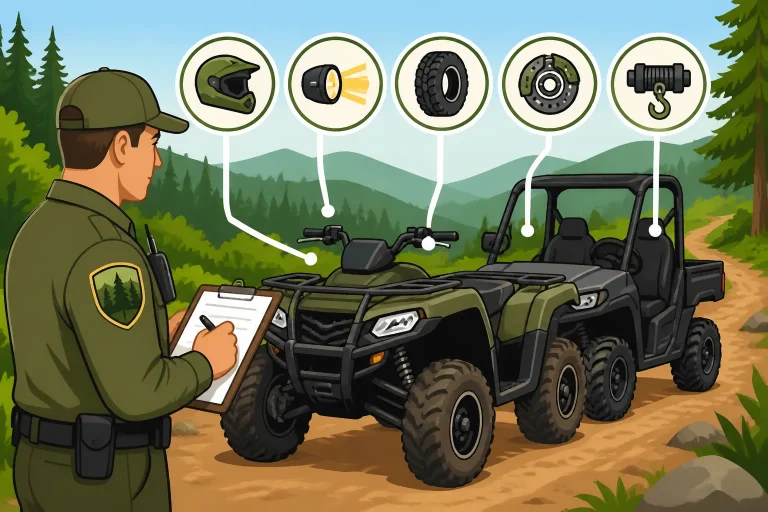
Protective gear and a basic machine check matter whether or not you take a course. Review the owner’s manual, inspect brakes and tires, secure loose cargo, and make sure each rider has properly fitted protective equipment. Avoid carrying a passenger unless the machine is designed and equipped for one. For a first outing, keep the ride short enough that fatigue does not become a problem.
A simple pre-ride checklist
Before leaving home, confirm the following:
- Course: Determine whether a certificate is required for your age or role. If you take a course voluntarily, save the completion record.
- Machine: Check registration status, machine classification, and basic operating condition.
- Access: Verify that the specific route is open and that you have any required decal, membership, or landowner permission.
- Insurance: Confirm that the policy covers the machine and intended riding, and bring proof.
- Local rules: Check restrictions for the town, trail, event, or property where you will ride.
- Riders: Confirm that each person meets applicable age, supervision, and passenger rules.
- Equipment: Bring protective gear, water, communication tools, and anything needed for the planned route.
The practical takeaway is simple: an adult generally does not need a Vermont safety course solely because they are riding an ATV or UTV. Training can still be valuable, and it may matter for a youth rider, a particular organization, or travel outside Vermont. Treat the certificate as one part of preparation, then separately confirm registration, access, insurance, and the rules for the place you intend to ride.
Disclaimer
This article is for general informational purposes only and does not constitute professional advice. Laws, prices and regulations vary by location and change over time. Consult a qualified professional for guidance on your specific situation.