Passing a Group Safely
Meeting a group on a narrow Vermont ATV trail can feel awkward fast: there may be little room to pull aside, limited visibility around a bend, and machines approaching from both directions. This guide explains how to slow down, communicate, choose a safe place to pass, and keep everyone on the marked corridor without turning a routine encounter into a risky one.
Start with a safe approach
Slow down before you reach the group
The safest pass often begins well before anyone is close enough to feel pressured. Ease off the throttle when you spot riders ahead or hear approaching machines, and be ready to stop. On a narrow corridor, speed leaves little room to react if someone swerves around a rut, a child is riding in the group, or the trail bends out of sight.
Vermont trails can run through woods, over uneven ground, and across corridors where visibility changes quickly. A clear stretch can turn into a blind corner or a steep rise without much warning. Keep enough distance from the riders ahead that you can see the trail and stop without crowding them. If you’re riding with friends, leave space between machines rather than bunching up.
Don’t assume the other riders have seen you. Engine noise, helmets, wind, and dense trees can make it difficult to hear another machine coming. A steady, controlled approach gives everyone time to notice one another and decide what to do. For a broader look at safe behavior on shared corridors, see Vermont Trail Etiquette on Private Land.
Read the trail before choosing a passing spot
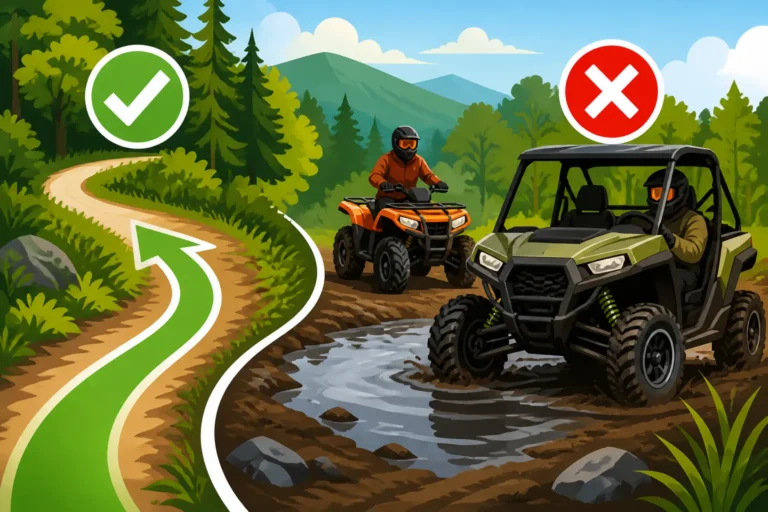
A wide-looking section isn’t automatically safe. Check the ground on both sides before moving over: soft shoulders, loose gravel, deep mud, drainage ditches, rocks, roots, and steep banks can all make a seemingly open edge a poor place to stop. Avoid steering off the traveled corridor just to make room. A trail edge may be fragile or part of private property, and leaving the route can cause damage or create a new hazard.
Look ahead for a place where both directions can see one another. A straight, level section with firm ground is generally easier to manage than a blind corner, narrow bridge, hillcrest, or muddy slope. If you can’t see far enough to know whether another group is coming, don’t commit to a pass. Slow down and wait until the trail opens up.
Before heading out, review Vermont Trail Signs and What They Mean and check Trail Conditions Before You Tow. Trail status and conditions can change, and a route that was roomy on a dry day may feel much tighter after rain or seasonal wear.
Passing an oncoming group
Decide who should yield
When two groups meet, the goal is not to prove who has the right of way. It’s to avoid a rushed maneuver and make room on stable ground. If one group is already closer to a safe pull-off, it may be simplest for that group to stop and let the other pass. If one side has a clear, broad area and the other is on a slope or uneven edge, the group on the safer ground may be better placed to wait.
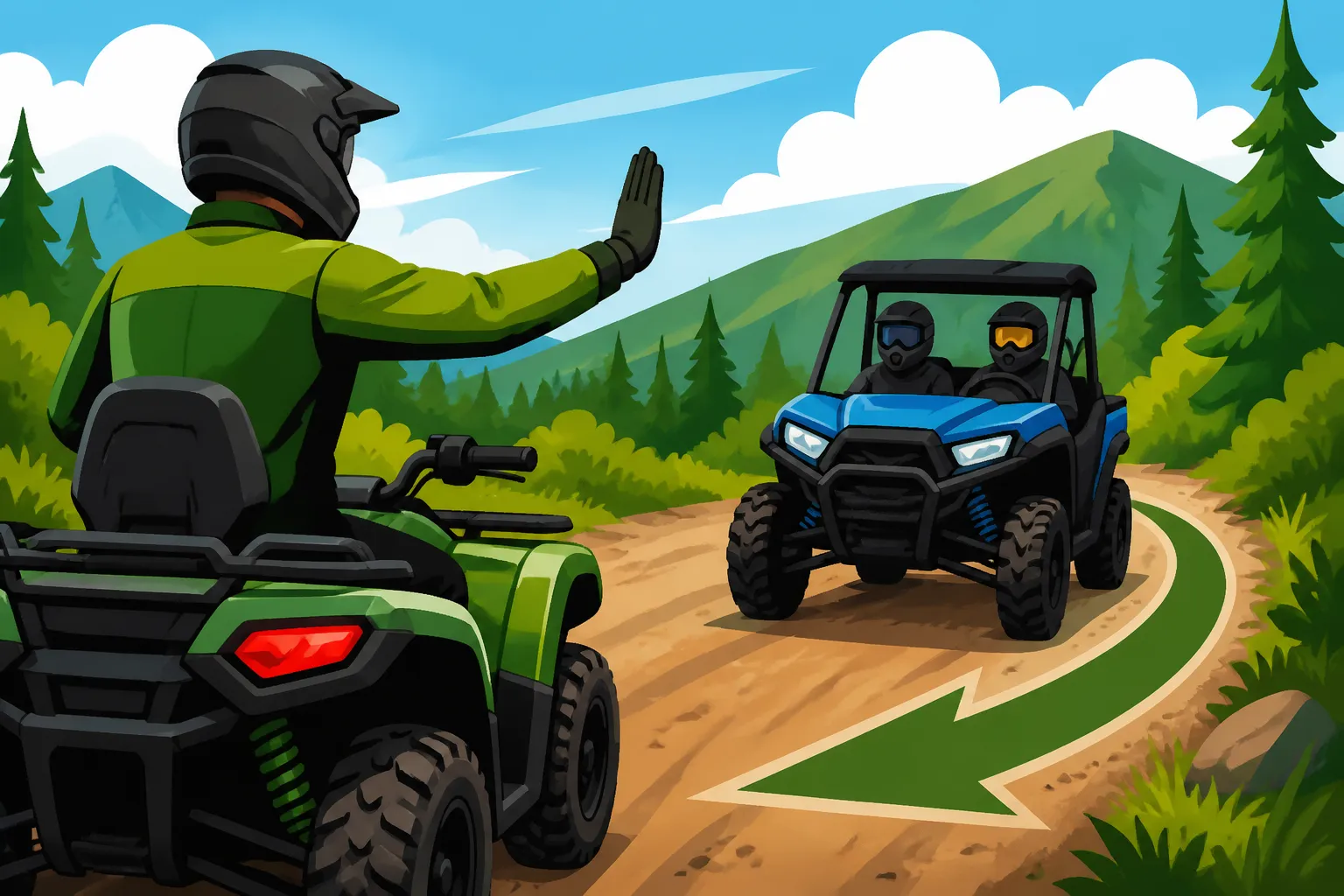
On a narrow corridor, it can help to have one rider from each group communicate while the rest remain stopped. A wave or clear hand signal can show that you’ve seen the other group and are waiting. Keep signals simple and visible. Don’t wave the other group forward if you can’t see the full path they need to travel.
The principle in Yielding on a Narrow Corridor is useful here: make room where it is safe to do so, rather than forcing every rider into a tight squeeze. If neither group has a safe place to pull over, stop at a visible spot and work out a plan before anyone moves.
Pass one machine at a time
Once both groups have stopped and agreed on who will move, keep the pass orderly. The group that is moving should proceed slowly, one machine at a time, with enough space between vehicles to avoid bumping tires or handlebars. Riders who are waiting should stay in place, keep their machines steady, and avoid shifting unexpectedly as another vehicle passes.
If the trail is too narrow for two machines to pass with a safe margin, don’t try to squeeze through. One group can back up slowly to a wider area if the ground behind is visible and stable. A rider should guide the maneuver only if they can stand well clear of the machine’s path and remain visible to the driver. Never have someone stand between two machines that could roll or move.
Be especially cautious near a drop-off, ditch, water crossing, bridge, or soft shoulder. A stopped machine can still slide or tip if it is parked at an angle on loose ground. If the pass requires a rider to leave the trail, reconsider the plan and find a safer place.
| Trail situation | Safer response | Avoid |
|---|---|---|
| Wide, level, visible section | Stop, communicate, and pass slowly | Accelerating to get through quickly |
| Blind corner or hillcrest | Wait until both groups can see the route | Passing where approaching riders may be hidden |
| Soft shoulder or steep edge | Keep machines on firm, stable ground | Forcing a machine off the corridor |
| Narrow bridge or culvert | Let one group cross at a time | Meeting or stopping side by side on the structure |
| Muddy or rutted stretch | Choose a firm spot and make a clear plan | Steering into deep ruts to create space |
Keep children and less experienced riders in view
A group’s pace is only as predictable as its least experienced rider. Children and newer riders may need extra time to stop, turn, or follow instructions. Make sure the group has gathered before moving again, and don’t assume a rider at the back has heard a signal given at the front.
If you’re supervising a younger rider, position yourself so you can see them and the oncoming group. Give one clear instruction at a time, such as “stop and wait here,” rather than several directions while machines are moving. Avoid placing a child between two moving machines or asking them to squeeze through a gap that feels uncomfortable.
Groups with passengers should also take a moment to settle before moving. A passenger shifting weight, reaching for a dropped item, or turning to look at another machine can distract the driver. When the pass is complete, allow the last rider in each group to confirm that everyone is ready before continuing.
Passing a group traveling in the same direction
Don’t pass until the whole route is visible
Catching up to a slower group can be frustrating, especially when everyone is eager to keep moving. Still, wait for a long, clear stretch where you can see the trail ahead and where there is enough room to pass without leaving the marked route. Don’t pass near a bend, a hilltop, a crossing, a bridge, a narrow section, or a spot where the trail could be occupied just beyond your view.
A safe pass requires more than room for your machine. You need enough space to move out, pass the group without crowding anyone, and return to your position on the corridor without cutting someone off. If there isn’t room for the complete maneuver, remain behind the group and wait.
Never tailgate to encourage riders to move over. Close following can make a driver feel pressured and can reduce your stopping distance if the group slows unexpectedly. Leave a comfortable gap, keep your speed controlled, and look for a natural place where the group can stop safely.
Ask before moving past
When the trail is wide and visible, communicate your intention before passing. A friendly wave or brief spoken request can let the group know you are there. If riders don’t respond, assume they may not have heard or seen you. Wait rather than revving the engine, darting around, or using a narrow gap without agreement.
Once the group acknowledges you, pass at a controlled pace and give each machine and rider generous space. Watch for a rider who may move to the side without seeing you, or a passenger who may be leaning outward. Don’t cut back in immediately after passing the last machine. Leave enough distance for the group to continue without feeling crowded.
If the group is large, consider waiting for a wider area and passing in smaller sections only if the riders agree and the trail remains clear. It may be safer for the group to pull into a suitable open spot and let you go by all at once. Keep in mind that a group can occupy more trail than it first appears to, especially if there are machines spaced out behind the front riders.
Make group passing safer before the ride
Agree on signals and regrouping habits
A short conversation before the ride can prevent confusion later. Agree on a few simple signals for slowing, stopping, and waiting. Make sure everyone knows who is leading and who is riding at the back. The lead rider can watch for approaching traffic and choose a safe place to pause; the rear rider can help confirm that the full group has caught up.
Don’t rely on a signal traveling perfectly through a long line of machines. Riders near the back may not see a hand signal at the front, especially on a winding trail. Build in regular visual checks and regroup at safe, open locations rather than letting the group stretch out until riders lose sight of one another.
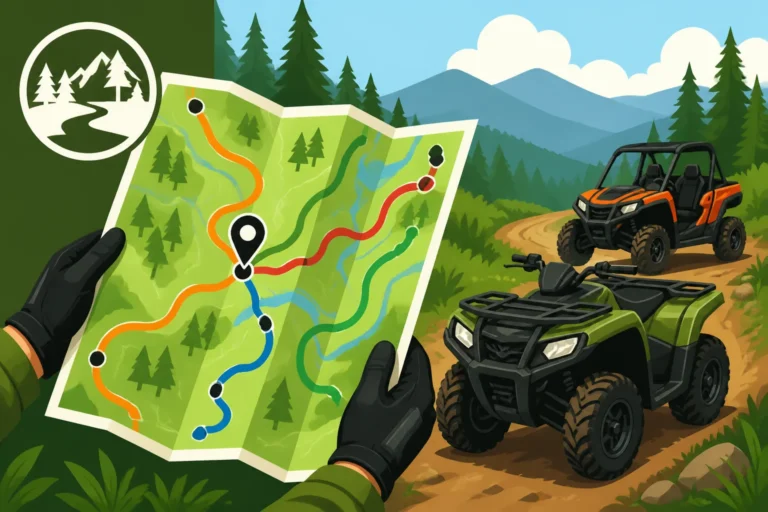
Before setting out, use Staying on the Marked Corridor as a reminder to keep the group on the approved route, even when making room for another rider. If you’re using a navigation app such as onX Offroad, review the route before the ride and agree on the track you intend to follow. An app can help with orientation, but it doesn’t replace trail signs, local directions, or sound judgment at a blind spot.
Adjust for Vermont trail conditions
A corridor that feels comfortable in dry weather may become difficult after rain, during muddy conditions, or where recent traffic has deepened ruts. Slow down and leave more stopping distance when the surface is slick. If the trail is too soft to pull safely to the edge, stay on firm ground and wait for a better place to pass rather than adding damage to the shoulder.
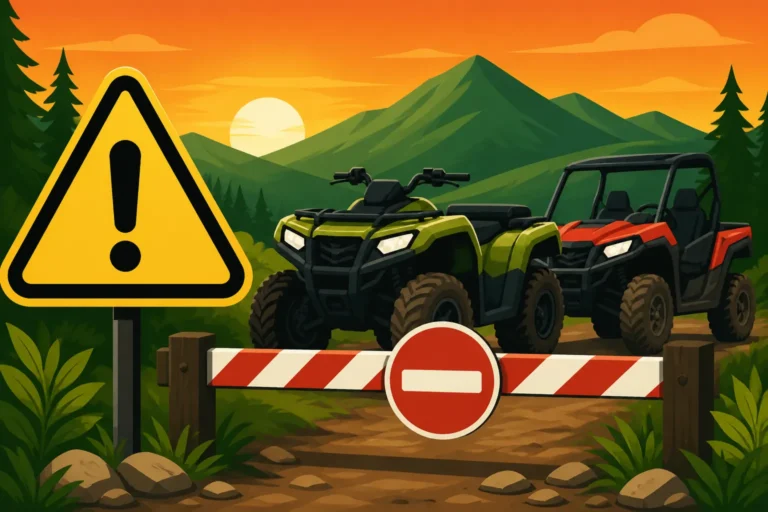
Respect gates, posted signs, and trail closures. In Vermont, many riding corridors depend on landowner permission and club stewardship. Pulling off the route, widening a trail, or riding around a barrier can damage the very access that makes a ride possible. Check Vermont Trail Closures Landowners Request when planning, and leave gates as you found them.
For a longer outing, plan where the group can pause, check the map, or let faster riders pass without blocking a narrow section. onX Offroad can be useful for checking your position and keeping a route in view, particularly where cell service is unreliable; download or prepare the information you need before entering a dead zone. The safest plan is one that still works if a phone loses signal or a rider needs extra time.
If the pass feels uncertain, wait
There is no need to force a pass because another rider is waiting behind you or because the trail looks almost wide enough. Stop at a visible, stable spot, keep your machine under control, and communicate calmly. If you can’t agree on a safe maneuver, give the situation time. A few minutes of waiting is better than a collision, a machine tipped into a ditch, or damage to the trail edge.
After passing, continue at a pace that suits the conditions and the group. Give other riders the same courtesy you would want when you’re the one moving slowly. A calm pass protects people, machines, and trail access—and helps everyone enjoy the ride.
Disclaimer
This article is for general informational purposes only and does not constitute professional advice. Laws, prices and regulations vary by location and change over time. Consult a qualified professional for guidance on your specific situation.