Keeping a Radiator Clear of Leaves
Vermont’s narrow, wooded trails can pack leaves, fern fragments, grass, and fine debris into an ATV or UTV radiator surprisingly quickly. When airflow drops, the engine may start running hotter just when you are far from a truck or service bay. This guide explains how to spot a clogged radiator, clear it safely, and reduce buildup before your next ride.
Why Vermont trails can clog a radiator
Leaves and trail debris block airflow
A radiator cools engine coolant by passing air through a grid of thin fins. Leaves pressed against the front of that grid can act like a blanket, limiting airflow. Small pieces may also lodge between the fins or collect around the grille, fan, and nearby ducting. If enough air cannot move through the radiator, cooling becomes less effective.
Vermont’s wooded corridors create several opportunities for debris to collect. A low branch may brush across the front of a machine; a leafy trail edge can push vegetation into the grille; and a slow, muddy section may leave damp plant matter stuck in place. It does not take a large branch to cause trouble. A layer of wet leaves or a mat of grass can be enough to interfere with airflow.
A clear radiator is particularly important when you are riding slowly. At low speeds, the machine may not receive as much natural airflow as it does while moving faster, so the cooling fan has more work to do. Long climbs, heavy loads, warm weather, and repeated stops can add to the cooling demand. A plugged radiator can turn an ordinary ride into an uncomfortable decision about whether to stop, turn back, or risk continuing.
If you are planning a route, check access and trail conditions before loading up. Vermont’s trail access depends on the corridor and the landowner’s permission, so do not assume that a mapped line is open. Vermont Trail Conditions Before You Tow and Vermont ATV Trails: The VASA System are useful starting points for understanding how to prepare for a ride.
What overheating can look like
Do not wait for steam or a warning light before checking for debris. Your machine may show early signs of a cooling problem, including a temperature warning, a rising temperature reading, or the fan running more often than you expect. You might also notice reduced power or an unusual hot smell. These signs can have more than one cause, but a dirty radiator is a sensible first thing to inspect.
A temperature warning during a slow climb, for example, deserves attention even if the machine seems to run normally once you reach a more open stretch. Higher speed can temporarily improve airflow and make the warning disappear. That does not mean the radiator has cleared itself. A clump of leaves may still be lodged against the grille, ready to restrict airflow again as soon as the trail slows down.
Respond to a warning by finding a safe place to stop. Avoid blocking a narrow corridor or stopping where another rider cannot see you. Shut the machine down if the temperature continues climbing or the manufacturer’s guidance tells you to do so. Give the engine time to cool before inspecting the radiator. Never remove a hot radiator cap: pressurized coolant can cause severe burns.
Small signs worth catching early
A quick visual check can reveal a problem before the temperature rises. Look for leaves, seeds, grass, mud, or other material covering the grille. If the grille looks clear, inspect the radiator face as far as you safely can; debris can pass through the outer opening and gather on the fins behind it. Do not assume the fan will pull everything through or push everything away.
Pay attention to changes from your machine’s usual behavior. If the fan is cycling more frequently on a familiar type of ride, or the temperature climbs sooner than it normally does, stop and investigate when it is safe. A rider who knows the machine’s normal sounds and temperature patterns is more likely to notice that something has changed.
How to clear leaves safely on the trail
Stop, cool down, and inspect
Park on stable ground away from traffic and other riders. Put the machine in park, set the brake, and shut it off. If the machine has been running hot, wait until it cools before reaching near the radiator or fan. The fan may start automatically on some machines, even after the engine has been switched off, so keep fingers and tools clear of moving parts.
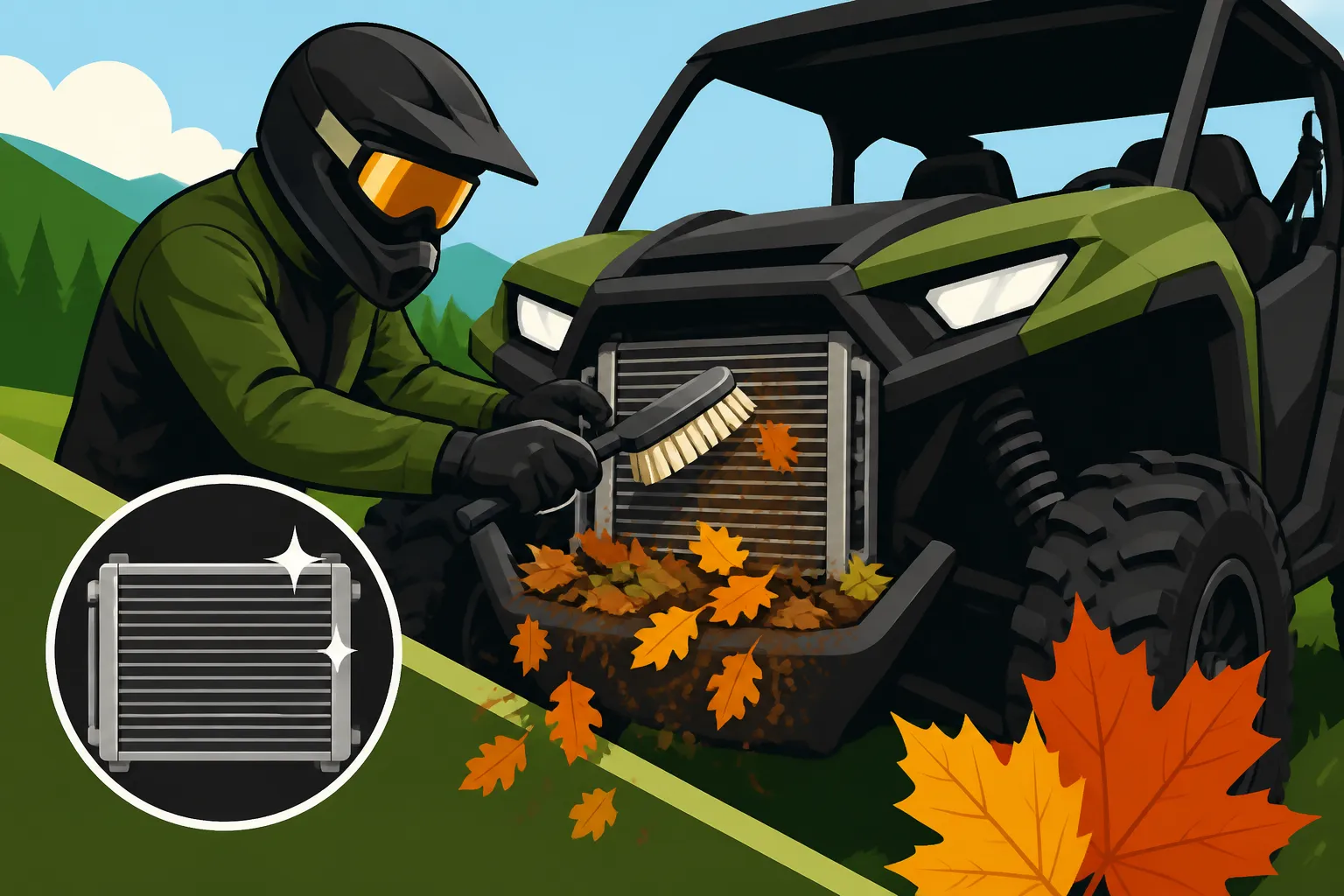
Start with the grille and remove loose leaves by hand if they come away easily. Wear gloves if you have them; leaves can conceal sharp twigs, burrs, or dirt. Pull debris outward rather than pushing it deeper into the radiator. Check the surrounding openings and ducts too, because a clean-looking grille does not guarantee that air can flow freely through the whole cooling path.
Use your owner’s manual for model-specific instructions about radiator access and cleaning. Some machines have a screen or removable grille designed to be cleaned; others have parts that should not be forced or removed without the right procedure. If you cannot see clearly, or if the debris is packed tightly into the fins, it is safer to stop and get help than to poke at the radiator with a stick or tool.
Use gentle cleaning methods
When the obstruction is loose, gentle hand removal is usually the best first step. A soft brush can help dislodge dry material from the grille, but work carefully and avoid bending the delicate radiator fins. If the manufacturer permits rinsing, use a gentle stream of clean water and direct it through the radiator in the direction recommended in the manual. High-pressure spray can damage fins or force debris farther into the core.
Do not use a screwdriver, knife, or other hard object to scrape between the fins. The fins are thin, and bending or puncturing them can reduce cooling performance or create a costly repair. Avoid spraying water into electrical connectors or other components unless the manual specifically allows it. If mud and leaves have dried into a dense layer, a quick roadside rinse may not remove it safely.
A compact soft brush, gloves, and a small cloth can be useful additions to a trail kit. They take up little room and can help with a simple inspection. For a longer outing, include them alongside other essentials such as water, basic tools, and a communication plan. Packing for a Full Day Out can help you think through what to carry beyond the machine itself.
Know when to stop riding
After clearing visible debris, give the machine time to cool and check the temperature again according to the owner’s manual. If the warning returns, the temperature continues rising, coolant is leaking, or you see steam, do not keep riding in the hope that the problem will disappear. Continuing to operate an overheating machine can cause serious engine damage.
If the radiator appears clear but the machine still runs hot, the cause may be something other than leaves. A fan problem, low coolant, a damaged radiator, or another mechanical fault may need attention. Do not open a hot cooling system or try an unfamiliar repair on the trail. Arrange a safe way to get the machine back for inspection.
The same caution applies when you are riding with a group. Tell the others you need to stop, choose a safe place, and make sure nobody is left behind on a narrow trail. If the machine cannot continue, follow your group’s plan for getting assistance rather than leaving it unattended in a place where it could block access. Staying on the marked corridor and respecting closures matters, especially when a breakdown puts pressure on riders to take an unauthorized shortcut. See Vermont Trail Etiquette on Private Land and Vermont Trail Closures After a Storm for related considerations.
Preventing radiator buildup before and during a ride
Check the grille before you leave
Make radiator inspection part of your pre-ride walk-around. Look through the grille for leaves, mud, grass, or damage. Check that the grille is secure and that nothing is covering the air intake. A quick check at home or at the staging area is easier than discovering a blockage halfway through a remote ride.
If you have recently ridden through wet leaves or muddy ground, clean the machine before the debris dries and hardens. Pay attention to hidden areas around the radiator, fan, and body panels. Follow the cleaning instructions in your owner’s manual, and do not remove panels or screens unless you know how they are designed to come off and go back on.
Also check for bent fins or a damaged grille. A damaged screen may allow larger debris to reach the radiator. If you spot a problem, repair it before a long outing rather than assuming it will hold up for one more trip. The broader Vermont ATV Equipment Requirements topic can help you review the equipment side of trail preparation, but machine-specific maintenance still belongs to the manufacturer’s guidance.
Reduce debris exposure without leaving the trail
When vegetation crowds the corridor, keep a controlled pace and avoid cutting through the trail edge. Do not push into brush to get around another rider or a wet section. A detour can damage land, create a new route, or put you on a closed or unauthorized area. If a section looks unsafe or blocked, stop in a suitable place and follow the club or land manager’s posted guidance.
Route planning can also help you anticipate the kind of riding ahead. onX Offroad can be used to review mapped routes and plan where to stage, but a digital map should not be treated as confirmation that every trail is currently open. Check local access information before you ride, and follow signs and closures on the ground. This is especially useful when planning a longer trip around the Northeast Kingdom, where a route may pass through changing terrain and corridor conditions.
If leaves are wet or the trail is freshly littered after a storm, allow extra time for stops and checks. A machine can collect debris gradually, so a brief inspection at a natural break in the ride is better than waiting for a warning. For route-specific preparation, Vermont Riding After a Rainstorm offers related advice on conditions that can change how a trail behaves.
Consider guards and screens carefully
Some riders add a radiator screen or protective guard to reduce the amount of debris reaching the core. Whether an accessory is suitable depends on the machine and its cooling design. A screen that catches leaves may also restrict airflow if it becomes clogged, so it still needs regular inspection and cleaning. Ask a dealer or qualified mechanic about options designed for your make and model.
Do not assume a guard eliminates radiator checks. It may make it easier to remove debris from the outer surface, but leaves can still collect around the intake or other cooling components. After fitting an accessory, monitor the machine’s temperature during ordinary use and follow its maintenance instructions.
| Situation | What to check | Sensible next step |
|---|---|---|
| Leaves visible on the grille | Grille openings and nearby ducts | Stop safely and remove loose debris by hand |
| Temperature warning appears | Radiator face, airflow path, and machine behavior | Shut down as needed and let the machine cool |
| Fan runs more than usual | Grille and radiator for buildup | Inspect at a safe stopping point |
| Debris is packed into the fins | Fins and manufacturer cleaning guidance | Avoid scraping; use an approved gentle cleaning method |
| Warning returns after cleaning | Coolant system and fan operation | Stop riding and arrange inspection or recovery |
Making radiator checks part of a Vermont ride plan
Build in simple inspection stops
You do not need to stop every few minutes, but it is sensible to check the grille after a stretch with heavy vegetation, repeated slow riding, or visible leaf buildup. Choose a wide, safe place where your group can pull out of the corridor without blocking other riders. Shut the machine off before inspecting it, and let it cool if it has been working hard.
A short check can be especially valuable on a long day out. One rider may notice a temperature warning while another has a clean grille and assumes the group can continue. Make it normal for anyone to speak up about a warning light, odd smell, or unusual fan activity. A calm stop is usually easier to manage than a breakdown farther from the trailhead.
Planning ahead includes knowing where you can turn around and how your group will communicate if someone has trouble. onX Offroad may help you review a route and identify general navigation points before departure, but save a route or carry another way to navigate if cell service is limited. Do not rely on a phone map alone for emergency communication or proof that a route is open.
Respect closures and land access
A radiator problem can tempt a rider to take a shortcut through brush or onto an unmarked track. Resist that urge. Vermont ATV riding depends on access to corridors and land, and a self-made detour can damage property or jeopardize future access. If a trail is blocked, closed, or unsafe, stop and use the approved route or turn back.
Before setting out, check the rules and access information for the area you plan to ride. The Vermont Trail Maps Still Coming page is relevant to planning expectations, while Vermont Trail Closures After a Storm is a reminder that conditions and access can change. Use onX Offroad as a planning aid alongside local information, signs, and any guidance provided by the club responsible for the corridor.
Clean the machine after the ride
After returning, inspect the grille and radiator again, even if the temperature stayed normal. Debris can remain lodged where it is hard to see and become more difficult to remove once it dries. Let the machine cool, then clean it using the procedure recommended by its manufacturer. A thorough post-ride look can reveal bent fins, a loose grille, or a leak that was not obvious on the trail.
Keep a simple record of recurring issues. Note where the radiator tends to clog, whether the debris is mostly leaves or mud, and when the temperature warning appeared. If the same problem keeps happening, a dealer or mechanic can help determine whether the machine needs a different screen, a repair, or a more thorough cooling-system check.
A clear radiator is a small detail that can make a long ride less stressful. Check before departure, pause when conditions call for it, and stop if a warning persists. That routine helps protect the machine while keeping you focused on the route, your riding group, and the land you are traveling across.
Disclaimer
This article is for general informational purposes only and does not constitute professional advice. Laws, prices and regulations vary by location and change over time. Consult a qualified professional for guidance on your specific situation.