Vermont ATV Trails Near a Lake
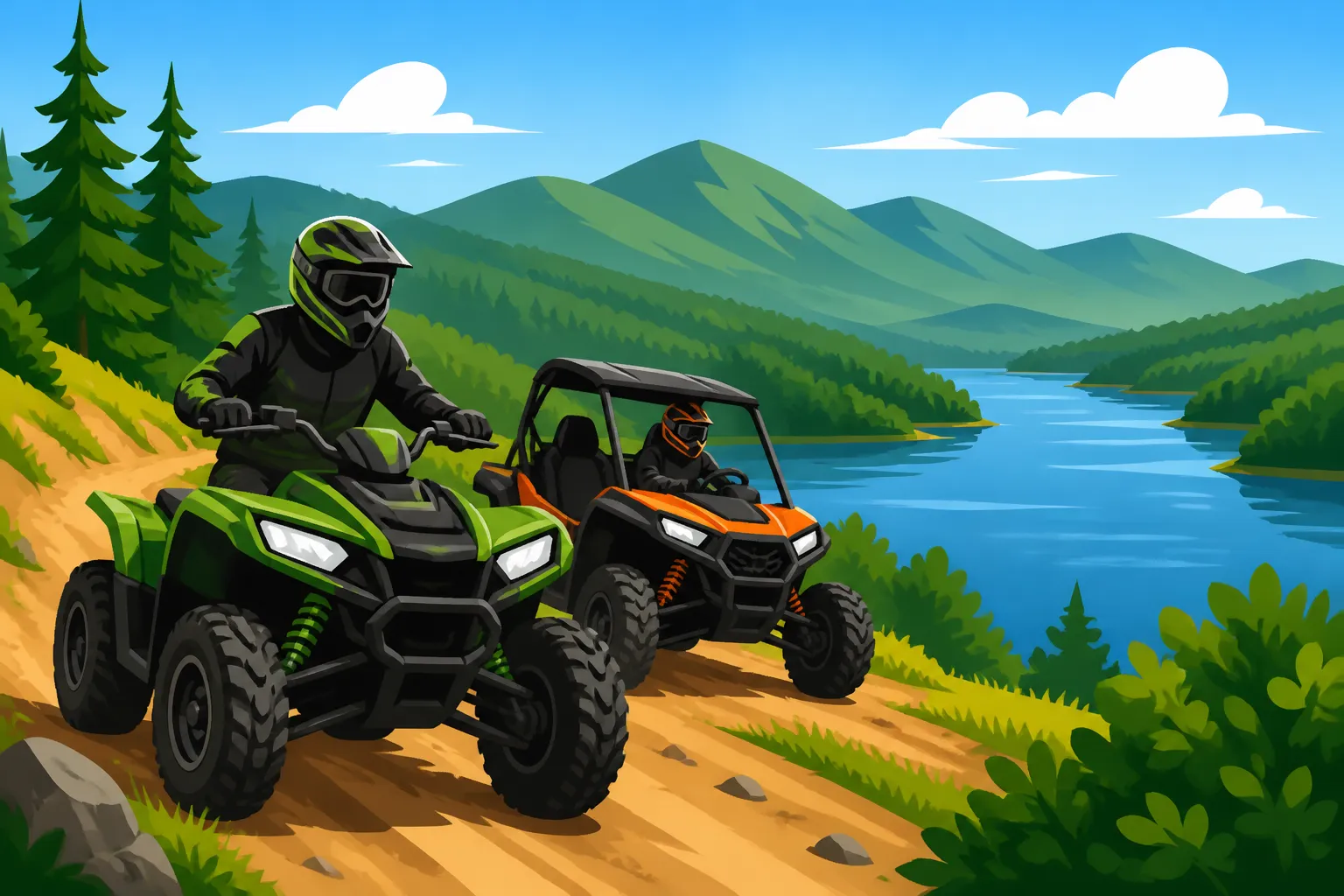
A lake can make a Vermont ATV trip feel like a full weekend, but “near the water” does not mean you can ride a machine onto the shore or follow any road you find on a map. This guide explains how to plan a ride around Island Pond and the Newport–Derby area, check trail access, and enjoy the lakeside without confusing a nearby destination with permission to ride there.
What to know about Vermont ATV trails near a lake
A nearby lake is a destination, not a trail-access guarantee
In Vermont, ATV riding is organized around designated corridors, club-managed routes, and permission from landowners. A lake may be close to a riding area, but that does not make its shoreline, beach, boat launch, park, or connecting road an ATV route. Treat the trail network and the lake as two parts of an outing that may require separate planning.
That distinction matters in places such as Island Pond, where the village and lake are part of the appeal, and around Newport and Derby, where Lake Memphremagog shapes the landscape. A route shown in an app or on a general road map is not automatically an approved ATV trail. Before setting out, check the relevant local club’s information and current route notices. The statewide network is explained in [Vermont ATV Trails: The VASA System].
A useful rule is to plan your ride to an authorized staging area or trail access point, then reach the lake by a lawful, separate route—often on foot or in a street-legal vehicle where permitted. Do not assume you can ride along the water, cross a park, or use a town road just because it connects two places. Local road access can depend on posted designations and town decisions.
Registration, trail access, and seasonal closures are separate checks
Before riding, confirm that the machine’s registration and trail-access requirements are in order. On Vermont’s VASA trail system, riders generally need more than a registered machine: the required trail access decal is a separate part of the preparation. The relationship between those requirements is covered in [The Plate and the TAD Vermont Trails Require].
Season matters, too. Club trails can close when the ground is soft, after heavy rain, or when a landowner withdraws permission. A route that was open on a previous visit may not be open today. For that reason, check [Vermont Trail Season Dates by Club] and [Vermont Trail Conditions Before You Tow] before loading the machine. A quick check can save a long drive with a trailer, especially if you are traveling from outside the Northeast Kingdom.
Vermont’s public land is not a general substitute for a closed club trail. Do not assume a state forest road or lakeside recreation area is open to ATVs; [Vermont State Land Is Mostly Closed to ATVs] explains why that assumption can cause problems. Stick to routes that are clearly designated for your use, and follow signs at gates and trailheads.
Lake-area bases worth considering
Island Pond and Brighton
Island Pond is a practical base to investigate if you want a Northeast Kingdom ride with a lake and village nearby. The village sits beside Island Pond, while local ATV riding is associated with the surrounding club network. Those are appealing ingredients for a trip, but they are not one continuous, guaranteed ride-to-the-water route. Check local trail status and access details before deciding where to stage. [Island Pond ATV Riding in Vermont] is a useful next step for area-specific planning.
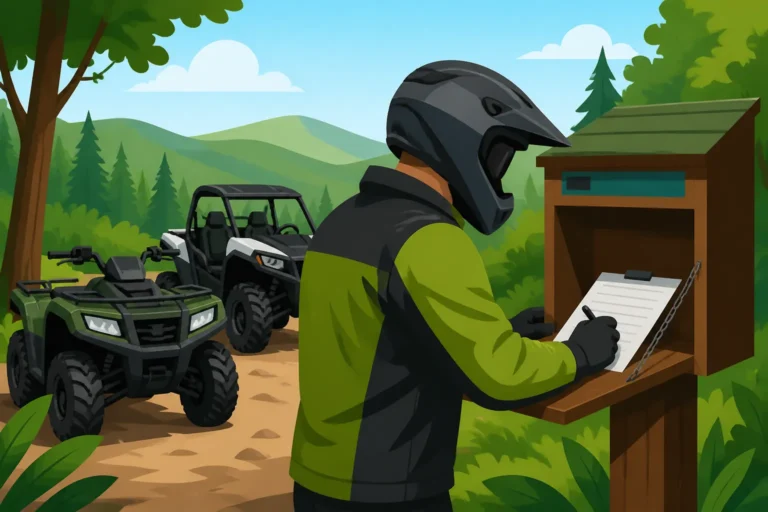
A realistic day might look like this: arrive with a full tank, park at an approved trailhead, ride only the open marked corridors, and return to the village for food or a lakeside walk. If your group wants to swim, launch a boat, or spend time at a public waterfront, confirm parking and access rules for that separate destination. Never use a beach, boat launch, or shoreline path as an improvised ATV connector.
Island Pond can also work well for a group with mixed interests. One person might want a longer ride while another prefers a shorter outing followed by time in town. Agree on a meeting point and return time before splitting up, and keep a paper or offline route reference in case phone service drops. For an overnight trip, confirm that the lodging or campground allows trailers and has a suitable place to park machines; [Vermont ATV Camping With Trail Access] offers more ideas for matching accommodations with a ride.
Newport, Derby, and Lake Memphremagog
The Newport and Derby area is another place to explore when you want a ride in the same general region as a large lake. Lake Memphremagog extends across the border, and Newport’s waterfront gives visitors a clear lake-oriented stop. The area also has ATV corridors maintained through local club work, but the presence of trails nearby does not mean every section leads into downtown Newport or to the water.
Start with the local route information and identify a legal staging point before choosing a waterfront stop. [Newport Area ATV Trails in Vermont] can help narrow your research. Then check whether your plan requires a road connection, a separate vehicle, or a walk between the riding area and the lake. Do not follow an unmarked road merely because it appears to provide the shortest connection.
If you are visiting from another state or from Quebec, leave extra time for the practical details: where to park a trailer, whether your machine’s registration is recognized for the trip, and what access decal or documentation applies to your planned trails. Check the relevant requirements before travel rather than sorting them out at a gate. A lakeside itinerary is much more enjoyable when the ride itself is fully authorized.
| Area to research | Lake experience | ATV-planning note | Good first check |
|---|---|---|---|
| Island Pond | Village and lake setting in the Northeast Kingdom | Confirm which local corridors are open and where to stage | [Island Pond ATV Riding in Vermont] |
| Newport and Derby | Lake Memphremagog and Newport’s waterfront | Do not assume a trail reaches the waterfront or downtown | [Newport Area ATV Trails in Vermont] |
| Other Vermont lake areas | Swimming, boating, walking, or scenic stops may be nearby | Verify trail access separately; shoreline access is not ATV access | Local club updates and official route signs |
How to plan a lake-and-trail day without access surprises
Verify the route before choosing the lake stop
Begin with the trail, not the lake. Identify an authorized trailhead, determine which club maintains the route, and check for current closures or reroutes. Then decide whether the lake is reachable by a permitted ATV route, by a separate road journey, or on foot. This order prevents a common planning mistake: selecting a waterfront destination first and assuming the machine can legally get there.
A mapping app such as onX Offroad can be useful during the research stage for viewing terrain and organizing a route. But treat it as a planning aid, not as proof that a corridor is open or that you have permission to ride it. Compare any route you consider with current club information, posted signs, and local guidance. If the map and the trail signage do not agree, stop and get clarification rather than guessing.
Download or save what you need before leaving a town. Cell reception can be unreliable in rural areas, and a route that looks simple on a phone screen can become confusing at a junction. Keep the club’s trail map or instructions available offline, and make sure everyone in the group knows the intended route and turnaround point. [Vermont ATV Trail Map Downloads] can help you prepare a map-based plan.
Pack for changing weather, terrain, and time away from the machine
A lakeside plan often encourages people to pack lightly, but a day on Vermont trails still calls for practical riding gear. Bring water, weather-appropriate layers, eye protection, a basic first-aid kit, and any machine-specific tools your group knows how to use. If you expect to be away from the staging area for several hours, carry enough food and supplies to handle a delay or a route change.
Think about what happens when you reach the lake. If you plan to swim or have lunch away from the ATV, secure valuables and follow the rules at the public access site. Avoid leaving a machine in a way that blocks a gate, trail entrance, farm access, or parking area. If your party includes riders who are not comfortable with a full-length outing, agree on a shorter loop or a clear return plan before setting off.
Vermont corridors can cross working land, so riding respectfully is part of keeping access open. Stay on the signed route, close gates as directed, slow down near homes and other trail users, and avoid creating new tracks around wet spots. [Vermont Trail Etiquette on Private Land] offers useful guidance for sharing those routes responsibly.
A simple checklist before you head out
Confirm the essentials at home
Use this checklist a day or two before departure, then recheck trail status before you leave. Conditions and access can change, and a plan that was sound last week may need adjusting after rain or a landowner request.
- Choose a lake area and a specific, authorized trailhead.
- Check the local club’s latest trail notices and seasonal closures.
- Confirm the machine’s registration and applicable trail-access decal.
- Verify that every road connection on your plan is open to ATVs.
- Save the current route information for offline use.
- Decide how you will reach the waterfront if the ATV route does not go there.
- Check parking, trailer, and waterfront rules for the separate lake stop.
- Pack water, layers, eye protection, and basic emergency supplies.
When you’re using onX Offroad or another mapping tool, cross-check the planned corridor against the information from the club that maintains it. A route line can help you understand the landscape, but signs, local notices, and permission determine where you can ride. If anything is unclear, choose a confirmed route or contact the local club before unloading.
Make the ride fit the group
A successful lake-area ride is not necessarily the longest one. For a family or mixed-experience group, a shorter loop with a confirmed lunch or waterfront stop may be a better day than trying to connect several unfamiliar corridors. Set expectations about pace, breaks, and turnaround time before starting. Keep the group together at junctions, and do not let a rider feel pressured to continue onto a route they are unsure about.
If your plan includes camping, treat the campsite and the trail system as separate permissions to check. A campground may welcome visitors with machines but not provide direct trail access, or it may have rules about where trailers and ATVs can be parked. Ask before booking, and use [Vermont ATV Camping With Trail Access] as a starting point for finding an arrangement that suits your trip.
The most dependable way to enjoy Vermont ATV trails near a lake is to keep the ride and the waterfront visit connected in your itinerary, but separate in your access assumptions. Pick a confirmed corridor, check it close to departure, and make the lake stop only by a route that is clearly allowed. That little bit of planning makes it easier to enjoy the scenery without putting trail access—or your day—at risk.
Disclaimer
This article is for general informational purposes only and does not constitute professional advice. Laws, prices and regulations vary by location and change over time. Consult a qualified professional for guidance on your specific situation.