Why Your Policy Must Name the Machine You Ride
It’s a common pitfall many of us fall into, thinking that our general auto insurance policy, or even our homeowner's policy, will somehow magically extend to cover our beloved ATV or UTV. You might assume "a vehicle is a vehicle," right? The harsh reality, especially here in Vermont where we love our off-road adventures, is that this simply isn't true. Discovering you're uninsured after an incident can turn a minor mishap into a financial catastrophe, leaving you utterly devastated. This guide will meticulously break down why your ATV or UTV insurance policy absolutely must specifically name the machine you ride, ensuring you’re adequately protected on Vermont’s trails and beyond.
The Critical Need for Specificity in ATV/UTV Insurance
Many riders make the honest mistake of believing their existing insurance policies will cover their ATV or UTV. They figure since it’s a vehicle, it’s covered under their car insurance, or since it’s on their property, their homeowner’s policy has it handled. Unfortunately, this is almost never the case. ATVs and UTVs are unique machines, designed for specific purposes and carrying a distinct set of risks that general policies simply aren’t structured to address.
Think about it: your car insurance is tailored for driving on paved roads, obeying traffic laws, and dealing with other cars. Your homeowner's policy is designed for your house and the property it sits on, protecting against things like fire, theft, or liability for incidents on your land. Neither of these typically account for the specific dangers of off-road riding, the unique parts and modifications, or the potential for incidents far from home on designated trails or even shared town roads. If your machine isn't explicitly listed, it’s practically invisible to your insurance company when it comes to a claim.
Why General Auto Policies Miss the Mark
A standard auto insurance policy is built around insuring a specific road-legal vehicle, complete with a VIN, make, model, and year, for use on public highways. It calculates premiums based on factors like road accident statistics, repair costs for typical road vehicles, and risks associated with daily commuting or highway travel. An ATV or UTV operates in a completely different environment. These machines traverse varied terrain – mud, rocks, forest trails, and even snow – environments where the risks of rollover, collision with natural objects, or mechanical stress are far higher and distinct from what a car faces.
Because of this fundamental difference in operational environment and risk profile, most auto policies explicitly exclude off-road vehicles. They are not designed to cover the specialized components, the aftermarket accessories from companies like SuperATV, or the unique repair processes often involved. You might have full coverage on your truck, but if you’re hauling your quad to the [Northeast Kingdom ATV Riding in Vermont] area and get into an accident on a town road where your quad is involved, don’t expect your truck’s policy to pay for the damage to your ATV if it's not named separately.
Homeowner's Insurance: Limited Liability, Zero Physical Damage
Homeowner's insurance policies might seem like a logical fallback since your ATV is often stored at your home. While some policies might offer very limited liability coverage if an accident occurs on your own property, this is a big "might," and it’s usually incredibly restrictive. For example, if your teenager accidentally rides the ATV into a neighbor’s fence while still technically on your land, your homeowner's policy might step in. But if that same teenager takes the machine even a few feet off your property onto an adjacent field, or heaven forbid, onto a public trail or road, that limited coverage almost certainly vanishes.
More importantly, homeowner's policies offer virtually no coverage for physical damage to the ATV itself. If your machine is stolen from your garage, or catches fire while parked in your driveway, your homeowner's policy is unlikely to compensate you for its loss. This means your investment in the machine, not to mention any valuable upgrades from SuperATV you’ve installed, would be completely unprotected. For anything beyond the most basic, on-property liability, and often not even that, you need a dedicated policy.
Understanding "Named Perils" and "Scheduled Property"
Insurance policies, especially those covering personal property, often operate on the principle of "named perils" or "scheduled property." This means that for something to be covered, it either has to be damaged by a specific event listed in the policy (a named peril) or it has to be explicitly listed, or "scheduled," on the policy itself. For ATVs and UTVs, the latter is almost always the key.
Your policy isn't a magic blanket that covers every piece of property you own. Instead, it's a contract specifying what it does cover. When it comes to vehicles, this means identifying the exact vehicle. Without that clear identification, the insurer has no contractual obligation to pay out for any damages or liabilities involving that particular machine. It's not about being tricky; it's about the fundamental way insurance works to assess and price risk.
What "Named Perils" Mean for Off-Road Vehicles
While dedicated ATV/UTV insurance policies often cover a broader range of "perils" (events that cause loss or damage) than a homeowner's policy, the principle still applies. These specialized policies are designed to cover things like collisions (with other vehicles, trees, or terrain), rollovers, fire, theft, vandalism, and sometimes even flood or falling objects. However, these perils only apply to the machine that is explicitly named and described in the policy documents.
If you have two ATVs, one named on your policy and one not, and both are stolen from your secure storage shed, the insurer will only process the claim for the machine they know about. The unnamed machine, no matter how similar, or how much you swear it was "implied," simply isn't part of the agreement. This is why it's so crucial that every single machine you own and intend to ride in Vermont is meticulously documented with your insurance provider. Even if you've purchased a robust winch system and upgraded tires from SuperATV for both machines, only the scheduled one's accessories would be covered.
The Power of "Scheduled Property" and Its Importance
"Scheduled property" is the bedrock of proper ATV/UTV insurance. When you call your insurance agent to get a policy, they'll ask for specific details about your machine: the make, model, year, and crucially, its Vehicle Identification Number (VIN). This VIN is like your machine's unique fingerprint. It identifies that exact vehicle and ties it directly to your insurance policy. Without it, there’s no way for the insurance company to confirm that the damaged or stolen machine is the one they agreed to cover.
This explicit scheduling allows the insurance company to accurately assess the risk associated with that specific machine. They can factor in its value, its horsepower, its intended use, and even its history (if you're buying used). It also ensures that in the event of a claim, there's no ambiguity about which machine is being referenced. It might seem like a minor detail, but this level of specificity protects both you and the insurer by clearly defining the scope of coverage. This is especially vital when considering [Vermont ATV Insurance Requirements] which mandate certain liability limits.
The Risks of Unnamed Machines in Vermont: Legal and Financial Consequences
Riding an unnamed or uninsured ATV or UTV in Vermont isn't just a gamble; it's a direct path to significant legal troubles and potentially ruinous financial burdens. Vermont law is clear: if you ride your ATV or UTV on any public land, designated trail, or public road that is open to ATVs (and remember, [Can You Ride an ATV on the Road in Vermont?] is a complex topic with town-by-town rules), you must have liability insurance. Failing to adhere to this can lead to severe penalties.
Imagine you're enjoying a crisp fall day exploring the [Island Pond ATV Riding in Vermont] trails, feeling the freedom of the open air. Suddenly, you misjudge a turn, your machine skids, and you collide with another rider. If your machine isn't explicitly named on an insurance policy with adequate liability coverage, you're looking at a nightmare scenario.
Legal Penalties for Uninsured Riding
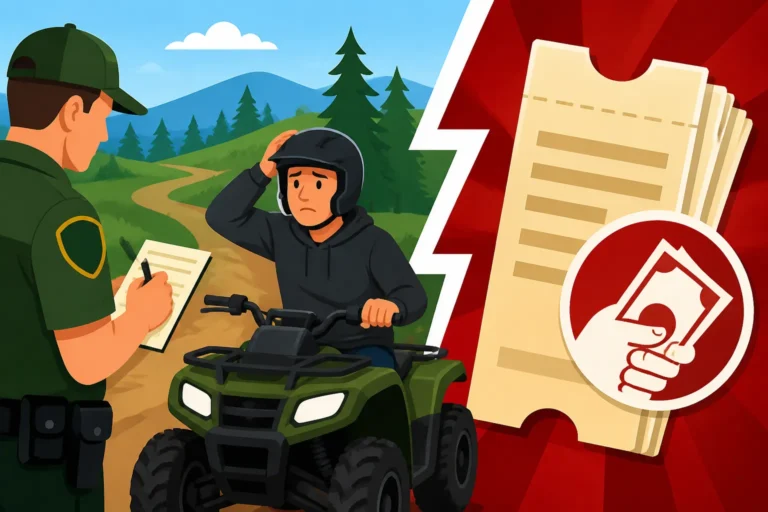
Vermont law requires minimum liability coverage for ATVs and UTVs operated on public trails or roads. This typically includes [Vermont's $25,000 Bodily Injury Minimum] per person, [Vermont's $50,000 Two-Person Minimum] per accident, and [Vermont's $10,000 Property Damage Minimum]. If a warden or police officer pulls you over and you cannot provide proof of insurance for the specific machine you are operating, you could face fines, a suspended registration, and potentially even impoundment of your vehicle.
Beyond the initial penalties, consider the long-term consequences. If you cause an accident while uninsured, you could be personally liable for tens, even hundreds of thousands of dollars in medical bills, property damage, and lost wages for the injured party. This isn't just a hypothetical; it's a very real risk every time you hit the trails. And even if you have [Vermont Self-Insurance at $115,000], that's a whole different process and still requires specific filings. Don't forget that [What a Warden Can Ask to See] includes proof of registration and insurance.
Financial Ruin from Accidents and Theft
The financial ramifications of riding an unnamed machine are staggering. If you’re involved in an accident and damage your machine, and it’s not specifically named on your policy, you’re solely responsible for all repair costs. A new engine, a bent frame, or even just replacing a set of high-performance tires and suspension components from SuperATV can easily run into thousands of dollars. Unless you have a sizable emergency fund specifically for ATV repairs, this could put your machine out of commission indefinitely.
Even if you’re meticulous about riding safely, theft is always a concern. Vermont might be a beautiful, relatively low-crime state, but ATVs and UTVs are valuable assets and attractive targets. If your unnamed machine is stolen from your garage, campsite, or even a trailhead, your insurance company will have no record of it being covered, and therefore, no obligation to replace its value. Your investment, whether it was a brand-new side-by-side or a meticulously restored quad, would be gone forever with no compensation. It's a risk simply not worth taking, especially when [Insuring a Machine Right After Purchase] is relatively straightforward.
How to Ensure Your ATV/UTV is Properly Covered
Navigating the world of insurance can feel overwhelming, but ensuring your ATV or UTV is properly covered is simpler than you might think. It primarily involves clear communication with your insurance provider and meticulous record-keeping. The goal is to make sure every single machine you own that you plan to ride on public trails or roads is unequivocally listed on its own dedicated policy.
Don't wait until you're at the DMV trying to register your machine or, worse, after an incident occurs. Take proactive steps to review your coverage, understand the specifics, and make any necessary adjustments. This peace of mind is invaluable, allowing you to fully enjoy the incredible riding opportunities Vermont has to offer without unnecessary worry hanging over your head.
The Importance of a Dedicated ATV/UTV Policy
The clearest and most reliable way to ensure your machine is covered is to purchase a dedicated ATV or UTV insurance policy. These policies are specifically designed for off-road vehicles, understanding their unique risks and coverage needs. They typically offer a range of options, including:
- Liability Coverage: Essential for meeting Vermont's legal requirements and protecting you from financial ruin if you cause an accident.
- Collision Coverage: Pays for damage to your own machine if you collide with another object or vehicle.
- Comprehensive Coverage: Protects against non-collision events like theft, vandalism, fire, or damage from natural disasters.
- Uninsured/Underinsured Motorist Coverage: Protects you if you're hit by another rider who doesn't have enough (or any) insurance.
- Accessory Coverage: Often crucial for riders who invest in aftermarket parts. If you've spent hundreds or thousands on upgrades from SuperATV – lift kits, specialized tires, winches, lighting – you'll want to ensure these are also covered, often by increasing your "stated value" or purchasing specific accessory coverage.
When choosing a policy, compare several providers. Look at not just the cost, but also the coverage limits, deductibles, and any specific exclusions. Make sure you understand exactly what’s covered and what isn’t. [Vermont ATV Registration Cost] often goes hand-in-hand with insurance considerations, so factor both into your budget.
Steps to Take for Proper Coverage
Here's a straightforward checklist to ensure your ATV or UTV is properly named and covered:
- Inventory Your Machines: List every ATV and UTV you own, noting its make, model, year, and VIN. If you have any significant aftermarket modifications (like performance parts or protective gear from SuperATV), make a note of those too, including their approximate value.
- Contact Your Insurance Agent: Speak directly with your current auto or homeowner's insurance agent. Ask specifically about dedicated ATV/UTV policies. Don't assume anything; confirm every detail.
- Provide All Details: When getting a quote or setting up a policy, provide the VIN for each machine. This is non-negotiable for proper scheduling. Be transparent about how you use your machine (recreational, utility, racing, etc.) as this can impact coverage and rates.
- Review Your Policy Documents: Once you receive your policy, read it thoroughly. Ensure that each of your machines is explicitly listed with its correct VIN. Verify that the coverage types and limits match what you discussed and what you believe you need. Pay close attention to any exclusions.
- Carry Proof of Insurance: Vermont law requires you to carry proof of insurance while operating your ATV or UTV on public lands or roads. Keep a physical copy or an electronic version on your phone. This is part of [Carrying Vermont Insurance Proof on the Machine].
Comparing General vs. Dedicated ATV/UTV Insurance
| Feature | General Auto Policy (Typically) | Dedicated ATV/UTV Policy (Recommended) |
|---|---|---|
| Vehicle Naming | Requires specific road vehicle VIN | Requires specific ATV/UTV VIN for each machine |
| Liability Coverage | Excludes off-road use | Mandatory, covers off-road/road use (where permitted) |
| Physical Damage | Excludes off-road vehicles | Covers collision, comprehensive (fire, theft, etc.) |
| Accessory Coverage | None | Often available, important for upgrades like SuperATV parts |
| Road Use Coverage | For road-legal vehicles only | Covers use on designated town roads in Vermont (where legal) |
| Off-Road Perils | Not applicable | Tailored for unique off-road risks (rollover, trail hazards) |
| Legal Compliance | Does not meet Vermont ATV law | Meets Vermont ATV insurance requirements |
By taking these steps, you’re not just buying a piece of paper; you’re investing in genuine protection for yourself, your passengers, your machine, and your financial future. Whether you're riding through the gorgeous foliage of central Vermont or exploring the remote logging roads of Essex County, knowing you're fully covered makes every adventure that much better.
Disclaimer
This article is for general informational purposes only and does not constitute professional advice. Laws, prices and regulations vary by location and change over time. Consult a qualified professional for guidance on your specific situation.