Carrying Vermont Insurance Proof on the Machine
You’re gearing up for a fantastic ride on Vermont’s trails or heading out on a designated town road, feeling that anticipation build. But then, a little thought nags at you: "Do I have my insurance proof with me?" It’s a common moment of doubt for many riders, and honestly, the thought of getting pulled over or encountering a warden without the right paperwork can quickly deflate that excitement. This guide is here to clear up exactly what Vermont expects from you regarding ATV and UTV insurance proof and, more importantly, how to keep it safe and accessible so you can ride with total peace of mind.
Why Vermont Wants You to Carry Proof of Insurance
Riding an ATV or UTV in Vermont, especially on publicly accessible trails or designated town roads, isn't just about the thrill; it comes with responsibilities. One of the biggest, and sometimes most overlooked, is ensuring you have valid insurance and can prove it. This isn't just some bureaucratic hurdle; it’s a crucial aspect of responsible off-road vehicle ownership designed to protect everyone.
The Law and Your Responsibility as a Rider
Vermont law is pretty clear on this: if you're operating your ATV or UTV on any public land, designated trail, or opened town road, you need to have specific liability insurance coverage. This isn't optional, and it's not just a suggestion; it's a legal requirement. Think of it like driving your car; you wouldn't (and shouldn't) leave the driveway without up-to-date auto insurance. The same principle applies here. The state wants to ensure that if an unfortunate accident occurs – and let's face it, they can happen even to the most careful riders – there's a safety net in place to cover potential damages or injuries to others. This includes your financial responsibility for property damage or bodily harm you might cause. You can learn more about the specific coverage amounts in [Vermont ATV Insurance Requirements].
It’s about more than just avoiding a ticket; it’s about being a good steward of the trails and a respectful member of the riding community. Accidents, even minor ones, can involve other riders, pedestrians, or even property owners whose land the trails cross. Having that insurance proves you’re prepared for those unforeseen circumstances, which is a major factor in maintaining positive relationships with landowners who generously grant access for trails. Without it, the entire system of interconnected trails, managed by dedicated clubs and VASA, could be jeopardized.
Peace of Mind on Vermont's Roads and Trails
Beyond the legalities, carrying your insurance proof offers a significant benefit that often goes unappreciated until you need it: genuine peace of mind. Imagine you’re deep in the Northeast Kingdom, miles from cell service, and you have a minor fender bender with another rider, or perhaps you accidentally graze a fence post on a trail that borders a field. In that moment of stress and adrenaline, having your insurance card readily available means one less thing to worry about. You can quickly exchange information, document the incident, and know that your policy details are at your fingertips.
This peace of mind extends to interactions with wardens or law enforcement officers. If you're stopped for a routine check, perhaps because you're riding on a town road recently opened to ATVs, being able to smoothly present your registration, safety certificate (if applicable), and insurance proof makes the entire encounter much quicker and more pleasant. It demonstrates you’re a prepared and responsible rider, respecting the rules that keep the trails and roads open for everyone. It shows you’re not just out there tearing it up, but you understand the framework that allows you to enjoy these incredible opportunities.
Avoiding Fines and Hassles During a Stop
Let’s be honest, no one wants to deal with a fine, especially when you’re out enjoying a ride. Getting caught without valid proof of insurance on your person or on your machine can lead to a citation. These aren't just minor inconveniences; they can involve substantial fees and potentially impact your ability to register your machine in the future. Imagine having your amazing day of riding cut short, or worse, having your machine impounded, all because you forgot a small piece of paper.
Beyond the financial penalty, there's the hassle of it all. A warden or officer might detain you longer while they attempt to verify your coverage, which can be difficult without immediate access to documentation. You might even have to make a separate trip to a DMV office or a police station to show proof later, consuming valuable time that could be spent riding or doing something else you enjoy. This is why it’s always best to have that proof physically or digitally available right there with you, on the machine, making any necessary checks swift and straightforward. It's a small step that prevents a big headache.
What Counts as Valid Insurance Proof in Vermont
So, you understand why you need to carry it. Now, let’s talk about what exactly Vermont considers valid proof of ATV or UTV insurance. It’s not just any old document; there are specific types of records that law enforcement and DMV officials will accept. Understanding these will ensure you're always properly prepared.
Acceptable Documents and Digital Options
The most common and universally accepted form of insurance proof is your physical insurance card. This small card, typically issued by your insurance provider, contains all the essential information needed to verify your coverage. Keep it clean, dry, and easily accessible. However, in our increasingly digital world, many states, including Vermont, also recognize digital proof of insurance displayed on a smartphone or other electronic device. Before relying solely on digital proof, it’s always a good idea to confirm with your insurance provider that their digital ID cards are accepted in Vermont and that you understand any limitations, such as needing a charged device. Just make sure your phone is charged and readable, even in bright sunlight!
Beyond the standard card, other forms of documentation can also serve as proof, especially if you've recently purchased your policy or are awaiting your physical card. This might include a copy of your insurance policy declaration page, a temporary insurance binder from your agent, or even a letter from your insurer confirming coverage. The key is that it must clearly identify your specific machine, the coverage period, and the liability limits. When in doubt, a quick call to your insurance agent can clarify what specific documents will suffice in Vermont. Always err on the side of having too much proof rather than not enough.
What Your Insurance Card Should Display
When you're carrying your insurance card, whether physical or digital, it's crucial that it contains certain pieces of information that Vermont authorities will look for. First and foremost, it needs to clearly identify the insured individual (that’s you!) and the insurance company. There should be a policy number that links your coverage directly to you. Most importantly for your ATV or UTV, the card must list the specific vehicle that is insured, typically by its Year, Make, Model, and Vehicle Identification Number (VIN). This ensures that the coverage applies to the machine you are actually operating.
Furthermore, the card must show the effective dates of your policy, proving that your coverage is current and hasn't expired. It should also indicate the types of coverage you have, specifically liability, and often the minimum coverage amounts for bodily injury and property damage, which must meet Vermont’s requirements. Some cards might also list additional coverages, like collision or comprehensive, but the core focus for compliance is liability. If any of these critical details are missing or unclear, your proof might be deemed insufficient, leading to potential issues during a stop. Always double-check your card as soon as you receive it to ensure all information is accurate and legible.
Dealing with Temporary or New Policies
Purchasing a new ATV or UTV, or getting insurance for the first time, can sometimes leave you in a temporary limbo before your permanent insurance card arrives. Don't let this deter you from riding, but do make sure you're covered. When you first get your policy, your insurance agent will often provide you with a "binder" or a temporary insurance card. This document serves as official proof of coverage for a short period, typically 30 days, while your permanent policy documents and cards are being processed and mailed out. It's perfectly acceptable for use in Vermont.
The crucial thing with temporary documents is to understand their expiration date and make sure you receive and switch to your permanent card before that date passes. Keep the temporary document in a safe place, just as you would your permanent card, and make a note to follow up if your permanent documents don't arrive in a timely manner. If you've just bought a machine from a dealer, they'll usually help you get this temporary proof set up right away. If it's a private sale, you'll need to proactively contact your insurer before you hit the trails or roads. Be aware that riding unregistered can also lead to issues, so ensure your registration is also in order. [Vermont ATV Registration Paperwork Checklist] can help you organize all the necessary documents.
| Type of Proof | Key Information Displayed | Best Practice for Use |
|---|---|---|
| Physical Card | Insured Name, Policy Number, VIN, Effective Dates, Coverage Limits | Keep in a waterproof pouch, secured on the machine or on your person. |
| Digital Card | Same as Physical Card | Ensure device is charged and screen is readable; have a backup. |
| Policy Declaration | Comprehensive policy details, VIN, full coverage breakdown | Good as a secondary backup; too bulky for primary roadside proof. |
| Temporary Binder | Insured Name, Policy Number, VIN, Short-term Effective Dates | Use immediately after purchase; follow up for permanent card. |
Best Practices for Storing Your Proof on Your Machine
So, you have your valid proof of insurance. Great! But where do you actually put it so it’s protected from the elements, always with your machine, and easily accessible when you need it? This is where a little planning goes a long way. Vermont weather can be unpredictable, and trails can be rough, so protecting your documents is key.
Protecting Documents from the Elements
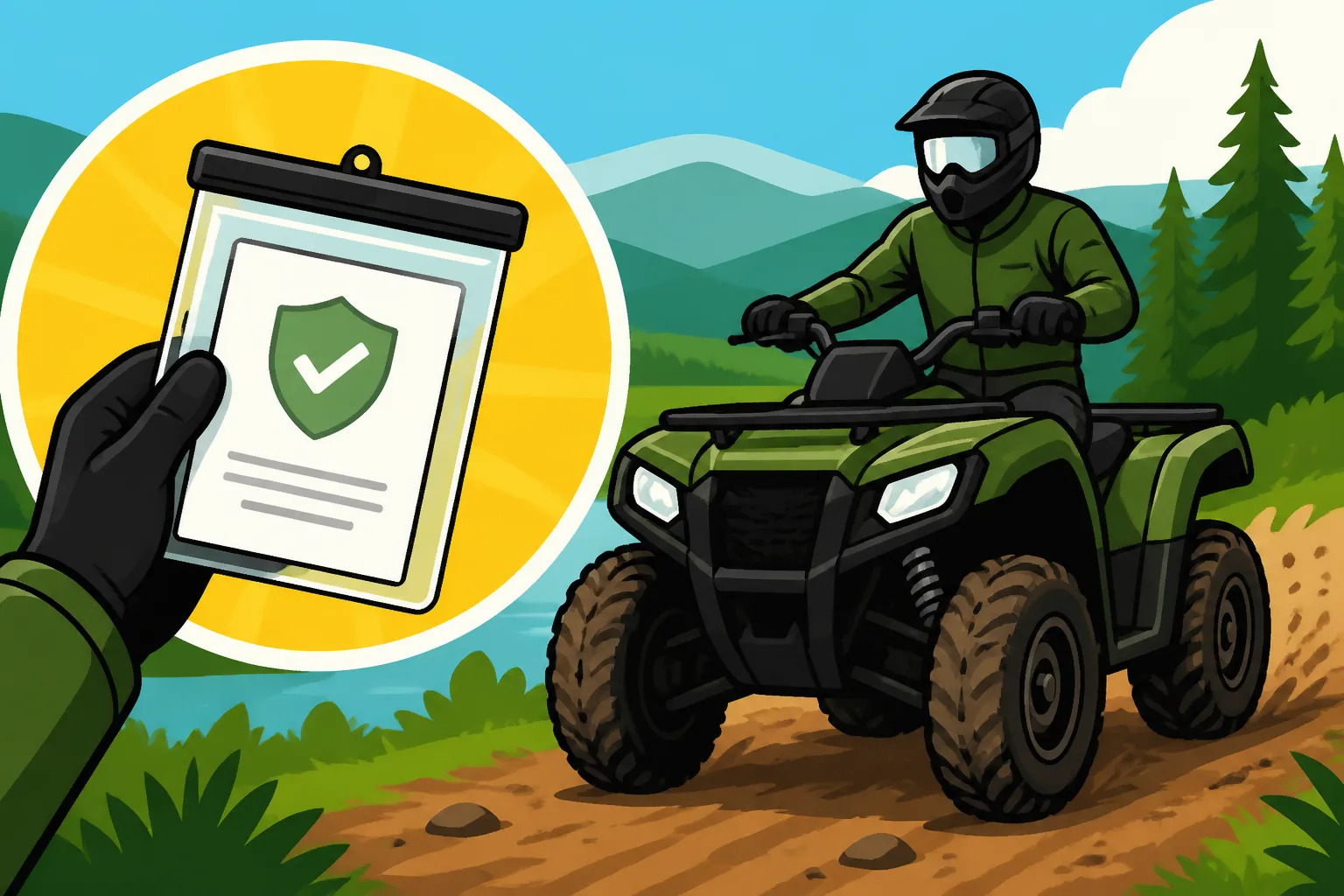
Vermont is beautiful, but it can also be wet, muddy, and dusty. The last thing you want is a soggy, unreadable insurance card when a warden asks for it. Water damage, mud splatter, or even fading from sun exposure can render your proof invalid or at least make it a pain to read. Investing in a good quality, heavy-duty waterproof pouch or a small, hard-shell waterproof case is absolutely essential. These aren't expensive items, but they provide invaluable protection.
You can find these pouches at outdoor supply stores, marine shops, or even online retailers. Look for something that’s specifically designed to be submersible or at least highly water-resistant. Some riders even use double-bagging techniques, placing their insurance card in a Ziploc bag, and then placing that Ziploc bag into a more robust waterproof pouch. This layered approach provides maximum security against moisture. Don't forget to also store your [Vermont ATV Registration Cost] and other important documents in the same protected way.
Accessible and Secure Storage Solutions
Once your documents are waterproofed, where do you put them on the machine? Accessibility is paramount. You don't want to be fumbling around under a seat or digging through a deep storage box with an officer waiting. Many ATVs and UTVs come with small, integrated storage compartments, often under the seat, in the glove box, or a small front storage area. These are ideal spots, provided they are clean and can accommodate your waterproof pouch. For UTVs, the glove box is often a perfect spot, as it's usually easy to open and reach.
Another excellent option, especially if your machine lacks secure, dry storage, is a small tank bag or handlebar bag. These accessories attach directly to your machine and are designed for quick access. Many of them are already water-resistant, and adding your waterproof pouch inside provides an extra layer of protection. Products from brands like SuperATV often include robust storage boxes or bags designed to withstand tough trail conditions, offering secure and dry places to keep your essentials, including critical documents. Whatever solution you choose, make sure it’s securely fastened so it doesn’t bounce off on a rough trail and get lost. The last thing you want is for your plate or documents to go missing, especially when [Vermont Plate Mounted on the Rear] is required.
Redundancy for Extra Confidence
Even with the best storage solutions, things can happen. Pouches can get lost, devices can run out of battery, or an accident could damage your primary storage spot. This is why having a backup, or redundancy, for your insurance proof is a smart move. Consider carrying a second physical copy of your insurance card in your wallet, backpack, or even taped inside your helmet bag. This way, if something happens to the copy on your machine, you still have an accessible backup on your person.
If you rely on digital proof on your phone, make sure you also have a physical copy tucked away somewhere else. Conversely, if your primary is a physical card, having a photo of it stored on your phone can be a lifesaver if the physical card somehow becomes unreadable or goes missing. Some riders even email a copy to themselves or a trusted family member, so it can be accessed from any device with internet access if absolutely necessary. While not a primary means of proof, it can expedite verification in an emergency. This layered approach ensures that no matter what the Vermont trails throw at you, you’ll always be able to provide the necessary documentation.
What Happens if You Don't Have Proof Handy
It's easy to forget things, especially when you're focused on getting out and enjoying the ride. But forgetting your insurance proof in Vermont can lead to consequences that range from annoying to quite serious. Understanding these possibilities is important so you can always prioritize having that proof available.
Consequences of an Insurance Violation
If you're stopped by a warden or law enforcement officer and cannot produce valid proof of insurance, you’ll likely face a citation. The specific penalty can vary, but it generally involves a fine. While the exact amount can change, these fines are typically substantial enough to make you wish you had remembered that little card. Beyond the financial hit, an insurance violation can sometimes lead to points on your driving record, depending on the severity and specific circumstances.
In more serious cases, or if you're found to be completely uninsured, your machine could even be impounded. Imagine being stranded miles from your truck and trailer, having your day ruined, and then facing additional fees to retrieve your machine. These are the kinds of hassles that are entirely avoidable with a bit of foresight. It's not just about what a warden can ask to see, but what they must see to ensure compliance. You certainly don't want to learn about [Vermont ATV Fines for Road Violations] firsthand because of an oversight.
Steps to Take if You're Pulled Over Without It
If, despite your best efforts, you find yourself in the unfortunate situation of being pulled over and realize you don't have your insurance proof, stay calm and be polite. Honesty is always the best policy. Explain to the officer or warden that you believe you are insured but don't have the physical proof on you at the moment. Offer to provide the information as soon as possible. Sometimes, officers will give you a break and issue a warning, allowing you a set amount of time to present proof at a specific location, like a police station or the DMV.
However, don't count on leniency. Expect to receive a ticket. If you do get a citation, make it your absolute top priority to gather the proof of insurance from home and present it to the specified authority (usually a court clerk or the issuing department) within the given timeframe. In many cases, if you can prove you were indeed insured at the time of the stop, the charge might be reduced or even dismissed, though you might still have to pay court fees. This is why having an active policy is key, even if you forgot the physical proof.
Learning from Common Mistakes
Many riders make similar mistakes when it comes to insurance proof. One of the most common is simply forgetting to transfer the card from one jacket to another, or from their main vehicle to their ATV. Another frequent error is letting the insurance card get wet or damaged, rendering it unreadable. Some riders rely solely on digital proof without considering what happens if their phone battery dies, or if they’re in an area with no cell service – a very real possibility in many parts of rural Vermont. While SuperATV accessories can help with storage, they can't prevent human forgetfulness.
To avoid these pitfalls, make it a habit to perform a quick "pre-ride check" of all your essential documents before every outing. This includes your registration, trail access decal (TAD), and insurance proof. Think of it like a pilot's pre-flight checklist. Always store your documents in a dedicated, waterproof spot on your machine. If you use digital proof, always have a physical backup. By being proactive and developing good habits, you can ensure that you’re always compliant and ready for whatever your Vermont ATV adventure brings, leaving worries about paperwork far behind. Remember, it's all part of being a responsible rider and ensuring continued access to the incredible riding opportunities Vermont offers.
Disclaimer
This article is for general informational purposes only and does not constitute professional advice. Laws, prices and regulations vary by location and change over time. Consult a qualified professional for guidance on your specific situation.