Passengers and Manufacturer Seats
Riding an ATV or UTV through Vermont's stunning landscapes is an incredible experience, but understanding the rules about who can ride with you – and where they can sit – can be a real head-scratcher. Many riders assume if there's space, it's okay, but the Green Mountain State has specific regulations designed to keep everyone safe. This guide will cut through the confusion, explaining Vermont's rules for passengers and manufacturer seats on your off-road machine, so you can ride confidently and legally.
Understanding Vermont's Rules for ATV Passengers
When you hit the trails or designated town roads in Vermont, it's not just about wearing a helmet and having your [Vermont ATV Registration Cost] sorted. It's also about ensuring every person on your machine is legally and safely seated. The laws here are pretty clear, and they prioritize safety above all else. Ignoring them could lead to fines, or worse, a preventable accident.
Why Seating Matters to the Law
The reason Vermont's laws focus so heavily on seating isn't to make things difficult; it's purely for safety. ATVs and UTVs are designed with specific weight distribution and balance in mind. When you add a passenger who isn't in a designated seat, you fundamentally alter how the machine handles. This can lead to serious instability, especially on uneven terrain, during turns, or when braking suddenly. Think about it: a machine built for one person suddenly trying to carry two on a narrow, twisting trail. It’s a recipe for disaster.
Moreover, if a passenger isn't secured in a proper seat, they're far more likely to be thrown from the machine in the event of a bump or sudden stop. The legal framework around "manufacturer's designated seats" aims to prevent these scenarios by ensuring that any additional riders are positioned and protected as the vehicle's original designers intended. This also ties into the overall [Vermont ATV Equipment Requirements], which often include specifications for seating.
The "Manufacturer's Designated Seat" Clause
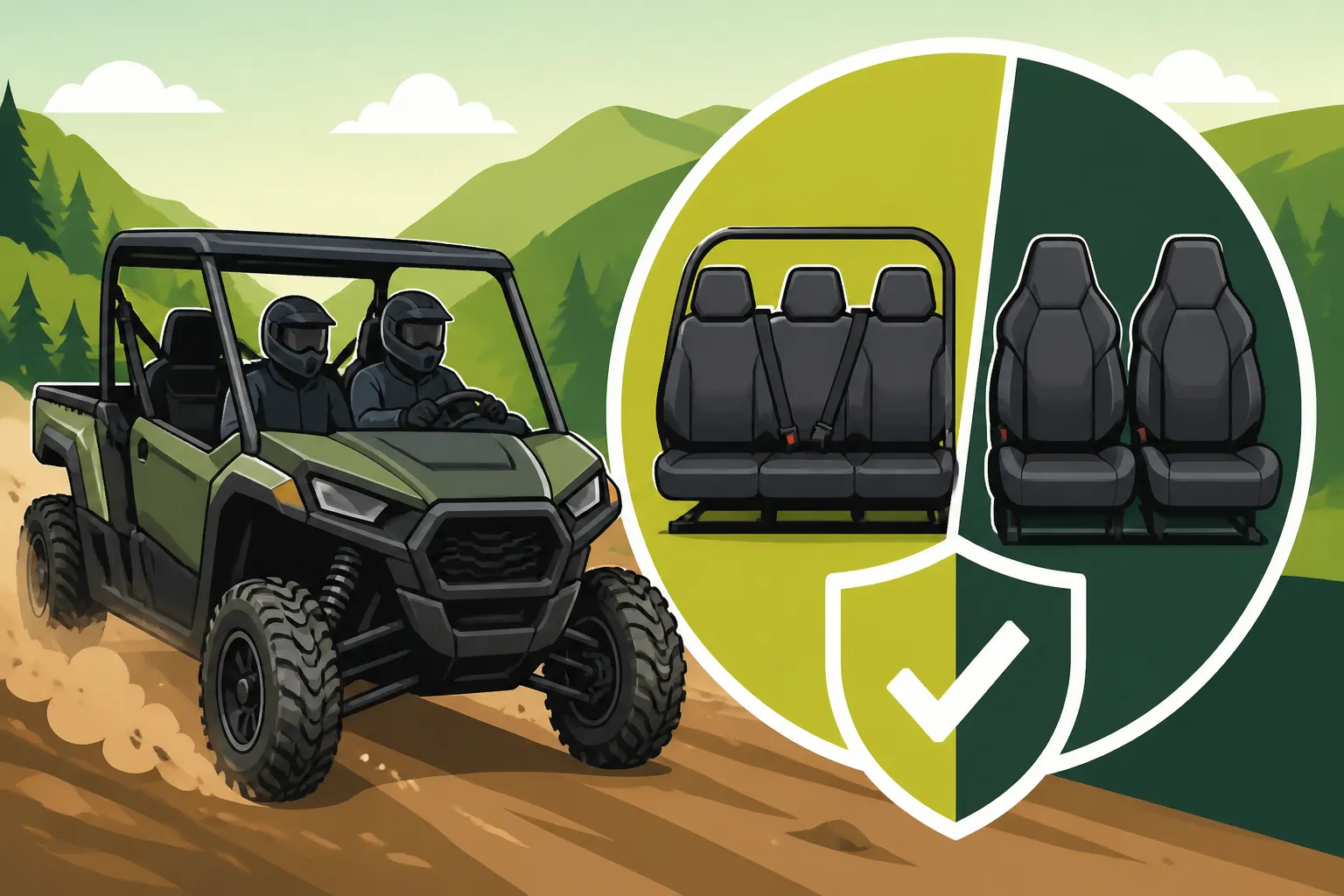
This is the golden rule in Vermont: passengers on an ATV or UTV must only occupy a seat specifically designed and provided by the manufacturer for that purpose. What does this mean in plain English? It means if your ATV came from the factory with a single seat, it's a single-rider machine. You cannot legally or safely strap a cushion to the rear rack or ask someone to stand behind you. Similarly, if your side-by-side has two bucket seats and a seatbelt for each, you can carry two people. If it has a bench seat designed for three, then three it is.
The law isn't interested in your clever modifications or how comfortable a cooler might look as a makeshift seat. It's strictly about the manufacturer's original intent and design. Trying to improvise a passenger seat is not only illegal but incredibly dangerous. It means the passenger lacks proper support, grab handles, and often, a seatbelt, leaving them vulnerable to falls or impacts. Always check your machine's owner's manual; it will clearly state the seating capacity. You'll often find this information is also critical for your [Vermont ATV Insurance Requirements].
Age and Supervision for Passengers
Beyond the physical seating, Vermont also has rules concerning the age of passengers, particularly younger riders. While the primary focus of age restrictions tends to be on the operator, it's important to remember that a passenger's age and ability to follow instructions are critical safety factors. For instance, a very young child might not have the strength or coordination to hold on properly, even in a designated seat.
Generally, anyone under 18 operating or riding an ATV in Vermont must wear a helmet. For passengers under 12, there are specific regulations governing [Vermont ATV Crossing Rules at Age 12] when on designated routes. While the law primarily dictates where a child can operate an ATV, if they are riding as a passenger, they need to be capable of maintaining their position safely throughout the ride. An adult supervisor, typically the operator, is responsible for ensuring the passenger is properly secured and understands basic safety protocols. If you're a parent, this means making sensible judgments about your child's readiness, even if the machine technically has a second seat.
The Difference Between ATVs and UTVs for Passengers
It’s easy to lump all off-road vehicles together, but when it comes to carrying passengers, there's a significant distinction between ATVs (All-Terrain Vehicles) and UTVs (Utility Terrain Vehicles, often called side-by-sides). This difference is not just about aesthetics; it’s fundamental to their design, safety, and legal operation with multiple riders in Vermont.
Single-Rider ATVs and the Passenger Problem
Most traditional ATVs, the kind you straddle like a motorcycle, are designed for a single operator. They have one saddle-style seat and no provisions for additional passengers. Trying to squeeze another person onto a single-rider ATV, even if they're small, creates a perilous situation. The balance of the machine is thrown off, making it incredibly difficult to steer, especially at speed or on turns. The extra weight shifts higher and further back, increasing the risk of rolling over or losing control. You also eliminate the operator's ability to shift their weight effectively, which is crucial for maneuvering an ATV safely.
Vermont law is unambiguous about this: if your ATV is not explicitly designed by the manufacturer with a second, designated passenger seat, you cannot legally carry a passenger. There are some two-up ATVs on the market, which feature an extended frame and a clearly defined second seat with backrests and grab handles, but these are purpose-built. Anything less than that is not permissible. This strict stance reflects the high risk of serious injury when an ATV designed for one is forced to carry two. For clarity on definitions, you might want to look at [Vermont's 72-Inch, 2,500-Pound ATV Definition].
UTVs and Their Multi-Passenger Design
UTVs, or side-by-sides, are a different beast entirely. These vehicles are inherently designed with multiple occupants in mind. They typically feature bucket seats or bench seats, similar to a car, often with individual seatbelts and robust roll-over protection structures (ROPS). You’ll find models built for two, three, four, and even six passengers. This design makes them much more stable and safer for carrying multiple people, provided everyone is using the factory-installed safety equipment.
Because UTVs are designed with a wider stance and lower center of gravity, they can accommodate additional passengers without the same drastic impact on handling and stability that an ATV would experience. The seating arrangement also allows passengers to be more secure and contained within the vehicle's protective frame. When riding a UTV in Vermont, ensure that everyone has their own designated seat and is properly buckled in, just as you would in a car. This is paramount for everyone's safety, whether you're cruising through a field or tackling a challenging section of trail on the [VASA's Statewide Trail Network].
Aftermarket Solutions and Vermont Compliance
The aftermarket industry is booming, offering all sorts of accessories, including add-on seats for ATVs and UTVs. This is where riders need to exercise extreme caution and be very clear about Vermont's regulations. For a single-rider ATV, adding an aftermarket seat does not magically make it legal to carry a passenger. The law specifically refers to the manufacturer's designated seat. An aftermarket seat, no matter how well-made, won't change the original design parameters of the ATV regarding weight distribution and stability. Installing a bolt-on seat might feel more comfortable, but it won't pass muster with law enforcement or make your machine safer for two.
However, for UTVs, aftermarket components like upgraded seats or harness systems are generally acceptable, as long as they maintain or enhance the original manufacturer's safety intent and do not exceed the vehicle's original seating capacity. For example, if your UTV came with a bench seat for three, but you replace it with two high-backed racing seats, you've reduced the capacity, but potentially enhanced the safety for those two riders. Companies like SuperATV offer a range of UTV accessories, including seating enhancements, but always ensure any modification complies with your vehicle's intended use and Vermont's regulations. Remember, the key is not to add capacity where none existed, but to potentially improve existing, designated seating.
Safety Considerations Beyond the Law
While adhering to Vermont's specific laws regarding passengers and manufacturer seats is non-negotiable, true safety goes beyond just legal compliance. There are practical, common-sense considerations that every rider and passenger should be aware of to ensure a fun and injury-free experience on the trails.
Weight Limits and Machine Stability
Every ATV and UTV has a maximum weight capacity, specified by the manufacturer. This isn't just a suggestion; it's a critical safety parameter. Exceeding this limit, even if everyone is in a designated seat, can severely compromise the machine's stability, handling, and braking performance. When you overload a vehicle, you raise its center of gravity, making it much more prone to rollovers, especially on inclines, declines, or during sharp turns. The suspension system might bottom out, and the brakes will have to work harder, increasing stopping distances.
Before you load up your family or friends, take a moment to consult your owner's manual for the specific weight limits of your machine. This capacity includes the operator, all passengers, and any cargo you might be carrying. A typical four-seat UTV might have a total payload capacity of 1,000-1,500 pounds, but combining four adults and a full cooler could push it close to the limit, particularly for some smaller models. Always factor in the weight of your passengers and gear to ensure you stay within safe operating parameters. Overloading isn't just risky; it can cause premature wear and tear on your machine, leading to costly repairs down the line.
Passenger Safety Gear and Conduct
In Vermont, a helmet is legally required for every rider and passenger on an ATV or UTV, regardless of age. This isn't up for debate. Ensure all helmets meet either FMVSS (Federal Motor Vehicle Safety Standard) or ASTM (American Society for Testing and Materials) standards. But safety gear extends beyond just a helmet. Eye protection is crucial to shield from dust, debris, and insects. Sturdy over-the-ankle boots, long pants, and long-sleeved shirts offer vital protection against scrapes, impacts, and sun exposure. Gloves can improve grip and protect hands.
Beyond gear, passenger conduct is equally important. Passengers should be instructed to keep their feet on the footrests and their hands on grab handles (if available) or firmly on the operator's waist. They should avoid sudden movements, especially during turns or over rough terrain, as this can upset the machine's balance. Communication between the operator and passenger is key; establish hand signals or verbal cues for slowing down, stopping, or pointing out hazards. A well-prepared and cooperative passenger is a safer passenger. Remember, this all contributes to your compliance with [Vermont ATV Helmet Law for Every Rider].
Insurance Implications for Passenger Injuries
This is a critical, often-overlooked aspect. While Vermont mandates liability insurance for ATVs and UTVs operated on designated roads and trails, the specifics of your policy matter immensely when a passenger is involved in an accident. If you're carrying a passenger illegally (e.g., on a single-rider ATV, or exceeding the manufacturer's designated seating capacity), your insurance provider might deny coverage for their injuries or property damage. Insurance policies are often written with clauses that limit liability if the vehicle is being operated outside its intended design or in violation of local laws.
Imagine a scenario where a passenger, illegally seated on your ATV, is injured in a rollover. If your insurance company determines that the illegal seating arrangement contributed to the accident or injury, you could be personally liable for significant medical bills and legal costs. Even with legally seated passengers, it's wise to review your policy's bodily injury and medical payments coverage to ensure it's adequate for all occupants. [Vermont ATV Insurance Requirements] typically set minimums, but often, more extensive coverage is a wise investment for peace of mind when carrying others. Always confirm with your insurance agent what your specific policy covers regarding passenger liability.
Common Misconceptions and Practical Advice
The world of off-road riding is full of camaraderie and a sense of freedom, but it’s also rife with assumptions. When it comes to carrying passengers on your ATV or UTV in Vermont, some common misconceptions can lead to dangerous situations and legal trouble. Let’s clear up a few of those and offer some practical advice to ensure everyone enjoys the ride safely and responsibly.
"Just One More" – The Temptation and the Risk
It’s a scenario many of us have faced: you're at the trailhead, ready for a ride, and one extra person wants to tag along. The temptation to say "just one more" and squeeze an additional rider onto a machine already at capacity, or onto a single-rider ATV, can be strong. Perhaps they’re small, or it’s "just a short ride." However, this seemingly innocent decision carries significant risks that far outweigh the convenience.
As discussed, exceeding the manufacturer’s designated seating or carrying capacity fundamentally compromises the machine’s safety. It increases the likelihood of a rollover, makes braking less effective, and hampers steering. In the eyes of Vermont law enforcement, it’s a clear violation, potentially leading to fines. More importantly, if an accident occurs, you, as the operator, are responsible for the safety of your passengers. Explaining to authorities, or worse, to an injured friend or family member, that you made an exception for "just one more" is a burden no one wants to carry. Always stick to the designated seating. If you have a larger group, perhaps consider caravaning with multiple machines or exploring options like renting a multi-seat UTV from a place like Bear Rock Adventures (though they are often located just across the border, they cater to Vermont riders).
Inspecting Your Machine for Passenger Readiness
Before every ride that involves passengers, a quick but thorough inspection of your ATV or UTV is crucial. Don't just assume everything is ready to go. Start by verifying the designated seating. Are all seatbelts (if applicable) in good working order, free from fraying or damage, and buckling securely? Are there appropriate grab handles for passengers to hold onto? Some UTVs have a passenger-side grab bar; make sure it's secure.
Next, check the machine's tires. Are they properly inflated to the manufacturer's recommended pressure for the expected load? Under-inflated tires can lead to poor handling and instability. Inspect the suspension – is it functioning correctly, or does it seem to be sagging more than usual with the added weight? Finally, confirm that all lights are working, especially if you anticipate riding at dusk or in variable weather conditions. Companies like SuperATV offer quality replacement parts and accessories, but always ensure any components critical to safety are in top condition. This diligence helps prevent issues and ensures a smooth, safe ride for everyone.
Communication Is Key for a Safe Ride
Good communication between the operator and passenger is one of the most underrated safety measures. Passengers, especially first-timers, might not know what to expect or how to react to sudden turns, bumps, or braking. Before you even start the engine, have a quick chat. Explain what they should do: hold on tight, keep arms and legs inside the vehicle, and try to anticipate your movements.
Establish simple signals. For instance, a tap on the shoulder could mean "slow down," or a thumbs-up could confirm "all good." Encourage your passenger to speak up if they feel uncomfortable, need to stop, or see a hazard. This open line of communication builds trust and allows you to adjust your riding style to match their comfort level and the terrain. On longer rides or in noisy conditions, a helmet communication system can be invaluable, but even simple pre-ride instructions can make a huge difference. Riding responsibly means ensuring everyone on board feels secure and informed, making the experience enjoyable for all.
Here’s a quick overview of how passenger rules often compare between ATVs and UTVs in Vermont:
| Feature | Traditional ATV (Single-Rider) | Two-Up ATV (Manufacturer Designed) | UTV (Side-by-Side) |
|---|---|---|---|
| Seating Capacity | 1 operator only | 1 operator + 1 passenger | 2 to 6+ passengers (depending on model) |
| Passenger Legality | Illegal to carry a passenger | Legal for one passenger in designated seat | Legal for passengers in all designated seats |
| Seat Type | Saddle-style | Extended saddle-style with backrest/grab handles | Bucket seats or bench seats, car-like |
| Safety Restraints | None for passenger | Grab handles, often backrest | Seatbelts (3-point or harnesses), grab handles |
| Roll-Over Protection | Operator's body acts as part of protection | Operator's body acts as part of protection | Robust Roll-Over Protection Structure (ROPS) |
| Stability | Highly affected by passenger weight | Designed for two, more stable than single-rider | Inherently stable for multiple passengers |
| Helmet Law | Mandatory for operator | Mandatory for both operator and passenger | Mandatory for all occupants |
| Insurance Impact | Potential denial if passenger carried illegally | Covered if operating legally | Covered if operating legally |
Disclaimer
This article is for general informational purposes only and does not constitute professional advice. Laws, prices and regulations vary by location and change over time. Consult a qualified professional for guidance on your specific situation.