Vermont Rules for a Visiting Maine Rider
You've got your ATV or UTV all prepped, the trailer hitched, and that familiar itch to explore new trails is calling you to the Green Mountain State. But before you point your rig north or west from Maine, it's absolutely vital to understand that while a quad is a quad, the rules of the road and trail can be wildly different from state to state. This guide is here to walk you, a fellow Maine rider, through everything you need to know to ensure your Vermont adventure is legal, safe, and frustration-free.
Understanding Vermont's Unique ATV/UTV Landscape for Maine Visitors
Stepping off the beaten path in Vermont means stepping into a world where private land access is king, and local towns hold significant sway over where you can and cannot ride. It's a system built on trust and cooperation, and as a visitor from Maine, understanding these nuances is your first step to a smooth experience. What might be common practice on logging roads back home could lead to fines or even trail closures if not respected here.
Reciprocity for Out-of-State Registrations
Let's start with the good news. Vermont does extend a hand of reciprocity to out-of-state registrations, including those from our neighbors in Maine. This means your valid Maine ATV or UTV registration is generally recognized for the purpose of identifying your machine. You won't typically need to re-register your machine with the Vermont DMV if it's already properly registered in Maine. This is a big relief for many who worry about duplicate paperwork and fees just for a weekend trip.
However, recognizing your registration is only one piece of the puzzle. It gets you in the door, so to speak, but it doesn't automatically grant you access to Vermont's extensive trail system. Think of it like having your driver's license – it proves who you are and that you're authorized to drive, but it doesn't pay for your gas or tell you which roads are open. You can find more details on this general recognition in our article on [Vermont Reciprocity With Maine].
This distinction is crucial because simply having a Maine plate won't cut it for trail access. Vermont has a robust and largely privately-owned trail network, and it operates on an additional system of permits and decals. So, while your machine is officially "legal" from a registration standpoint, you're not quite ready to hit the dirt just yet.
The All-Important Trail Access Decal (TAD)
This is perhaps the most significant difference a Maine rider will encounter when planning a Vermont trip: the Vermont Trail Access Decal, or TAD. Vermont's vast trail system, largely managed by the Vermont ATV Sportsman's Association (VASA) and its member clubs, relies heavily on private landowner permission. The TAD is essentially your ticket to ride these trails, and it's absolutely mandatory for everyone who wants to use the VASA-designated corridors.
The TAD not only grants you legal access but also acts as your contribution to the maintenance, insurance, and overall sustainability of the trails. A portion of the decal fee goes directly to the VASA organization and the local clubs that do the hard work of signing trails, clearing brush, and negotiating with landowners. It’s how the system thrives, and without it, there simply wouldn't be a trail network for us to enjoy.
For visiting riders from Maine, the cost of a TAD is a bit different than for Vermont residents, reflecting the fact that you haven't contributed to the state's registration system. It's important to factor this into your trip budget. The TAD expires annually on December 31st, regardless of when you purchase it, so if you're planning a late-season ride, you'll still pay the full price for a shorter usage window. We've got a whole breakdown on [Vermont TAD Prices for Visitors] that covers the specifics you'll need.
Getting Your Maine Machine Ready for Vermont Trails
Once you understand the basic requirements, it's time to get down to the brass tacks of preparing your machine and paperwork. A little preparation goes a long way in avoiding any unwelcome surprises or delays when you're itching to ride. Don't let a missing piece of paper or an overlooked regulation turn your dream trip into a headache.
Registration and Trail Decal Specifics for Visitors
As a Maine rider, your primary concern, beyond your home state registration, is securing that Vermont Trail Access Decal. You can purchase these online through the VASA website, or sometimes at local vendors and VASA club offices. It's highly recommended to do this before you arrive in Vermont, especially during peak riding seasons, to avoid any potential delays or limited availability. Attaching the decal correctly to your machine, usually in a visible spot like the rear fender or front cowl, is also part of the requirement. Ensure it's placed where it won't easily get covered by mud or obstructed by accessories.
Remember, the TAD covers your VASA membership and club dues, which are essential for maintaining the trails you'll be riding. It's not just a fee; it's an investment in the trail system. When you're outfitting your machine, perhaps with some heavy-duty bumpers or cargo racks from SuperATV, make sure the decal placement remains clear and visible. A warden needs to be able to see it at a glance, without having to dig through layers of mud or accessories.
The process for purchasing a TAD for your machine from Maine is straightforward. You'll typically provide your name, address, and the VIN of your machine. Keep your purchase confirmation handy, along with your actual decal, as wardens and trail masters do perform checks. For a step-by-step guide on the purchase process, check out [How to Buy a Vermont TAD].
Safety Certification for Younger Riders
If you're bringing along younger riders from Maine, this is another critical area where Vermont's rules might differ from what you're used to. Vermont has specific requirements for ATV safety courses, especially for riders under a certain age. Generally, anyone under the age of 18 needs to have successfully completed an approved ATV safety course to operate an ATV or UTV on designated trails in Vermont. This applies to both residents and non-residents.
Even if your child has an equivalent safety certification from Maine, Vermont will typically recognize it, provided it meets their standards. It's always a good idea to carry proof of this certification with you, either a physical card or a printed certificate. Nothing puts a damper on a family ride quicker than a warden asking for paperwork you don't have. This emphasis on safety is universal, but the specifics can vary.
For those who haven't completed a course, or if you're unsure if your Maine certification is valid, Vermont offers online courses. It’s worth looking into if you’re planning a trip with children. You can find more details about these requirements and exemptions in our guide on [Vermont Safety Course Required Under 18]. The goal is to ensure all riders, particularly the younger ones, have the foundational knowledge and skills to ride safely and responsibly on Vermont's diverse terrain.
Navigating Vermont's Road Rules and Equipment for Visitors
Beyond the trails, many of Vermont's routes incorporate town roads, creating a network that connects trail segments. This means you'll inevitably be sharing paved and unpaved public roads with cars, trucks, and even farm equipment. Knowing the rules of the road, and what equipment your machine needs to be street-legal on these designated sections, is paramount for safety and compliance.
Road Access and Local Ordinances
Unlike some states where ATVs might have broader road access, Vermont's approach is highly localized. It's not a blanket rule across the state. Individual towns, through their selectboards, must specifically vote to open certain roads to ATV and UTV traffic. This means that one town might have extensive road access connecting trails, while the very next town might have none at all, or only very limited sections. This can be a source of confusion and frustration for visitors, but it's the reality of riding here.
Always check local VASA trail maps and any specific town ordinances before assuming a road is open. These maps typically highlight designated routes. Ignoring these rules can lead to fines and, more importantly, can jeopardize the relationship VASA has with towns and landowners, potentially leading to road closures for everyone. For an in-depth look at this complex issue, check out our piece on [Can You Ride an ATV on the Road in Vermont?].
When riding on these designated roads, all standard traffic laws apply, just as they would for a car. This includes obeying speed limits, traffic signs, and signals. You might encounter specific town curfews or speed limits lower than the posted vehicle speed limit for ATVs, so always be vigilant for signage. Being respectful of local residents and reducing noise, especially in residential areas, goes a long way toward maintaining good relationships within the community.
Essential Equipment and Insurance
Vermont has specific equipment requirements for any ATV or UTV operating on public roads, even if it’s just to connect trail sections. These usually include working headlights, taillights, brake lights, and a functional muffler system that meets noise regulations. Some towns might also require mirrors. While many modern machines come equipped with these features, if you’ve modified your ATV or UTV with aftermarket parts, like an exhaust system from SuperATV, ensure it still complies with Vermont’s noise limits. These regulations are in place to ensure both your safety and that of other road users, as well as to minimize disturbance to residents.
Perhaps the most critical requirement for any machine riding on Vermont's designated roads is liability insurance. Just like driving your car, you must carry proof of insurance that meets Vermont's minimum liability limits. This is non-negotiable and something that a warden or law enforcement officer will absolutely check if you're stopped. Your Maine insurance policy should cover your ATV or UTV, but it's crucial to verify with your insurance provider that your coverage extends to riding on public roads in Vermont and meets their specific minimums.
Failure to carry adequate insurance is a serious offense in Vermont. It’s not just about avoiding a ticket; it’s about protecting yourself and others in the event of an accident. Make sure your proof of insurance is readily accessible, perhaps in a waterproof bag with your registration and TAD. You can learn more about the specific coverage amounts needed in [Vermont ATV Insurance Requirements]. Don't leave home without confirming this vital piece of your preparation.
Respectful Riding and Avoiding Common Pitfalls
Riding an ATV or UTV in Vermont, especially as a visitor, comes with a responsibility to understand and respect the local customs and regulations that uphold this unique trail system. The continued availability of these trails hinges on every rider's behavior. A few careless actions can have wide-reaching negative consequences for the entire riding community.
Landowner Permission and Trail Etiquette
The vast majority of VASA's trails traverse private land, generously opened by landowners. This relationship is the backbone of the entire system. As such, respecting private property and landowner wishes is paramount. This means staying strictly on marked trails, leaving gates as you found them (open if open, closed if closed), and never, ever littering. Riding off-trail, even just a little bit, can damage crops, disturb livestock, or simply disrespect the trust placed in riders.
Always remember that these trails are a privilege, not a right. A landowner can withdraw their permission at any time, which can lead to permanent trail closures. Be mindful of noise, especially when passing near homes or farms. Wave to landowners if you see them, and offer a polite "thank you" if you have the chance. The future of Vermont's ATV trails truly rests on the collective actions of all riders. Our article [Vermont Landowner Permission Rules] offers deeper insights into this crucial aspect of riding.
It's not just about staying on the marked trail; it's also about how you ride on the trail. Excessive speed, tearing up muddy sections when they could be detoured (if a safe and designated detour exists), or riding during mud season closures can all damage the trails and upset landowners. Maintaining your machine with quality parts, perhaps including protective gear like A-arm guards or rock sliders from SuperATV, not only protects your investment but also helps minimize trail damage from debris.
Common Mistakes and Enforcement
Visiting riders often fall into a few common traps. One of the biggest is assuming that all roads are open or that a public dirt road is automatically an ATV trail. Always rely on official VASA maps or local club information, not just your GPS or a hunch. Another common mistake is neglecting to purchase the TAD, thinking their Maine registration is sufficient for trail access. It isn't.
Enforcement of ATV laws and regulations in Vermont is carried out by Vermont State Police, county sheriffs, local police departments, and specially deputized game wardens. They are well-versed in ATV laws and often patrol trail systems and designated road segments. They can, and do, stop riders to check for proper registration, TADs, insurance, and safety certifications, especially for younger operators.
Penalties for violations can range from fines to impoundment of your machine, depending on the severity and repeat offenses. It’s simply not worth the risk. A quick check of your paperwork and a clear understanding of the rules before you leave your campsite can save you a lot of hassle and expense. Be courteous if stopped; an officer is just doing their job to keep everyone safe and the trail system viable. Our guide on [Vermont Warden Checks on the Trail] offers a look at what they typically scrutinize.
Here's a quick comparison of what Maine riders need for legal trail riding in their home state versus what's required in Vermont:
| Requirement | Maine | Vermont (for Maine Visitors) |
|---|---|---|
| ATV/UTV Registration | Required (Maine registration) | Required (Maine registration is accepted) |
| Trail Access Decal | Maine ATV/UTV sticker (if applicable) | Vermont Trail Access Decal (TAD) is mandatory |
| Safety Course (Under 18) | Required | Required (Maine certificate recognized) |
| Liability Insurance | Recommended, required on some public roads | Mandatory for road access, highly recommended elsewhere |
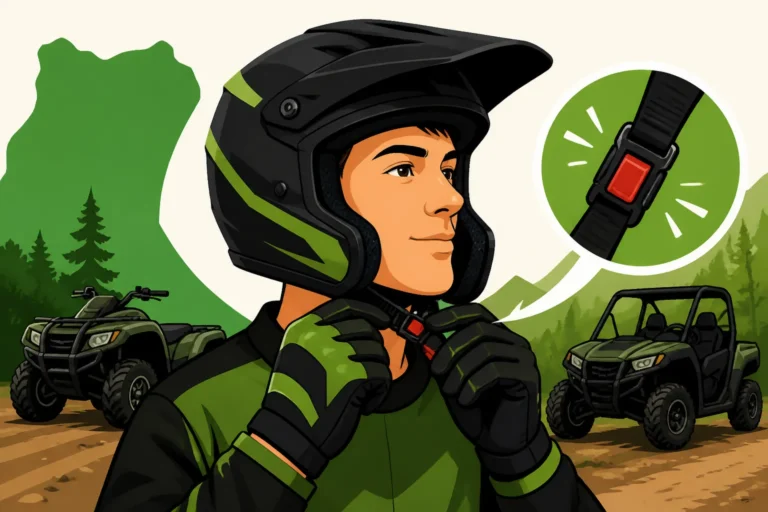
| Helmet | Required for under 18 | Mandatory for all riders and passengers |
| Head/Tail Lights | Required for night/low visibility | Required for public road access |
| Muffler | Required, must meet noise limits | Required, must meet noise limits |
By understanding and adhering to Vermont's specific regulations, especially the requirement for a TAD and the local nature of road access, you can ensure your ride from Maine to Vermont is nothing but smooth trails and unforgettable scenery. Enjoy your ride in the Green Mountains!
Disclaimer
This article is for general informational purposes only and does not constitute professional advice. Laws, prices and regulations vary by location and change over time. Consult a qualified professional for guidance on your specific situation.