Can You Ride an ATV on the Road in Vermont?
Many ATV and UTV enthusiasts dream of the freedom of riding from their driveway straight to the trails, but navigating the rules for riding an ATV on public roads in Vermont can feel like trying to solve a complicated puzzle. It's incredibly frustrating when you hear conflicting information or discover that what's legal in one town might get you a hefty fine in the next. This guide is here to cut through the confusion, offering a realistic look at Vermont's road access rules, what you absolutely need to know before you even think about putting a tire on pavement, and how to enjoy the trails responsibly without breaking any laws.
The Nuance of Vermont's ATV Road Rules: It's Not a Simple "Yes" or "No"
When it comes to riding your ATV or UTV on public roads in the Green Mountain State, the answer isn't a straightforward yes or no. This ambiguity is often the biggest source of headaches for riders, especially those new to Vermont or just visiting. Unlike some states where ATVs might have broader road access by default, Vermont operates on a more localized, granular system that puts a lot of power in the hands of individual towns. This means you can't just assume anything; you have to do your homework every single time you venture into a new area.
Why Local Ordinances Are Everything in Vermont
The core reason for this complexity is that while state law generally restricts ATVs from most state highways, it grants local selectboards the authority to open town-maintained roads to off-road vehicles. This crucial distinction means that what applies in one town, say Brighton, might be completely different from a neighboring town like Island Pond. It's a patchwork quilt of regulations, which can be incredibly frustrating for riders simply looking to connect trails or access amenities. One minute you could be legally cruising down a gravel road, and the next you might unknowingly cross an invisible town line where ATVs are strictly prohibited, leading to potential fines and a ruined day. This is why you'll often hear us emphasize that understanding local ordinances is paramount. The process for opening these roads isn't automatic; it involves town meetings, public hearings, and official designations by the local selectboard, as detailed in articles like [How a Vermont Selectboard Opens a Road to ATVs].
This localized control is a double-edged sword. On one hand, it allows communities to tailor rules to their specific needs, considering factors like traffic volume, population density, and the wishes of residents. On the other hand, it places a significant burden on riders to stay informed. You can't just rely on general knowledge; you need specific, up-to-date information for every town you plan to ride through. This often means checking town websites, looking for posted signs, or even contacting town clerks directly. It's a far cry from the simple "open or closed" sign you might see on a private trail system, and it demands a higher level of rider responsibility to navigate successfully.
What Kind of Roads Might Be Open to ATVs?
So, if local towns have the power to open roads, which roads are we talking about? Generally speaking, the state's major paved highways (think Routes 2, 7, or 100) are almost always off-limits to ATVs, regardless of local ordinances. These are managed by the state and are typically considered too high-speed and high-traffic for off-road vehicles. The focus for potential ATV access shifts almost entirely to town-maintained roads. These can range from paved village streets to dirt and gravel roads, and even the often rugged and unmaintained Class 4 roads.
Town roads, particularly those that are less traveled or connect directly to established trail networks, are the most common candidates for being designated as open to ATVs. For example, a town might open a particular section of a Class 3 gravel road to allow riders to get from a trail parking lot to a general store or to link two segments of the VASA trail system. [Vermont ATV Rules on a Class 4 Road] can be particularly complex, as these roads are often not regularly maintained and may only be accessible by ATVs or robust 4×4 vehicles. However, even when a town opens a road, there are often specific conditions attached, such as speed limits, time-of-day restrictions, or seasonal closures. Always remember that simply because a road looks like a good place to ride doesn't mean it's legal. Signs, or the lack thereof, are your primary indicator, but verification through official town channels is always the safest bet.
Essential Requirements for Riding Your ATV on Vermont's Permitted Roads
Even if you find a town that has graciously opened some of its roads to ATVs, you can't just jump on your machine and go. Vermont has a strict set of requirements that your ATV and you, as the rider, must meet to legally operate on any public thoroughfare, even those specifically designated for ATV use. Skipping any of these steps isn't just risky; it can lead to tickets, fines, and potentially having your ride cut short. Think of it as earning the privilege to share the road; there are responsibilities that come with it.
Registration, Decals, and Legal Documentation
First and foremost, your ATV or UTV absolutely must be registered with the Vermont Department of Motor Vehicles (DMV). This isn't just for trail riding; it applies equally to any legal road use. Many people ask, [Do You Need to Register an ATV in Vermont?] and the answer is a resounding yes if you plan to ride anywhere off private land. This process involves submitting proper proof of ownership and paying the required fees. You'll want to be familiar with the [Vermont ATV Registration Cost] and ensure all your paperwork is in order before you even consider hitting a town road. Having your registration certificate and proof of ownership on you is non-negotiable, as a warden or law enforcement officer can ask to see them at any time.
Beyond the basic registration, if the town road you're on is part of or connects to the VASA (Vermont ATV Sportsman's Association) trail system, you will also need a Vermont Trail Access Decal, often referred to as a TAD. This decal signifies that you've paid your dues to support the trail system, which often includes segments of town roads. Learn more about it by checking out [Vermont TAD: The Trail Access Decal Explained]. While not always strictly a "road rule," it's critical for seamless riding on interconnected routes. Failure to display a current TAD on VASA-designated road connectors can lead to penalties, as these funds directly contribute to the maintenance and insurance of the trails, including the very road sections you might be using.
Insurance, Helmets, and Safety Gear
Safety is paramount, and Vermont's laws reflect this, especially when ATVs venture onto shared public roads. One of the most critical requirements is insurance. You absolutely must carry [Vermont ATV Insurance Requirements], specifically liability coverage. This isn't optional; it's a legal mandate designed to protect other road users and property in case of an accident. Imagine a scenario where you're riding a permitted road section and an unforeseen incident occurs – that liability insurance is your safeguard and a legal necessity. Always carry proof of insurance with you, as it will be requested alongside your registration.
And let's talk helmets. There's no exception here: [Vermont ATV Helmet Law for Every Rider] means exactly that. Everyone, regardless of age or experience, must wear an approved helmet when operating or riding as a passenger on an ATV or UTV on any public land or designated trail, which includes open roads. This isn't just about avoiding a ticket; it's about protecting your life and well-being. Additionally, while not every town explicitly mandates them for ATVs, it's wise to ensure your machine is equipped with functional headlights, tail lights, and brake lights, especially if you anticipate riding during dawn, dusk, or in low visibility conditions. Many riders also choose to add mirrors to their machines when riding on roads, as they significantly improve situational awareness. Products from companies like SuperATV offer a wide range of accessories, from durable headlights to robust mirrors and even full windshields, that can enhance safety and help meet any specific town requirements for road-legal operation. These additions not only keep you compliant but also make your ride much safer when sharing the pavement with other vehicles.
Machine Specifications and Modifications
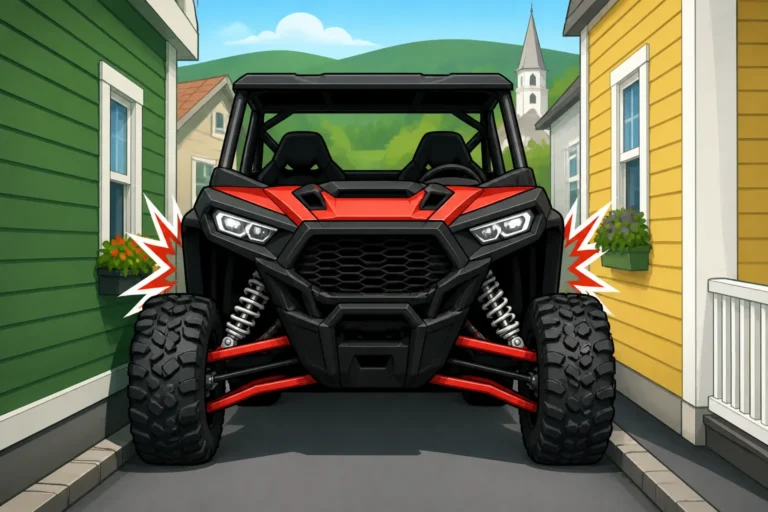
Vermont has a clear definition for what constitutes an ATV, and this definition is crucial for understanding whether your machine is even eligible for road access, let alone trail use. Generally, an ATV must be less than 72 inches wide, weigh less than 2,500 pounds dry weight, and have a non-straddle seat. Machines that exceed these dimensions fall into the "All-Terrain Side-by-Side Vehicle" (ASV) category, which has its own registration rules and might face different local road access restrictions. It’s important to know if your machine fits the state’s classification.
Beyond the basic definition, certain modifications might be necessary or highly advisable for road use. While statewide mandates for things like turn signals or a horn on an ATV aren't always explicit for every road-open scenario, many towns or specific situations might imply or require them for safe integration with other traffic. For instance, if you're riding a permitted section of a paved village road, having visible turn signals and a working horn vastly improves your ability to communicate with drivers of cars and trucks, making the experience safer for everyone. Many riders opt to equip their machines with these types of road-friendly accessories, often sourced from aftermarket providers like SuperATV, even if they aren't strictly mandated. These additions are about proactive safety, not just compliance. Ensuring your tires are in good condition and suitable for mixed terrain (including pavement, if you're riding roads) is also critical, as is having properly functioning brakes. A well-maintained machine that is clearly visible and able to signal its intentions contributes significantly to a safe road-sharing experience.
Navigating Local Rules and Staying Compliant
Given Vermont's hyper-local approach to ATV road access, merely knowing the state's general requirements isn't enough. The real challenge, and where many riders get tripped up, lies in understanding and adhering to the specific rules laid down by individual towns. This means your research doesn't stop once you've registered and insured your machine; it's an ongoing process that defines your riding itinerary.
Researching Town Ordinances and Posted Routes
This is perhaps the most critical step for any rider planning to use an ATV on Vermont roads: you must research the specific town ordinances for every community you intend to enter. It cannot be overstated how different these rules can be from one town line to the next. What's allowed in [Brighton's ATV Ordinance Explained in Vermont] might be entirely different from the regulations in [Newport City's ATV Routes in Vermont]. Some towns might open a few specific roads to connect trail segments, while others might prohibit ATVs entirely on all public ways. The best way to find this information is typically through the town clerk's office, the town's official website, or by looking for clearly posted signs at town boundaries or along designated routes. Many ATV clubs also maintain updated maps and information for their areas, which can be invaluable resources.
When a town opens roads to ATVs, they will typically designate specific "posted routes." These routes are usually marked with official signs indicating that ATV use is permitted. Stick strictly to these marked routes. Veering off onto an unmarked road, even if it looks like a continuation or a shortcut, could land you in trouble. These posted routes are the key to legal road riding. Without clear signage or confirmed information from the town, assume the road is closed to ATVs. Taking the time to plan your route, referencing official town maps or VASA maps, is essential to avoid accidental trespass or violations. This proactive research is the cornerstone of responsible and legal ATV use on Vermont's roads.
Common Road Riding Restrictions and Penalties
Even on roads that are open to ATVs, you'll almost certainly encounter additional restrictions that are specific to road use. These commonly include limitations on speed, time of day, and even the time of year. For instance, many towns will impose [Vermont ATV Speed Limits on Town Roads] that are lower than the posted limit for cars, often around 25 mph, to ensure safety on shared roads. There might also be [Vermont ATV Curfew Hours by Town], meaning you can't ride after dark or before a certain hour in the morning, especially in more populated areas. Furthermore, some towns might have [Vermont ATV Season Dates on Town Roads] that align with the VASA trail season (typically May to October), but others might have unique variations, so always check.
Failure to adhere to these local ordinances and restrictions can result in significant penalties. [Vermont ATV Fines for Road Violations] can range from moderate tickets for minor infractions (like exceeding a speed limit or violating a curfew) to more substantial fines and even impoundment of your machine for more serious offenses, such as riding on a clearly prohibited road. The enforcement of these rules falls to local law enforcement, state police, and sometimes even game wardens. It's also critical to remember that while a town might open a road, private land adjacent to that road remains private. Riding onto private property without explicit permission is trespassing, a serious offense with its own set of legal consequences. Always respect property lines, stay on designated routes, and be mindful of noise and dust, as these are often the primary concerns of residents who live along these routes.
Practical Tips for a Responsible Vermont Road Ride
Embarking on an ATV adventure that includes town roads in Vermont is a fantastic way to experience the state's beauty, but it requires more than just a functioning machine and basic knowledge. To truly enjoy your ride and contribute positively to the riding community, you need to be prepared, respectful, and fully aware of your surroundings. These practical tips can help ensure your journey is not only legal but also enjoyable and sustainable for the future of ATV access in Vermont.
Planning Your Route and Connecting Trails
One of the main reasons ATVs are permitted on certain town roads in Vermont is to provide crucial connections between segments of the extensive VASA trail system. These road links allow riders to bridge gaps between off-road trails, access services like gas stations and restaurants, or even ride directly from their lodging to the nearest trailhead. Therefore, careful route planning is absolutely essential. Don't just head out with a vague idea of where you're going. Obtain official [Vermont ATV Trail Map Downloads] from VASA or local clubs, and meticulously plan your journey, identifying every road section you'll be using. Cross-reference these maps with current town ordinances to ensure every inch of your route is legal.
It's a good practice to identify potential fuel stops, restrooms, and emergency services along your route, especially when traversing the less populated areas of the Northeast Kingdom. Understanding your machine's fuel range is vital, as gas stations can be few and far between on some loops. Consider packing a small repair kit, extra water, and snacks, as relying solely on roadside amenities might not always be feasible. Planning also extends to knowing when and where to transition from designated trail to public road and back again. These transition points are often clearly marked, but being familiar with them in advance will prevent confusion and ensure you stay on legal ground.
Being a Good Neighbor and Ambassador
The future of ATV road access in Vermont hinges significantly on the conduct of riders. When you're on a town road, you're not just representing yourself; you're representing the entire ATV community. Being a good neighbor means minimizing your impact and maximizing courtesy. This starts with noise. While many ATVs are naturally louder than cars, excessive throttle or aftermarket exhausts that exceed legal sound limits can quickly generate complaints from residents, potentially leading to road closures. Consider quieter exhaust options, or simply ride mindfully, especially when passing through residential areas. Companies like SuperATV offer parts that can help keep your machine running efficiently and within noise limits, ensuring you're not an unwelcome rumble.
Dust is another significant concern, particularly on unpaved town roads during dry spells. Slow down when passing houses or other vehicles to reduce the amount of dust kicked up. Always yield to other vehicles, pedestrians, and cyclists, and be especially cautious around horses, slowing to a walk or stopping if necessary. Adhere strictly to posted speed limits on roads, even if they feel slow. Remember that the ability for ATVs to use town roads is often a privilege granted by local communities, and maintaining that privilege means demonstrating respect for residents and the environment. Educate yourself and any passengers, especially younger riders, about proper etiquette and [Vermont ATV Crossing Rules at Age 12] when you encounter state highways. By being polite, considerate, and compliant, you contribute to a positive perception of ATV riding, helping to keep those valuable road connections open for everyone to enjoy.
Disclaimer
This article is for general informational purposes only and does not constitute professional advice. Laws, prices and regulations vary by location and change over time. Consult a qualified professional for guidance on your specific situation.