Vermont Towns That Never Opened a Road
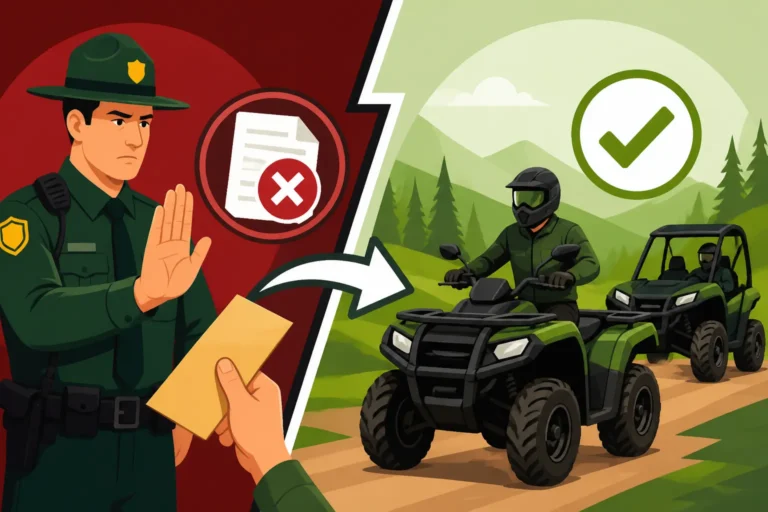
Riding an ATV in Vermont offers some of the most breathtaking scenery and challenging trails you could ask for. But let's be real, nothing sours a planned ride faster than pulling up to a town road, eager to connect to the next segment of trail, only to be met with a "No ATVs" sign. It's frustrating, confusing, and can throw your entire day off track. This guide is here to help you understand why some Vermont towns choose not to open their roads to ATVs, how to identify them, and what this means for your riding adventures.
Understanding Vermont's Local Control over ATV Road Access
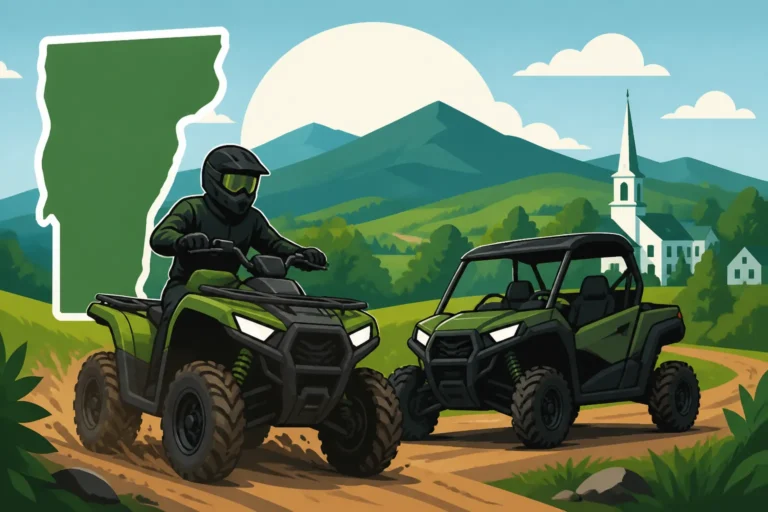
One of the unique aspects of ATV riding in Vermont, and one that often causes a good deal of head-scratching for riders, is the hyper-local control over road access. Unlike some states where rules are set statewide, Vermont gives significant authority to its individual towns. This means that your experience on a municipal road can change dramatically from one town line to the next.
The Power of the Selectboard: Why Towns Decide
In Vermont, the town's legislative body, typically called the Selectboard, holds the keys to whether ATVs can operate on town-maintained roads. This isn't just a casual decision; it's a formal process rooted in state law that empowers local officials to designate which, if any, municipal roads are open to ATVs. They're tasked with balancing the interests of residents, riders, and the overall community. You might be accustomed to thinking of ATV regulations as statewide, but here, it’s truly a neighborhood-by-neighborhood discussion.
The Selectboard's decision to open or close roads to ATVs is usually an annual affair. They deliberate, often hold public hearings, and then pass an ordinance that explicitly lists the roads (or parts of roads) where ATVs are permitted. If a town's Selectboard takes no action to open roads, or explicitly votes against it, those roads remain closed by default. This is why you can ride through one town smoothly, only to find a hard stop at the border of the next. It boils down to local autonomy and local priorities. This annual designation process means that even roads that were open one year might be closed the next, making it crucial to stay informed. For more on this, check out [How a Vermont Selectboard Opens a Road to ATVs].
Common Reasons Towns Opt Against Opening Roads
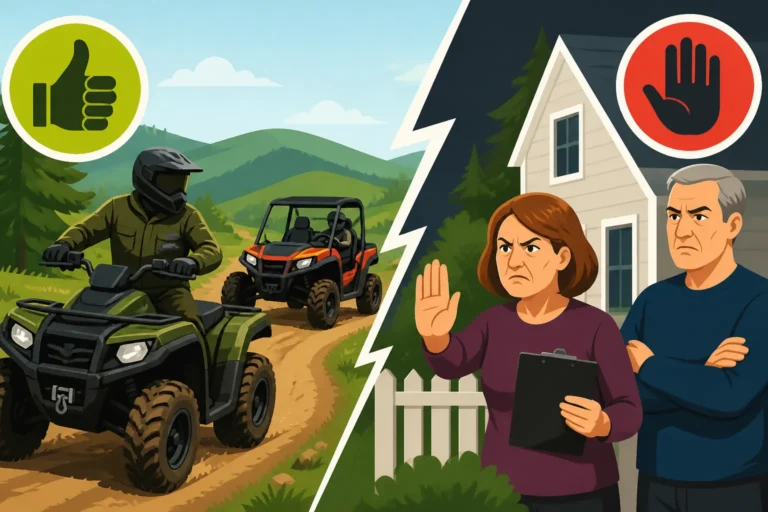
It’s easy to feel like towns are just being difficult when they close roads, but there are often very legitimate, albeit sometimes frustrating, reasons behind these decisions. One of the most frequently cited concerns is noise. Residents living along rural roads, especially in quieter communities, often express worries about the sound of ATVs disrupting their peace and quiet, particularly on weekends or late evenings. This concern can become a major sticking point in town meetings.
Another significant issue is road damage. ATVs, especially larger ones, can contribute to wear and tear on unpaved town roads, leading to ruts, dust, and gravel displacement. For towns with limited budgets for road maintenance, the added strain can be a genuine financial burden. Safety is also a perennial concern, especially in areas with narrow roads, blind corners, or residential neighborhoods where children play. Residents worry about the speed of machines, the potential for accidents, and the mixing of ATVs with cars, bicycles, and pedestrians. Finally, community feedback, often fueled by citizen petitions, plays a massive role. If enough residents voice opposition, their Selectboard is bound to listen. These factors are all part of the complex puzzle that town officials must navigate when considering road access.
Identifying Towns with Limited or No ATV Road Access
Knowing that local control is the norm, the next logical question is, "How do I know which towns are open and which aren't before I get there?" It's a critical piece of information for planning any ride, and thankfully, there are ways to find it, even if it requires a little digging.
Where to Find Official Town Ordinances and Maps
The most reliable source for information on ATV road access is the towns themselves. Every town's official ordinance, if one exists, should be accessible through their town clerk's office or on the town's official website. These documents will explicitly state which roads, if any, are open to ATVs. Sometimes, towns will even provide maps highlighting designated routes, making it much easier to visualize your ride. However, these resources can sometimes be buried deep within municipal websites, requiring a bit of persistence to locate.
Beyond individual town resources, the Vermont Association of Snow Travelers (VASA), which oversees the statewide trail system, is an invaluable resource. While VASA's primary focus is the trail system that runs largely on private land, they often work in conjunction with towns to connect trail segments via designated roads. VASA's website or local club contacts can sometimes provide insights or direct you to towns that are generally more ATV-friendly. It’s always best to cross-reference with the town’s official documents, though, as VASA focuses on trails, and the town focuses on road regulations. Staying updated on [Vermont ATV Road Rules: Towns Decide] is key.
Recognizing Signs of No ATV Access on the Ground
Even with the best planning, sometimes you find yourself in an unfamiliar area, and you need to quickly assess whether a road is open. The most obvious sign of no ATV access is a clear "No ATVs" or "No Off-Road Vehicles" sign posted at town lines or specific road entrances. These signs are there for a reason, and ignoring them can lead to problems. Look for consistent signage, especially in areas where different towns meet.
A lack of any designated ATV route signage is also a strong indicator. Towns that do open roads typically post signs indicating permitted routes, speed limits, and other regulations. If you see no such signs, it's safer to assume the road is closed. Another subtle, but often accurate, indicator is local sentiment. If you stop at a general store or gas station and ask about ATV routes, locals are usually quick to tell you if the town is "closed" or "open." They know their area best and can save you a lot of grief. Remember, if in doubt, it’s always best to turn around and find an alternative route.
The Impact of Closed Roads on Your Vermont Riding Experience
Encountering closed roads can significantly impact your ATV riding plans, especially if you're trying to connect different trail systems or access amenities like gas stations, restaurants, or lodging. It forces a different kind of trip planning, one that requires more foresight and sometimes, more equipment.
Navigating Around Non-Permissive Towns
When a town has decided its roads are off-limits, it doesn't necessarily mean your ride is completely derailed, but it does mean you'll need to adjust. Often, this involves trailering your machine around the closed town to reach the next open section of trail or another permissive town. This can add significant time and logistical complexity to your day, transforming a simple point-to-point ride into a multi-stage transport operation. Carrying a good trailer and having a reliable tow vehicle becomes even more crucial in these situations.
For those adventurous riders who enjoy exploring different terrains, components that enhance your machine’s versatility, like those offered by SuperATV, become invaluable. Upgraded suspension, larger tires, or heavy-duty axles can make traversing various surfaces more comfortable and reliable, particularly if you find yourself needing to detour onto less-maintained access roads or trails to bypass a closed area. Planning ahead with a detailed map, understanding where the trail officially ends and town roads begin, and knowing alternative staging areas are all part of the game. Sometimes, you might even find [Vermont Trails Connected by Town Roads], which makes planning easier, but it’s never a guarantee.
Legal Ramifications of Riding on Closed Roads
Riding on a town road that is not designated for ATV use carries significant legal risks, and ignorance of the local ordinance is rarely a valid defense. You could face fines, which can escalate with repeat offenses, and in some cases, your machine could even be impounded. This is a costly and inconvenient outcome that no rider wants. Local law enforcement, including town constables and game wardens, do patrol these areas and are usually quite familiar with which roads are open and which are not.
Beyond fines and impoundment, you could also be charged with trespassing, especially if the "closed" road is bordered by private property and you veer off the road. Vermont has clear [Vermont Trespass Law for Riders], and landowners in communities that oppose ATV access are often quick to report violations. An incident on a closed road could also complicate any insurance claims in the event of an accident, as your policy might not cover activities undertaken in violation of local laws. The bottom line is that respecting local regulations is not just about avoiding a ticket; it's about being a responsible rider and preserving the limited access that is available elsewhere. Always be mindful of [Vermont Penalties for Riding Unregistered] too, as an unregistered machine compounds any other violations.
How Communities Decide to Keep Roads Closed to ATVs
The decision-making process for opening or closing roads to ATVs in Vermont towns is a deeply democratic, and sometimes contentious, one. It's not usually a snap judgment made by one person, but rather the result of public input, careful deliberation, and a balancing act of various community interests.
Public Hearings and Citizen Engagement
When a Selectboard considers an ordinance regarding ATV road access, public hearings are almost always part of the process. These forums are where residents and interested parties can voice their opinions, concerns, and support. It's where you'll hear arguments about noise, safety, environmental impact, and economic benefits. Citizens can also submit petitions, either advocating for the opening of roads or, conversely, for keeping them closed. A well-organized petition, demonstrating significant community sentiment, can heavily sway a Selectboard's decision.
For riders, this means that participating in these hearings, or having local ATV clubs represent your interests, is crucial. If the only voices heard are those against ATV access, it's far more likely that roads will remain closed. Understanding the dynamics of [Vermont Town Meeting Votes on ATV Roads] can give you insight into how these decisions are shaped. It’s a microcosm of local governance, and every voice counts, whether it's for or against opening the roads.
Factors Influencing a "No" Vote from Selectboards
Selectboards face a tough job, balancing numerous factors when deciding on ATV road access. A "no" vote often stems from a combination of concerns. Environmental impact, particularly on sensitive ecosystems or water quality along dirt roads, can be a major factor. Some towns prioritize maintaining the quiet, rural character that attracts many residents, and they view ATV noise as incompatible with that vision. The historical preservation of certain areas or scenic routes might also lead to restrictions.
Infrastructure strain is another real consideration. Beyond just the cost of road maintenance, some towns might worry about the capacity of their emergency services to respond to incidents involving ATVs, or the need for increased law enforcement presence to monitor compliance. For smaller towns with limited resources, adding the burden of managing and enforcing ATV road use can seem overwhelming. Additionally, towns with strong agricultural ties might worry about ATVs interfering with farm operations or livestock. These are complex issues, and for more detail on the process, you can look at [Vermont Selectboard Hearings on ATVs].
Here’s a simplified look at common factors considered by Selectboards:
| Factor | Argument for Opening Roads | Argument for Closing Roads |
|---|---|---|
| Noise | Economic benefit from riders outweighs minor noise increase. | Disrupts peace, lowers quality of life for residents. |
| Road Damage | ATV clubs can help maintain, or rider fees offset costs. | Increases maintenance costs for already strained town budgets. |
| Safety | Riders can adhere to speed limits and safety protocols. | Mixes fast machines with cars, bikes, pedestrians; increases accident risk. |
| Economy | Brings tourism, supports local businesses (gas, food). | Minimal economic benefit, outweighed by negative impacts. |
| Environment | Responsible riding limits impact; designated routes prevent damage. | Causes erosion, dust, harms wildlife, impacts water quality. |
| Community | Provides recreation for local residents and visitors. | Changes rural character, leads to conflicts among residents. |
| Enforcement | Local law enforcement can manage regulations. | Difficult and costly to enforce, strains local police resources. |
Future Prospects and Advocacy for ATV Road Access
While some towns remain closed to ATVs, the landscape of access in Vermont isn't static. There's ongoing work by dedicated individuals and organizations to foster understanding, build relationships, and, where appropriate, advocate for responsible access.
The Role of ATV Clubs and VASA in Advocacy
ATV clubs are often the unsung heroes when it comes to maintaining and expanding riding opportunities in Vermont. These volunteer-driven organizations work tirelessly to build relationships with private landowners, secure permissions for trails, and maintain the existing trail network. They also play a critical role in engaging with town Selectboards. By demonstrating a commitment to responsible riding, offering volunteer help for road maintenance, and educating members on local ordinances, clubs can sometimes sway public opinion and local government decisions.
VASA, as the statewide organization, coordinates these efforts, provides resources, and advocates at a broader level. They represent the collective voice of ATV riders in Vermont and work to educate both riders and non-riders about the sport. Joining a local ATV club, such as those discussed in [Vermont ATV Clubs and What They Maintain], is one of the most effective ways to support advocacy for more access. Your membership dues and volunteer hours contribute directly to these efforts, showing towns that riders are organized, responsible, and invested in their communities.
Potential for Future Road Openings in Previously Closed Towns
It’s important to remember that a town's decision to close roads to ATVs isn't always permanent. Community sentiments can shift, new Selectboard members might bring different perspectives, or local businesses might begin to see the economic benefits that responsible ATV tourism can bring. Advocacy from local riders, combined with a proven track record of respectful riding on existing open routes, can gradually chip away at long-held opposition.
Sometimes, towns that were initially hesitant might consider opening a very limited number of specific roads to connect trail segments, especially if a clear plan for enforcement and maintenance is presented. For riders looking to traverse diverse terrain and perhaps even explore new potential routes, having a machine equipped for anything is key. SuperATV offers a range of durable parts and accessories, from heavy-duty axles to winch systems, that prepare your ATV or UTV for unexpected challenges or more demanding sections should new access points emerge. Patience, persistent advocacy, and demonstrating responsible riding are the best tools for opening doors in the long run.
Disclaimer
This article is for general informational purposes only and does not constitute professional advice. Laws, prices and regulations vary by location and change over time. Consult a qualified professional for guidance on your specific situation.