Vermont Road Designations Carry Forward
It’s a common frustration for ATV and UTV riders in Vermont: you’ve found a fantastic route, ridden it multiple times, and then, seemingly out of nowhere, you hear that part of it might be closed. This confusion often stems from how Vermont towns designate roads for off-road vehicle use, and the concept that these designations don't always "carry forward" automatically. It can feel like the rules are shifting under your tires, making it tough to plan a ride with confidence. This guide aims to clear up this often-misunderstood aspect of Vermont ATV laws, explaining the annual designation process and what it truly means for riding on town roads.
The Truth About "Carry Forward" for Vermont ATV Roads
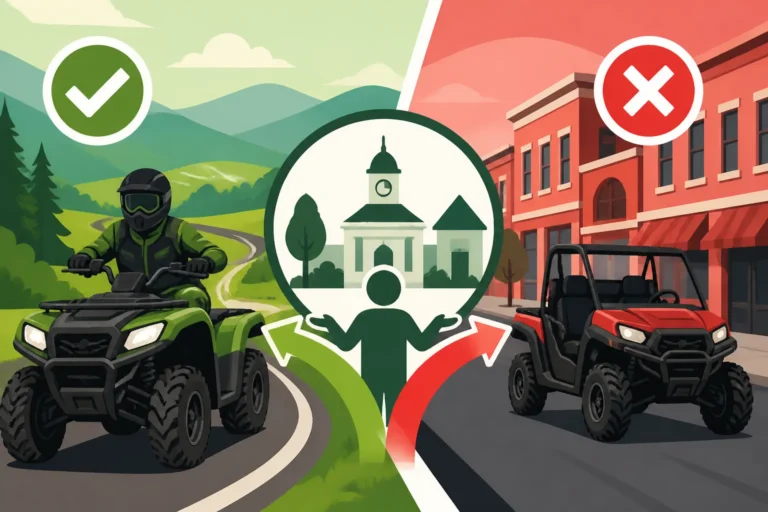
Many riders assume that once a town opens a road to ATVs, it's open for good. You spot the signs, enjoy the ride, and think, "Excellent, this is now a permanent part of the network." However, in Vermont, the reality is far more intricate and demands annual attention from every rider. The term "carry forward" might suggest automatic renewal, but when it pertains to ATV road access in Vermont, it generally refers to the potential for re-designation rather than a guaranteed continuation. Grasping this distinction is absolutely essential for any rider who wants to remain legal and avoid an unexpected fine.
The Core Concept of Annual Renewal
Unlike in some states where off-road vehicle road designations might remain valid for extended periods until officially revoked, Vermont operates on a system of annual designation. This means that each year, local selectboards are entrusted with the responsibility—and the authority—to decide which town roads will be accessible to ATV and UTV traffic. If a selectboard neglects to re-designate a road, that road is, by default, no longer open for ATV use, even if it was previously accessible. This isn't always about a deliberate act of closure; sometimes, it’s simply a lack of action, which unfortunately has the same legal consequence for riders. This fundamental detail is crucial for anyone planning their riding season. For a deeper dive into this, check out [What Happens If a Board Takes No Action].
Consider, for instance, a beloved route you’ve often enjoyed through the picturesque town of Brighton. Last year, the selectboard officially opened Main Street and a segment of Creek Road for ATV access, providing a vital link to a VASA trail. This year, if the selectboard convenes for its annual meeting and simply doesn't vote to renew those designations, or overlooks the necessary procedural steps, those roads become legally off-limits to ATVs. It’s not that new "no ATV" signs were erected; it's that the permission to ride there has simply expired. This annual renewal mechanism is deeply embedded in the principle of local control and serves as a powerful instrument for towns to manage the impact of ATV traffic.
Distinguishing from Permanent Road Access
It's vital to clarify that this annual process differs significantly from, for example, a state highway that generally prohibits ATVs unless specifically designated by the state (a rare occurrence) or a private road where access is solely at the landowner's discretion. Town roads, which form the connective tissue of many ATV routes, fall under the specific jurisdiction of the local selectboard. There isn't a "grandfather clause" that automatically extends designations year after year. Every season offers a new opportunity for the town to evaluate the situation, consider community feedback, and make a fresh determination.
Think of it akin to renewing your vehicle registration or annual permits; it’s not a permanent grant. Each year initiates a new cycle where the local governing body makes a deliberate choice. This system provides towns with considerable flexibility to adapt to evolving conditions, address resident concerns, or simply respond to the changing character of their community. A route that was perfectly suitable five years ago might now present challenges due to new residential developments, increased traffic, or environmental considerations. For riders, this means vigilance is paramount. Always verify the current year’s designations, particularly if you're exploring a town you haven't visited recently. It's an integral part of your responsibility to understand [Vermont ATV Road Rules by Town].
Impact on Rider Planning
The annual nature of road designations carries substantial implications for how you plan your ATV and UTV adventures across Vermont. You cannot simply rely on last year’s memory or an outdated map. Clubs affiliated with the Vermont ATV Sportsman’s Association (VASA) dedicate countless hours to communicating these changes, but ultimately, the onus rests on the individual rider to confirm current access. This may involve checking town websites, contacting the town clerk, or reviewing updated VASA trail maps that incorporate road sections.
Imagine organizing a multi-day trip linking several towns in the Northeast Kingdom. If just one critical road segment in a town isn't re-designated for the current year, your entire route could be compromised, necessitating detours or even rendering a section impassable. This uncertainty can be disheartening, especially if you've invested in a quality machine and accessories, perhaps even outfitting it with durable parts from SuperATV designed for Vermont's varied terrain. To ensure your investment yields accessible trails, staying informed about road designations is paramount. It’s not merely about knowing where the VASA trails are; it’s about knowing how to legally reach and travel between them using designated public roads.
The Annual Designation Process and Local Control
The procedure by which Vermont towns decide to open or close roads to ATVs is a clear illustration of local governance in action. It's not a statewide mandate but rather a sequence of deliberate steps undertaken at the municipal level. Comprehending this process isn't just an academic exercise; it empowers riders to engage with their local communities and advocate for continued or expanded access. It also helps explain why access can sometimes appear inconsistent from one town to another.
Selectboard Decisions and Public Hearings
At the core of the annual designation process is the local selectboard. These elected officials are responsible for the general administration of the town, including its road network. Annually, typically in late winter or early spring, selectboards consider whether to designate specific town highways for ATV use for the upcoming riding season. This decision usually entails reviewing past experiences, current conditions, and community feedback. A critical component of this process is the public hearing.
Public hearings serve as mandatory opportunities for residents to express their views, both in favor of and against ATV access on particular roads. Riders who wish to see continued access should plan to attend these hearings, or at minimum, submit written comments, to articulate the economic benefits, recreational value, and responsible riding practices that support opening roads. Conversely, residents concerned about noise, dust, or safety will also utilize these forums to voice their objections. The selectboard then weighs these inputs, alongside their own assessments, to make a final determination. Understanding [How a Vermont Selectboard Opens a Road to ATVs] can inform your engagement strategy.
The Importance of Public Input
Never underestimate the influence of public input in these local decisions. Selectboards are accountable to their constituents, and a well-reasoned, respectful presentation from the ATV community can be exceptionally persuasive. This means attending, speaking clearly, and demonstrating a commitment to responsible riding. It’s not solely about sheer numbers; it’s about the quality of the engagement. Are riders prepared to volunteer for trail maintenance? Are they demonstrating respect for private property? Are they aware of and adhering to noise regulations?
Conversely, a deluge of complaints from residents can quickly sway a selectboard towards closing or not re-designating routes. These are the "dust and noise complaints in a village" that can directly impact access. This is where individual rider behavior on designated roads becomes paramount. Every interaction, every ride, contributes to the overall perception of ATV users within the community. Positive engagement and responsible riding cultivate trust and support for continued access, while negative experiences can rapidly erode it. VASA clubs often play a vital role in coordinating this public input, ensuring a unified and positive message.
Notification and Publication Requirements
Once a selectboard decides to designate roads, there are specific legal mandates for public notification. This typically involves posting notices in prominent public locations, publishing them in local newspapers, and sometimes featuring the information on the town's official website. These notices will clearly itemize the roads open to ATVs and frequently include any specific restrictions, such as speed limits, seasonal dates, or curfews. This is why it’s so critical for riders to actively seek out this information rather than making assumptions.
For instance, a town might publish its annual designation list by late April, precisely outlining which roads will be open from, say, May 15th through October 1st. Riders should seek out these official announcements before embarking on their rides. If you're a nonresident rider, or simply exploring a new part of the state, verifying these local announcements is even more crucial. While VASA often compiles this information, it originates from these local town publications. It represents the official word, and it’s what local law enforcement or a game warden will reference if there's any question about your legal right to be on a particular road. You can find more information on [Annual Designation and What Lapses].
Why a Town Might Not Re-Designate an ATV Road
While many towns in Vermont acknowledge the economic and recreational advantages that ATV tourism can bring, the decision to open roads is never taken lightly. There are various reasons why a selectboard might opt not to re-designate a road, or even to close a previously open route. These reasons frequently reflect community sentiment, practical considerations, and the delicate equilibrium between outdoor recreation and residential quality of life. Understanding these factors can help riders appreciate the challenges towns face and, potentially, contribute to solutions that preserve access.
Common Reasons for Non-Renewal
One of the most frequent reasons for a town to not re-designate a road is simply a lack of sustained support or a shift in community priorities. Sometimes, the initial enthusiasm for opening a road diminishes if the perceived benefits fail to outweigh the perceived drawbacks. Road damage, particularly after heavy precipitation or during the spring thaw, can be a significant concern, leading to repair costs that the town budget might struggle to accommodate. Even with robust skid plates and underbody protection from a reputable company like SuperATV, the cumulative impact of numerous machines on unpaved roads can still create headaches for highway departments.
Another reason can be a change in the composition of the selectboard itself. New members might arrive with different perspectives on ATV use or a stronger focus on other community issues. What was once a straightforward "yes" vote might evolve into a contentious debate. Furthermore, if a previously open road saw very little actual ATV traffic, the town might conclude that the administrative effort of designation isn't justified for minimal use. It's not always about outright opposition; sometimes it's simply a matter of resource allocation and perceived utility.
The Influence of Resident Complaints
Few factors can prompt a selectboard to act—or, in this context, to not act—more swiftly than a consistent stream of resident complaints. Issues such as excessive noise, especially if riders are operating outside of designated hours or with modified exhaust systems, can quickly turn public opinion against ATV access. Dust stirred up on dry dirt roads is another common grievance, affecting air quality and cleanliness for homes situated along the route. Safety concerns, particularly in areas where ATVs share roads with pedestrians, cyclists, or children, are also paramount.
These complaints are often amplified in "Neighbors Who Petition Against Routes" and during public hearings. When multiple residents voice concerns about disruptions to their peace and quiet, or perceived dangers, the selectboard has a strong mandate to respond. Responsible riding, staying on marked trails, obeying speed limits, and being mindful of noise levels are not just legal requirements; they are essential for fostering good neighborly relations and preserving ATV access. It’s a collective responsibility, and the actions of a few irresponsible riders can unfortunately jeopardize access for everyone.
Budgetary and Maintenance Concerns
Maintaining town roads is a costly and continuous endeavor for Vermont municipalities, and the impact of ATV traffic can add to that burden. Even on well-constructed roads, heavy ATV use, particularly in challenging weather conditions, can contribute to wear and tear, frost heaves, and mud season closures. Towns must weigh the costs associated with increased grading, gravel replenishment, and drainage improvements. If the financial burden of maintaining ATV-accessible roads outweighs the economic benefits brought by riders (such as increased local business revenue), a selectboard might choose not to re-designate those roads.
Moreover, there are costs associated with signage, enforcement, and the administrative tasks involved in the designation process. While the VASA system and its member clubs perform an immense amount of work maintaining trails, the roads linking them are the town's responsibility. If a town perceives that ATV use disproportionately increases its highway department’s workload without sufficient offsetting benefits, then closing those roads can appear to be a fiscally sound decision. This is why supporting local businesses in towns that welcome ATVs is so important; it provides a tangible economic benefit that selectboards can consider.
Rider Responsibilities on Designated Vermont Roads
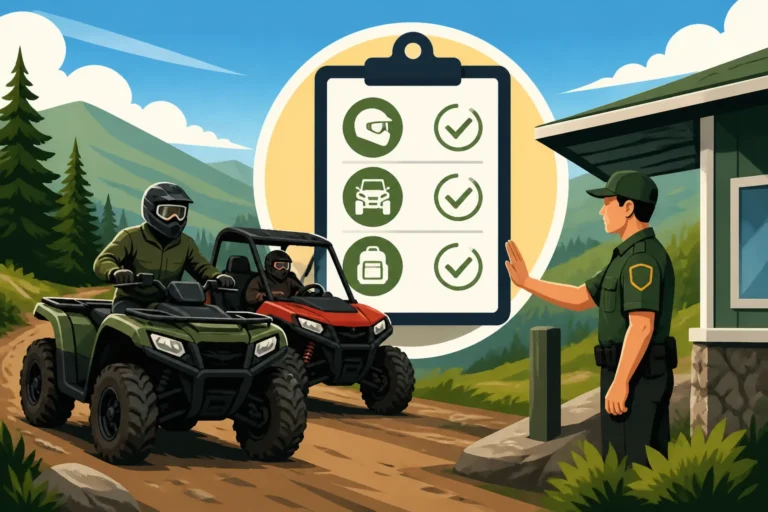
Being granted the privilege to operate an ATV or UTV on a town road comes with significant responsibilities. It’s not an unregulated free-for-all; these are public thoroughfares shared with cars, bicycles, pedestrians, and sometimes even agricultural equipment. Understanding and strictly adhering to all local and state regulations is crucial not only for your safety but also for the continued availability of ATV access on Vermont's roads. Disregarding these responsibilities is a sure way to jeopardize future access for the entire riding community.
Adhering to Local Ordinances
Every town that designates roads for ATV use will have its own specific local ordinance. While state laws establish a baseline, towns frequently add additional restrictions tailored to their unique circumstances. These can include:
- Speed Limits: Often lower than typical road speed limits, especially in village centers. Brighton, for example, has a [Brighton's 25 mph Cap in Vermont].
- Curfew Hours: Restrictions on when ATVs can operate, particularly at night, to mitigate noise complaints. You might encounter [Newport City's 10 p.m. to 7 a.m. ATV Curfew].
- Seasonal Dates: Specific start and end dates for the riding season, which may differ from VASA trail season dates.
- Designated Routes Only: Strict adherence to only riding on the specifically marked roads. Venturing onto non-designated roads, even briefly, can result in fines.
- Equipment Requirements: Beyond state minimums, some towns might have additional expectations for safety gear or machine configurations, such as specific lighting or mirrors.
Before riding in any new town, it is absolutely essential to check their specific ordinance. Do not assume the rules are uniform everywhere. A quick call to the town clerk’s office or a review of the town’s website can save you a lot of trouble. Riding on [Vermont Posted Routes and Their Signs] is paramount.
Insurance and Registration Essentials
Even when you’re riding on a designated town road, your machine must be properly registered and insured. This isn't optional; it's a fundamental legal requirement for operating an ATV or UTV in Vermont, particularly on public roads.
- Registration: Your ATV or UTV must possess a valid Vermont registration and display a current plate. If you’re a nonresident, you'll still need to ensure your machine is properly registered, either in Vermont or through reciprocity with your home state (if applicable). For details, check out [Vermont ATV Registration Cost].
- Insurance: Vermont law mandates specific liability insurance minimums for ATVs and UTVs operated on public roads. This coverage addresses bodily injury and property damage in the event of an accident. You must carry proof of this insurance with you at all times when riding. The minimums include [Vermont's $25,000 Bodily Injury Minimum], [Vermont's $50,000 Two-Person Minimum], and [Vermont's $10,000 Property Damage Minimum].
Operating without current registration and adequate insurance not only exposes you to significant financial risk in case of an accident but also carries substantial penalties and can result in your machine being impounded. These rules are in place to safeguard everyone, including yourself, other riders, and the public. Additionally, you'll need a [Vermont Trail Access Decal Explained] for VASA trails, but the road rules are distinct and separate.
Respecting Landowners and Property
A substantial portion of Vermont’s ATV trail system, and many of the roads that connect them, are adjacent to or traverse private property. Respect for landowners is not merely good etiquette; it’s critical for the very existence of the entire trail system. Landowners generously permit trails to cross their property, and abusing this privilege can lead to trails being permanently closed.
This implies:
- Stay on Marked Paths: Never deviate from the designated road or trail. Even a few feet off the path can be considered trespassing.
- Private Property is Private: Do not enter private driveways, fields, or woods unless you have explicit permission. This is especially true when riding [Vermont Riding Adjacent to Your Own Property].
- Leave Gates As You Found Them: If you encounter a gate, close it if it was closed, or leave it open if it was open. This is vital for managing livestock and property access.
- No Littering: Pack out everything you pack in. Leaving trash is not only disrespectful but also illegal.
- Mind Noise: Be especially conscious of noise levels when passing homes or livestock. This is another area where complaints can lead to road closures. Aftermarket exhausts that significantly increase noise can be problematic.
Every rider serves as an ambassador for the sport. Positive interactions and respectful behavior are what keep landowners content and roads open. The future of ATV riding in Vermont fundamentally depends on it.
Navigating Posted Signs and Understanding Route Maps
Successfully navigating Vermont's ATV road network demands more than just a good sense of direction; it requires a sharp understanding of official signage and how to interpret various route maps. This system is built upon local decisions, which means variations exist. The ability to read signs and maps accurately is essential for staying on designated routes and avoiding inadvertent trespassing or violations.
Identifying Official ATV Route Signs
When a town designates a road for ATV use, they are legally obligated to post official signs. These signs are your primary visual indicator that you are on a legal route. They typically mark the beginning and end of an ATV-friendly section, as well as providing directional arrows. These are specific municipal signs, distinct from generic trail markers. They are often green or blue, featuring an ATV symbol and sometimes the words "ATV Route" or "Designated ATV Road."
It's critical to actively look for these official signs. Do not assume that because a dirt road appears trail-like, it is automatically open to ATVs. The absence of a sign strongly suggests it is likely not a designated route, no matter how inviting it looks. Occasionally, towns will also post signs indicating specific restrictions, such as "No ATVs After 9 PM" or "25 MPH Speed Limit for ATVs." Pay close attention to these details, as they are legally binding. Think of these signs as your essential guide to legal riding on public thoroughfares.
Interpreting Town-Specific Regulations
Beyond the official route signs, some towns might also feature informational kiosks or larger signs at major entry points to their ATV network that detail their specific ordinances. These might elaborate on:
- Season Dates: When the local riding season commences and concludes.
- Hours of Operation: Specific times of day when riding is permitted.
- Safety Requirements: Reminders about helmets (which are mandatory for all riders, regardless of age, in Vermont), or other safety gear. You can read more about [Vermont ATV Helmet Law for Every Rider].
- Fines and Penalties: A clear statement of the consequences for violating local rules.
While not universally present, these supplementary signs can be incredibly helpful. If you don't encounter them, it remains your responsibility to seek out the town's complete ordinance document. Remember, the absence of a detailed sign does not absolve you of the responsibility for knowing the rules. If you’re uncertain, always err on the side of caution and verify the rules before you ride. This proactive approach ensures a smoother and more enjoyable experience for everyone.
Utilizing VASA Trail Maps
The Vermont ATV Sportsman's Association (VASA) plays a crucial role in connecting these designated town roads into a cohesive trail system. VASA's trail maps are invaluable resources for planning your rides. These maps typically illustrate:
- Designated VASA Trails: The core network meticulously maintained by VASA clubs.
- Designated Town Roads: Sections of town roads that have been officially opened to ATVs, enabling riders to link between different trail segments or access essential services.
- Points of Interest: Fuel stations, lodging, restaurants, and parking areas that are accessible by ATV.
It's important to understand that while VASA maps depict the connectivity through town roads, the actual designation authority ultimately rests with the individual towns. VASA collaborates closely with municipalities to facilitate the opening of these roads and to ensure their inclusion on maps. However, these maps are usually updated annually, and riders should always cross-reference them with the most current town ordinances. Relying on an outdated map risks riding on a road that is no longer designated. Joining a local VASA club, such as the Tri-County ATV Club near Island Pond, often provides access to the most up-to-date information and maps, and your membership fees directly contribute to supporting the network. Remember also that a [Vermont Registration Before Your First Ride] and a [Vermont Trail Access Decal Explained] are both critical.
The Role of Local Selectboards and Town Meetings
In Vermont, local control is deeply ingrained in the fabric of governance, and nowhere is this more evident than in decisions concerning ATV access on town roads. The selectboard and, in some instances, the broader town meeting, wield ultimate authority for these designations. Riders who aspire to be active participants in maintaining or expanding access need to grasp this local democratic process and learn how to effectively engage with it.
Legislative Authority at the Local Level
The power to open or close town roads to ATVs rests squarely with the local selectboard. They function as the governing body responsible for establishing policy, managing town affairs, and making decisions that impact public ways. This authority is conferred by state statute, allowing towns to determine which types of vehicles can operate on their roads beyond standard motor vehicle laws. This means that while the state sets some overarching rules (like registration and insurance requirements), the practical decisions about where you can ride are made at the town level.
This decentralized approach means that riding experiences can vary dramatically from one municipality to the next. One town might enthusiastically embrace ATV tourism, opening many of its dirt roads and even some village streets (like [Main Street Open to Machines] in certain towns), while a neighboring town might choose to keep all its roads closed. This is not necessarily due to animosity towards riders, but rather a reflection of local values, economic priorities, and community concerns. It’s this local legislative authority that necessitates annual review and consistent communication.
How Citizens Can Engage
For riders, understanding this local authority translates into knowing how and when to engage. Attending selectboard meetings, especially those where ATV road designations are on the agenda, is one of the most direct methods. These meetings are open to the public, and most towns allocate time for public comment. When speaking, be prepared, polite, and articulate. Emphasize the positive impacts of ATV tourism, the economic benefits to local businesses, and the responsible practices of riders.
Beyond meetings, individual riders or VASA club members can communicate directly with selectboard members. This can be through emails, letters, or even informal conversations. Building relationships and demonstrating a commitment to being a responsible part of the community can be highly effective. It's also important for riders to respect the democratic process, even if a particular decision doesn't align with their preferences. Persistent advocacy, founded on facts and respectful dialogue, is often more effective than confrontation.
The Power of Petitioning
In certain situations, if a community feels strongly about opening or closing a particular road, citizens possess the power to petition their selectboard or even propose an article for a town meeting. A petition, bearing a sufficient number of registered voters' signatures, can compel the selectboard to consider a specific action or place an item on the town meeting warning (agenda). This is a powerful instrument of direct democracy and can be utilized to initiate discussions or challenge existing policies regarding ATV access.
For instance, a group of local riders might gather signatures for a petition to open a section of road that would significantly connect two existing trail systems. Conversely, a group of residents might petition to close a road that they believe is causing too much disruption. These [Vermont Petitions to Open a Road] or [Vermont Petitions to Close a Road] demonstrate the direct influence citizens can have on local ATV policy. While petitioning requires effort and organization, it is a legitimate avenue for citizens to shape their local riding landscape.
Comparative Overview: Designation Action Outcomes
To further clarify the implications of a selectboard's annual decision, here's a table summarizing the different actions and their results.
| Selectboard Action | Outcome for ATV Road Access | Key Implication for Riders |
|---|---|---|
| Active Re-designation / Renewal | Road remains open for the specified season. | Ride with confidence, adhering to local ordinances. |
| No Action Taken | Road is not open for the upcoming season. | Do NOT ride. It is effectively closed, even without specific signs. |
| Active Revocation / Closure | Road is explicitly closed for the upcoming season. | Do NOT ride. Official signs or notices will typically confirm. |
| New Designation | A previously closed road is opened for the season. | Check for new signs and be aware of any specific new rules. |
| Conditional Designation | Road is open with specific added restrictions. | Pay close attention to extra speed, time, or equipment rules. |
This table underscores the active role towns play and the passive outcome of inaction. Riders must always confirm the current status, as "no action" can be just as impactful as an "active closure."
Disclaimer
This article is for general informational purposes only and does not constitute professional advice. Laws, prices and regulations vary by location and change over time. Consult a qualified professional for guidance on your specific situation.