Vermont Town Ordinances That Set Curfews
Riding your ATV or UTV in Vermont can feel like navigating a patchwork quilt of rules, especially when it comes to when and where you can actually be on the roads. One minute you're enjoying the scenic beauty, the next you're wondering if that hum from your engine is about to get you into trouble after dark. This guide aims to clear up the confusion around Vermont town ordinances that set curfews, helping you understand the "why" and "how" of these local regulations so you can ride confidently and respectfully.
Understanding Vermont's Local Control over ATV Road Access
One of the most unique, and sometimes frustrating, aspects of ATV and UTV riding in Vermont is the sheer amount of local control that towns and villages exercise over road access. Unlike some states where rules might be more uniform across the board, Vermont empowers its local communities to decide what works best for them. This means that a road open to ATVs in one town might be strictly off-limits, or only open during certain hours, just across the town line. It's a system designed to protect local character and quiet enjoyment, but it definitely puts the onus on riders to do their homework.
Why Towns Have the Final Say
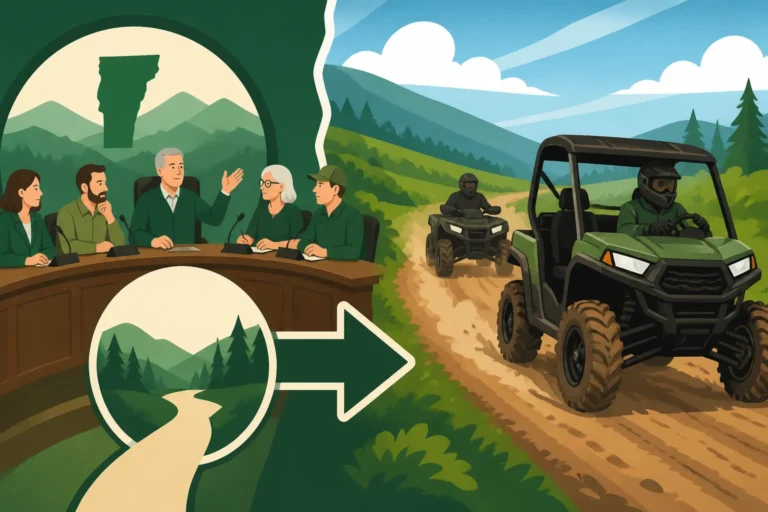
The Vermont state statutes lay out a framework for off-highway recreational vehicles (OHRVs), but they explicitly delegate the authority for opening specific town highways and legal trails to local legislative bodies, typically the selectboard in towns or the trustees in villages. This isn't just about speed limits or helmet laws; it extends to the very hours of operation. These local boards are often responsive to the concerns of their constituents – residents who live along these roads and trails. They're balancing the desire for recreational access with considerations like noise, safety, and the peace and quiet of their communities. It’s why you might find that a tiny village with many year-round residents has a stricter curfew than a more rural area.
The rationale is quite simple from a governance perspective: local issues are best managed at the local level. While this ensures that ordinances truly reflect the specific needs and desires of a community, it also means that what you consider a reasonable riding hour can change dramatically from one town to the next. This hyper-local approach means that while the state sets the overarching guidelines, the specific, day-to-day rules you encounter on the ground, especially regarding curfews, are a direct result of local decision-making. You'll often find that the rules are decided through a specific process. For more on this, check out [How a Vermont Selectboard Opens a Road to ATVs].
The Annual Designation Process
It’s not a "set it and forget it" situation either. Many of these local ordinances and road designations for ATV use are reviewed and re-approved annually. This means that a road that was open last year with certain hours might have its status or curfew adjusted for the current season. This annual process often involves public hearings, where residents can voice their support or opposition, and selectboards can gather feedback before making their final decisions. Imagine planning a multi-town ride, only to find out that a crucial connecting road has new, more restrictive hours this year because the local board voted to change it. This is why staying informed isn't just a suggestion; it's a necessity for Vermont riders.
This dynamic nature of the rules means you can't rely on old maps or past experiences alone. What was true even a year ago might have changed. Clubs like VASA (Vermont ATV Sportsman's Association) and their member clubs work closely with towns to help manage and advocate for consistent access, but ultimately, the local selectboard holds the power. This ongoing review process is a direct reflection of the community's evolving relationship with OHRV use. Understanding this annual dance helps riders appreciate why the rules can be so fluid and why checking current maps and ordinances is absolutely paramount before hitting the trail.
The Challenge of Uniformity for Riders
For those of us who just want to enjoy a day on the trails, the lack of uniformity across Vermont towns can be a real headache. You could be riding a beautiful stretch of trail, cross an invisible town line, and suddenly be in violation of a curfew you didn't even know existed. This isn't just an inconvenience; it can lead to fines and a sour experience. It means you can't make assumptions, ever. A 9 p.m. curfew in one town might be an 8 p.m. curfew in the next, or perhaps no specific curfew at all, just a general expectation of quiet enjoyment.
This fragmented regulatory landscape often leads to frustration, especially for riders traveling through multiple jurisdictions. It forces a level of vigilance that isn't always present in other recreational activities. For example, if you're trying to make it back to your lodging after a full day of riding, and you're covering ground through two or three different towns, you essentially have to plan your return based on the earliest curfew you'll encounter on your route. It's a logistical challenge that adds an extra layer of planning to what should be a straightforward day out. Tools and apps that consolidate local ordinance information can be a godsend for riders navigating this complexity.
The Rationale Behind Town Curfews
Towns don't just pull these curfews out of thin air; there's usually a very good reason behind them, rooted in community concerns and quality of life. While it might feel restrictive to us as riders, understanding the local perspective can help foster a more respectful and sustainable riding environment for everyone. These curfews are often a direct response to issues that arise when ATVs and UTVs are used on town roads, especially during evening and nighttime hours. It's a balancing act between allowing recreational access and maintaining the peace for residents.
Noise Concerns in Residential Areas
Let's be honest: ATVs and UTVs, especially some of the more powerful models equipped with aftermarket exhausts, aren't exactly known for being quiet. While many modern machines are designed to meet noise regulations, the reality of a machine rumbling down a residential street at 10 p.m. is very different from its sound at 10 a.m. Noise complaints are frequently at the heart of ATV curfews. Residents value their peace and quiet, particularly in the evening and overnight hours. A handful of loud riders after dark can quickly turn public opinion against ATV access on town roads, even if the majority of riders are respectful.
Curfews are a practical tool for towns to mitigate these noise impacts. By setting specific hours, they aim to ensure that residential areas are quiet during typical sleeping hours. Think about a family with young children or someone working an early morning shift – the sound of an ATV, even a relatively quiet one, can be disruptive. These rules are often a direct response to genuine concerns about noise pollution and the disruption of residential tranquility. Aftermarket modifications, while sometimes enhancing performance or aesthetics, can also exacerbate noise issues, making it even more important for riders to be mindful of their exhaust systems, especially when considering brands like SuperATV for upgrades that might affect sound levels.
Safety Considerations After Dark
Riding an ATV or UTV after dark introduces a whole new set of safety concerns, both for the riders themselves and for other road users. Visibility becomes a major issue. While your machine undoubtedly has headlights and tail lights, the nuances of rural Vermont roads – unexpected curves, wildlife, unlit driveways, and pedestrians – are amplified in low light conditions. Other vehicles might not spot you as easily, and you might not see obstacles as quickly. Curfews are often a proactive measure to reduce the risk of accidents during these more challenging hours.
Even with proper lighting, the potential for reduced visibility and increased fatigue plays a significant role in a town's decision to restrict nighttime riding. Deer, moose, and other wildlife are much more active at dusk and after dark, posing a serious hazard. Furthermore, the combination of darkness and the temptation to speed on open roads can increase the likelihood of incidents. By establishing curfews, towns are often trying to protect riders from themselves and prevent potential collisions that could lead to serious injury or property damage. They also want to make sure that the roads are safe for everyone, whether they're in a car, on a bicycle, or just out for a walk. For more on essential equipment, including lights, see [Vermont Headlight and Tail Light Rules] and [Vermont Lights Required After Dark].
Community Feedback and Quality of Life
Ultimately, town curfews are a reflection of a community's desire to maintain a certain quality of life. This often comes directly from public feedback – residents speaking up at town meetings, sending letters, or petitioning their selectboard. When a few bad apples repeatedly cause disturbances, whether through excessive noise, reckless riding, or simply riding at inappropriate hours, it can quickly erode public support for ATV access. Curfews are a way for towns to address these concerns and demonstrate to their residents that their feedback is heard and acted upon.
It's about finding a balance. Communities want to be welcoming to recreation, but not at the expense of their own peace, safety, and comfort. The local character of Vermont towns, with their close-knit communities and appreciation for quiet rural living, means that these quality-of-life considerations often carry significant weight. Curfews are not designed to punish riders, but rather to protect the very fabric of what makes these communities special. Engaging with this process and understanding [Vermont Town Meeting Votes on ATV Roads] can give riders a voice.
Common Curfew Structures You'll Encounter
Given the local control over ATV rules, you'll find a variety of curfew structures across Vermont. It's not a one-size-fits-all scenario, which is why checking the specific ordinance for each town you plan to ride through is critical. Some towns might have very straightforward rules, while others might have more nuanced regulations that factor in weekends, holidays, or even specific seasons. Getting caught off guard is easy, so familiarize yourself with these common patterns.
Fixed Nightly Curfews (e.g., 9 PM to 7 AM)
The most common type of curfew you'll encounter is a fixed nightly period during which ATV and UTV operation on designated town roads is prohibited. This often means something like "no ATV operation between 9 p.m. and 7 a.m." or similar hours. These curfews are typically in effect every day of the week, regardless of whether it's a weekday or weekend. They are generally implemented to ensure quiet enjoyment during typical sleeping hours and to enhance safety during periods of reduced visibility.
For example, a town might simply state that all OHRV routes are closed to traffic during these specified nighttime hours. This makes it relatively easy to understand: once the clock strikes 9 p.m., you need to be off the town-designated roads. Conversely, you can't start your morning ride until 7 a.m. This structure is designed for clarity and easy enforcement, providing a consistent boundary for riders and residents alike. It's worth noting that even if you're riding a machine designed for quiet operation, or one with premium components from a brand like SuperATV that ensures reliability, these curfew hours are still in effect, and the rules are not flexible.
Seasonal Curfews and Their Variations
Beyond fixed nightly curfews, some towns might implement seasonal restrictions or variations based on the time of year. For instance, a town might have a stricter curfew during the summer months when residents are more likely to have windows open, or when children are out playing later. Conversely, some towns might relax certain hours during hunting season to accommodate hunters using ATVs for access, though this is less common for general road access than for private land or designated trails.
Another variation might involve "mud season" closures, which while not strictly a curfew, limit access during certain parts of the year when roads are most vulnerable to damage. These seasonal considerations mean that a route open with specific hours in July might have different rules in October. It underscores the importance of checking current ordinances and local announcements, as these seasonal adjustments can significantly impact your riding plans. Always consult local club maps or town websites for the most up-to-date information, particularly as seasons change.
Weekend vs. Weekday Differences
Some towns recognize that noise and traffic patterns change between weekdays and weekends, and their ATV curfews might reflect this. You might find that a town has a slightly later curfew on Friday and Saturday nights (e.g., 10 p.m. instead of 9 p.m.) to allow for more evening recreational activity, while maintaining stricter hours during the work week. Or, conversely, a town might impose stricter rules on weekends to preserve the peace when more residents are home enjoying their properties.
These nuanced differences are often a direct result of community input and an attempt to strike a balance between recreational desires and residential peace. It's a pragmatic approach that acknowledges varying rhythms of community life. However, it also means that riders must pay even closer attention to the specific day of the week when planning their rides. For example, knowing that [Newport City's Curfew Hours in Vermont] are 10 p.m. to 7 a.m. can be helpful, but you'd still need to confirm if that applies uniformly across all days or if there are weekend variations. This level of detail is crucial for responsible riding and avoiding citations.
Navigating Specific Town Ordinances
Knowing that local ordinances dictate curfews is one thing; actually finding and understanding those specific rules for each town you plan to visit is another. It can feel like a scavenger hunt! However, being prepared is your best defense against accidental violations. Let's look at a few examples of how different Vermont towns approach these curfews, keeping in mind that these can change, so always verify the latest information.
Brighton's ATV Ordinance Explained in Vermont
Brighton, home to Island Pond, is a popular ATV destination, and like many towns that embrace OHRV tourism, it has a comprehensive ordinance. Brighton's rules are quite specific, reflecting the town's experience with managing ATV traffic in a vibrant recreational area. They've designated specific routes and times. For instance, [Brighton's ATV Ordinance Explained in Vermont] often outlines not just operating hours, but also speed limits on town roads (often capped at 25 mph), and restrictions on where ATVs can park or access services.
When it comes to curfews, Brighton has historically implemented a fairly standard nightly curfew, such as no riding between 9 p.m. and 7 a.m. This applies to the designated town roads that are part of the VASA trail system. These hours are put in place to ensure that the many residents and visitors staying in the village can enjoy a peaceful evening. Understanding these specific local rules is paramount, especially in a town like Brighton where you'll find a mix of year-round residents, seasonal campers, and ATV enthusiasts.
Newport City's Curfew Hours in Vermont
Newport City, another hub in the Northeast Kingdom, also navigates the balance of ATV access with urban and residential peace. Its approach to curfews tends to be specific to its character as a city, rather than a more rural town. [Newport City's Curfew Hours in Vermont] are generally quite clear, often prohibiting ATV use on designated routes between 10 p.m. and 7 a.m. This later start to the curfew (compared to Brighton's 9 p.m.) might reflect the city's slightly different evening rhythm, but it's still a firm boundary.
These curfews in Newport City are particularly important because the designated routes often integrate closely with city streets and residential areas. Riders need to be acutely aware of when they must transition from city routes to more remote trails or when they need to be off the roads entirely. The city's ordinance also typically specifies where ATVs can travel, often focusing on routes that connect to the broader VASA trail system while minimizing impact on core downtown areas or densely populated neighborhoods.
Braintree's ATV Ordinance in Vermont
Moving to a different region, Braintree, in Central Vermont, provides another example of a town establishing its own rules. While perhaps not as widely known as an ATV hub as the Northeast Kingdom towns, B [Braintree's ATV Ordinance in Vermont] still illustrates the local control principle. Often, smaller, more rural towns might have slightly different curfew approaches. They might, for example, have a general expectation of "quiet hours" rather than a hard-and-fast curfew written explicitly into the ATV ordinance, or they might adopt a standard 9 p.m. or 10 p.m. cut-off.
The key takeaway from Braintree, and indeed any town, is that you cannot assume. Even if a town has a small population and seems very rural, a local resident might have petitioned the selectboard to implement specific hours. Always check the town clerk's office, the town's website, or trusted VASA club resources for the precise language of the current ordinance. These details can save you from an unexpected interaction with law enforcement and ensure you're riding respectfully within the community's established boundaries.
Practical Tips for Riders to Avoid Violations
The myriad of local curfews might seem daunting, but with a little preparation and a lot of respect, you can easily navigate Vermont's varied ATV landscape without running afoul of the rules. It boils down to being informed, being courteous, and planning ahead. Nobody wants to end their day with a ticket, especially not for something that could have been easily avoided.
Researching Ahead: Your Best Defense
This cannot be stressed enough: research is your absolute best defense. Before you even load your machine onto the trailer, spend time looking up the specific town ordinances for every single town you plan to ride through. Start with the VASA interactive trail map, which often indicates designated roads and provides links to local club information. Many clubs will also post updated rules, including curfews, on their websites. If you're unsure, a quick call to the town clerk's office in the relevant town can provide definitive answers.
Don't rely solely on maps from previous years or word-of-mouth. Ordinances, as we've discussed, can change annually or even mid-season. It's much easier to spend 20 minutes online researching than to face a fine or an unpleasant confrontation. Make a mental note, or even a physical one, of the earliest curfew you'll encounter on your planned route, and treat that as your hard stop for the day. This proactive approach ensures you're riding within the legal framework and respecting local communities.
Respecting Local Residents and Noise Levels
Even within the legal operating hours, being a good neighbor goes a long way. This means being mindful of your speed, especially when passing through residential areas, and being acutely aware of your machine's noise level. If your ATV or UTV is equipped with a loud aftermarket exhaust system, consider if it's truly appropriate for shared town roads, especially near homes. Remember, it's often the perception of noise and disruption that drives towns to implement or tighten curfews.
Driving respectfully, slowing down when passing houses, avoiding revving your engine unnecessarily, and generally acting as a considerate road user can help foster a positive image of ATV riders in the community. It's about being an ambassador for the sport. When residents see riders being courteous and respectful, they are far less likely to complain about legal operation and more likely to support continued access. The investment in quality parts, like those from SuperATV, can ensure your machine is running efficiently and not creating unnecessary noise.
Planning Your Rides Around Curfew Times
Once you know the curfews for your chosen riding area, plan your day accordingly. Build in buffer time to ensure you're off designated town roads before the curfew kicks in. This might mean starting your ride earlier, choosing shorter loops, or simply heading back to your staging area well in advance of the deadline. Don't push your luck, especially as dusk approaches. It's easy to lose track of time when you're having fun on the trails.
Consider having a GPS device or phone app that shows your location relative to town boundaries and trailheads. This can be invaluable for estimating your return time. If you're on a long point-to-point ride or planning a multi-town adventure, mark the earliest curfew on your route as your absolute deadline. Remember that getting back to your vehicle or lodging may involve riding [Riding Home From the Trailhead] on town roads, so account for that travel time within the legal hours. A well-planned ride is a safe and legal ride, and it greatly reduces the stress of wondering if you're in violation.
Enforcement and Consequences of Curfew Violations
Ignoring local ATV curfews in Vermont isn't just a minor oversight; it can lead to real consequences. Vermont towns and state authorities take their OHRV regulations seriously, and enforcement is a part of maintaining public safety and quality of life. Understanding who enforces these rules and what penalties you might face is crucial for responsible riding. Nobody wants to ruin a good day on the trails with a ticket or, worse, having their machine impounded.
Who Enforces ATV Rules: Warden or Town Officer?
In Vermont, the enforcement of ATV rules, including local curfews, can fall under the jurisdiction of several different entities. You might encounter a game warden from the Vermont Fish & Wildlife Department, a state trooper from the Vermont State Police, or a local constable or police officer from the town or village you're riding in. [Who Enforces ATV Rules: Warden or Town Officer?] is a very common question, and the answer is that all of them generally have the authority to enforce OHRV laws on town roads and designated trails.
Game wardens often focus on compliance with registration, safety certificates, and general OHRV laws on trails and state land crossings. State police might get involved in more serious incidents or on state highways where ATVs are illegally operated. Town constables and local police, however, are typically the primary enforcers of local town ordinances, including specific curfews. They know their town's rules inside and out, and they are often the ones responding to noise complaints or reports of ATVs being operated outside of designated hours. So, no matter where you are or who you see, assume they have the authority to check your compliance.
Vermont ATV Fines for Road Violations
If you're caught violating a local ATV curfew, you can expect to face fines. The exact amount of the fine will depend on the specific town ordinance and the nature of the violation. While I can't give you current figures, [Vermont ATV Fines for Road Violations] can range from a nominal amount for a first offense to significantly higher penalties for repeat violations. Some towns have a tiered fine structure where the penalty increases with each subsequent offense.
Beyond just a monetary fine, there can be other consequences. Repeated violations could lead to a suspension of your ATV registration or even your driver's license, if the offense is serious enough or involves other infractions. Local communities may also choose to rescind or tighten ATV access if violations become rampant, negatively impacting all riders. The goal of these fines isn't just to punish, but to deter non-compliance and maintain the integrity of the local regulations, ensuring that ATV use remains a sustainable activity for everyone.
Appealing a Town Ordinance Ticket
Receiving a ticket for a curfew violation can be frustrating, especially if you believe you were mistakenly cited or if there were extenuating circumstances. In Vermont, you generally have the right to appeal a town ordinance ticket. [Appealing a Town Ordinance Ticket] typically involves appearing before the local traffic or civil court, or possibly a designated town board, depending on the specific town's procedures. This process allows you to present your case and explain your situation.
If you choose to appeal, it's wise to gather any relevant documentation, such as maps you used, screenshots of the ordinance you consulted, or any evidence that supports your defense. While it might seem like a hassle, if you genuinely believe you have a case, pursuing an appeal can be worth it. However, it's often more straightforward and less stressful to simply adhere to the curfews in the first place. The best way to avoid having to appeal a ticket is to never get one, and that starts with knowing and respecting the local rules.
The Broader Impact of Curfews on the Vermont ATV Community
Local curfews, while sometimes a source of inconvenience for individual riders, play a much larger role in shaping the perception and future of ATV and UTV riding throughout Vermont. They are a constant reminder of the delicate balance between recreational access and community harmony. How riders respond to and respect these rules directly influences how towns view the OHRV community as a whole.
Balancing Access with Community Harmony
Curfews are a tangible manifestation of a town's effort to strike a balance between allowing ATV access and preserving the peace and quality of life for its residents. For the riding community, this means that every time you respect a curfew, you're not just avoiding a ticket; you're contributing to the overall goodwill that allows the trail system to thrive. Conversely, every violation, especially those involving excessive noise or late-night riding, can erode that goodwill, leading to calls for stricter rules, fewer open roads, or even complete closures.
The VASA trail system, which relies heavily on landowner permission and town-designated roads, is a testament to this ongoing negotiation. Without the cooperation and understanding of local communities, much of the access riders enjoy simply wouldn't exist. Curfews are a clear boundary set by these communities, and honoring them is a fundamental part of maintaining the broader access that makes Vermont such a desirable place to ride.
Advocacy and Engaging with Local Selectboards
If you feel that a particular curfew is unreasonable, or if you believe there's an opportunity for a town to adjust its rules while still protecting residents, there are avenues for advocacy. Engaging with your local selectboard or town officials, particularly through organizations like VASA and its local clubs, is the most effective way to make your voice heard. Attending town meetings, especially those where [Vermont Town Meeting Votes on ATV Roads] are discussed, allows you to provide constructive feedback.
However, any advocacy must come from a place of respect and understanding for the local community's concerns. Simply demanding more access without acknowledging the reasons behind current restrictions is unlikely to be successful. Instead, offering solutions, demonstrating responsible riding practices, and being part of the conversation can help shape future policies in a positive way. After all, towns want their roads to be safe for everyone.
The Future of ATV Access and Curfew Discussions
The conversation around ATV and UTV access on Vermont town roads, including curfews, is an ongoing one. As the popularity of these machines grows, and as communities evolve, these discussions will continue. Factors like new machine technology (quieter engines, electric options), evolving recreational patterns, and changes in local demographics can all influence how towns approach OHRV regulations in the future.
Riders who want to ensure long-term access need to remain engaged and proactive. This means supporting clubs that work with landowners and towns, educating fellow riders on responsible practices, and consistently demonstrating respect for local rules, including curfews. The future of [Vermont ATV Road Rules: Towns Decide] is in our hands as a community. By being thoughtful and responsible, we can help ensure that the joy of Vermont ATV riding remains accessible for generations to come, whether you're outfitting your rig with the latest from SuperATV or simply enjoying the natural beauty.
| Town (Example) | Typical Nightly Curfew | Weekend Variation | Primary Rationale |
|---|---|---|---|
| Brighton | 9 PM – 7 AM | No change | Residential quiet, safety |
| Newport City | 10 PM – 7 AM | No change | Urban noise mitigation, safety |
| Braintree | 9 PM – 7 AM | No change | Rural peace, general safety |
| Hypothetical Town A | 9 PM – 7 AM | 10 PM – 7 AM (Fri/Sat) | Balance recreation, residential quiet |
| Hypothetical Town B | 8 PM – 8 AM | 8 PM – 8 AM | High density residential, strict noise control |
Disclaimer
This article is for general informational purposes only and does not constitute professional advice. Laws, prices and regulations vary by location and change over time. Consult a qualified professional for guidance on your specific situation.