Importing an ATV From Quebec Into Vermont
Bringing an ATV or UTV across the Canadian border from Quebec into Vermont might seem straightforward if you're used to driving between U.S. states. However, the reality of international importation involves a maze of customs regulations, federal duties, and specific state requirements that can quickly turn an exciting purchase into a bureaucratic headache. This guide is here to untangle that process, helping you understand exactly what you need to do to legally import your new-to-you off-road machine and get it ready for Vermont's trails.
The Initial Hurdles: Why Bringing an ATV from Quebec Isn't Just a Border Hop
It’s easy to assume that because Vermont and Quebec share such a close relationship, moving an ATV across the border would be as simple as driving it into New Hampshire. But that's where the frustration often begins. You're not just crossing a state line; you're crossing an international border, and that means dealing with two different national governments (Canada and the U.S.) before you even get to Vermont's specific state regulations. Many riders find themselves surprised by the layers of paperwork and inspections involved.
Understanding the Cross-Border Complexities
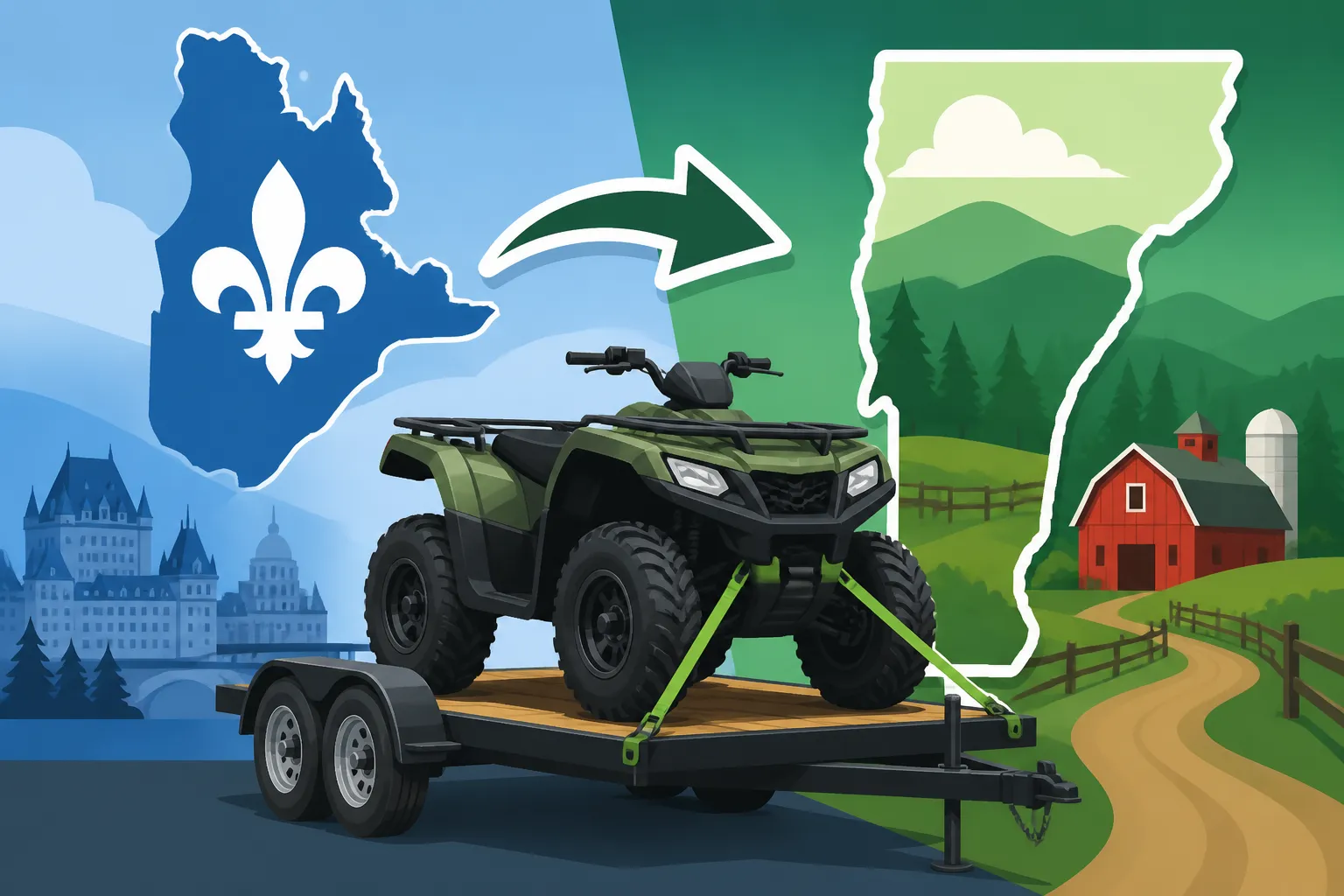
When you acquire an ATV or UTV in Quebec and plan to bring it home to Vermont, you're essentially becoming an importer. This isn't just about showing your Quebec registration to a border agent. The U.S. Customs and Border Protection (CBP) has rules about what vehicles can enter the country, what documentation is required, and what taxes or duties might be owed. Think of it less like a casual trip and more like a structured logistical operation.
For instance, an ATV registered in Quebec might have a different type of ownership document than what Vermont typically calls a "title." This discrepancy can cause confusion both at the border and later at the Vermont Department of Motor Vehicles (DMV). Understanding these differences upfront is key to avoiding delays. You'll need to satisfy federal import laws before you can even think about Vermont's registration processes. It's a two-stage game, and each stage has its own set of demands.
Why You Can't Just "Drive It Over"
The idea of simply loading up your new quad on a trailer and driving it across the border without much thought might be tempting, especially if you're just a few miles from the line. However, this approach carries significant risks. Failing to properly declare your ATV or UTV at the border can lead to substantial fines, seizure of your vehicle, and even more severe legal consequences. The U.S. government takes customs declarations very seriously.
Every item crossing the border, including vehicles, must be declared. This declaration process involves presenting specific documents to prove ownership and value, allowing customs officials to determine if any import duties or fees apply. You can't just wave goodbye to Quebec and expect a quick nod from the U.S. side. They're looking for proof that the machine isn't stolen, that it meets import regulations, and that all necessary financial obligations are met. It’s a process designed to protect national security and economic interests, which means individual riders need to be diligent in their compliance.
Essential Paperwork: Proving Ownership and Origin for Customs
Before you even think about approaching the border, your first mission is to gather every single piece of paper related to your ATV or UTV. This paperwork is your shield against delays and your key to smooth passage through customs and, eventually, to legal registration in Vermont. Trying to import an ATV without comprehensive documentation is like trying to ride a muddy trail without proper tires – you're just asking for trouble.
Gathering Your Quebec Documentation
When dealing with a vehicle from Quebec, the documentation might look a little different than what you'd expect from a U.S. sale. Here’s what you absolutely need:
- Original Quebec Registration Document: This is paramount. In Quebec, your registration often serves as your primary proof of ownership. While it might not be a "title" in the U.S. sense, it's what Canadian authorities use, and what U.S. Customs and Vermont will initially look for to establish a chain of ownership. Make sure it's current and in the seller's name. If you're dealing with an older machine, the paperwork trail might be thinner, but you still need the best available proof.
- Bill of Sale: This document is crucial for both U.S. Customs and the Vermont DMV. It legally transfers ownership from the seller to you and establishes the purchase price. The purchase price is vital because U.S. Customs will use it to assess any applicable import duties, and the Vermont DMV will use it to calculate your [Vermont Purchase and Use Tax on an ATV]. For private sales, it's a good idea to use a detailed template. Services like LawDepot offer customizable bill of sale forms that can ensure all necessary information, like VIN, buyer and seller details, and purchase price, are clearly documented, which can prevent issues down the line.
- Manufacturer's Statement of Origin (MSO) or Certificate of Origin (MCO): If the ATV or UTV is relatively new and has not been previously titled in Quebec (which is rare for a used machine but possible for very recent purchases), the MSO or MCO is critical. This document identifies the vehicle's manufacturer, its specifications, and certifies that it meets all federal safety and emissions standards at the time of manufacture. It's definitive proof of the machine's origin.
- Customs Forms: While not usually provided by the seller, you might need to fill out specific U.S. Customs forms. For most personal-use ATVs, you'll simply declare it upon entry. However, if the machine is particularly valuable or if you're importing multiple machines, additional forms might be required, such as a CBP Form 7501 (Entry Summary) if duty is assessed. The border agents will guide you, but having your ownership documents ready makes their job—and yours—much easier.
Proving Compliance: Emissions and Safety Standards
One concern when importing any vehicle into the U.S. is ensuring it meets federal emissions and safety standards. For new vehicles, this is a much more stringent process, often requiring a statement from the manufacturer that the vehicle conforms to U.S. Environmental Protection Agency (EPA) and Department of Transportation (DOT) regulations.
For used ATVs and UTVs, especially those that are several years old, the requirements are often less demanding than for highway vehicles. Generally, if the ATV was manufactured for sale in North America, it likely meets similar general safety standards. However, customs officials can still inspect the vehicle to ensure it's not a prohibited import or doesn't pose an unreasonable safety risk. The MSO/MCO, if available, can provide initial assurance of its build standards. Always be prepared for a physical inspection and to answer questions about the vehicle's history and modifications. Any modifications that significantly alter the machine from its factory specifications could raise questions, especially regarding safety equipment or emissions controls.
Navigating the Border: Customs, Duty, and U.S. Import Regulations
Standing at the U.S. border crossing with your newly acquired Quebec ATV can feel like a high-stakes moment. This is where all your careful preparation pays off. The process isn't just a formality; it's a critical legal step that confirms your machine's lawful entry into the United States. Don't rush this part, and be honest and thorough in your declarations.
The Customs Declaration Process
When you arrive at a U.S. Customs and Border Protection crossing point, you’ll need to declare the ATV or UTV you are importing. This means you will tell the CBP officer that you are bringing a vehicle into the country that you purchased in Quebec. Be ready to present all the documentation you've meticulously gathered: the Quebec registration, the bill of sale, and any MSO/MCO.
The CBP officer will review your documents, verify the vehicle's Vehicle Identification Number (VIN), and may conduct a physical inspection of the ATV. They are checking to ensure the paperwork matches the vehicle, that the vehicle is not on any "hot list" (stolen vehicles), and that it appears to meet general import admissibility criteria. Answer all questions clearly and truthfully. Trying to minimize the value or obscure details can lead to bigger problems than simply paying a small duty. Be patient, as this process can sometimes take a bit longer than a regular border crossing, especially if they need to do a more detailed inspection or consult with a supervisor.
Paying Duty and Import Taxes
One of the most common questions is whether you'll have to pay duty on an ATV imported from Canada. The answer is often "it depends," but usually, for personal-use ATVs, any duty assessed is relatively low or sometimes even exempt, especially if it's an older, used machine. However, it's important to understand that duty is a federal import tax paid to the U.S. government, separate from any sales or purchase and use tax you'll owe to the state of Vermont.
The duty, if applicable, is typically calculated as a percentage of the ATV's declared value (which is where your detailed bill of sale comes in handy). If the customs officer believes your declared value is too low, they may have the authority to reassess it. Once the duty amount is determined, you will be required to pay it on the spot, usually by credit card or cash. Getting a receipt for this payment is essential, as it serves as proof that the vehicle has been legally imported and all federal import taxes have been settled. This receipt might not be directly asked for by the Vermont DMV, but it's part of the complete paper trail proving legal entry into the U.S.
Getting Road Ready: Vermont Registration and Titling
Once you've successfully navigated the border and satisfied U.S. Customs, the next and final hurdle is getting your Quebec-imported ATV or UTV legally registered and titled in Vermont. This involves a trip to the Vermont DMV, where they will require their own specific set of documents and fees. Don't assume your U.S. Customs paperwork is all you need; Vermont has its own rules.
The Vermont DMV Checklist
To register your ATV or UTV in Vermont, even if it came from Quebec, you'll need to present a comprehensive set of documents to the DMV. The requirements for out-of-state purchases apply here. The Vermont DMV needs to be satisfied that you are the legal owner, that any previous liens are cleared, and that all applicable Vermont taxes are paid. This typically includes:
- Proof of Ownership: This is where all your Quebec documentation and customs paperwork converge. The DMV will want to see your original Quebec registration, the detailed bill of sale, and any MSO/MCO you might have. Your U.S. Customs entry documents also contribute to this proof, showing the vehicle was legally brought into the country. Ensure your [Proof of Ownership Vermont's DMV Will Accept] is robust and clearly shows the transfer to your name.
- Proof of Identity and Vermont Residency: You'll need a valid driver's license or state ID and documentation proving you live in Vermont, such as a utility bill or lease agreement.
- Application for Registration (Form VD-119): This is the standard form for all Vermont vehicle registrations. You'll fill out your personal information and details about the ATV.
- Application for Title (Form VD-119i): For ATVs, a title isn't always mandatory if the machine is older, but it's highly recommended and required for newer machines. Vermont has specific rules for [Vermont Title for an Off-Road Vehicle], and you'll want to apply for one if your machine qualifies. There's a separate fee for the title.
- Payment for [Vermont Purchase and Use Tax on an ATV]: This is a sales tax equivalent that Vermont charges when you register a vehicle for the first time, calculated on the purchase price listed on your bill of sale. Even if you paid duty to U.S. Customs, you still owe Vermont this tax. Make sure your bill of sale clearly states the purchase price to avoid issues. If your original bill of sale is very basic, consider drafting a more comprehensive one using a service like LawDepot to ensure it meets Vermont's standards for detailing the transaction.
- Payment for Registration Fees: Vermont has a [Vermont ATV Registration Cost] that typically covers one or two years. The fee amount depends on whether your machine is classified as an ATV or an ASV (All-Terrain Sport Vehicle), with [Vermont ASV Registration Cost Compared] being generally higher.
Understanding Vermont's ATV Definitions and Fees
Vermont categorizes off-road vehicles, and this classification directly impacts your registration fees. It's crucial to know if your imported machine falls under the "ATV" or "ASV" definition. While both are off-road vehicles, ASVs generally encompass larger, heavier machines like side-by-sides or UTVs, and their registration fees reflect that. Understanding the [Vermont ATV Versus ASV Classes] is important before you head to the DMV, as it determines which fee you'll pay – for example, the $45 one-year fee for an ATV or the $108 ASV one-year fee.
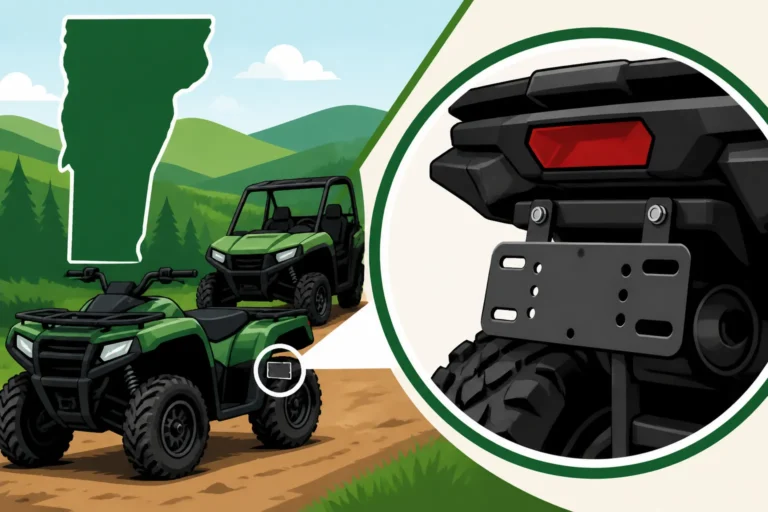
The DMV clerk will also issue your [Vermont ATV Plates and Where They Go] after your registration is complete. These plates must be properly displayed on the rear of your machine when riding on designated trails or roads.
Addressing Unique Situations
Sometimes, importing an ATV from Quebec presents unique challenges that require specific solutions:
- Private Sale with Minimal Paperwork: If you bought your ATV from a private seller in Quebec and the paperwork is scant, you might need to prepare a more formal bill of sale. [Writing a Bill of Sale the Vermont DMV Accepts] is critical. Again, legal document services like LawDepot can be invaluable here, helping you generate a bill of sale that includes all the necessary details Vermont requires, even if you’re reconstructing the details of a handshake deal. This document should clearly identify the buyer, seller, vehicle details (VIN, make, model), and purchase price.
- Older Machines Without a Title: For very old ATVs, especially those from Quebec that might predate modern titling practices, obtaining a title can be tricky. Vermont does have provisions for [Vermont Title for an Older Machine], but it often requires additional forms like an ownership affidavit where you swear to the vehicle's history. This affidavit, along with your Quebec registration and bill of sale, helps establish a legal chain of ownership in lieu of a formal title document.
- Machines Purchased from a Dealer in Quebec: If you purchased your ATV from a Quebec dealer, they should provide you with a more comprehensive package of documents, including a formal bill of sale and possibly manufacturer's certificates, making the process smoother at the border and the DMV. Always ask for all original paperwork.
The journey of importing an ATV from Quebec into Vermont is definitely an adventure in paperwork, but by being prepared and understanding each step, you can successfully bring your new machine home and enjoy the Green Mountain State's trails.
Disclaimer
This article is for general informational purposes only and does not constitute professional advice. Laws, prices and regulations vary by location and change over time. Consult a qualified professional for guidance on your specific situation.