Buying an ATV Across the Border and Riding It Home
So, you've been eyeing that sweet ATV or UTV deal across the border—maybe in New Hampshire, New York, or even up in Quebec—and you're dreaming of bringing it home to Vermont to hit our incredible trails. It's a common thought! The idea of finding a unique machine, a better price, or just a model not readily available here can be incredibly tempting. But before you hitch up the trailer and head out, it’s crucial to understand the ins and outs of bringing a machine purchased elsewhere into our Green Mountain State. This guide is going to walk you through every step, helping you navigate the paperwork, taxes, and legalities so your cross-border ATV adventure doesn't turn into a cross-border headache.
The Allure of Cross-Border ATV Shopping
It’s no secret that sometimes the perfect deal isn't right in your backyard. Vermont riders often cast their nets wider, looking to neighboring states and provinces for their next off-road machine. There's a good reason for this, but also a good reason to be prepared.
Why Riders Look Beyond Vermont's Borders
There are a few compelling reasons why you might consider buying an ATV or UTV outside of Vermont. For starters, inventory can play a big role. Dealerships in areas with larger populations or different market demands might stock a wider variety of models, trim levels, or even colors that aren't easily found in smaller Vermont shops. Sometimes, it's about the timing—you might find a year-end clearance sale in a neighboring state that Vermont dealers aren't offering, or perhaps a pre-owned machine that meets your specific criteria pops up on a listing service across the state line.
Then there's the price. While it's not always a guarantee, sometimes the overall cost, even with potential sales tax differences, can be more attractive elsewhere. This could be due to lower overheads for the seller, different regional pricing strategies, or even a more competitive used market. Imagine finding that perfect side-by-side with all the aftermarket goodies you wanted, at a price that feels too good to pass up, just an hour's drive away in New York. The excitement is real, but so is the need to ensure you're making a smart, informed purchase that will be simple to legalize in Vermont.
Initial Considerations Before You Even Leave Vermont
Before you even start browsing listings from afar, take a moment to consider what Vermont will require once you bring that shiny new (or new-to-you) machine home. This proactive thinking can save you a ton of grief down the line. First, remember that Vermont has its own definition for ATVs and ASVs (all-terrain vehicles and all-terrain sports vehicles, respectively), which dictates how they're registered and what fees apply. Understanding these definitions can help you verify that the machine you're looking at will indeed be classified as an ATV or ASV when you try to register it here.
Secondly, and perhaps most importantly, think about the paperwork. What proof of ownership will the seller provide? For a new machine, you'll need the Manufacturer's Certificate of Origin (MCO). For a used machine, a proper title (if the selling state titles ATVs) and a robust bill of sale are absolutely non-negotiable. Don't assume that just because a neighboring state has a different titling or registration process, Vermont will simply waive its requirements. Our DMV is pretty particular about proof of ownership, and showing up with insufficient documentation is a surefire way to get turned away. Get familiar with what's needed so you can ask the right questions of the seller before you commit to a purchase.
Navigating the Purchase in a Neighboring State or Province
So, you've done your homework, found the machine, and you're ready to make the trek. This is where the rubber meets the road, or rather, where the paperwork gets real. Ensuring you collect all the necessary documents at the point of sale is absolutely vital for a smooth process back in Vermont.
Essential Paperwork for an Out-of-State Purchase
No matter where you're buying your ATV or UTV, the cornerstone of your purchase is solid paperwork. This isn't just a formality; it's your legal proof of ownership, which the Vermont Department of Motor Vehicles (DMV) will scrutinize.
For any purchase, new or used, you absolutely need a detailed bill of sale. This document should clearly state the date of sale, the full names and addresses of both the buyer and the seller, the purchase price, and a complete description of the ATV, including its make, model, year, and—critically—its Vehicle Identification Number (VIN). Without the VIN, you won't get anywhere with registration. Think of the bill of sale as the official record of the transaction. You can find excellent templates online through services like LawDepot, which allows you to customize and print legal documents, ensuring all necessary fields are covered. A well-drafted bill of sale protects both you and the seller. Make sure to get a signed original from the seller, and keep a copy for yourself. For more details, refer to [Writing a Bill of Sale the Vermont DMV Accepts].
If you're buying a brand-new machine, you'll also need the Manufacturer's Certificate of Origin (MCO), sometimes called a Manufacturer's Statement of Origin (MSO). This document is essentially the "birth certificate" of the ATV, proving it's never been titled or registered before. The MCO will be signed over to you by the dealer. For a used machine, if the selling state issues titles for ATVs (many do, some don't), you'll need the original title, properly signed over by the seller. If the selling state does not issue titles, then the bill of sale, combined with previous registration documents, often serves as proof of ownership. Don't be afraid to ask the seller for copies of their previous registration to show a clear chain of ownership, especially if no title exists.
Specifics for Buying in Quebec
Buying an ATV in Quebec adds a layer of complexity because you're crossing an international border. This isn't just about a longer drive; it involves customs and potential duties.
First, currency. Most transactions in Quebec will be in Canadian dollars, so be prepared for the exchange rate. Ensure you understand the total cost in USD before finalizing the deal.
Second, and most critical, is the import process. When you bring a vehicle across the U.S. border from Canada, you'll need to declare it to U.S. Customs and Border Protection (CBP). This typically involves filling out a CBP Form 7501 (Entry Summary) and potentially a DOT Form HS-7 (Declaration of Conformance) and an EPA Form 3520-1 (Declaration Form for Imports). For ATVs, you generally won't pay the same kind of duties as you would for a car, but tariffs can apply. It's best to check with CBP directly or consult their website for the most current rules regarding recreational vehicles. Don't try to "sneak" it across; undeclared vehicles can lead to significant fines and seizure. Have your bill of sale, MCO (if new), or proof of prior ownership ready. The customs officer will review your documents to ensure the machine meets U.S. safety and emission standards. It sounds daunting, but with the right preparation, it's manageable. For a more in-depth look at this specific scenario, check out [Importing an ATV From Quebec Into Vermont].
Specifics for Buying in New Hampshire or New York
Purchasing an ATV from a neighboring U.S. state like New Hampshire or New York is generally much simpler than dealing with international customs, but you still need to be diligent with your paperwork.
The primary difference here is the absence of border crossings and associated customs forms. You're still within the U.S., so the process focuses entirely on ownership documentation. As always, a comprehensive bill of sale is paramount. If you're buying from a private seller, they should provide you with a title if their state issues one for ATVs. New Hampshire, for instance, does not title ATVs, so you'll rely heavily on a well-executed bill of sale and perhaps their previous registration document as proof. New York does title ATVs, so you'd expect a signed-over title from a New York seller.
The key here is to confirm what proof of ownership is legally acceptable in the selling state for an ATV. Then, ensure you collect precisely what they provide. The Vermont DMV will accept valid out-of-state paperwork as long as it clearly demonstrates a legal transfer of ownership to you. Remember, even though there's no customs, you'll still be subject to Vermont's Purchase and Use Tax when you register the machine here. For details specific to registering an ATV bought in another state, take a look at [Vermont Registration for a Machine Bought Out of State].
Bringing Your New ATV Home to Vermont
Once the transaction is complete and you have all your essential documents in hand, the next step is safely transporting your new machine back to Vermont and getting it legally registered. This phase is all about compliance with Vermont's specific requirements.
Transporting Your ATV Back to Vermont
After successfully purchasing your ATV or UTV, the safest and most legally sound way to bring it back to Vermont is by trailering it or hauling it in the bed of a truck. Do not, under any circumstances, plan to ride it home on public roads, even if it’s just a short distance across the border. Your newly acquired machine is not yet registered in Vermont, nor does it have a Vermont plate. Riding an unregistered ATV on public roads or trails is illegal and can lead to fines, impoundment, and insurance issues if an accident occurs. Even if the selling state offers temporary registration, those permits are rarely valid for use on Vermont roads or trails.
Make sure your trailer is properly registered and your tow vehicle is in good working order. Secure the ATV or UTV tightly with appropriate tie-downs to prevent shifting during transit. A loose machine can be a serious hazard on the highway. Check your trailer lights and tires before you leave. This might seem obvious, but after the excitement of a purchase, it's easy to overlook these practical steps.
What the Vermont DMV Needs From You
Alright, you're back home, machine safely unloaded. Now it's time to make it legal in Vermont. A trip to the DMV can feel daunting, but being prepared with all your documents will make it much smoother.
Here’s a checklist of what you'll typically need to bring:
- Properly executed Bill of Sale: This is your primary proof of purchase. Ensure it's original and complete, including the VIN, purchase price, and seller/buyer details. If you used a template from a service like LawDepot, ensure all fields are filled out accurately.
- Manufacturer's Certificate of Origin (MCO): If the ATV is brand new or has never been titled/registered before.
- Previous Title (if applicable): If the selling state issues titles for ATVs and the machine was previously titled, you'll need the original title, signed over to you.
- Previous Registration (if no title): For states like New Hampshire that don't title ATVs, the previous owner's registration, combined with a strong bill of sale, helps establish a clear chain of ownership.
- Proof of Vermont Residency: A valid Vermont driver's license or state ID, along with recent mail addressed to you, usually suffices.
- Payment for Fees and Taxes: Be prepared to pay the registration fee and Vermont's Purchase and Use Tax.
The Vermont DMV is very particular about [Proof of Ownership Vermont's DMV Will Accept]. They want to see a clear, unbroken line from the manufacturer (via MCO) or the previous legal owner (via title or registration/bill of sale combo) to you. Don't leave out any document you think might be helpful, even if it's just extra verification. For a full breakdown of what paperwork to gather, check out [Vermont Registration Paperwork Checklist].
One of the most significant costs you'll face is the [Vermont Purchase and Use Tax on an ATV]. This tax is levied on the purchase price of your machine, even if you bought it out of state. If you paid sales tax in the state where you purchased it, Vermont may offer a credit for that tax, reducing what you owe here, but you'll need proof of the tax paid. Be ready to discuss this with the DMV clerk.
You'll also need to apply for a [Vermont Title for an Off-Road Vehicle] if your ATV falls under the requirements for titling (typically newer machines or those meeting certain criteria). This is a separate application and fee from registration, but it's usually handled at the same time.
The Registration Process Itself
With all your documents in hand, you’ll submit them to the Vermont DMV. The clerk will review everything, verify the VIN, calculate your fees, and process your application. You'll fill out the necessary registration forms (like Form VD-119). The [Vermont ATV Registration Cost] is a yearly fee, though you often have the option for a [Vermont's Two-Year ATV Registration Option], which can be more convenient.
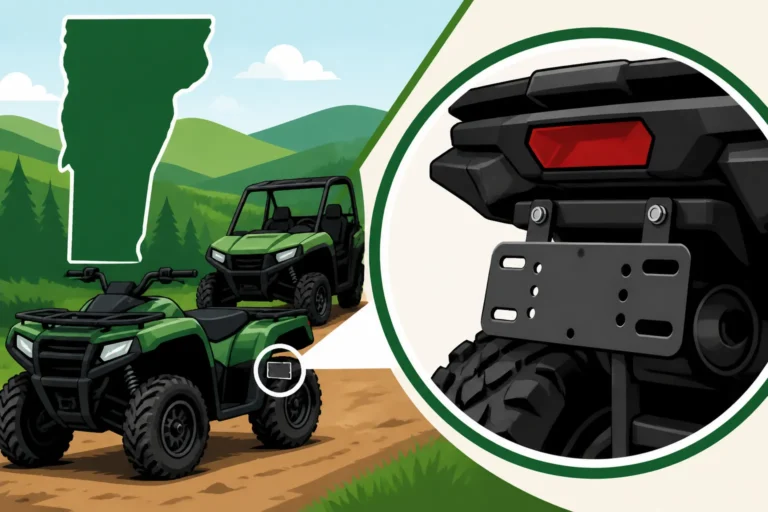
Once processed, you’ll receive your new Vermont ATV registration certificate and your official Vermont ATV plate. The plate must be prominently displayed on the rear of your machine whenever you ride on designated trails or roads. While waiting for the physical plate to arrive in the mail, your temporary registration receipt often serves as valid proof for a short period. It’s always best to carry a copy of your registration certificate with you while riding. Remember, the journey isn't truly over until your machine is legally tagged and ready for the trails!
Potential Pitfalls and Smart Strategies
Bringing an ATV home from across the border can be a rewarding experience, but it's not without its potential stumbling blocks. Being aware of these common issues and arming yourself with smart strategies can help ensure your purchase and registration process goes smoothly.
Common Mistakes to Avoid
Many riders, eager to get on the trails, overlook crucial details that can turn an exciting purchase into a bureaucratic nightmare. Here are some common mistakes to actively avoid:
- Not getting a proper bill of sale: This is probably the biggest pitfall. A simple handwritten note saying "Sold ATV for $X" with only a signature just won't cut it for the Vermont DMV, especially if you're buying from a private seller. As mentioned earlier, robust templates from services like LawDepot can ensure all necessary details are included, providing a clear legal record. Without a complete bill of sale, proving ownership and purchase price can become incredibly difficult.
- Ignoring customs rules for international purchases: Trying to bypass U.S. Customs when bringing an ATV from Quebec is a huge no-go. The penalties can be severe, including confiscation of the machine. Always declare your purchase and have all your import documentation ready.
- Assuming registration from another state is valid in Vermont for riding on trails: Your New Hampshire or New York registration might be perfectly legal for that state's purposes, but it does not grant you the right to ride on Vermont's designated VASA trails or town roads. Vermont has its own registration requirements that apply to all machines operated within its borders, regardless of where they were purchased or previously registered.
- Underestimating [Vermont Purchase and Use Tax Rate]: This tax can be a significant cost, especially on a higher-priced machine. Don't forget to factor this into your budget. If you haven't budgeted for it, it can be a nasty surprise at the DMV counter. Always verify if a tax credit for out-of-state sales tax paid will apply to your specific situation, and have proof of that payment.
- Not checking the VIN against stolen vehicle databases: This is critical for any used purchase. Run the VIN through an online database (like the National Insurance Crime Bureau's VINCheck) to ensure the ATV hasn't been reported stolen. Discovering your new machine is stolen after you've paid for it and brought it home is a terrible situation, and you'll likely lose both the machine and your money.
Riding Legally on Vermont Trails
Getting your ATV registered with the Vermont DMV is a massive step, but it's important to remember that it's just the first step towards legal trail riding. Vermont has additional requirements to ensure safe and responsible use of its extensive trail system.
First and foremost, to ride on the vast network of VASA (Vermont All-Terrain Vehicle Sportsman’s Association) trails, you'll need a [Vermont TAD: The Trail Access Decal Explained]. This decal is separate from your DMV registration and essentially serves as your trail pass, with funds going to support trail maintenance and club operations. Without a current TAD, your registered ATV isn't permitted on VASA trails.
Furthermore, Vermont has specific safety and legal requirements you need to adhere to. For riders under 18, a [Vermont ATV Safety Course Required Under 18] is mandatory. This course teaches vital safety information and ensures younger riders understand the rules of the trail. Even if you're over 18, taking a safety course is a smart move. Finally, remember that [Vermont ATV Insurance Requirements] are in place. You must carry liability insurance on your ATV before you can legally ride it on designated trails and roads in Vermont. Make sure your insurance policy specifically covers ATV use in Vermont and meets the state's minimum coverage limits. Don't assume your auto policy extends to your off-road machine; often, it does not.
Getting Help When You Need It
It's completely normal to have questions when dealing with cross-border purchases and state-specific vehicle regulations. Don't hesitate to seek clarification.
For questions specifically about Vermont's registration, titling, or tax requirements, your best resource is always the Vermont Department of Motor Vehicles (DMV). Their website has detailed guides, and you can call or visit a local office for personalized assistance. While their answers are authoritative, sometimes specific or unusual scenarios can benefit from multiple conversations or by talking to different clerks.
When it comes to creating legally sound documents like a bill of sale, especially for private transactions, resources like LawDepot can be incredibly helpful. Their customizable templates ensure you include all the necessary legal language and information, minimizing the chance of rejection by the DMV due to incomplete paperwork. Having a professional-looking and comprehensive bill of sale can instill confidence at the DMV counter and save you a lot of back-and-forth.
Ultimately, bringing an ATV or UTV from another state or country to Vermont can be a great way to find your dream machine. With careful planning, thorough documentation, and an understanding of Vermont's specific requirements, you'll be hitting the trails with confidence and peace of mind in no time.
Disclaimer
This article is for general informational purposes only and does not constitute professional advice. Laws, prices and regulations vary by location and change over time. Consult a qualified professional for guidance on your specific situation.