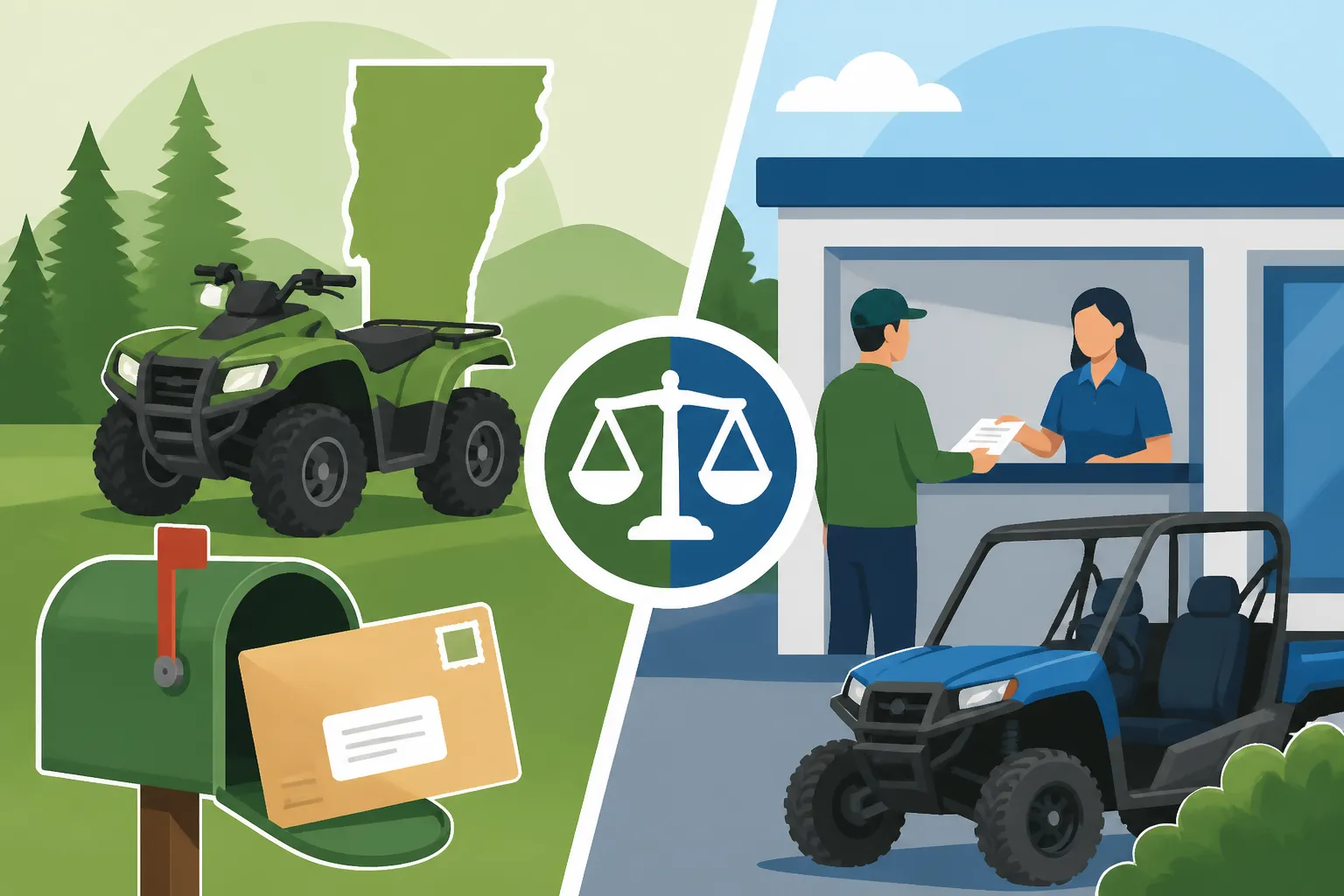
Registering by Mail Versus in Person
Navigating the world of ATV and UTV registration in Vermont can feel like trying to solve a puzzle with missing pieces, especially when you're just eager to hit the trails. Many riders wrestle with the fundamental question: Is it better to brave the DMV lines in person, or can you save yourself the trip and handle everything by mail? This guide is here to break down both options, helping you understand the real-world implications of each choice so you can pick the method that best suits your lifestyle and urgency.
The Traditional Route: Registering Your ATV In Person at the Vermont DMV
For many years, heading to the Department of Motor Vehicles office was the go-to, and often the only, way to get things done. While technology has opened up other avenues, there's still a strong argument to be made for the in-person experience, especially if you value direct interaction and immediate results. It's not without its challenges, however, and understanding these upfront can save you a lot of frustration.
The Immediate Gratification and Expert Help
One of the biggest draws of registering your ATV or UTV in person is the instant gratification. Imagine walking into the DMV with all your paperwork, patiently waiting your turn, and then walking out with your shiny new registration and plate in hand. There's no waiting for mail, no wondering if your documents made it, and no anxiety about potential errors. This can be a huge relief, especially if you've just bought your machine and are itching to get it out on the trails. It's often the fastest way to get your machine legal and ready to ride.
Beyond the immediate results, a significant advantage is the direct access to a DMV clerk. Let's say you're a new resident to Vermont and aren't entirely familiar with the specific requirements, or perhaps you've inherited an ATV and the ownership transfer process feels a bit murky. Having a knowledgeable person there to review your documents, answer your specific questions, and even point out a missing signature or an incorrect date on your bill of sale can be invaluable. They can clarify nuanced points, like what constitutes [Proof of Ownership Vermont's DMV Will Accept] or explain the intricacies of [Vermont Purchase and Use Tax on an ATV]. This immediate feedback can prevent costly delays and the need for multiple trips. For anyone feeling overwhelmed by the paperwork, this direct support is a major plus. You can often clarify questions about [Vermont ATV Registration for a New Resident] on the spot.
The Downsides: Time, Travel, and Waiting Games
However, the in-person experience isn't always smooth sailing. The reality of DMV visits often involves significant time commitment. First, there's the travel to the nearest DMV office. Depending on where you live in Vermont, this could be a short hop or a considerable drive, eating up valuable hours of your day. Then, once you arrive, you might encounter waiting lines that can test the patience of even the most seasoned Vermonter. While some offices now offer [Appointments at a DMV Office], getting one can sometimes be tricky, and walk-in wait times can still be substantial.
Beyond the wait, there's the risk of forgetting a crucial document. Imagine driving an hour, waiting 45 minutes, only to be told you're missing a specific form or a required signature. That's not just an inconvenience; it's a wasted half-day that you won't get back. The stress of ensuring every single piece of paper is perfect before you even leave your home is a common frustration. You might also find yourself navigating the complexities of different payment methods, although most DMVs accept a range of options. If you're someone with a demanding work schedule, limited transportation, or who simply dislikes public bureaucracy, the in-person route can feel like a significant hurdle, potentially delaying your riding plans.
Opting for Convenience: Registering Your ATV by Mail in Vermont
In an increasingly digital world, the idea of handling administrative tasks from the comfort of your home is incredibly appealing. Registering your ATV by mail offers a level of convenience that the traditional in-person visit simply can't match, removing many of the logistical headaches. However, this convenience comes with its own set of trade-offs, particularly regarding speed and the margin for error.
The Appeal of Doing It From Your Couch
The primary benefit of registering your ATV or UTV by mail is the sheer convenience. You can gather all your documents, fill out the necessary forms, and prepare your payment at your own pace, whenever it suits your schedule. No need to take time off work, arrange childcare, or spend gas money driving to an office. This is especially advantageous for Vermonters living in more remote areas, far from a DMV branch, or for those with mobility challenges that make travel difficult. You can sit down with your [Vermont Registration Paperwork Checklist], double-check everything, and even use resources like LawDepot to ensure critical documents, such as a [Writing a Bill of Sale the Vermont DMV Accepts] or an Ownership Affidavit, are properly drafted.
The mail-in option provides a relaxed environment to tackle the paperwork. You can carefully read through instructions for [Filling Out Vermont's Form VD-119] and consult the VD-119i guide at your leisure, reducing the pressure that can come with feeling rushed at a DMV counter. For those who prefer to avoid crowds and manage their time flexibly, the ability to simply drop a pre-addressed envelope in the mail is a significant advantage. This method allows you to take control of the process on your own terms, fitting it into your life rather than rearranging your life around DMV hours.
The Patience Required and Potential Pitfalls
While convenient, registering by mail requires a healthy dose of patience. Unlike an in-person visit, where you receive your registration and plate on the spot, the mail-in process involves waiting for your documents to be received, processed, and then for your new registration and plate to be mailed back to you. This can take several weeks, and during peak times, it might even stretch longer. If you're hoping to ride your ATV soon after purchase, this delay can be a major drawback. You'll need to plan well in advance and factor in this processing time, as you cannot legally operate your ATV on public trails or roads until you have your valid registration and plate.
Another significant pitfall of the mail-in method is the risk of errors or omissions in your paperwork. Without a clerk to review your documents immediately, a single mistake – a missing signature, an incorrect date, an uncopied ID, or an underpayment – can lead to your entire package being rejected and sent back. This not only adds to the processing time but can be incredibly frustrating. Imagine waiting three weeks, only to receive your package back with a note saying you forgot to sign one line, forcing you to start the waiting game all over again. While resources like LawDepot can help you prepare accurate documents, the final check is still on you. This potential for delay and the need for meticulous attention to detail are the primary reasons some riders still prefer the in-person approach, even with its inconveniences. For mail-in, understanding [Vermont ATV Registration Processing Time] is crucial, and knowing [Where Vermont Mails Your New ATV Plate] can help manage expectations.
Key Considerations for Both Methods
Regardless of whether you choose to register your ATV or UTV by mail or in person, there are universal elements you absolutely need to get right. These considerations are the bedrock of a successful registration, and overlooking them can cause delays and headaches no matter which path you take. Understanding these details can smooth out your experience considerably.
Understanding the Paperwork Puzzle
The most critical aspect of any ATV or UTV registration in Vermont is getting your paperwork in order. This isn't just a suggestion; it's a non-negotiable requirement. Whether you're standing at the counter or sealing an envelope, having all your ducks in a row is paramount. You'll typically need your completed [Filling Out Vermont's Form VD-119], which is the application for registration and title. Beyond that, proof of ownership is essential. This often comes in the form of a manufacturer's certificate of origin (MCO) for new machines, or a signed-over title or a detailed bill of sale for used machines. If you've bought your machine from a private seller, a well-written bill of sale is critical, and it should include specific details like the vehicle identification number (VIN), purchase price, and contact information for both buyer and seller. You might also need proof of identity and residency.
Don't forget the financial side of things: you'll need to account for the [Vermont Purchase and Use Tax on an ATV] if applicable, which is paid at the time of first registration, unless an exemption applies. Failing to include the correct documentation for any of these items will, without a doubt, result in your application being rejected, regardless of the submission method. This means more time, more effort, and more frustration. It's truly worth spending the extra time upfront to meticulously review every document against a comprehensive checklist to ensure everything is correct and complete. Many people find it helpful to make copies of all documents for their records before submitting them.
Payment and Fees: Knowing What to Expect
The financial aspect of ATV and UTV registration involves several fees, and how you pay them can differ slightly between the mail and in-person options. Generally, you'll be looking at the registration fee itself, which can be for a one-year or two-year period. For example, the [The $45 One-Year Fee] is standard for many ATVs. If your machine requires a title (which most newer ATVs and UTVs do), there will also be a separate [The $27 Title Fee]. Additionally, as mentioned, the Vermont Purchase and Use Tax will be calculated based on the sale price of your machine, unless you qualify for an exemption. You can refer to [Vermont ATV Registration Costs and Terms] for a general overview of these charges.
When registering in person, you typically have the flexibility to pay with cash, check, money order, or often a credit or debit card. This provides immediate confirmation that your payment has been received and processed. For mail-in registrations, you'll almost always need to send a check or money order payable to "Vermont Department of Motor Vehicles." Credit card payments are generally not accepted through the mail for registration purposes. It's crucial to ensure your check is made out for the exact amount, covering all applicable fees and taxes. An incorrect payment amount, even by a few dollars, can lead to your entire application being returned unprocessed. Always double-check the current fee schedule on the Vermont DMV website or consult their instructions to ensure you're sending the correct amount.
Comparison: Mail vs. In-Person Registration
To help you decide which method is best for you, here’s a quick comparison:
| Feature | Registering by Mail | Registering In Person |
|---|---|---|
| Convenience | High (from home, at your pace) | Low (travel, wait times) |
| Processing Time | Longer (weeks) | Immediate (walk out with registration/plate) |
| Paperwork Review | Self-guided (high risk of error) | Clerk assistance (immediate feedback, lower risk) |
| Payment Options | Check, money order | Cash, check, money order, debit/credit card |
| Immediate Use of ATV | Delayed (wait for mail delivery) | Immediate (after successful registration) |
| Best For | Remote residents, flexible schedules, organized individuals | Urgent needs, complex cases, those needing direct assistance |
| Potential Frustrations | Delays, rejections due to errors, uncertainty | Waiting in lines, travel time, limited hours |
Ultimately, the best way to register your ATV or UTV in Vermont depends entirely on your personal circumstances, your timeline, and your comfort level with paperwork. If you need your machine registered yesterday and prefer direct answers to your questions, an in-person visit to the DMV might be the way to go, provided you're prepared for potential wait times and travel. However, if you have a bit more time, live far from a DMV, or simply prefer to handle things at your own pace from home, registering by mail offers unparalleled convenience, especially with tools like LawDepot to help you prepare accurate forms. Just remember, meticulous attention to detail with your paperwork and payment is non-negotiable for both methods to ensure a smooth process.
Disclaimer
This article is for general informational purposes only and does not constitute professional advice. Laws, prices and regulations vary by location and change over time. Consult a qualified professional for guidance on your specific situation.