The $45 One-Year Fee
Navigating the world of ATV and UTV registration in Vermont can sometimes feel like trying to solve a puzzle with missing pieces, especially when you're just trying to figure out how much it's going to cost. Many riders find themselves scratching their heads over fees and durations, wondering if they're making the right choice for their machine and their riding habits. This guide aims to clear up all that confusion by diving deep into Vermont's $45 one-year ATV registration fee, explaining exactly what it covers, when it's your best option, and what other essential steps you'll need to take to hit the trails legally and safely.
Understanding Vermont's One-Year ATV Registration Fee
The first step to enjoying Vermont's incredible landscapes on your ATV or UTV is getting it properly registered. For many riders, especially those new to the state or those with specific riding plans, the $45 one-year registration fee is the most straightforward option. It’s a common choice, but understanding its nuances is key to avoiding surprises down the road. This fee represents your commitment to legal operation for a full twelve-month period, ensuring you have a valid plate and the state recognizes your machine. It’s more than just a sticker; it’s your ticket to designated trails and approved town roads.
Who Pays the $45 Fee?
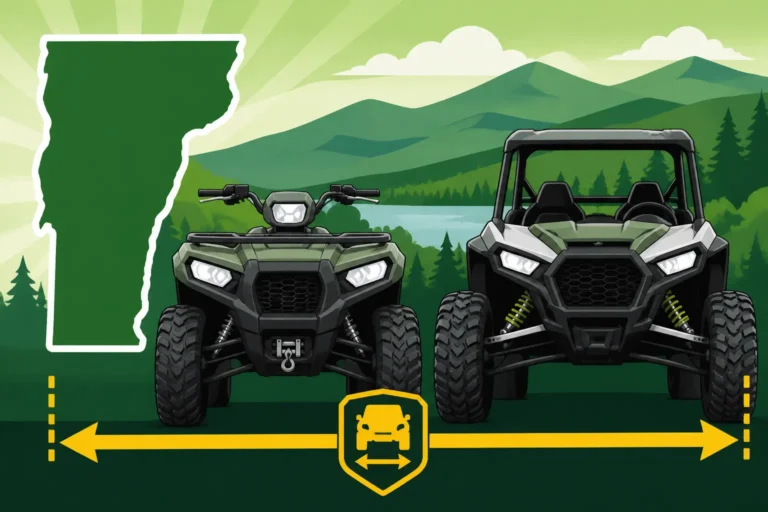
Essentially, anyone who registers an all-terrain vehicle (ATV) in Vermont for a single year will pay this $45 fee. This isn't just for Vermont residents, either. If you're visiting from out of state and plan to ride extensively within Vermont, you'll also be looking at this same fee if you choose the one-year option. Vermont prides itself on offering the same basic [Vermont ATV Registration Costs and Terms] to both its residents and nonresidents, creating a level playing field for everyone who wants to experience our trails. This uniform approach simplifies things considerably, so you don't have to worry about different pricing tiers based on your home address. The fee primarily applies to machines that fit Vermont's definition of an ATV – typically under 72 inches wide and under 2,500 pounds. If your machine is larger, it might fall into the ASV (All-Terrain Vehicle, Class A) category, which has a different fee structure, as outlined in [Vermont ATV Versus ASV Classes].
This inclusive fee structure means that whether you live down the road in Burlington or you're trailering your quad up from Massachusetts, the initial registration cost for a standard ATV for one year is the same. It covers your machine, regardless of its age or how recently you purchased it, as long as it meets the physical specifications for an ATV. New machines, used machines, ones purchased from a dealer, or those acquired through a private sale – all are subject to this same fee for the one-year registration period. The simplicity of this approach is often a welcome relief for riders trying to navigate various state regulations.
What Does the $45 Fee Cover?
The $45 fee is specifically for your vehicle's registration for a 12-month period. When you pay this, you're not just getting a receipt; you're securing a valid registration certificate and an official Vermont ATV plate. This plate is essential and needs to be properly displayed on the rear of your machine, as detailed in [Vermont ATV Plates and Where They Go]. The registration certificate itself is a crucial document that proves your machine is legally allowed on Vermont's designated ATV trails and town roads. It's important to carry this certificate with you whenever you ride, as law enforcement or trail wardens may ask to see it.
Beyond the physical plate and certificate, the fee essentially grants your machine legal status for one year. It allows your ATV to be part of Vermont's extensive trail system, which relies on registered machines for funding and maintenance. It does not cover other necessary items like a Trail Access Decal (TAD) – which is a separate, mandatory purchase for riding on VASA trails – nor does it include the cost of a title, if your machine requires one. Think of it as the foundational cost to get your machine into the system. It’s the baseline requirement before you even think about hitting the dirt.
The Process of Paying the $45 One-Year Fee
Getting your ATV registered for one year at the $45 fee is a relatively straightforward process once you have all your ducks in a row. The primary method involves submitting the necessary paperwork to the Vermont Department of Motor Vehicles (DMV). You'll need to complete the official application form, typically Form VD-119, which can be found on the DMV's website or picked up at a local office. This form will ask for details about your ATV, your personal information, and confirmation of ownership. Make sure you read through [VD-119i and What It Explains] to understand all the sections.
Along with the completed form, you'll need proof of ownership, such as a bill of sale or Manufacturer's Certificate of Origin (MCO), and proof of Vermont residency if you're registering as a resident. Non-residents will simply indicate their home state. You can usually submit these documents and your payment either by mail or in person at a Vermont DMV office. While mailing is convenient, visiting an office allows you to get immediate assistance if you have questions and often results in quicker processing. Just be sure to bring all required documents mentioned in [Vermont Registration Paperwork Checklist] to avoid a wasted trip. Once processed, your registration certificate and plate will be mailed to you, allowing you to attach your [Vermont Plate Mounted on the Rear] and start riding.
When the $45 One-Year Registration Makes Sense
Choosing between a one-year and a two-year registration period is a decision many ATV owners face. While a two-year option might offer a slight discount, the $45 one-year registration often proves to be the most practical and flexible choice for a variety of riders. It's not just about the immediate cost; it's about matching the registration period to your specific needs and plans. Understanding your own riding habits and future intentions will help you decide if the single-year commitment is right for you.
Short-Term Riding Plans and Seasonal Use
If your riding in Vermont is seasonal, or if you're not entirely sure how long you'll own your current machine, the $45 one-year registration is likely your best bet. Perhaps you only ride during the prime summer and fall foliage months, or maybe you're considering upgrading your ATV next year. In these scenarios, committing to a two-year registration, even at a slightly reduced rate, might not be the most economical choice. For example, if you know you'll be selling your machine within a year, or if you're just dipping your toes into the Vermont ATV scene for a single season, the flexibility of the one-year option is invaluable. You won't have to worry about transferring the remainder of a longer registration period or losing out on prepaid fees. This is particularly relevant for those who live out of state and only visit Vermont for a specific riding season or a short vacation, needing legal access for a defined period.
Think about planning a big family trip to the Northeast Kingdom for a summer of riding. You might only need your machine registered for that specific season, returning to your home state afterward. In such a case, purchasing the [Vermont Registration Valid One Year] simply makes sense. You get exactly what you need without paying for time you won't use. It’s a common choice for vacationers and those who might be trying out ATV riding in Vermont before committing to a longer-term plan. This pragmatic approach saves you from paying for services you don't fully utilize, keeping your recreational costs aligned with your actual usage.
Comparing the $45 Fee to Other Vermont Registration Options
While the $45 fee covers a standard ATV for one year, it's worth knowing how it stacks up against other options. The most common alternative for ATVs is the [Vermont's Two-Year ATV Registration Option], which typically costs $90. As you can see, two years at $45 per year equals $90, so there isn't a significant per-year discount for choosing the longer period for a standard ATV. However, if your machine falls under the ASV (All-Terrain Vehicle, Class A) category, the fees are higher, with a [Vermont ASV Registration at $108 a Year] or [Vermont ASV Two-Year Registration at $211]. These machines are generally wider or heavier than standard ATVs.
So, for a regular ATV, the decision between one year ($45) and two years ($90) primarily comes down to convenience and your long-term plans. If you prefer to renew annually or your plans are uncertain, the one-year fee offers maximum flexibility. If you know you'll be riding this machine for at least two years and prefer to get the paperwork done less often, the two-year option provides that convenience without a major financial difference. It's truly a matter of personal preference and how often you want to visit the DMV website or office for renewals.
| Registration Type | Duration | Fee | Notes |
|---|---|---|---|
| ATV | 1 Year | $45 | Standard ATV, common choice for flexibility. |
| ATV | 2 Years | $90 | Standard ATV, for convenience, no per-year discount. |
| ASV (Class A) | 1 Year | $108 | Wider/heavier machines, higher annual cost. |
| ASV (Class A) | 2 Years | $211 | Wider/heavier machines, slight discount for 2 years. |
| Registration Transfer | N/A | $10 | Moving an existing registration to a new machine. |
| Title Application | N/A | $27 | Separate fee for initial title or transfer. |
Potential Pitfalls of Choosing a One-Year Period
While flexible, choosing the one-year registration period also means you'll need to remember to renew it every year. Forgetting your renewal date can lead to an expired registration, and riding an unregistered ATV on Vermont trails or roads can result in penalties. Unlike some other registrations that might have grace periods or reminders that always seem to land in your mailbox, it's ultimately your responsibility to stay on top of your [Vermont ATV Registration Renewal]. This annual task can be a slight inconvenience compared to a biennial renewal.
Another potential pitfall, especially if you also purchase a [Vermont TAD at $80 for a Registered Machine], is that the TAD expires on December 31st regardless of when you buy it or when your registration expires. This means you might end up renewing your registration mid-year, and then needing to buy a new TAD just a few months later. It’s a staggered system that requires attention to both dates to ensure continuous legal access to the trails. If you're someone who prefers minimal administrative tasks, aligning your registration period might be something to consider, or at least being acutely aware of both expiration dates.
Essential Paperwork for Your $45 Registration
The $45 one-year ATV registration fee is just one part of the equation. To actually get that registration, you'll need to present the correct documentation to the Vermont DMV. This can be a point of frustration for many, as missing just one piece of paper can send you home empty-handed. Preparing thoroughly is the best way to ensure a smooth registration process, whether you're doing it in person or by mail.
Gathering Your Ownership Documents
The most critical step in registering your ATV in Vermont, regardless of the fee you're paying, is proving you actually own the machine. This usually means providing a Manufacturer's Certificate of Origin (MCO) if the ATV is brand new and being registered for the first time. For used ATVs, a clear bill of sale is typically required. The bill of sale should include the make, model, year, VIN, purchase price, and the names and signatures of both the buyer and seller. The DMV is particular about what they accept as proof of ownership, so it's vital that these documents are complete and accurate. You might find resources like [Writing a Bill of Sale the Vermont DMV Accepts] helpful in ensuring your documentation is up to snuff.
Sometimes, especially with older machines or private sales, obtaining a perfect bill of sale can be tricky. If you're missing certain documents or need to formalize a private sale, legal resources can be incredibly useful. For instance, if you're drafting a bill of sale or need an affidavit of ownership in a pinch, platforms like LawDepot offer templates and guidance that can help you create legally sound documents that the Vermont DMV is more likely to accept. Having a clear chain of ownership documented correctly will make the entire registration process much smoother and faster.
Completing the Vermont DMV Form VD-119
Once you have your ownership proof, the next big piece of the puzzle is the Vermont DMV's Vehicle Registration Application, Form VD-119. This form is where you'll provide all the specific details about your ATV and yourself. You’ll need information like the Vehicle Identification Number (VIN), make, model, year, and engine size. You’ll also fill in your name, address, and contact information. Accuracy is paramount here; any discrepancies could cause delays. The form also asks about the vehicle's purchase price, which is important for calculating [Vermont Purchase and Use Tax on an ATV], a separate but often concurrent fee.
It's highly recommended to review the instructions document, [VD-119i and What It Explains], before you start filling out the form. This companion guide will walk you through each section, clarifying common questions and ensuring you don't miss any critical fields. Taking your time and double-checking every entry before submission can save you a significant amount of hassle later on. If you're unsure about any section, it's always better to call the DMV or ask a clerk if you're registering in person, rather than guessing and potentially submitting incorrect information.
Proving Residency and Other Key Details
Beyond ownership, you’ll also need to prove your residency if you’re registering as a Vermont resident. This typically involves providing a valid Vermont driver's license or state ID, or other acceptable forms of proof of address such as utility bills or a lease agreement. This helps the DMV confirm your identity and ensures that the registration goes to the correct address. If you’re a nonresident, you'll simply indicate your home state on the form, as Vermont registration fees don't discriminate based on where you live.
In addition to residency, the form may ask for information relevant to any lienholders if you've financed your ATV. If so, you'll need to provide their details, as they may be noted on your title. The more complete and accurate your information is, the faster your application for the $45 one-year fee will be processed. Ensuring all your personal details match what's on your identification and ownership documents is a small step that can prevent big holdups.
Beyond the $45 Fee: Other Costs to Consider
While the $45 fee covers your one-year ATV registration, it’s crucial to understand that it’s usually not the only cost involved in getting your machine trail-ready in Vermont. There are other important fees and requirements that every rider must consider to ensure they are fully compliant with state law and VASA trail rules. Ignoring these additional costs can lead to fines, denied trail access, or even legal trouble.
Vermont Purchase and Use Tax Implications
One of the most common additional costs you'll encounter, especially when registering a newly purchased ATV, is the Vermont Purchase and Use Tax. This tax is applied to the purchase price of your machine when you first register it in Vermont, unless you meet specific exemption criteria, such as a gift from a family member. The tax rate is consistent across the state, and it’s usually paid at the time of registration. Even if you bought your ATV out of state, if you're bringing it to Vermont and registering it here, you'll likely owe this tax.
It's essential to factor this tax into your total cost, as it can add a significant amount, depending on the price of your ATV. The DMV forms, including VD-119, will typically guide you through calculating this tax. If you're unsure about exemptions or how the tax applies to your specific situation, it's always best to check with the Vermont DMV directly. Remember, the $45 registration fee is separate from this tax, and both need to be handled to ensure your ATV is fully legal. You can find more details on this in [Vermont Purchase and Use Tax on an ATV].
The Importance of a Vermont Trail Access Decal (TAD)
Once your ATV is registered and you have your shiny new plate, you might think you're ready to hit the trails. Not quite! For virtually all designated ATV trails in Vermont, you'll also need a Vermont Trail Access Decal, or TAD. This decal is mandatory for riding on the VASA (Vermont All-Terrain Sportsmen's Association) trail system, which comprises the vast majority of organized trails in the state. The TAD funds trail maintenance, landowner relations, and other vital aspects of keeping the trails open and enjoyable for everyone. Without it, even with a valid registration, you won't be allowed on VASA trails.
The cost of a TAD is separate from your $45 registration fee. For Vermont-registered machines, the TAD typically costs $80 for your first machine and $60 for a second machine, as outlined in [Vermont TAD at $80 for a Registered Machine]. It's crucial to understand that the TAD operates on a calendar year basis, expiring on December 31st, regardless of when you purchase it. So, if you register your ATV for one year in July and buy a TAD then, that TAD will still expire at the end of December. This is an important distinction to remember to avoid riding without proper authorization or having to buy another TAD sooner than you expected. You'll often find that joining a local [Vermont ATV Clubs Worth Joining] is bundled with the TAD purchase, supporting the very people who maintain the trails.
Thinking About Insurance
Finally, while not a direct fee paid to the state for registration, liability insurance is a non-negotiable requirement for ATV riders in Vermont. Vermont law mandates that all ATVs operated on designated trails or roads must carry minimum liability insurance coverage. This protects you and others in case of an accident. The state specifies minimum coverage amounts for bodily injury and property damage, which are important to understand. You can learn more about these requirements in [Vermont Requires ATV Liability Insurance].
The cost of this insurance will vary based on your machine, your riding habits, and your personal driving record, but it's an essential part of your annual riding budget. You'll need to show proof of insurance if requested by law enforcement or a trail warden. So, after you’ve paid your $45 registration fee, handled the purchase and use tax, and secured your TAD, don’t forget to contact your insurance provider to ensure you have adequate coverage before you even think about putting a wheel on a Vermont trail. It's about safety, responsibility, and adhering to the law, all of which contribute to a great riding experience.
Disclaimer
This article is for general informational purposes only and does not constitute professional advice. Laws, prices and regulations vary by location and change over time. Consult a qualified professional for guidance on your specific situation.