How the ATV and ASV Classes Change Your Fee
It's no secret that navigating the world of ATV and UTV registration in Vermont can feel like trying to solve a puzzle with half the pieces missing. One of the biggest head-scratchers for many riders, myself included, is understanding why some machines are categorized as "ATVs" and others as "ASVs," and how that seemingly small distinction can lead to a noticeable difference in what you pay at the DMV counter. This guide is here to untangle that confusion, explaining exactly how Vermont's classification system works, what defines each vehicle type, and most importantly, how those definitions directly impact your registration fees.
Untangling Vermont's ATV and ASV Definitions
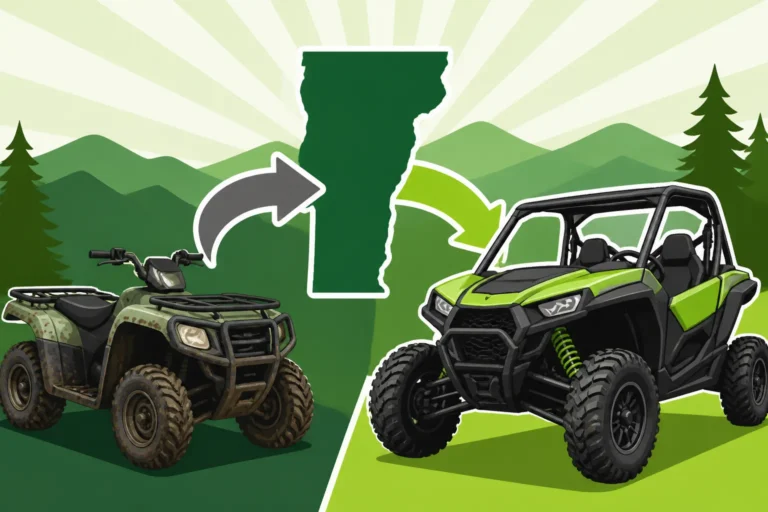
Before we even get to the dollar signs, it's crucial to understand the fundamental differences between an All-Terrain Vehicle (ATV) and an All-Terrain Side-by-Side Vehicle (ASV) in Vermont. Many of us just call everything a "quad" or a "side-by-side," but the state's official definitions are what truly matter when it comes to getting that all-important registration sticker. It's a common point of frustration for riders when they show up at the DMV, certain they have an ATV, only to be told it's actually an ASV – and the price tag changes with it.
The Core Distinction: What Makes an ATV an ATV?
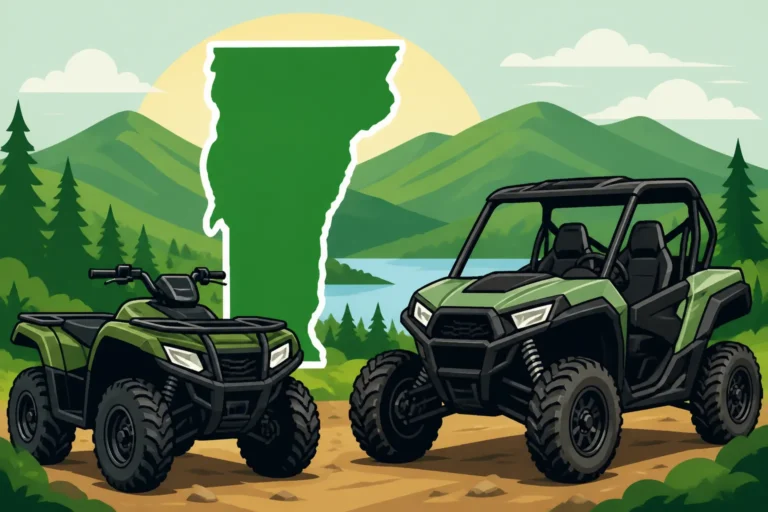
In Vermont, the definition of an All-Terrain Vehicle, or ATV, typically refers to those machines we traditionally think of as "quads." These are purpose-built off-highway vehicles that have several key characteristics that set them apart. First and foremost, they're designed to be ridden with the operator straddling the seat, much like a motorcycle. This riding position is combined with handlebar steering, which gives the rider direct control over the front wheels.
Beyond the riding posture and steering, Vermont also specifies certain dimensional and weight limits for an ATV. Generally, an ATV must not exceed 72 inches in width. This particular measurement is crucial because many newer, more robust machines can easily push past this limit. Additionally, an ATV must typically weigh less than 2,500 pounds dry weight. The term "dry weight" means the vehicle's weight without any fluids like fuel, oil, or coolant, and without any cargo or passengers. This definition is really important, especially as manufacturers build bigger, more capable machines. If your machine meets these criteria – straddle seat, handlebars, within the width and weight limits, and rides on low-pressure tires – it's likely going to be classified as an ATV by the Vermont Department of Motor Vehicles. For a deeper dive into these specific measurements, check out [Vermont's 72-Inch, 2,500-Pound ATV Definition].
Understanding the ASV: When Your Machine Isn't a "Traditional" Quad
Now, let's talk about the All-Terrain Side-by-Side Vehicle, or ASV. This is where most modern UTVs, often referred to simply as "side-by-sides," fit in. The primary distinguishing factor for an ASV, compared to an ATV, is its seating arrangement and steering mechanism. Unlike an ATV where you straddle a seat and use handlebars, an ASV features a non-straddle seat – usually bucket seats or a bench seat, much like a car. The steering is also typically controlled by a steering wheel, not handlebars.
Think about it: when you climb into a side-by-side, you're usually sitting upright, often next to a passenger, and you steer it like you would a small car or golf cart. This fundamental difference in rider position and control is the cornerstone of the ASV classification. While many ASVs tend to be larger, wider, and heavier than traditional ATVs, the seating and steering are the defining characteristics that push them into the ASV category. So, even if your machine is technically under 72 inches wide and under 2,500 pounds, if it has a steering wheel and non-straddle seating, it's an ASV in the eyes of the Vermont DMV. This distinction is vital because it directly influences your registration costs, as we'll explore shortly.
Why These Definitions Matter Beyond Just a Name
It's easy to dismiss these distinctions as mere bureaucratic jargon, but in Vermont, understanding whether your machine is classified as an ATV or an ASV goes far beyond just what you call it. These definitions are the foundation upon which your registration fees are calculated, and they can sometimes even influence where and how you're permitted to ride on certain trails or town roads. The frustration for many riders stems from the fact that they might not realize this until they're standing at the DMV counter, paperwork in hand, expecting one price and being quoted another.
For instance, you might have a brand-new, sporty two-seater that you've always called a "quad" in casual conversation. But if it has a steering wheel and bucket seats, Vermont's regulations clearly put it in the ASV category. This isn't just about paying more; it's about compliance. Misclassifying your vehicle, even unintentionally, can lead to delays in your registration, requiring you to resubmit forms or even pay additional fees. It's a pain that no one wants, especially when you're eager to hit the trails. So, taking the time to correctly identify your machine's class before you even start filling out paperwork can save you a significant amount of hassle and potential headache down the line. It's truly the difference between a smooth registration process and a prolonged administrative ordeal.
The Dollars and Cents: How Classification Impacts Your Registration Fee
Once you've correctly identified whether your off-highway vehicle is an ATV or an ASV according to Vermont's definitions, the next step is to understand how that classification directly translates into the amount you'll pay for registration. This is where the rubber meets the road, quite literally, for your wallet. The state has different fee schedules for each class, and the difference can add up, especially if you're opting for a multi-year registration.
The Standard Vermont ATV Registration Costs
If your machine fits Vermont's definition of a traditional ATV – meaning it has a straddle seat, handlebars, and meets the specified width and dry weight criteria – you'll generally fall into the lower registration fee bracket. Vermont offers both one-year and two-year registration options for ATVs, providing some flexibility depending on how long you plan to keep your machine registered or your preference for administrative convenience.
For a single year of registration, the fee for a Vermont ATV is quite straightforward. Many riders find this option appealing if they're unsure about their long-term plans or simply prefer to renew annually. You can find more details on this specific fee by looking up [The $45 One-Year Fee]. However, for those who want to avoid the annual renewal process and save a little bit of effort, the state also offers a two-year registration period for ATVs. Opting for two years upfront can often feel like a better value, not just in terms of the total cost over two years but also because it means one less trip to the DMV or less paperwork to mail in. If this sounds like a good fit for you, you can explore the exact figure for [The $90 Two-Year Fee]. These fees cover the basic legal right to operate your registered ATV on designated public trails and roads throughout Vermont, assuming you meet all other requirements like possessing a Trail Access Decal and insurance.
The Higher Price Tag for ASV Registration
Now, if your machine is classified as an All-Terrain Side-by-Side Vehicle (ASV) – typically a UTV with bucket seats and a steering wheel – you'll find that the registration fees in Vermont are notably higher than those for traditional ATVs. This is often a point of contention and surprise for new ASV owners who might not have been aware of the distinction before heading to the DMV.
Similar to ATVs, ASVs also have both one-year and two-year registration options. For a single year of ASV registration, the cost is a fair bit more than what an ATV owner would pay. This higher annual fee reflects the state's different classification for these types of machines. You can find specific information on this cost by searching for [The $108 ASV One-Year Fee]. If you're looking for the convenience of a longer registration period, Vermont also provides a two-year option for ASVs. While it does represent a larger upfront cost, it saves you the trouble of renewing every single year. For the precise amount for this extended period, look up [The $211 ASV Two-Year Fee]. Comparing these figures directly with the ATV fees, you'll see a clear premium associated with ASV registration. It's a difference that can certainly make you pause and wonder about the underlying reasons for the disparity.
A Look at the "Why": Justifying the ASV Premium
It's natural to feel a bit of frustration or curiosity when you see a higher price tag for ASV registration compared to ATVs. Many riders wonder, "Why does my side-by-side cost more to register than a quad?" While the Vermont DMV's fee structure isn't always accompanied by a detailed explanation for every dollar, we can infer some common reasons often cited for such distinctions in other states, and in Vermont, it likely boils down to a few key factors. For a broader explanation, you might want to read [Why an ASV Costs More to Register].
Firstly, ASVs, particularly side-by-sides, are often larger and heavier machines than traditional ATVs. Their increased size and weight could be perceived as having a greater impact on trail infrastructure, requiring more maintenance or contributing to wear and tear. They also typically have a higher carrying capacity, accommodating multiple passengers and more gear, which some argue might translate to increased usage or different patterns of use on public lands and designated routes.
Secondly, legislative decisions often play a significant role. Lawmakers might view ASVs as a distinct category with different safety profiles or environmental footprints, leading to a separate fee structure. It's not uncommon for states to create categories based on perceived differences in risk, demand for resources, or simply to align with evolving vehicle technology. While it might feel arbitrary to the individual rider, especially if you treat your ASV with the same care and respect as an ATV, these fees are generally set with broader policy goals in mind. Ultimately, while the reasons might not always be crystal clear, the fact remains that the state has determined ASVs require a different, and generally higher, registration investment.
Navigating the Registration Process for Both Classes
Once you understand the classification and the associated fees, the next hurdle is the actual registration process. While many of the steps are similar for both ATVs and ASVs, knowing what paperwork to gather and how to accurately represent your machine can streamline the entire experience. It's all about being prepared so you don't face unexpected delays or complications.
Essential Paperwork for ATV and ASV Registration
Getting your ATV or ASV registered in Vermont requires a careful assembly of paperwork, no matter which class your machine falls into. The DMV needs to confirm your ownership, identity, and the specifics of the vehicle itself. The core documents are generally the same, but the nuances can vary slightly depending on where and how you acquired your machine.
First and foremost, you'll need proof of ownership. This is often the manufacturer's certificate of origin (MCO) for new machines purchased from a dealer. If you bought your machine used, a properly executed bill of sale from a private seller, along with the previous owner's registration or title (if applicable), will be crucial. Remember, the bill of sale needs to be clear and detailed, including the VIN, purchase price, date, and signatures of both parties. For individuals dealing with private sales, especially if it's your first time, using a reliable template for your bill of sale can be incredibly helpful to ensure it covers all the necessary legal points. Services like LawDepot offer templates for such documents, which can give you peace of mind that you're not missing any critical information that the DMV might require. Beyond ownership, you'll need proof of identity and Vermont residency, usually a valid driver's license or state ID. Finally, be ready with your payment for the registration fees, any applicable title fees, and the Vermont Purchase and Use Tax. For a comprehensive list, you can consult the [Vermont Registration Paperwork Checklist] or dive into [Proof of Ownership Vermont's DMV Will Accept].
The Application Form and Declaring Your Machine's Class
Once you have your supporting documents in order, the next step is filling out the official Vermont DMV application form for your off-highway vehicle registration. The primary form for this is typically Form VD-119, often called the "Application for Registration and Title." This form is where you officially declare information about your machine, and crucially, identify whether it's an ATV or an ASV.
The form will have specific sections asking for vehicle details such as make, model, year, and vehicle identification number (VIN). It's in these sections, or perhaps a dedicated checkbox or field, where you must accurately indicate your machine's class. It’s absolutely essential to be honest and precise here. Don't guess. If you're unsure after reviewing the definitions, measure your machine, check the manufacturer's specifications, or even call the DMV for clarification. Incorrectly marking your machine as an ATV when it's an ASV (or vice-versa) will lead to delays. The DMV clerks are trained to identify these machines and will catch discrepancies, which means your paperwork will be sent back, or you'll be asked for additional information or the correct fee. Accuracy on this form, particularly regarding classification, is key to a smooth process. Sometimes, if previous ownership documents are missing, you might need to file an ownership affidavit, and understanding how to do that correctly is important; see [Filing an Ownership Affidavit at the Vermont DMV] for more.
What Happens If You Get It Wrong? Common Pitfalls
We've all been there: rushing through paperwork, making an assumption, and then realizing later that we've made a mistake. When it comes to registering your ATV or ASV in Vermont, getting the classification wrong on your application form can lead to a host of headaches and unnecessary delays. It's a very common pitfall that catches many riders off guard.
If you mistakenly classify your ASV as an ATV (or vice-versa), the most immediate consequence is that your registration application will likely be rejected or flagged by the DMV. This means your processing time will increase significantly. You might receive a letter in the mail requesting corrected information or additional payment, or if you're registering in person, you'll be told at the counter that the fees are incorrect or the vehicle description doesn't match the classification. This often means needing to go home, correct the form, and return to the DMV, or re-mail your application, pushing back your riding plans. In a worst-case scenario, if the misclassification goes unnoticed during registration but is later discovered by a warden or law enforcement while you're out on the trails, you could potentially face fines for operating an improperly registered vehicle. Imagine planning a weekend ride only to be turned around because your paperwork wasn't accurate! It's far better to double-check your machine's specifications against Vermont's definitions, perhaps even taking a tape measure to it, before submitting your paperwork. A little bit of diligence upfront can save you a lot of grief and frustration down the road.
Beyond the Initial Fee: Other Costs and Considerations
While the ATV versus ASV registration fee is a significant part of your overall cost, it's important to remember that it's not the only expense you'll incur when preparing to legally ride in Vermont. There are other mandatory charges and requirements that apply to all off-highway vehicles, regardless of their specific classification. Overlooking these can lead to another surprise at the DMV or, worse, issues out on the trail.
Don't Forget the Title Fee and Purchase and Use Tax
Beyond the annual or biennial registration fee, there are two other significant financial considerations that apply to almost all ATV and ASV owners in Vermont: the title fee and the Purchase and Use Tax. These costs are distinct from the registration fee itself and are generally applied at the time of your first registration in the state.
If your ATV or ASV is a newer model year (generally 15 years old or newer), Vermont will typically require you to obtain a title. This document proves legal ownership and is essential for future sales or transfers. There is a separate fee for applying for a title, which is constant regardless of whether your machine is an ATV or an ASV. For more information on the steps involved, check out [Vermont Title Application Steps]. Even if your machine is older and doesn't require a title, you'll almost certainly be subject to Vermont's Purchase and Use Tax. This is a one-time tax assessed on the purchase price of the vehicle, similar to sales tax, and it's collected by the DMV when you first register the machine. There are specific exemptions, like gifts between immediate family members, but for most purchases, this tax will apply. You can learn more about this by reading [Vermont Purchase and Use Tax on an ATV]. The key takeaway here is that while the ATV/ASV classification dictates your registration cost, the title fee and Purchase and Use Tax are additional, often larger, expenses that you need to budget for, regardless of your vehicle's class.
The Trail Access Decal (TAD): A Universal Requirement
Once your ATV or ASV is successfully registered with the Vermont DMV, you're not quite ready to hit the extensive network of VASA (Vermont Association of Snow Travelers) trails just yet. There's another crucial item you'll need: the Vermont Trail Access Decal, or TAD. This decal is a universal requirement for all off-highway vehicles, whether they're ATVs or ASVs, that wish to operate on VASA-maintained trails.
The TAD is essentially your pass to ride on these designated trails, which make up the vast majority of legal riding opportunities in Vermont. It's an additional cost that goes towards the maintenance and upkeep of the trail system by VASA and its member clubs. This means that even after paying your ATV or ASV registration fee, you'll need to purchase and affix a TAD to your machine. For more comprehensive details on this essential decal, including costs and how to obtain one, I highly recommend reading [Vermont TAD: The Trail Access Decal Explained]. It's worth noting that while your registration makes your machine legal for general operation, the TAD opens up access to the vast trail network. Even for documentation like ownership transfers, having clear, correctly drafted documents from services like LawDepot can smooth transitions, ensuring all official papers are in order for new owners.
Insurance: A Mandatory Piece of the Puzzle
Another critical, and mandatory, piece of the puzzle for all Vermont off-highway vehicle owners is insurance. Regardless of whether your machine is classified as an ATV or an ASV, the state requires proof of liability insurance before you can legally operate it. This isn't just a suggestion; it's a legal requirement designed to protect you and others in the event of an accident.
Vermont's law specifies minimum coverage limits for bodily injury and property damage, similar to automobile insurance. These limits are in place to ensure that if you're involved in a collision or cause damage while riding, there's financial protection for those affected. You'll need to carry proof of this insurance with you whenever you're operating your machine. The cost of insurance will vary widely based on your machine's value, your riding history, your age, and the coverage limits you choose. While the type of machine (ATV vs. ASV) might influence your insurance premium (as ASVs are sometimes perceived as higher risk by insurers due to size or multiple passengers), the requirement to have insurance is universal. So, when you're budgeting for your riding season, be sure to factor in the cost of a good off-highway vehicle insurance policy. For more information on what's required, take a look at [Vermont ATV Insurance Requirements].
Real-World Scenarios and Avoiding Headaches
Understanding the definitions and fees is one thing, but applying that knowledge in real-world situations can sometimes present new questions. Whether you're buying a machine, dealing with modifications, or simply renewing, knowing what to expect can prevent common registration headaches.
Buying from a Dealer vs. Private Sale: Classification Implications
The way you acquire your ATV or ASV can significantly impact the ease of the registration process, particularly concerning classification. There's a notable difference in what you can expect when purchasing from an authorized dealer versus buying through a private sale.
When you purchase a new or used machine from a licensed Vermont dealer, they typically handle a substantial portion of the registration and titling paperwork for you. Dealers are well-versed in the state's classifications and fees. They'll ensure your machine is correctly identified as an ATV or ASV, collect the appropriate taxes and fees, and often submit the application to the DMV on your behalf. This essentially acts as a helpful buffer, minimizing the chances of incorrect classification or missing paperwork for the buyer. It's a convenient service that many new owners appreciate.
However, if you're buying from a private seller, the onus shifts entirely to you, the buyer, to correctly classify the machine and complete all necessary documentation. This means you'll need to be diligent in verifying the machine's specifications against Vermont's definitions, gathering all proof of ownership, and accurately filling out the DMV forms. This is where a clear and comprehensive bill of sale becomes absolutely vital. Using a template from a reputable service like LawDepot can ensure that all required information, including the VIN, sale price, and condition, is properly documented, which can make your journey to the DMV much smoother. For advice on what to look for and how to handle the paperwork in a private sale, consider reading [Buying From a Private Seller in Vermont].
What if My Machine is Borderline or Modified?
One of the trickiest situations for riders can be when their machine seems to fall into a grey area between the ATV and ASV classifications, or when modifications have potentially altered its original class. What if your side-by-side is exceptionally narrow, or your ATV has a custom seat that almost resembles a bench? Or perhaps you've added accessories that push its weight?
For machines that are "borderline" on dimensions, such as those close to the 72-inch width limit or the 2,500-pound dry weight threshold, the best advice is always to measure. Don't rely on a visual estimate. Use a tape measure and compare your findings to the official Vermont definitions. If in doubt, consult your owner's manual for factory specifications or contact the manufacturer. For machines that have been modified, such as adding a heavy winch, substantial roll cage, or aftermarket tracks, these changes could potentially push your vehicle into a different weight class, though typically the ASV distinction hinges more on steering and seating. If you believe a modification has altered your machine's legal classification, or if you simply want to be absolutely sure, it's always best practice to contact the Vermont DMV directly. Their clerks can provide definitive guidance based on your specific machine's details, helping you avoid any future issues. For information on specific dimensions, you might want to review [Vermont Machines Wider Than 72 Inches] or [Vermont Machines Over 2,500 Pounds].
Renewing Your Registration: Expect the Same Classification
Once you've successfully registered your ATV or ASV the first time, the renewal process is generally much simpler, and you can almost always expect your machine to maintain its original classification. The Vermont DMV will have your vehicle's information on file, including whether it was registered as an ATV or an ASV.
When it's time to renew, usually a notice will be mailed to you, detailing the renewal fees and instructions. You'll typically pay the same one-year or two-year fee that corresponds to your machine's established classification. For instance, if you registered an ASV, you'll renew it as an ASV at the ASV rate. Unless you have made significant structural modifications to your machine that would fundamentally change its definition (e.g., converting a straddle-seat ATV into a steering-wheel, bench-seat vehicle, which is highly unlikely and often impractical), its classification will remain consistent. This means you won't need to go through the entire re-evaluation process each time you renew. It's usually a straightforward payment and sticker update. For a complete guide to this process, check out [Vermont ATV Registration Renewal]. This consistency makes future registration much less of a puzzle, allowing you to focus more on planning your next great Vermont adventure!
Comparing ATV and ASV Registration Fees in Vermont
To make it easier to visualize the difference in registration costs, here's a quick comparison table for ATV and ASV fees in Vermont:
| Vehicle Class | Registration Period | Fee (Approximate) |
|---|---|---|
| ATV | One Year | $45 |
| ATV | Two Years | $90 |
| ASV | One Year | $108 |
| ASV | Two Years | $211 |
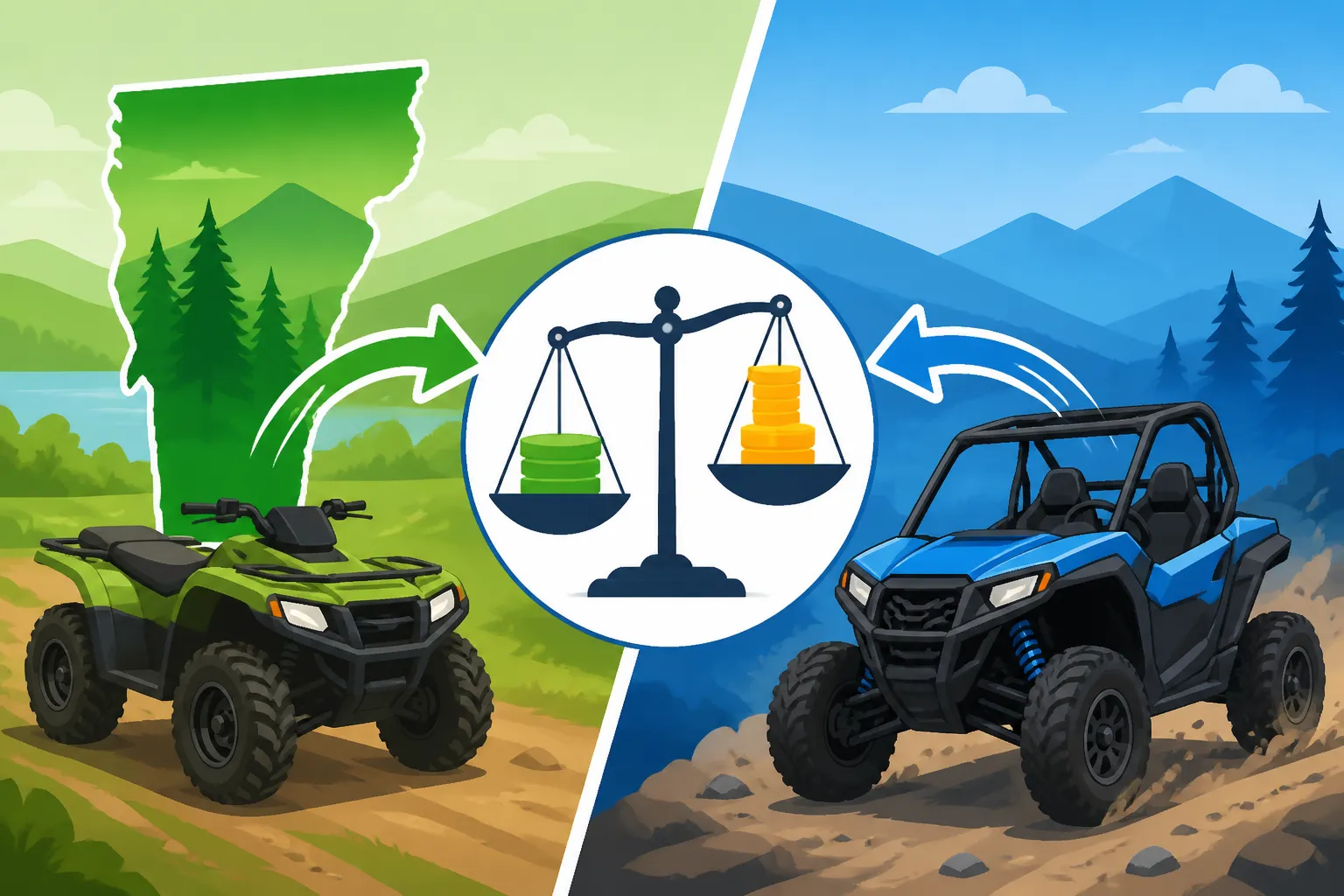
These figures highlight the premium associated with ASV registration in Vermont. While the exact reasoning might be complex, the financial impact is clear for riders choosing side-by-sides.
Disclaimer
This article is for general informational purposes only and does not constitute professional advice. Laws, prices and regulations vary by location and change over time. Consult a qualified professional for guidance on your specific situation.