Dry Weight Versus Curb Weight
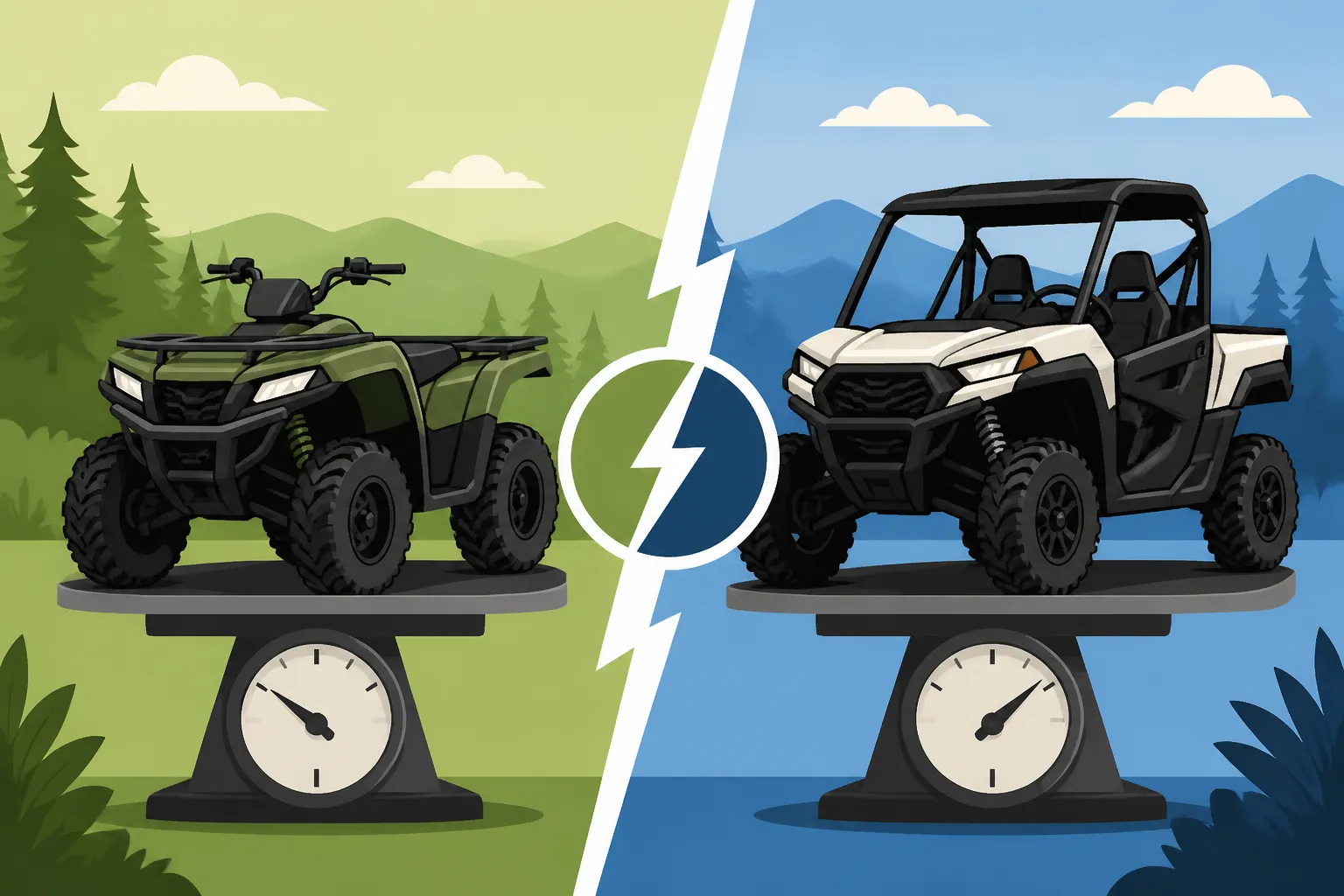
One common source of confusion for ATV and UTV owners, especially those navigating the ins and outs of registration here in Vermont, revolves around how a machine's weight is actually measured and defined. You might see two different terms thrown around – "dry weight" and "curb weight" – and mistakenly think they're interchangeable. They're not, and understanding the distinct difference between them can save you a heap of headaches, not to mention potential registration snags, when you're trying to get your new (or new-to-you) machine ready for Vermont's trails and designated roads. This guide will cut through the jargon, helping you understand both concepts and why that distinction matters so much for your off-road adventures in the Green Mountain State.
Understanding "Dry Weight" in the ATV World
When you first start looking at ATVs or UTVs, whether it's online, in a brochure, or at a dealership, one of the specifications you'll almost certainly come across is "dry weight." It sounds straightforward, right? Just the weight of the machine without any liquids. But there's a bit more to it than that, and understanding what's not included is just as important as knowing what is.
What Dry Weight Really Means for Your Machine
Simply put, dry weight is the weight of the vehicle as it rolls off the factory floor, before any fluids are added. Think of it as the barebones weight. This means it doesn't include engine oil, transmission fluid, coolant, hydraulic brake fluid, or, crucially, any fuel in the gas tank. It also typically excludes the battery, though this can sometimes vary slightly by manufacturer or how they choose to report it. Essentially, it's the weight of the machine's components: the chassis, engine, suspension, tires, bodywork, and electrical wiring, but in a completely dehydrated state. It’s a baseline figure, a snapshot of the machine in its lightest possible configuration.
Because of this "fluids-free" definition, the dry weight can be significantly lighter than how your machine will actually operate once it's fueled up and ready to hit the trails. For riders, this can sometimes be misleading if they're not aware of what that number truly represents. It’s useful for comparing the fundamental heft of one model against another, stripped of variables like fuel tank size, but less useful for understanding its real-world operational weight.
Why Manufacturers Quote Dry Weight
You might wonder why manufacturers even bother with dry weight when it's not how you'll ever actually ride the machine. There are a few key reasons. Firstly, it offers a consistent benchmark for comparison. If every manufacturer reported a "wet" or "curb" weight, there would be inconsistencies in how much fuel was in the tank, what size battery was used, or whether optional accessories were included. Dry weight provides a level playing field, making it easier for consumers to compare the raw mass of different models across brands. It helps highlight the engineering efficiency or robustness of a particular design.
Secondly, for shipping and logistics purposes, dry weight is often the most practical measurement. Vehicles are typically shipped without fluids to reduce weight and avoid potential spills during transport. This figure is crucial for freight calculations and understanding the base load a transport vehicle will carry. While it's a technical specification primarily aimed at industry standards and initial comparisons, it’s the number most often presented in marketing materials, perhaps because a lower number always looks a little better on paper.
How Dry Weight Impacts Vermont's ATV Definition
In Vermont, the definition of an ATV itself, particularly concerning its size and weight, is incredibly important for registration purposes. While the state's statutes refer to operational weight limits, manufacturers often present dry weight figures first. This creates a potential disconnect. If you’re looking at a machine that has a dry weight of, say, 2,400 pounds, you might think you’re well within the [Vermont's 72-Inch, 2,500-Pound ATV Definition]. However, once you add fluids, a battery, and maybe some aftermarket accessories, that machine could easily creep over the 2,500-pound threshold, shifting its classification from a standard ATV to an ASV Class A.
This reclassification can significantly impact registration fees and regulations. Vermont law is specific about the characteristics of an "all-terrain vehicle" and an "all-terrain sport vehicle" (ASV), and weight is a primary differentiator. So, while dry weight is a starting point, it's never the final word when it comes to legal compliance on Vermont roads and trails. You need to consider the full picture to avoid any surprises at the DMV counter.
Deciphering "Curb Weight" for Vermont Riders
In contrast to dry weight, "curb weight" offers a much more realistic picture of your ATV or UTV's actual heft when it's ready to roll. This is the figure that often aligns more closely with what Vermont's Department of Motor Vehicles (DMV) is concerned with when classifying your machine. Ignoring this distinction could lead to registering your vehicle incorrectly, which no one wants.
What Curb Weight Adds to the Equation
Curb weight, also sometimes referred to as "wet weight" or "operational weight," includes all the necessary fluids your machine needs to function. This means a full tank of fuel, engine oil, coolant, and brake fluid. It also includes the battery. Think of it as the weight of your ATV or UTV sitting at the curb, ready for you to hop on and drive away – hence the name. This figure accounts for the standard equipment and all operational liquids. It does not, however, include the weight of the rider, any passengers, or any cargo you might load onto the machine, like tools, a cooler, or hunting gear.
The difference between dry weight and curb weight can be substantial, often ranging from 50 to 150 pounds or more, depending on the size of the machine and its fluid capacities. For a typical side-by-side, which can have a large fuel tank and extensive cooling systems, this difference can be even greater. This added weight from fluids and the battery is an essential consideration, especially when your machine's weight is near a legal limit or classification threshold.
Components Included in Curb Weight
Let's break down what exactly goes into that curb weight number:
- Fuel: This is a big one. A full tank of gasoline adds a significant amount of weight. Depending on your tank size, this could be anywhere from 10 to 30 pounds or more.
- Engine Oil: Your engine needs oil to run smoothly, and that fluid has weight.
- Coolant: For liquid-cooled machines, the radiator and cooling system are filled with coolant, adding further weight.
- Brake Fluid: Hydraulic brakes require fluid, another small but necessary component of the curb weight.
- Battery: The battery, essential for starting and running electrical systems, is a weighty item often excluded from dry weight but included in curb weight.
- Standard Accessories: While the primary components are fluids and battery, some manufacturers might also include the weight of standard tools or basic safety equipment that come with the vehicle from the factory.
Understanding these components helps you appreciate why curb weight provides a much more accurate representation of your machine's mass when it's actually in use. This figure directly impacts everything from how the machine handles to, more importantly for Vermont, its legal classification.
Why Vermont Cares About Curb Weight for Registration
Vermont's DMV isn't interested in the weight of your machine sitting in a shipping crate. They care about its operational weight, which is essentially its curb weight, when it comes to registration and classification. The state has specific definitions for ATVs and ASVs, and exceeding certain weight thresholds can push your machine into a different category, leading to different fees and regulations. For instance, [Vermont ASV Class A Registration Explained] highlights how machines exceeding specific dimensions or weights are classified differently.
When you go to register your machine, particularly if it's a larger UTV or a powerful ATV, the DMV clerk will be looking at specifications that reflect its ready-to-ride state. If the manufacturer's provided weight is dry, you might need to calculate or estimate the curb weight yourself, or ensure the dealer provides the correct figure. Presenting an accurate weight helps ensure you're registering your vehicle in the correct class, paying the appropriate [Vermont ATV Registration Cost] or [Vermont ASV Registration Cost Compared], and avoiding potential fines for misrepresentation or operating an improperly classified vehicle.
The Critical Differences: Dry vs. Curb Weight Side-by-Side
The distinction between dry weight and curb weight might seem like a technicality, but it has real-world implications for ATV and UTV owners, especially here in Vermont. Ignoring this difference can lead to confusion, incorrect assumptions about your machine's capabilities, and even problems with compliance. Let's really dig into why this matters.
Practical Implications for Vermont ATV Owners
For riders in Vermont, understanding the difference between these two weight measurements is far more than just trivia. It directly impacts whether your machine falls under the standard ATV definition or gets classified as an ASV, which carries different requirements. Imagine you're looking at a powerful side-by-side that claims a dry weight of 2,450 pounds. You might think, "Great, it's an ATV!" However, once you add a full tank of gas (say, 10 gallons at about 6 lbs/gallon = 60 lbs), engine oil, coolant, and a hefty battery, your machine's curb weight could easily exceed 2,500 pounds, pushing it into the ASV category.
This reclassification isn't just about a different sticker; it can mean a higher [Vermont ASV Registration at $108 a Year] or [Vermont ASV Two-Year Registration at $211] compared to a standard ATV. More significantly, it means your machine is subject to the rules and limitations specifically for ASVs, which can sometimes differ in permissible riding areas or equipment requirements. Always consider the curb weight when assessing your machine's compliance with Vermont's regulations, not just the lighter dry weight number often featured in sales literature.
Potential Pitfalls of Misinterpreting Weight
Misunderstanding these weight definitions can lead to several frustrating pitfalls:
- Incorrect Registration Class: As discussed, this is the most common issue. You might unintentionally register your machine as an ATV when, in fact, its operational weight classifies it as an ASV. This can lead to issues if a warden or DMV official ever questions your registration.
- Safety and Performance Misjudgments: A heavier machine handles differently. If you're mentally operating off the dry weight, you might underestimate the true weight of your fully loaded machine, impacting your judgment on steep inclines, tight turns, or when crossing soft terrain. It also affects how much additional cargo or passenger weight you can safely carry.
- Insurance Implications: While less direct, sometimes insurance policies can have clauses related to vehicle classification or modifications that increase weight. An accurate understanding of your machine's operational weight ensures you're providing correct information to your insurer.
- Access Restrictions: Some specific trails or designated routes in Vermont might have weight restrictions, especially on sensitive surfaces or older bridges. Knowing your true curb weight helps you adhere to these limits and protect the trail system for everyone.
It's always better to be armed with accurate information, and if you're ever unsure about how to properly declare your machine's weight, don't hesitate to consult with your dealer or the Vermont DMV directly.
Real-World Scenarios Where Weight Matters
Let's imagine a couple of scenarios to illustrate why this distinction is so crucial:
- Scenario 1: Buying a Used UTV from a Private Seller. You find a great deal on a used side-by-side. The seller provides you with a bill of sale, perhaps even using a template from a service like LawDepot, but lists the weight as "2,400 lbs (dry)." You think you're good for ATV registration. However, after filling the tank, checking fluids, and installing a new battery, you take it to a local scale, and it clocks in at 2,580 lbs. Suddenly, you're looking at an ASV Class A. This requires a different registration process, and you might have to pay additional fees to rectify the initial, incorrect registration. You might even need to use an ownership affidavit at the Vermont DMV if the paperwork is murky.
- Scenario 2: Adding Accessories to Your ATV. You own an ATV that had a dry weight of 1,200 pounds, but with fluids, it's about 1,300 pounds – well within the ATV class. Over time, you add a heavy winch, a substantial cargo box, larger aftermarket tires, and a full skid plate package. Each addition, even if small, contributes to the overall weight. Without realizing it, you could push your machine's curb weight significantly higher, potentially closer to thresholds that might redefine its classification in the future, especially if Vermont's definitions evolve further. This is why it's important to periodically re-evaluate your machine's weight, particularly after major modifications.
How Weight Affects Vermont Registration and Classification
Vermont has specific ways of classifying off-road vehicles, and weight is a paramount factor in these definitions. These classifications aren't just bureaucratic hurdles; they dictate how and where you can legally operate your machine. Understanding how dry versus curb weight plays into these rules is essential for every rider in the state.
Vermont's 72-Inch, 2,500-Pound ATV Definition
The cornerstone of ATV definition in Vermont often hinges on a machine's width and weight. Specifically, when we talk about [Vermont's 72-Inch, 2,500-Pound ATV Definition], this refers to a common threshold. An "all-terrain vehicle" is generally defined as a motorized, off-highway vehicle designed to travel on four or more low-pressure tires, that is 72 inches or less in width, and weighs 2,500 pounds or less. If your machine exceeds either of these measurements, it's no longer considered a standard ATV in the eyes of the law, and that's where the ASV (All-Terrain Sport Vehicle) classification comes into play.
The critical point here is that this 2,500-pound limit refers to the operational weight, which aligns with curb weight. It's not the dry weight advertised by the manufacturer. This is where many riders can get tripped up. If your UTV has a dry weight of 2,400 pounds, it's crucial to calculate or verify its curb weight. Adding fuel, oil, coolant, and a battery could easily push it over that 2,500-pound mark, thereby altering its classification and, consequently, its registration requirements. This also highlights why [Vermont ATV Versus ASV Classes] exist, to properly categorize and regulate machines based on their physical characteristics.
The Importance of Accurate Weight for ASV Class A
When a machine exceeds the 2,500-pound weight limit, or the 72-inch width limit, it generally falls into the ASV Class A category. [Vermont ASV Class A Registration Explained] dives deeper into this, but for our purposes, it's vital to know that these machines face different registration costs and, potentially, different operational guidelines. An ASV Class A might require specific permits or only be allowed on certain designated trails or roads where larger, heavier vehicles are accommodated.
The DMV relies on the information you provide during registration. If you mistakenly list the dry weight of your machine, and it's actually an ASV by its curb weight, you're not just underpaying your registration fee; you're operating a misclassified vehicle. This could lead to fines or complications if you're ever stopped by law enforcement or a trail warden. Accurate weight reporting ensures you comply with all state regulations, keeping your rides smooth and worry-free.
What to Do If Your Machine Is Near the Limit
If you have a larger ATV or UTV and suspect its curb weight might be hovering around the 2,500-pound threshold, here’s what you should do:
- Consult Your Owner's Manual: Most comprehensive owner's manuals will provide both dry and curb weight figures, or at least enough information to accurately calculate the curb weight.
- Verify with Your Dealer: If you purchased from a dealership, they should be able to provide the precise curb weight for your specific model, often found on their specification sheets or internal documentation.
- Actual Weigh-In: The most definitive method is to physically weigh your machine. Load it up with all its fluids (full tank of gas, oil, coolant) and the battery. Many local transfer stations, truck stops, or even agricultural co-ops have certified scales where you can get an accurate weigh-in. Make sure to get a printout of the weight.
- Factor in Accessories: If you've added heavy aftermarket accessories (winches, plows, heavy-duty bumpers, roof racks), remember that these contribute to the overall operational weight. You might need to add their weight to the manufacturer's curb weight or weigh the machine with all accessories installed.
- Document Everything: Keep a record of your machine's weight, along with any relevant documentation. If you're creating a bill of sale, perhaps using a reliable template from LawDepot, ensure the weight specified reflects the curb weight, not just the dry weight. This documentation can be invaluable if questions arise during registration or subsequent inspections.
Taking these steps ensures you correctly classify and register your machine, avoiding potential issues down the line.
Practical Tips for Verifying Your Machine's Weight
Knowing the difference between dry weight and curb weight is one thing, but actually figuring out your specific machine's operational weight is another. It's not always as simple as checking a sticker, especially if you've added accessories or bought a used machine where the original specs might be unclear. Here are some practical tips to help you accurately determine your ATV or UTV's weight for Vermont registration.
Consulting Your Owner's Manual and Manufacturer Specs
Your owner's manual is often the first and best place to look for accurate weight information. Most comprehensive manuals will have a "Specifications" section that lists various measurements, including both dry and curb weight. If only dry weight is listed, the manual might also specify fluid capacities (fuel tank, oil capacity, coolant capacity), allowing you to make a reasonably accurate calculation of the curb weight yourself. For instance, knowing your fuel tank holds 5 gallons, and gas weighs approximately 6 pounds per gallon, immediately adds 30 pounds to the dry weight.
If you don't have the physical manual, most manufacturers provide digital versions on their websites. A quick search using your ATV or UTV's make, model, and year should lead you to the official specifications page. Pay close attention to any disclaimers about how weight is measured (e.g., "with full tank of fuel" or "without fluids"). When in doubt, call a dealership for your brand; they often have access to detailed specification sheets that might not be publicly available. This meticulous check is especially important when you're preparing your [Vermont Registration Paperwork Checklist].
The Option of Physically Weighing Your ATV/UTV
For the most precise and undeniable weight measurement, nothing beats physically putting your machine on a scale. This is especially recommended if:
- Your machine's reported weight is very close to Vermont's 2,500-pound threshold.
- You've added substantial aftermarket accessories (winches, plows, tracks, large storage boxes) that significantly increase its original weight.
- You bought a used machine and the previous owner's documentation is unclear or only lists dry weight.
Here’s how to go about it:
- Prepare Your Machine: Fill your fuel tank completely, ensure engine oil, coolant, and brake fluid levels are full, and that your battery is installed. Remove any cargo or personal items you wouldn't consider part of the machine's permanent operational weight.
- Find a Certified Scale: Look for public scales at truck stops, material yards, recycling centers, or even agricultural supply stores. These scales are often certified and will provide a printed weigh slip. Call ahead to confirm they can accommodate an ATV/UTV and provide a weigh slip.
- Get a Weigh Slip: Make sure to obtain a dated and stamped weigh slip or receipt that clearly shows the gross weight of your machine. This document can serve as official proof of your vehicle's weight if the DMV ever requests it.
This method removes all guesswork and provides definitive proof, which can be invaluable for registration and peace of mind.
Documenting Your Machine's Weight for the DMV
Once you have determined your machine's accurate curb weight, whether through manual research or a physical weigh-in, proper documentation is key for the Vermont DMV. When you fill out the registration forms, ensure the weight you provide is the curb weight, not the dry weight.
If you're buying a machine, especially from a private seller, you might use a bill of sale template. Resources like LawDepot offer customizable bill of sale forms that allow you to include detailed vehicle specifications, including the curb weight. Even if the state doesn't explicitly require a separate weigh slip at initial registration for all vehicles, having that information accurately recorded on your bill of sale or in your personal records is a smart move.
Should your machine be on the heavier side, pushing into the ASV category, it’s always better to be upfront and register it correctly from the start. This prevents issues down the line and ensures you comply with [Vermont ATV Registration for a New Resident] or [Vermont Registration for a Machine Bought Out of State] requirements, making your experience riding in Vermont much more enjoyable and free of legal worries.
Dry Weight vs. Curb Weight Comparison
To help clarify the distinctions, here's a quick comparison of dry weight and curb weight:
| Feature | Dry Weight | Curb Weight |
|---|---|---|
| Definition | Weight of machine without any fluids or battery | Weight of machine with all operational fluids & battery |
| Included Components | Chassis, engine, suspension, tires, bodywork | Fuel (full tank), engine oil, coolant, brake fluid, battery, standard tools |
| Exclusions | Fuel, oil, coolant, brake fluid, battery, rider, cargo | Rider, passengers, cargo, aftermarket accessories |
| Manufacturer Use | For comparison, shipping, baseline specifications | For operational characteristics, handling |
| Vermont DMV Relevance | Less relevant for legal classification | Critically relevant for ATV/ASV classification & registration |
| Typical Value | Lower | Higher |
| Best for | Comparing basic machine mass | Understanding real-world operational weight and compliance |
This table should give you a clear, at-a-glance understanding of how these two important weight measurements differ and why the curb weight is the one you really need to focus on for your Vermont ATV or UTV.
Disclaimer
This article is for general informational purposes only and does not constitute professional advice. Laws, prices and regulations vary by location and change over time. Consult a qualified professional for guidance on your specific situation.