Vermont Registration for a Leased Machine
Vermont ATV registration for a leased machine requires specific lease agreements and authorization documents from the legal owner.
Start here, or nothing else is legal.
Resident registration, titling and renewal, and public-use versus private-land fees — plus the age and safety-course rules that decide who may ride.
Vermont ATV registration for a leased machine requires specific lease agreements and authorization documents from the legal owner.
Vermont ATV liens and title certificates explain how financing affects vehicle ownership, registration, and legal transfer.
Vermont ATV and UTV co-ownership requires both owners listed on applications, proper signatures, and correct ownership documents.

Vermont ATV registration transfer after an owner dies requires specific documents, a will or estate administrator, and DMV paperwork.
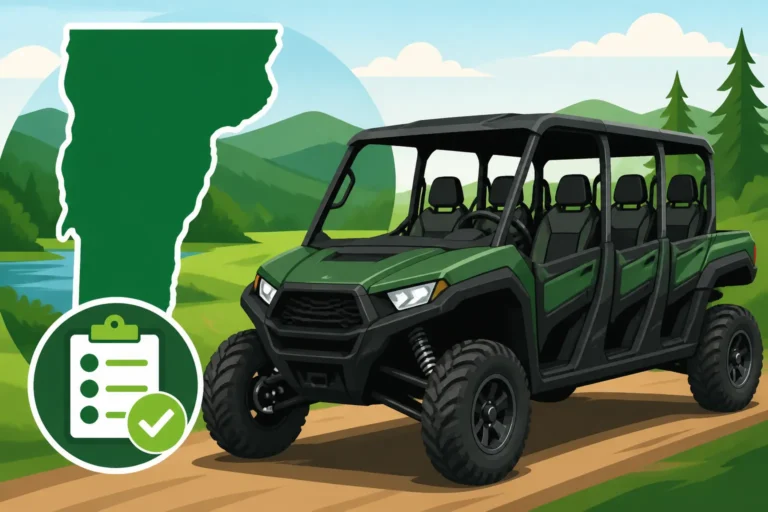
Vermont registration rules for six-seat UTVs explain ATV and ASV classifications, department fees, and legal trail requirements.
Vermont side-by-side registration requires an ASV Class A classification, specific paperwork, and fees for legal trail use.
Vermont dirt bike registration rules and vehicle classifications differ from ATV laws because two wheeled machines are excluded.
Vermont youth quad registration requirements, necessary ownership paperwork, and rules for operating child-sized ATVs legally.
Vermont ASV Class A eligibility criteria define off-road machines by tire count, steering wheels, and non-straddle seating.

Vermont ASV registration costs, fee comparisons for annual versus biennial options, and classification rules for larger off-road vehicles.