Vermont Riding in Summer Green
Vermont’s summer-green season can make an ATV or UTV ride feel like a journey through a tunnel of ferns, hardwoods, and mountain views—but lush scenery doesn’t mean every trail is open or easy. This guide explains how to plan a responsible summer ride, check access, prepare for changing conditions, and make the most of a day on Vermont’s corridors.
Plan a Vermont summer ride around access, not just scenery
Know which trails you can ride
Many Vermont ATV routes use private land, and a trail that appears on a map is not automatically open to riders. Landowner permission, club decisions, weather damage, seasonal restrictions, and route changes can all affect access. Stay on marked corridors, follow posted signs, and treat gates and closures as instructions—not invitations to find a way around.
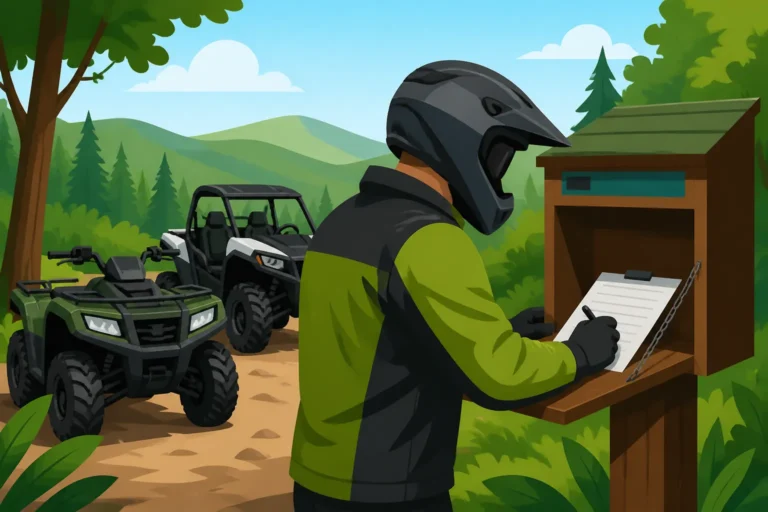
VASA and its member clubs help maintain and sign many of the corridors riders use. Before leaving home, check the relevant club’s current notices and trail information. A route that was open on your last visit may have changed after a storm, a landowner request, or trail work. For broader context on how the network is arranged, see [Vermont ATV Trails: The VASA System](Vermont ATV Trails: The VASA System) and [Vermont's Trails Run on Private Land](Vermont's Trails Run on Private Land).
State land requires particular care. Vermont’s forests and public lands are not a blanket invitation to ride an ATV. Access is limited to designated areas or crossings where riding is allowed. If a route seems to cut through state land, confirm its status rather than assuming that public ownership means motorized access is permitted. [Vermont State Land Is Mostly Closed to ATVs](Vermont State Land Is Mostly Closed to ATVs) explains why checking the exact route matters.
A mapping app can help you plan, but it cannot grant permission or guarantee a trail is open. Some riders use onX Offroad to organize routes and review map information, then compare that plan with club updates and signs on the ground. Keep a paper map or offline navigation option as a backup, especially in areas where phone coverage is unreliable. The practical distinction is simple: use maps to orient yourself, and use current local information to decide whether you may ride.
Take care of registration, decals, and rider requirements
Before the trip, confirm that your machine and everyone riding it meet the applicable requirements. Vermont trail access can involve both machine registration and a Trail Access Decal, often called a TAD. Requirements may differ for Vermont-registered machines and machines registered elsewhere, so visitors should check the rules that apply to their situation rather than relying on what worked in another state.
If you are visiting from outside Vermont, plan these details before towing north. A machine that is properly registered at home may still need additional trail-access steps for Vermont corridors. Start with [Vermont Requires Registration Plus a TAD](Vermont Requires Registration Plus a TAD) and [Vermont Out-of-State Machines Still Need a TAD](Vermont Out-of-State Machines Still Need a TAD). Keep required paperwork and proof of access easy to show if a warden or other authorized official asks to see them.
Rider training and supervision matter, too. Families should check the age-related rules before putting a young rider on a machine, and adults should make sure the route suits the least experienced person in the group. Vermont’s requirements include specific provisions for younger riders; [Vermont ATV Safety Course Required Under 18](Vermont ATV Safety Course Required Under 18) is a useful starting point when planning a family outing.
Do these checks well before ride day. It is frustrating to arrive at a trailhead with a full trailer and discover that a missing decal, an expired document, or an age requirement has changed the plan. A quick pre-trip checklist helps:
- Confirm that the route is open and appropriate for your machine.
- Check registration, trail-access, and training requirements.
- Make sure every rider understands the route and group plan.
- Save the relevant club information and maps for offline use.
- Recheck conditions shortly before you leave.
What summer-green conditions are like on Vermont trails
Expect shade, damp ground, and changing traction
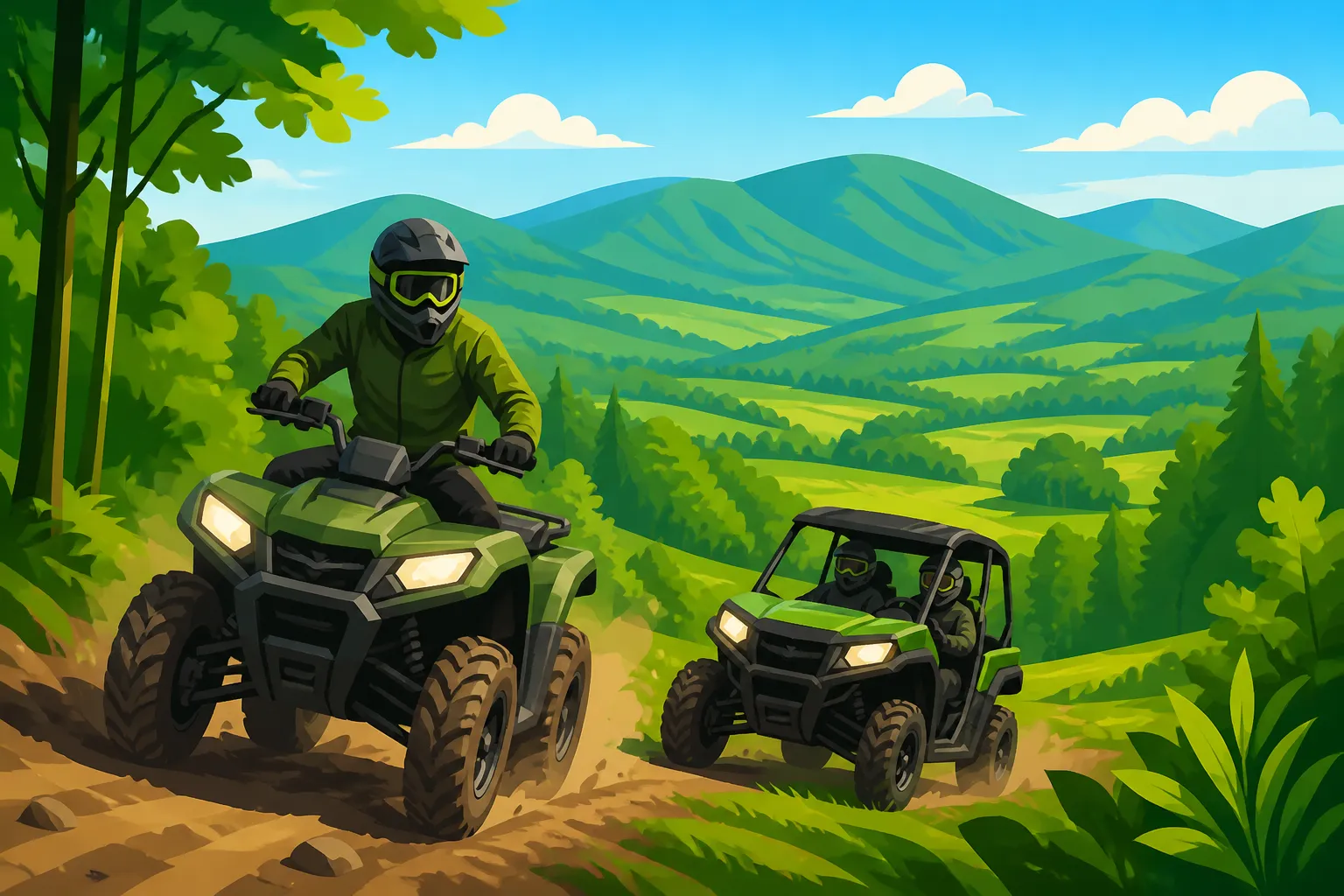
Summer greenery is part of the appeal: ferns crowd the edges, tree cover shades long stretches, and roadside openings can reveal views over valleys and ridgelines. That same landscape can make a route feel very different from an open gravel road. Dense canopy may keep sections damp after rain, while exposed areas can dry quickly. A trail can shift from firm dirt to slick clay, loose stone, or a wet low spot over a relatively short distance.
Avoid assuming that a dry forecast means every section will be dry. Water can linger under trees and in shaded hollows, and a brief shower may make a slope or clay surface slippery. If you come to a wet or soft section, slow down and assess it before entering. Choose a route around the area only if the marked trail allows it; do not cut a new line through vegetation or private land. Repeated wheelspin can create ruts that damage the corridor and give landowners a reason to withdraw permission.
The safest pace is one that lets you react to what the trail actually does, not what the previous mile looked like. Keep extra space between machines so the rider in front does not throw debris at the next person or force them into a sudden stop. On a narrow corridor, make room for other trail users and follow local signs about yielding. [Vermont Trail Etiquette on Private Land](Vermont Trail Etiquette on Private Land) offers helpful reminders for riding through working landscapes and shared corridors.
A route-planning app such as onX Offroad can help you note planned turns or identify your general position, but stay alert to physical signs and trail conditions. A digital line should never persuade you to continue through a closed gate, onto an unmarked spur, or into terrain that is unsafe for your machine. Save maps for offline use before reaching a dead zone, and agree on a regrouping point in case the group becomes separated.
Prepare for heat, rain, insects, and changing visibility
Summer riding still calls for layers. A morning in the hills can feel cool, while the afternoon brings heat, humidity, and direct sun on open sections. Wear protective clothing that suits the machine and conditions, and bring rain gear even when the sky looks clear at the trailhead. A storm can arrive while you are far from the trailer, and wet clothing can become uncomfortable once the temperature drops.
Hydration is easy to underestimate when you are focused on the ride. Bring more water than you expect to need, take regular breaks, and pay attention to headaches, unusual fatigue, dizziness, or nausea. Do not wait until someone feels unwell to stop. A slower pace and a shaded rest can make the day safer and more enjoyable for everyone.
Insects are another part of the season. Mosquitoes, ticks, and biting flies can be bothersome around trailheads, wooded edges, and stops where the group is standing still. Use an insect repellent that is appropriate for your needs, check yourself after the ride, and remove ticks promptly using a suitable method. Keep food sealed and avoid leaving wrappers or other trash behind.
Visibility deserves attention even in daylight. Dust, spray, branches, and low light beneath a dense canopy can make a machine harder to see. Keep headlights and tail lights in good working order, ride at a speed that leaves room to stop, and use eye protection. A clear visor or goggles also help when the trail is wet or dusty. Summer greenery can hide ruts, rocks, and drainage cuts until you are close, so look ahead rather than focusing only on the tire track in front of you.
| Summer condition | What it can mean on the trail | A practical response |
|---|---|---|
| Damp ground beneath trees | Slick soil or soft edges after rain | Reduce speed and avoid spinning tires |
| Dense foliage | Limited sightlines and hidden obstacles | Leave space, look ahead, and slow before blind turns |
| Heat and humidity | Fatigue and dehydration | Carry water and schedule regular breaks |
| Sudden rain | Lower traction and reduced comfort | Bring rain gear and reconsider exposed or difficult sections |
| Insects | Uncomfortable stops and tick exposure | Use suitable repellent and check after the ride |
| Poor cell coverage | Navigation or contact difficulties | Save maps offline and set a regrouping plan |
Build a ride plan that works for your group
Choose a realistic route and turnaround point
A good summer ride is not measured by how many miles you cover. Pick a route that fits the experience, stamina, and machine capability of the least experienced rider in the group. If children or first-time riders are coming along, shorter segments with planned breaks are usually more comfortable than an ambitious loop with no easy way to shorten it.
Before departure, identify the trailhead, parking arrangements, fuel plan, and a sensible turnaround point. Make sure everyone knows where the group will stop if it becomes separated. Larger groups can stretch out on narrow or winding corridors, so agree on a pace and use safe pull-off areas to regroup rather than stopping abruptly in the travel lane.
Use more than one source when planning. Club information and posted signs are essential for access and closures. An app such as onX Offroad can help keep track of your planned route, but compare it with the current information available from the club responsible for that area. [Reading a VASA Club Trail Map](Reading a VASA Club Trail Map) and [Vermont Trail Conditions Before You Tow](Vermont Trail Conditions Before You Tow) are useful topics to review before committing to a destination.
Have a backup plan that does not depend on trespassing or improvising a new route. If a corridor is closed, turn around and use another confirmed route—or call it a day. That may feel disappointing after a long drive, but ignoring a closure can damage landowner relationships and put the whole trail network at risk.
Pack for a full day, not just the ride itself
A thoughtful gear check can prevent small problems from becoming trip-ending ones. Bring water, snacks, basic first aid supplies, a phone charger or power bank, rain layers, and the tools or recovery equipment appropriate for your machine and route. Carry a tow strap only if you know how to use it safely, and never attach it to a point that is not designed for recovery.
Check the machine before loading it. Look over tires, brakes, lights, fuel, and visible fluid levels. Secure loose equipment and confirm that any trailer is ready for the drive to the trailhead. If the route is remote, tell someone who is not riding where you plan to go and when you expect to return. A simple check-in plan matters when cell service drops out.
Keep food and waste contained. Do not leave bottles, cans, food scraps, or broken parts at a pull-off or trailhead. Close gates as you found them, avoid disturbing livestock or crops, and ride quietly near homes. These small habits show respect for the people whose land makes access possible. For more on how that access is sustained, see [Vermont Landowner Permission Holds the System Together](Vermont Landowner Permission Holds the System Together).
If the group encounters a hazard, stop in a safe place and make a clear decision together. Do not pressure a less experienced rider to attempt a climb, crossing, or muddy section they are uncomfortable with. Turning around is a sound riding choice, not a failure. The goal is to finish the day with everyone and every machine in good shape.
Ride responsibly and protect the summer trail experience
Keep your impact low
Summer trails can look sturdy while still being vulnerable to damage. Wet soil, narrow shoulders, and soft edges can rut quickly under repeated wheelspin. Stay on the marked corridor, avoid widening the trail, and do not use a ditch, field, or wooded edge as a passing lane. If a section is too soft to ride without damaging it, turn back or follow an official closure or reroute.
Noise and dust affect neighbors and other trail users, especially where corridors pass close to homes or farms. Use a machine that is properly maintained, avoid unnecessary revving, and slow down near residences. Share the corridor courteously with walkers, cyclists, horses, and other permitted users. Give people time and space, and follow any posted guidance about passing.
Leave gates as you found them and do not assume that an open gate means a route is open to motorized travel. Respect signs even when the trail appears passable beyond them. For more perspective on how access can change, read [Why a Landowner Can Close a Trail Overnight](Why a Landowner Can Close a Trail Overnight). A landowner’s decision can affect a route quickly, and riders benefit when the community responds with care rather than frustration.
Finish with a useful post-ride check
When you return to the trailer, walk around the machine and look for damage, loose parts, packed mud, or debris around the radiator and moving components. Clean the machine in a suitable place rather than washing mud and residue into a storm drain, stream, or sensitive area. A careful wash also gives you a chance to spot problems before your next ride.
Check yourself and your passengers for ticks, cuts, dehydration, or unusual soreness. Make notes about fuel use, trail conditions, and any closures or hazards you encountered. Share a condition concern with the appropriate local club or land manager rather than posting an unverified claim that could send other riders to a closed or damaged section.
If you used onX Offroad or another navigation tool, update your saved notes so your next plan reflects what you observed. Do not treat a recorded track as proof that a route remains open. Pair any digital record with current club guidance and official signs when you plan another visit.
A Vermont summer ride is at its best when the green scenery, careful planning, and considerate riding all work together. Confirm access before towing, prepare for weather and trail changes, and be willing to turn around when conditions call for it. That approach makes a safer day for your group and helps preserve the relationships that keep riding opportunities available.
Disclaimer
This article is for general informational purposes only and does not constitute professional advice. Laws, prices and regulations vary by location and change over time. Consult a qualified professional for guidance on your specific situation.