Vermont Trail Etiquette on Private Land
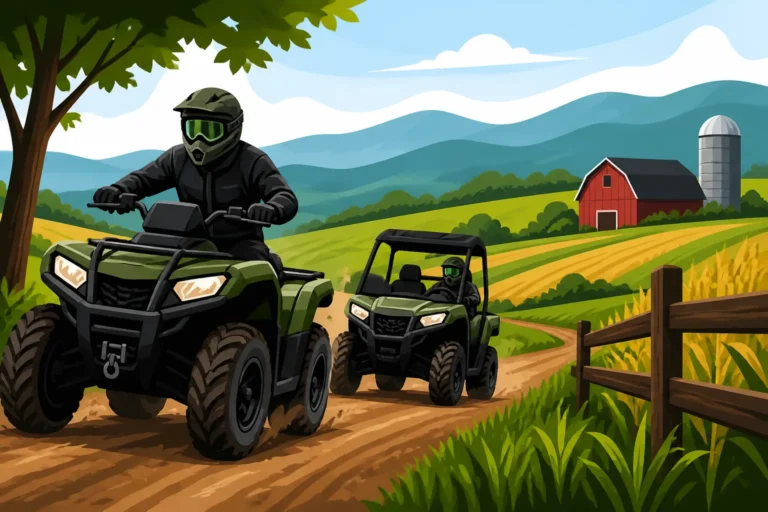
A Vermont trail can cross a working farm, timberland, or a narrow corridor where a landowner has agreed to allow riders through. That access is generous, but it is not unlimited. This guide explains how to ride respectfully on private land, avoid common mistakes around gates and trail edges, and help keep routes open for the next visit.
Why private land matters on Vermont ATV trails
A marked trail is permission for a corridor, not an invitation to roam
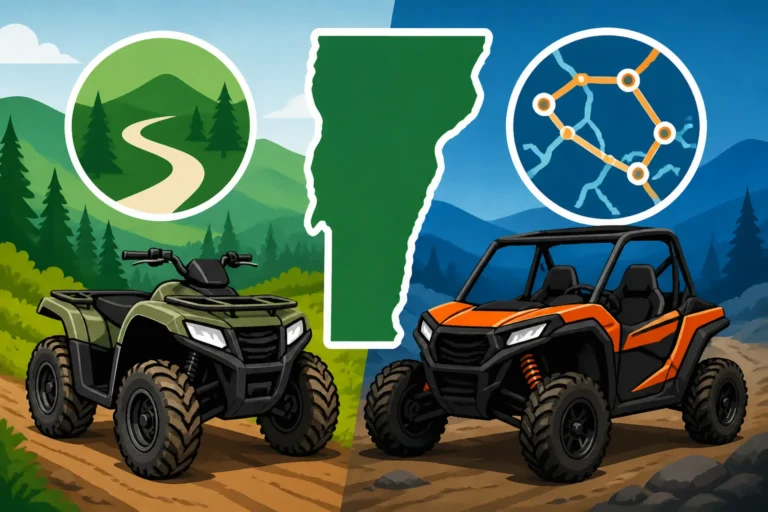
Many Vermont ATV routes cross private property. Riders may see a signed corridor running beside a pasture, through a wooded parcel, or over an old farm or logging road. That route exists because a landowner has allowed a specific use in a specific place. It does not mean riders may explore nearby fields, take an appealing side path, or leave the marked corridor to find a viewpoint.
It is easy to misread an open gate or a broad gravel lane as permission to travel wherever the terrain seems passable. Instead, treat signs, markers, and the route shown by the maintaining club as boundaries. Stay on the designated line even when a shortcut looks harmless. A few yards off route can lead to crops, a yard, a wet area, or property the trail agreement does not cover.
Vermont’s trail network depends on ongoing cooperation between clubs and property owners. That relationship can be affected by more than a single rider’s behavior: repeated noise, damaged ground, litter, or unauthorized exploration may give an owner a reason to ask for a closure. The larger picture is explained in [Vermont's Trails Run on Private Land] and [Vermont Landowner Permission Holds the System Together].
Access can change, so check before you ride
A route you rode last season may have changed. Landowners can withdraw permission, clubs may reroute a corridor, and weather or trail damage can prompt a temporary closure. A familiar map or an old memory is not a guarantee that a trail is open today. Check the local club’s current information before setting out, especially if you are traveling to a different part of Vermont.
This is particularly important in areas with a connected network, such as the Northeast Kingdom. Riders may be tempted to assume that a route remains open from one town to the next because the connection was available on an earlier trip. Look for current club notices and posted signs, and follow directions at each junction. [Vermont Trail Conditions Before You Tow] is a useful reminder to check access as part of trip planning, not after the trailer is unloaded.
Digital maps can help you plan, but they should not overrule posted closures or current club guidance. A mapping app such as onX Offroad can be one reference for navigation; use it alongside the local club’s route information and what you see on the ground. If those sources disagree, do not ride through a closed gate or continue along a route that appears to be closed. Turn around safely and ask the maintaining club for clarification.
How to stay on the right route
Follow the marked corridor at every turn
Before moving off from a trailhead, take a moment to identify the intended route and how it is marked. At a junction, slow down enough to find the correct marker rather than following tire tracks. Tracks can be old, unauthorized, or left by a maintenance vehicle. If a marker is missing or unclear, stop in a safe place and confirm the route instead of guessing.
Keep your machine on the established trail surface. Do not widen the route to pass another rider, skirt a muddy section, or avoid a puddle unless the club has marked a suitable alternative. Riding around a wet spot can create parallel ruts and damage vegetation, while a new track may lead into a sensitive area or outside the permission granted for the corridor. The considerate choice is often to wait, pass carefully where the trail allows, or turn back if conditions are poor.
Route markings are especially important where a corridor crosses farmland or working land. A trail may pass close to a field edge without allowing travel through the field itself. Keep a deliberate distance from crops, livestock areas, and equipment, and never assume that a visible opening is a trail entrance. [Staying on the Marked Corridor] and [Reading a VASA Club Trail Map] cover two practical habits that make it easier to avoid accidental trespass.
Treat gates and trail closures as clear instructions
If a gate is closed, do not open it unless a sign or club instruction specifically says riders should do so. Some gates separate a public or approved corridor from a work area, livestock, or a section that is not open to machines. A gate left open by someone else is not proof that the route is open; if the posted information says the corridor is closed, follow that instruction.
When a club route directs riders to pass through a gate, leave it as you found it. Close it securely if it was closed before you arrived, and do not assume it can be left ajar for the group behind you. A gate that fails to latch can allow animals to wander or create a problem for the landowner long after riders have passed. If you are unsure how a gate is meant to be handled, stop and check the nearby sign or contact the club rather than improvising.
A closure applies even when it means changing your plans. Do not ride around a barrier, across a field, or along the property edge to reconnect with the route. A detour that seems minor to one rider can become an unauthorized track used by many. [Why a Landowner Can Close a Trail Overnight] explains why access can change quickly, while [Vermont Trail Closures Landowners Request] provides more context on closures initiated by property owners.
Everyday etiquette on farms, timberland, and shared corridors
Give people, animals, and work vehicles room
Private land is not simply scenery beside a trail. It may be an active workplace, grazing area, or access route for residents and land managers. When you see people, livestock, horses, or equipment, slow down well in advance and leave enough room for everyone to move safely. Avoid sudden acceleration or revving, and wait for a clear signal before passing if someone is working near the corridor.
Livestock can react unpredictably to a machine, even if the animals appear accustomed to traffic. Keep a steady, controlled pace, avoid startling them, and do not stop close to a fence to take photos. Never enter an enclosure or feed an animal. If a herd blocks the route, do not pressure it forward; turn around if there is no safe, authorized way to proceed and contact the local club about the obstruction.
On a narrow corridor, courtesy works best when riders make their intentions obvious. Slow down, allow space, and pass only where the trail is wide enough to do so without leaving the marked route. If a work vehicle is approaching, pull over only where the ground is stable and the trail remains within the authorized corridor. [Meeting Horses on a Shared Vermont Corridor] and [Yielding on a Narrow Corridor] offer useful guidance for encounters that call for extra patience.
Keep noise, dust, and group behavior under control
A machine can be loud long before a rider realizes how far the sound carries. Near homes, farms, and quiet stretches of trail, ride smoothly and avoid unnecessary acceleration, repeated revving, or loud conversations at a stop. A short pause to regroup is often better than a prolonged gathering outside someone’s house or near a working area.
Dust can be a nuisance for people on the property, other trail users, and riders behind you. Leave space between machines and reduce speed when the surface is dry or visibility is limited. In a group, keep the pace manageable for the least experienced rider and agree on where to regroup. A long line of machines spreading out or racing to catch up can make a shared corridor feel less safe and more disruptive.
Before riding, make sure the machine is in good working order and that its exhaust and other equipment meet applicable requirements. Avoid modifying a machine in a way that creates excessive noise, and be mindful that a quiet moment on a wooded trail may be close to someone’s home or livestock. For broader trail-use practices, see [Vermont Trail Etiquette on Private Land] and [Riding Quietly Past Houses].
| Situation | Respectful response | Avoid |
|---|---|---|
| A junction is hard to read | Stop safely and confirm the marked route | Following tire tracks or guessing |
| A gate is closed | Follow signs and contact the club if unclear | Opening it without instruction or riding around it |
| A muddy section appears | Stay on the established trail or turn back if needed | Creating a new track around the mud |
| Livestock are nearby | Slow down, keep space, and wait calmly | Revving, approaching a fence, or entering a field |
| A work vehicle is approaching | Yield where the corridor safely allows | Blocking the route or pulling off into unauthorized land |
| A closure sign is posted | Turn around and use an approved alternative | Treating the sign as optional |
Leave the property as you found it
Pack out everything and protect the trail surface
Take all belongings and waste with you, including food wrappers, drink containers, and any small items that fall from a pack or machine. Do not leave trash at a gate, trail junction, or informal stopping spot. Even a small amount of litter can create extra work for volunteers and make a landowner less willing to host a corridor.
Avoid spinning tires, digging into the trail, or driving around established obstacles. If the route is too soft for your machine, forcing your way through can deepen ruts and create repair work for the maintaining club. If you encounter a damaged bridge, washout, or unsafe section, do not attempt a risky crossing or move barriers. Turn around and report the issue through the local club’s preferred channel.
At rest stops, keep machines and people within the designated trail area. Do not park in a field, block a driveway, or use a nearby private yard as a convenient place to gather. A stop that feels brief to your group may obstruct a landowner’s access or make it harder for a neighbor to use the property.
Handle a problem without making it worse
If you accidentally stray from the marked route, stop as soon as it is safe. Do not continue exploring in search of a better way back. Retrace your path carefully if doing so is safe and clearly returns you to the established corridor. If you are stuck, injured, or unsure where the authorized route lies, ask for help rather than creating a second route through private land.
Report significant problems such as a washed-out section, a missing marker, a damaged gate, or a trail blocked by fallen trees. Give the club a clear description of the location and what you observed. A phone map can help you describe where you are, but do not share private property details publicly in a way that encourages others to leave the corridor. onX Offroad or another navigation tool may help you identify your approximate location; club directions and on-site signs still determine where you should ride.
If you see another rider going off-route, a calm reminder is more useful than an argument. Point out the marker or closure if it is clear, and avoid escalating a disagreement on the trail. If the behavior continues or involves property damage, report it to the appropriate club contact. Trail etiquette is partly about individual choices, but also about helping a community preserve access responsibly.
Plan a responsible ride before unloading
Confirm your route, conditions, and group expectations
A little preparation prevents many of the awkward situations riders face on private land. Before leaving home, confirm that the route is open, identify the club responsible for the area, and check for current notices about conditions or closures. Plan a route that matches the experience of your group, allow time for a slow pace, and agree that everyone will remain on marked corridors.
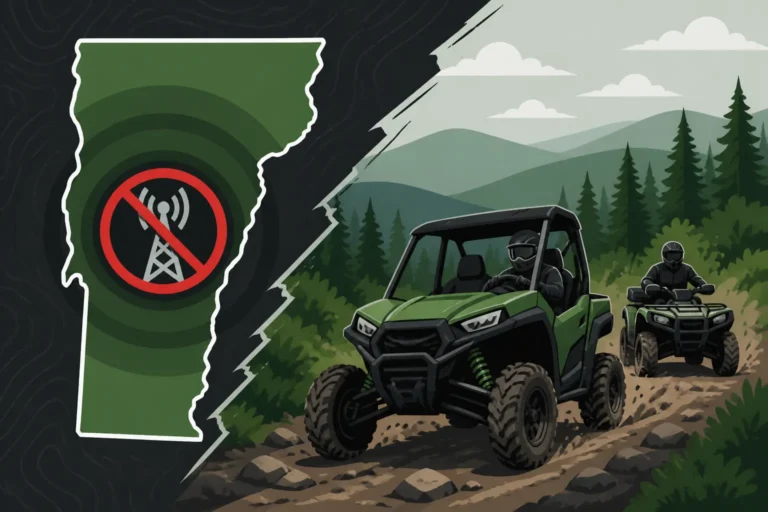
For navigation, use more than one source. A current club map or trail update should be your primary guide to approved access. A map app such as onX Offroad can help with orientation, but digital lines may not capture a recent closure or a route change. Download or carry information you can use if cell service is unavailable, and stop in a safe place before checking a phone.
Talk through the basics with the group before the ride: how to handle a closed gate, what to do if someone gets separated, where to regroup, and how to respond if a route looks uncertain. This is especially useful with first-time riders, guests, and people who have not ridden Vermont trails before. The whole group benefits when one person does not have to make a rushed decision at every junction.
Make responsible access part of the trip
An enjoyable ride does not have to mean covering the most miles or taking every visible branch. Choose a route that gives the group time to ride carefully, stop without blocking access, and turn around if weather or trail conditions make the planned route unsuitable. Respecting a closure may mean changing the day’s plan, but it also helps protect the opportunity to ride there again.
If you are visiting a new area, learn which local club maintains the corridor and how it shares trail updates. [Finding the VASA Club That Maintains Your Local Trail] can help riders understand why local knowledge matters. Club volunteers often know about conditions and access details that may not be obvious to someone arriving from outside the area.
Vermont’s private-land trail access is a shared privilege that depends on trust. Stay on the marked corridor, follow signs, keep noise and speed considerate, and leave gates and property as instructed. When riders do those ordinary things consistently, they make it easier for landowners, clubs, neighbors, and future visitors to keep sharing the route.
Disclaimer
This article is for general informational purposes only and does not constitute professional advice. Laws, prices and regulations vary by location and change over time. Consult a qualified professional for guidance on your specific situation.