Vermont ATV Camping With Trail Access
Camping near Vermont ATV trails can make a ride feel wonderfully simple: park the truck once, settle in, and head out for the day. But a campground’s proximity to a trail does not automatically mean you can ride from your site. This guide explains how to choose a base, confirm legal access, plan for changing trail conditions, and camp responsibly.
Understand how Vermont ATV trail access works
A nearby trail is not necessarily a ride-from-camp trail
Vermont’s ATV trail network depends heavily on landowner permission and the work of local clubs. A campground might sit close to a marked corridor, yet the land between your site and that corridor could be private property where riding is not allowed. Even a short connection across a field, logging road, or neighborhood can be a problem if it is not an authorized route.
Before booking, ask the campground a specific question: “Can registered ATVs ride directly from the property to an open, authorized trail?” That is more useful than asking whether the campground is “near trails.” Ask where riders are allowed to travel, whether you must trailer to a trailhead, and whether the route is currently open. If the answer is vague, follow up with the local club or trail contact before making plans.
This distinction matters most for families and groups bringing trailers. A campsite that looks close on a road map may still require a drive to a public staging area, and some trailheads have limited parking or may not be suitable for a large trailer. Planning for a possible trailer transfer is less exciting than imagining a ride straight from camp, but it can prevent an awkward arrival-day scramble.
Check the required decal, registration, and riding rules
A Vermont-registered machine generally needs more than a plate to ride on the VASA trail network. Riders should confirm the applicable registration, trail access decal, insurance, and safety requirements before heading out. Visitors should check the rules that apply to their home-state machine, too. A valid plate from another state does not, by itself, answer every question about Vermont trail access.
Start with [Vermont Requires Registration Plus a TAD] and [The Plate and the TAD Vermont Trails Require]. These explain why registration and trail access are separate pieces of the picture. For a visiting rider, [Vermont Out-of-State Machines Still Need a TAD] is a useful next read. Requirements can differ by situation, so check the relevant rules for your machine and rider rather than assuming a friend’s setup covers everyone in the group.
Do not treat a decal as a blanket pass to ride anywhere. It does not create permission on an unmarked private trail, open a closed corridor, or override a town’s road rules. Check [Vermont Trail Etiquette on Private Land] and [Vermont Trail Maps Still Coming] to keep the distinction clear: trail access depends on where an authorized route is open, not simply on where your machine can physically travel.
Choose a campsite that fits your riding plan
Decide whether you need direct trail access or a staging base
There are two practical ways to plan an ATV camping trip. The first is a campground with a confirmed legal connection to an open trail. The second is a conventional campsite that serves as a comfortable base, with machines and trailers hauled to an authorized trailhead each day. Neither option is automatically better; the right choice depends on your group, your equipment, and how much time you want to spend moving vehicles.
Direct access is convenient when it is genuinely available. Riders can avoid repeated loading, and a group can return to camp for lunch or a rest. But “direct access” should mean a route the property and relevant trail authority confirm is permitted—not a shortcut across a neighboring lot or an informal track that happens to appear on an app.
A staging base can work well when you want showers, a full-service campground, or a location near several activities beyond riding. It may also be the more realistic option in areas where lodging and authorized ATV corridors do not meet neatly. Before committing, check whether the trailhead allows overnight parking, whether your trailer will fit, and how far the drive is. [Vermont Trailheads With Trailer Parking] is a helpful planning topic when you are comparing places to launch.
Ask campgrounds the practical questions before you reserve
A quick conversation with campground staff can reveal details that a booking page leaves out. Ask whether the campground permits ATV and side-by-side use on its property, where machines may be parked, whether trailers can remain connected, and whether there is a designated wash area. If you expect to ride from the property, ask the staff to describe the legal connection rather than relying on a general “trails nearby” claim.
It is also worth asking how the property handles noise, fuel storage, and muddy equipment. Some campgrounds may have quiet hours or restrictions on washing machines, generators, or parking a muddy side-by-side near neighboring sites. Clarify whether children may ride within the campground and whether machines must be shut off while parked. These small details matter after a long day when everyone is tired and just wants to get dinner going.
For a group trip, confirm the arrangement for every machine and every sleeping setup. A campground may have room for a tent but not for a long truck-and-trailer combination at the same site. If two families are arriving separately, ask whether they can reserve nearby sites and park their trailers without blocking roads or other campers. A little planning can spare you the familiar frustration of arriving late and discovering that the “easy setup” needs a complete reshuffle.
| Camping setup | What it offers | What to confirm before booking |
|---|---|---|
| Campground with confirmed trail connection | Convenient starts and returns to camp | That the connection is authorized and open, not just nearby |
| Campground with trailhead access by road | Comfortable base with a daily drive to the riding area | Trailer parking, trailhead rules, and drive time |
| Rustic campsite near a corridor | A quieter, simpler stay | Whether the site itself allows machines and whether access is legal |
| Cabin or lodge with riding nearby | Less camping gear and often easier group logistics | Whether machines are allowed, where they can be stored, and how riders reach trails |
| Dispersed or backcountry-style camping | A more remote experience | Land rules, fire restrictions, vehicle access, and whether ATV riding is permitted at all |
Find a suitable trail area and verify current access
Use official club information before relying on a map
Vermont’s trails are not a single continuous public system where every route stays open all season. Local clubs maintain corridors, coordinate with landowners, and may change access when conditions or permissions change. A route shown on an old paper map, an app, or a friend’s saved track may not reflect a current closure or reroute.
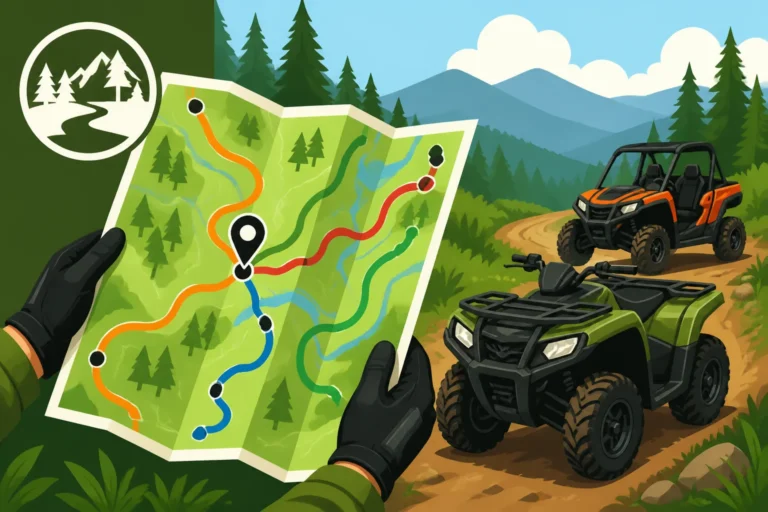
Use [Vermont ATV Trail Map Downloads] and [Finding the VASA Club That Maintains Your Local Trail] as starting points for identifying the relevant area and club. Then check the club’s current notices or contact the organization responsible for the corridor. If your campsite advertises trail access, ask which club or corridor provides the connection and confirm that it is open for your travel dates.
Mapping apps can still be useful for organizing your day. For example, onX Offroad can help you review terrain and save route ideas, but an app display should not be treated as proof that a route is legal or open. Compare app information with current club guidance, posted signs, and any instructions at a trailhead. If there is a conflict, do not ride the questionable section until you have clarified it.
Plan for conditions, reroutes, and seasonal closures
A route that was rideable during a dry summer weekend may be closed after heavy rain or during a muddy period. Vermont’s spring conditions can be especially hard on trails and unpaved roads. Soft ground, rutting, damaged culverts, and saturated slopes can turn one group’s shortcut into a costly repair job for a club or landowner. A closure is not an inconvenience to work around; it is a request to stay off that section.
Check [Vermont Mud Season Closures] and [Vermont Trail Closures After a Storm] before setting out. Keep an alternate plan that does not depend on crossing a closed corridor or improvising a route through private land. If your intended loop is unavailable, shorten the ride, use an authorized alternative, or spend the day exploring on foot. It may feel disappointing to change the plan, but it is far better than damaging a trail or losing access for future riders.
A navigation app can help you keep track of your intended route and notice when you have drifted, but it cannot tell you that a landowner has withdrawn permission unless that information is specifically reflected and current. Save the official map or club information you need before entering an area with limited cell service. Let someone at camp know your general plan and expected return, especially if you are riding a long loop or traveling in a remote part of the Northeast Kingdom.
Plan a camp-to-trail day with less hassle
Match your campsite location to the group’s abilities
A full-day ride can be a lot for a beginner, a young rider, or someone who is still getting comfortable with a side-by-side. Choosing a base near a suitable trail area can reduce the pressure to cover long distances simply to make the trip feel worthwhile. Look for manageable options and ask the local club about the character of the routes, including surface, hills, narrow sections, and likely stopping points.
Do not assume that a route described as easy will suit every rider. A long day, changing weather, rough surfaces, or frequent stops can make a modest loop feel demanding. If your group includes children or first-time riders, plan a conservative first outing and leave room to turn around. [Vermont ATV Trails for Beginners] and [Vermont ATV Trails for Kids] can help you think through what to ask when comparing options.
For a mixed-ability group, agree on the pace and regrouping plan before leaving camp. The fastest riders should not disappear ahead while less experienced riders are still figuring out a tricky section. Pick safe places to stop, make sure everyone understands the route, and set a clear expectation that anyone can ask for a break without being pressured to keep up. A relaxed ride is usually more memorable than a rushed one.
Make a realistic plan for fuel, food, and changing weather
Riding from a campground does not guarantee easy access to fuel or supplies. A remote trailhead may be a long way from a store, and some routes may not pass through a village. Work out how much fuel the machine is likely to use for your planned ride, then build in a conservative buffer rather than planning to arrive back with almost nothing in the tank. [Fuel Range on a Long Loop] is a useful topic to review before you choose a route.
Pack water, snacks, and a meal that will still be appealing after a bumpy ride. A cooler left at camp can make lunch simple if the group returns during the day, but a route with no convenient return point calls for food and water carried on the machines. Bring layers and rain protection even if the morning looks clear. Conditions can feel different in shaded or elevated areas, and a wet rider who is far from camp will appreciate having a dry layer.
Give the group a firm turnaround time, not just a destination. If a rider gets tired, a machine has a minor problem, or conditions slow the group, you want enough daylight and fuel to get back without rushing. [Packing for a Full Day Out] and [Vermont Trail Conditions Before You Tow] are useful reminders that the day begins before the engine starts: route, weather, equipment, and return plans all affect how comfortable the ride will be.
Set up camp safely and respectfully
Keep machines, fuel, and camping activity organized
A campsite can become cluttered quickly when the group brings machines, helmets, riding gear, cooking equipment, and wet layers. Set aside a clear area for parking and unloading, and keep machines away from tent doors, cooking areas, and places where children are playing. Before moving a machine, check that people are clear and that the ground is firm enough to avoid rutting or spinning tires.
Fuel handling deserves care. Store fuel only as the campground permits, away from flames, heaters, and cooking equipment. Do not refuel next to a fire ring, tent, or running generator. Let a hot machine cool before refueling, and clean up any spill according to the property’s instructions. These habits are simple, but they are especially important at a busy campground where neighboring sites may be only a short distance away.
Noise and dust are part of ATV travel, but they do not need to become a campsite dispute. Shut engines off when machines are parked, avoid unnecessary revving, and respect quiet hours. If your group returns muddy, follow the campground’s wash policy instead of rinsing equipment into a storm drain, stream, or neighboring site. [Vermont Trail Etiquette on Private Land] also offers a useful mindset for camp: access is a privilege sustained by considerate behavior.
Leave the trail and campsite in good shape
Trail access relies on trust. Close gates as you found them, stay on the marked corridor, and do not widen a route by riding around a puddle or soft patch. If a section looks damaged, turn around rather than creating a second line beside it. [Gates Left As You Found Them] and [Why a Landowner Can Close a Trail Overnight] explain why small choices can have consequences beyond one ride.
The same care applies at camp. Pack out trash, secure food, and keep pets under control. Do not dump gray water, wash chemicals, or machine fluids into a ditch or waterway. If your campsite has designated waste facilities or rules for firewood, follow them. A campground that welcomes riders is more likely to keep doing so when guests leave clean sites and do not create extra work for staff.
If you encounter a landowner, trail worker, or club volunteer, be courteous and follow instructions. They may be working to repair a route, manage a closure, or protect a sensitive area. A friendly conversation is often welcome, but do not treat it as permission to use an unmarked trail or cross private ground. When in doubt, stop and ask the appropriate person rather than riding ahead and hoping the route is acceptable.
Prepare your machines and group before the trip
Check equipment before towing and riding
A machine that ran well in the driveway can behave differently after a long tow or several hours on rough ground. Before leaving home, check tires, brakes, lights, steering, battery condition, fluid levels, and any safety equipment required for the machine. Look for loose cargo and make sure helmets and protective gear fit the riders who will use them. A quick inspection at camp before the first ride can catch problems that developed during transport.
Carry a small repair and recovery kit suited to your machines and the route. Depending on the group and terrain, that might include basic tools, a tire repair kit, a tow strap, gloves, a flashlight, and a first-aid kit. Keep essential items secured so they cannot shift during the ride. A recovery strap is only useful if riders know how to use it safely and have identified suitable attachment points on the machines.
For a multi-day trip, plan for cleaning and routine checks between rides. Mud can hide damage, block airflow, and make it harder to spot a loose fastener or worn component. Follow the machine manufacturer’s maintenance guidance, and do not keep riding if steering, braking, or another essential system feels wrong. [Washing a Machine After a Ride] and [First Aid Worth Carrying] can help round out a practical preparation list.
Confirm the rules for every rider and every machine
A group can arrive with several different machines, riders, and levels of experience. Check that each machine is eligible for the type of riding planned and that each rider has the training, supervision, and protective equipment required for their situation. Do not assume a youth rider can use the same route, machine, or arrangement as an adult. Review [Vermont ATV Safety Course Required Under 18] and [Vermont Supervision Rules Under 16] when children or teens are joining the trip.
Passengers need special attention. A passenger should ride only on a machine designed and equipped for that purpose, with an appropriate seat and a clear understanding of how to hold on and communicate. Never squeeze a passenger onto a machine that is intended for one rider. For a group with children, check [Vermont ATV Rules for Passengers] and [Passengers and Manufacturer Seats] before deciding which machines are suitable.
Insurance, registration, and proof of access should be sorted out before the trip, not at the trailhead. Keep required documents accessible and make sure the policy covers the machine and the riding you intend to do. [Vermont Insurance Proof at a Trailhead] and [Reading Your Policy Before the Season] are helpful starting points. A well-prepared group can spend less time debating paperwork at camp and more time enjoying the ride responsibly.
Build an itinerary for a multi-day Vermont trip
Choose a base around the kind of riding you want
The Northeast Kingdom is a popular area for ATV trip planning, but “near the Kingdom” is not enough to build a useful itinerary. Think about the specific club territory, the routes open during your dates, the services your group needs, and whether everyone is comfortable with the terrain. A base near Island Pond, Newport, or another regional hub may suit some plans, but the exact trail connection and campground arrangement still need checking.
Use [Newport as a Riding Base] and [Island Pond ATV Riding in Vermont] as planning references, then verify current access with the relevant local club. If your priority is a full day on marked corridors, choose the riding area first and look for appropriate lodging or camping nearby. If your priority is a family vacation with only one or two riding days, choose the campsite for the whole group’s needs and treat riding as one part of the itinerary.
A flexible schedule is valuable in Vermont. Weather, trail conditions, and local closures can change what is practical from one day to the next. Plan a backup activity that does not depend on riding, especially if you are traveling with children or non-riders. That way, a closure does not turn the whole trip into a disappointment or create pressure to use a route that should remain closed.
Coordinate arrival, parking, and departure
Arrival day is often more complicated than people expect. The group may need to unload machines, connect trailers, set up tents, check in, and locate the nearest authorized staging area. If you plan to ride that same day, allow enough time to do those tasks calmly. Do not assume a late arrival leaves enough daylight for a safe first outing.
Before the trip, agree on who is bringing tools, fuel containers, cooking gear, first aid supplies, and maps. For several households, a shared checklist can prevent everyone from bringing the same items while forgetting something important. Share the campground’s address and arrival instructions with every driver, and make sure the group knows whether trailers can remain at the site or need to be moved.
On departure day, leave time to inspect and secure each machine for towing. Clean equipment only where permitted, check tie-downs, and make sure nothing has been left behind at the campsite or trailhead. The final morning can feel rushed, but a slow walk around the site is worth it. Check for small items such as straps, gloves, chargers, and trash, then leave the campsite in the condition you would hope to find it on your next trip.
Disclaimer
This article is for general informational purposes only and does not constitute professional advice. Laws, prices and regulations vary by location and change over time. Consult a qualified professional for guidance on your specific situation.