Vermont Noise Complaints About ATVs
There's nothing quite like the freedom of exploring Vermont's incredible landscapes on your ATV or UTV, feeling the fresh air and taking in the scenery. But let's be honest, that exhilaration can sometimes come with a bit of a rumble, and that rumble can, unfortunately, lead to a less-than-friendly knock on your door or, worse, a call to local authorities. Noise complaints about ATVs are a real headache for riders, landowners, and the broader community, and they can even threaten trail access. This guide is here to walk you through understanding why these complaints happen, how to be a more considerate rider, and what to expect if a complaint is made.
Understanding Vermont's ATV Noise Landscape
It might surprise you, but when it comes to ATV noise, Vermont doesn't have a single, universal law that specifies a decibel limit for off-road vehicles like ATVs and UTVs. This isn't like car inspections where a specific number dictates legality. Instead, ATV noise is often governed by a patchwork of general nuisance laws, local town ordinances, and regulations regarding vehicle modifications.
The Nuance of Specific ATV Decibel Limits
Many riders expect there to be a hard and fast decibel limit, like "your ATV cannot exceed 96 dB." However, the state of Vermont doesn't currently publish a statewide decibel limit specifically for ATVs and UTVs operating on trails or designated roads. This can be incredibly frustrating for riders who want to stay compliant but don't have a clear benchmark to measure against. You might see specific regulations for snowmobiles or even motorcycles, but ATVs often fall into a gray area where "excessive" or "unreasonable" becomes subjective. This lack of explicit guidance means that what might be acceptable in one remote area could be a significant issue in a more populated or residential zone. It puts the onus on the rider to be extra considerate and aware of their surroundings.
General Nuisance Laws and Local Ordinances Fill the Gap
Because there isn't a statewide, specific ATV noise regulation, local municipalities and the state's general nuisance laws often step in. Many Vermont towns have their own ordinances that address noise. These aren't always ATV-specific, but they broadly prohibit "unreasonable," "excessive," or "disruptive" noise, especially during certain hours.
Think about a small village where homes are close to an ATV route. If you're revving your engine loudly as you pass by at 6 AM, even if your machine's exhaust is technically "legal" by manufacturer standards, it could easily trigger a complaint under a local noise ordinance. These ordinances often include curfews, like [Brighton's Night Curfew in Vermont], which limit loud activities during late evening and early morning hours. [Newport City's Curfew Hours in Vermont] are another example. These local rules are paramount, and they vary significantly from town to town. What's perfectly fine in a rural, unpopulated area might get you a ticket in a more densely settled community. It's crucial for riders to check the specific ATV ordinances of any town they plan to ride through, especially if those routes pass near residential zones. This is where the local selectboard plays a huge role; they often designate routes and set the rules for [Vermont ATV Road Rules by Town].
Muffler and Exhaust Requirements
Even without explicit decibel limits, Vermont law does address exhaust systems. Generally, an ATV must be equipped with an adequate muffler in good working order and "in constant operation" to prevent excessive or unusual noise. Modifying your exhaust system to make it louder than the original manufacturer's design, or running without a muffler or with a "straight pipe," is almost universally prohibited and is a surefire way to invite a noise complaint and a fine. The intent of the law is to ensure that vehicles are not unnecessarily loud. This is distinct from a specific decibel measurement, but it means that if a law enforcement officer or game warden deems your exhaust system to be "excessive" or "unusual," you could face a citation. It's best to stick to factory-installed exhaust systems or aftermarket options specifically designed to meet or exceed legal sound requirements. You can learn more about this in [Vermont Muffler and Noise Rules].
Common Causes of ATV Noise Complaints
Most noise complaints aren't just arbitrary; they usually stem from specific actions or situations that genuinely disrupt others. Understanding these common triggers can help you be a more considerate rider and avoid potential issues.
Modified Exhaust Systems
This is, hands down, the biggest culprit. Many riders, for performance or aesthetic reasons, choose to install aftermarket exhaust systems. While some aftermarket options are designed to be performance-enhancing while still meeting sound regulations, others are explicitly made to be louder. "Straight piping" an ATV, or removing baffles and silencers, will dramatically increase noise levels, often beyond what is legally or socially acceptable.
Imagine trying to enjoy a quiet Sunday morning coffee on your porch, only to have a group of ATVs with modified exhausts roar by, shaking your windows. That's a direct route to a noise complaint. Even if you're out on a remote trail, the sound can carry surprisingly far, reaching homes that might seem distant. If your machine is significantly louder than stock, you're rolling the dice. Companies like SuperATV offer a wide range of accessories, and while they cater to performance, it's always critical to choose exhaust components that are clearly advertised as "street legal" or "sound compliant" for your region, if available, or simply stick with the original equipment.
Riding Habits and Time of Day
It's not just the machine itself; how you ride makes a huge difference. Aggressive riding – sudden, hard acceleration, constantly running at high RPMs, or rapid deceleration with engine braking – generates far more noise than smooth, controlled riding. This is especially true when passing through residential areas, even on designated [Vermont ATV Road Rules by Town].
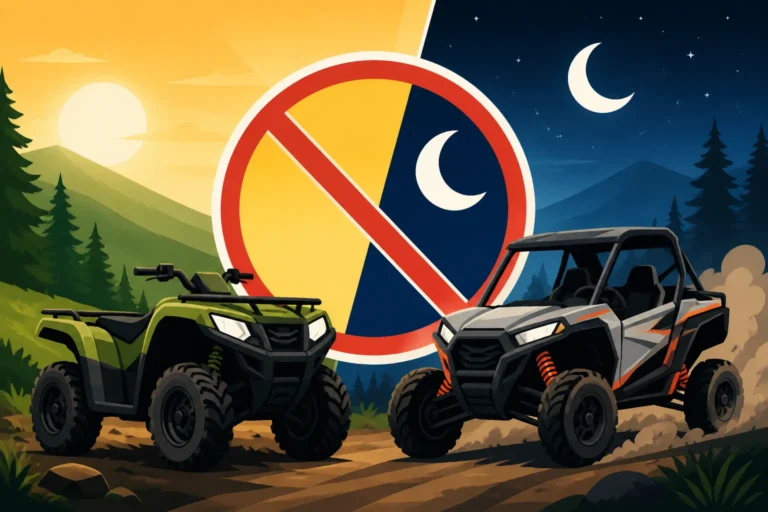
Consider riding past a farmhouse at peak haying season versus cruising through a quiet village. The impact of your noise will be vastly different. The time of day also plays a massive role. Riding an ATV early in the morning (before 8 AM) or late in the evening (after 9 PM or 10 PM) in areas near homes is almost guaranteed to generate complaints. People are sleeping, enjoying quiet time with family, or simply expecting peace and quiet during these hours. Even if there isn't a specific town curfew, common courtesy dictates being extra quiet during these times. For instance, if you're riding through a town with [Vermont Town Ordinances That Set Curfews], knowing those hours is vital.
Proximity to Residential Areas
Even a perfectly stock, well-maintained ATV can be perceived as too loud if it's operating very close to homes. Sound diminishes with distance, so what's unobtrusive a quarter-mile away might be jarring directly outside someone's window. This is a common issue when ATV trails or designated road routes pass through or skirt the edges of residential neighborhoods or small villages.
Landowners who have granted permission for trails to cross their property might retract that permission if their neighbors are constantly complaining about noise. This directly impacts the sustainability of the VASA trail system, which relies heavily on private landowner generosity. Riders need to be acutely aware when they are entering or leaving a populated area and adjust their speed and engine RPMs accordingly. It's not just about what's legal; it's about being a good neighbor and preserving access for everyone.
Perceived Versus Actual Noise
Sometimes, a noise complaint isn't just about the decibel level; it's about perception and existing sentiment towards ATVs. In areas where there's already tension between residents and ATV riders – perhaps due to past trespass issues, irresponsible riding, or general opposition to ATV use – any ATV noise might be deemed "excessive."
For some, the mere sound of an ATV, even a quiet one, triggers an emotional response because they associate it with negative experiences or simply prefer quiet solitude. This is a tough one to combat because it's less about your machine's actual sound output and more about public relations. However, by consistently riding responsibly, being courteous, and minimizing your noise, you can slowly help to shift that perception over time. Remember, the actions of a few loud, inconsiderate riders can unfortunately cast a shadow over the entire ATV community, leading to discussions in [Vermont Selectboard Hearings on ATVs] that might not favor riders.
Preventing Noise Complaints: Rider Best Practices
Avoiding noise complaints isn't just about following the letter of the law; it's about being a responsible, respectful member of the riding community. By adopting a few best practices, you can significantly reduce the likelihood of drawing unwanted attention.
Maintaining a Stock or Approved Exhaust
This is truly one of the most impactful steps you can take. Your ATV or UTV came from the factory with an exhaust system designed to meet noise regulations and provide an acceptable sound level for most environments. While the roar of a modified exhaust might appeal to some, it's the number one cause of complaints.
If your stock muffler is damaged, replace it with an OEM (Original Equipment Manufacturer) part or a quality aftermarket equivalent specifically labeled as "sound compliant" or "legal for street/trail use" in Vermont. Avoid "performance" exhausts that openly advertise being louder. If you're looking for durable replacement parts, companies like SuperATV offer a range of components, but always verify that any exhaust modifications you consider won't increase your machine's sound output beyond acceptable levels or violate local rules. A quiet machine not only keeps the peace but also allows you to enjoy the sounds of nature around you, which is often why we head out on the trails in the first place.
Mindful Riding Techniques
Your riding style can be as important as your machine's exhaust system. Even with a stock muffler, aggressive riding can create a lot of noise. Think about how you drive a car: you don't typically floor the accelerator and brake hard in residential areas. The same principle applies to ATVs.
When you're riding through or near populated areas, ease off the throttle. Keep your RPMs low. Avoid sudden bursts of speed, rapid acceleration, or excessive engine braking. Glide through sections where houses are visible, and save your more spirited riding for open trails far from homes. This mindful approach not only reduces noise but also conserves fuel and makes your ride smoother and safer. It's about recognizing that your enjoyment shouldn't come at the expense of someone else's peace and quiet.
Respecting Curfews and Quiet Hours
Many towns and communities have established curfews or quiet hours, particularly for motorized vehicles operating on town roads or designated routes. These are often in place to protect the residential quality of life during periods when people expect quiet.
Before you plan a ride, especially if it involves traversing town roads or passing through villages, take a moment to check the local ordinances for [Vermont Town Ordinances That Set Curfews]. If a town has a 9 p.m. curfew, like Brighton, that means your machine should be off the roads and trails in that area by that time. Planning your rides to conclude well before these hours, or starting later in the morning, demonstrates respect for the community. Ignoring these curfews is a quick way to get yourself a ticket and potentially jeopardize future ATV access in that town.
Communication with Landowners and Neighbors
Sometimes, simply being proactive and communicative can prevent complaints. If you frequently ride on or near private property with permission, or if your regular route passes close to a few homes, a friendly wave, a quick chat with a neighbor, or even offering to help with a small task can go a long way.
Landowners are the backbone of Vermont's trail system. If you're riding on private land, ensure you have explicit permission and understand any specific requests they might have regarding noise, speed, or timing. If a neighbor expresses concern about noise, listen respectfully. You might find a simple adjustment to your route or riding time resolves their issue. Open communication helps build trust and ensures that the ATV community is seen as a positive, respectful presence, not a disruptive one. It also strengthens the case against [Vermont Petitions to Close a Road] by showing good faith.
What Happens When a Noise Complaint is Filed
Despite your best efforts, a noise complaint can still happen. Perhaps it was a misunderstanding, or a neighbor had a particularly bad day, or you unknowingly crossed a line. Knowing how these complaints are typically handled can help you respond appropriately and understand the potential consequences.
Who Investigates a Complaint
When a noise complaint about an ATV is filed in Vermont, who investigates it largely depends on where the incident occurred and the nature of the complaint.
- Local Law Enforcement: If the complaint pertains to riding on a town road or within a village, the local police department, sheriff's office, or town constable will typically be the first responders. They enforce local ordinances, traffic laws, and general public nuisance statutes.
- Vermont State Police: For incidents on state roads, or in areas without robust local law enforcement, the Vermont State Police might respond.
- Vermont Game Wardens: If the noise complaint is specifically related to ATV operation on trails, private land (especially if it involves trespass or misuse), or in remote areas often accessed by ATVs, a Vermont Game Warden is likely to be involved. These wardens have broad authority to enforce off-road vehicle laws, including those related to equipment and responsible operation. They can certainly ask to see your registration and other documents, as detailed in [What a Warden Can Ask to See].
The investigating officer will typically assess the situation, which might involve observing the ATV in operation, speaking with the complainant, and potentially speaking with the rider. They are looking for violations of specific ordinances, state laws regarding mufflers, or general nuisance behavior.
Potential Consequences for Riders
The consequences of a noise complaint can range from a friendly warning to significant fines, and even impact future riding access.
- Warnings: For a first-time or minor infraction, an officer might issue a verbal warning and educate you on local rules or best practices. This is a chance to learn and correct your behavior without financial penalty.
- Fines: If a clear violation of a town ordinance (like a curfew or excessive noise rule) or state law (like an illegal exhaust) is found, you could receive a ticket. These fines can vary depending on the municipality and the specific offense. For instance, [Brighton's Fine Schedule in Vermont] might outline escalating fines for repeated violations of their ATV ordinance. These citations often come with a waiver fee, which you can pay to avoid a court appearance, but it still counts as an admission of guilt.
- Impoundment: In severe or repeated cases of reckless operation or illegal modifications leading to excessive noise, an officer could potentially impound the machine, though this is rare for a simple noise complaint unless other serious violations are present.
- Loss of Access: This is perhaps the most significant long-term consequence. If a particular trail or road route consistently generates noise complaints, the local selectboard or landowners might decide to revoke access. This could lead to [Vermont Petitions to Close a Road] and even result in routes that were once open being permanently shut down for ATVs. This doesn't just affect you; it impacts the entire riding community.
It's important to remember that law enforcement officers are enforcing existing rules and responding to public concerns. Cooperating respectfully, even if you disagree with the complaint, is always the best approach.
The Impact on the ATV Community
A single noise complaint, especially if it's legitimate and repeated, can have ripple effects that extend far beyond an individual rider. The sustained ability to ride ATVs and UTVs in Vermont, particularly on shared roads and trails, relies heavily on maintaining a positive relationship with residents and landowners.
- Stricter Regulations: Persistent noise complaints can galvanize local opposition to ATVs, leading town selectboards to enact stricter ordinances, shorter riding seasons, more restrictive curfews, or even outright bans on [Vermont ATV Road Rules: Towns Decide]. This is often discussed during [Vermont Town Meeting Votes on ATV Roads].
- Loss of Trail Access: Landowners, who generously allow ATV clubs to use their property for trails, may withdraw their permission if they or their neighbors are constantly bothered by noise. Since the vast majority of VASA trails are on private land, this can quickly fragment and reduce the entire trail network.
- Negative Public Perception: Each complaint contributes to a negative stereotype of ATV riders as irresponsible and inconsiderate. This makes it harder for clubs to gain new landowner permissions, secure funding for trail maintenance, and advocate for expanded riding opportunities.
- Increased Enforcement: Towns and state agencies might dedicate more resources to monitoring ATV activity and enforcing rules, which can lead to more checkpoints and tickets for everyone, not just the loud minority.
Ultimately, preventing noise complaints is a collective responsibility. Every rider who takes steps to be quieter and more considerate contributes to the long-term health and growth of the ATV community in Vermont.
| Common Noise Source | Rider Practice (Complaint Risk) | Solution / Best Practice (Lower Risk) |
|---|---|---|
| Modified/Loud Exhaust | Aftermarket pipe, removed baffles | Stock muffler, sound-compliant aftermarket |
| High RPMs Near Homes | Aggressive acceleration, fast passes | Gentle throttle, low RPMs in residential |
| Early Morning/Late Night Riding | Riding at 5 AM or 11 PM near houses | Adhere to local curfews, ride during day |
| Excessive Engine Braking | Aggressive deceleration in sensitive areas | Smooth braking, coasting |
| Group Riding Volume | Many loud machines in a convoy | Smaller groups, staggered riding, quieter machines |
| Lack of Awareness | Unknowing of local ordinances or sensitivities | Research town rules, talk to locals |
| Poor Machine Maintenance | Loose parts rattling, engine knocking | Regular maintenance, check for rattles |
Disclaimer
This article is for general informational purposes only and does not constitute professional advice. Laws, prices and regulations vary by location and change over time. Consult a qualified professional for guidance on your specific situation.