An MCO at the Vermont DMV Counter
You’ve just purchased a shiny new ATV or UTV, and the excitement of hitting Vermont’s trails is palpable! But before you can feel the wind in your hair and the mud under your tires, there's that one hurdle: registering your machine at the Vermont Department of Motor Vehicles. A common point of confusion for new owners revolves around the Manufacturer's Certificate of Origin, or MCO. This guide is designed to demystify the MCO, explain its critical role in registering your new off-road vehicle in Vermont, and walk you through what to expect when you present it at the DMV counter.
Understanding the Manufacturer's Certificate of Origin MCO in Vermont
When you buy a brand-new ATV or UTV, it doesn't come with a traditional title like a used machine would. Instead, it comes with a special document called a Manufacturer's Certificate of Origin, or MCO. Think of this as your vehicle's birth certificate – it's the very first official document that proves your machine was made by a manufacturer and that you are its first retail owner. Without this document, the Vermont DMV has no way to officially record your new machine as yours.
What Exactly is an MCO?
The MCO is issued by the vehicle's manufacturer and accompanies the ATV or UTV when it's shipped to the dealership. It contains vital information about the machine, such as its Vehicle Identification Number (VIN), make, model, year, engine size, and typically the name of the dealer who purchased it from the manufacturer. Crucially, the dealer then signs it over to you, the first retail buyer, officially transferring ownership.
This document is paramount because it proves the machine is indeed brand new and has never been titled or registered in any state before. It's the clean slate, the starting point for your machine's legal life on record. Without it, the DMV cannot confirm the machine’s origins or its ownership history, making it impossible to establish you as the legal owner in Vermont's system.
Why Your MCO is Critical for New ATV/UTV Registration
For a new ATV or UTV, your MCO isn't just important; it's absolutely non-negotiable for registration in Vermont. It serves as the primary proof of ownership, signaling to the DMV that this machine is entering the state's registration system for the very first time. The MCO establishes the crucial link between the manufacturer and you, the initial owner, allowing the state to create a title record in your name.
Without a valid and properly endorsed MCO, the Vermont DMV simply won't be able to process your registration. They need that definitive documentation to establish the chain of ownership and ensure the vehicle isn't stolen or previously registered elsewhere without proper transfer. This is particularly relevant when you eventually apply for a title, as the MCO is the foundational document that leads to the issuance of your official [Vermont ATV Titles and What They Cost]. If you arrive at the DMV counter without your MCO for a new machine, you'll likely be turned away, needing to go back to the dealer to retrieve it. It's a key piece of the puzzle, and the whole process grinds to a halt without it.
Preparing Your MCO and Other Documents for the DMV
Once you have your MCO in hand from the dealership, the next step is to ensure it's accurate and to gather all the other necessary paperwork the Vermont DMV will require. A little preparation now can save you a lot of frustration and a potential second trip to the DMV later. It's always a good idea to double-check everything before you leave home.
Checking Your MCO for Accuracy
Before heading to the DMV, take a moment to carefully review your MCO. Look closely at all the details printed on it. Is the Vehicle Identification Number (VIN) correct and does it match the VIN on your actual machine? Are the make, model, and year of your ATV or UTV accurately listed? Most importantly, is your name spelled correctly and does your address match your other identification?
Common errors can include minor typos in your name or address, or even an incorrect digit in the VIN. While these might seem small, the DMV requires everything to be precise. If you spot any discrepancies, contact your selling dealer immediately. They are the only ones who can issue a corrected MCO or provide an official affidavit of correction. The DMV clerks at the counter cannot make these changes themselves, and attempting to register with errors will only lead to delays or rejection.
Gathering Supporting Documentation
The MCO is crucial, but it's not the only document you'll need. You'll want to gather a few other key pieces of paperwork to ensure a smooth registration process. First, bring your sales invoice or bill of sale from the dealership. While the MCO proves initial ownership, the bill of sale confirms the financial transaction and purchase price, which is essential for calculating [Vermont Purchase and Use Tax on an ATV]. If you want to ensure your bill of sale is robust and legally sound, especially for future reference or if you ever engage in private sales, resources like LawDepot can help you generate comprehensive templates that cover all necessary details.
You'll also need proof of Vermont residency, such as a valid Vermont driver's license or a utility bill in your name at your current address. Don't forget proof of insurance, as [Vermont Requires ATV Liability Insurance] before you can register your machine. Make sure your insurance policy clearly lists your ATV or UTV. Finally, have your payment ready for the registration and title fees. Knowing what forms you need, like the VD-119 form for registration, and having them pre-filled can also speed things up. You can find more details on [Filling Out Vermont's Form VD-119] and other required items on the [Vermont Registration Paperwork Checklist].
The Process at the Vermont DMV Counter
You’ve got all your documents, your MCO is double-checked, and you’re ready to make your new ATV or UTV legal on Vermont’s trails. Navigating the DMV can sometimes feel like a maze, but understanding the steps at the counter will make the experience much smoother. Whether you've made an appointment or plan to walk in, a prepared approach is always best.
Presenting Your MCO and Paperwork
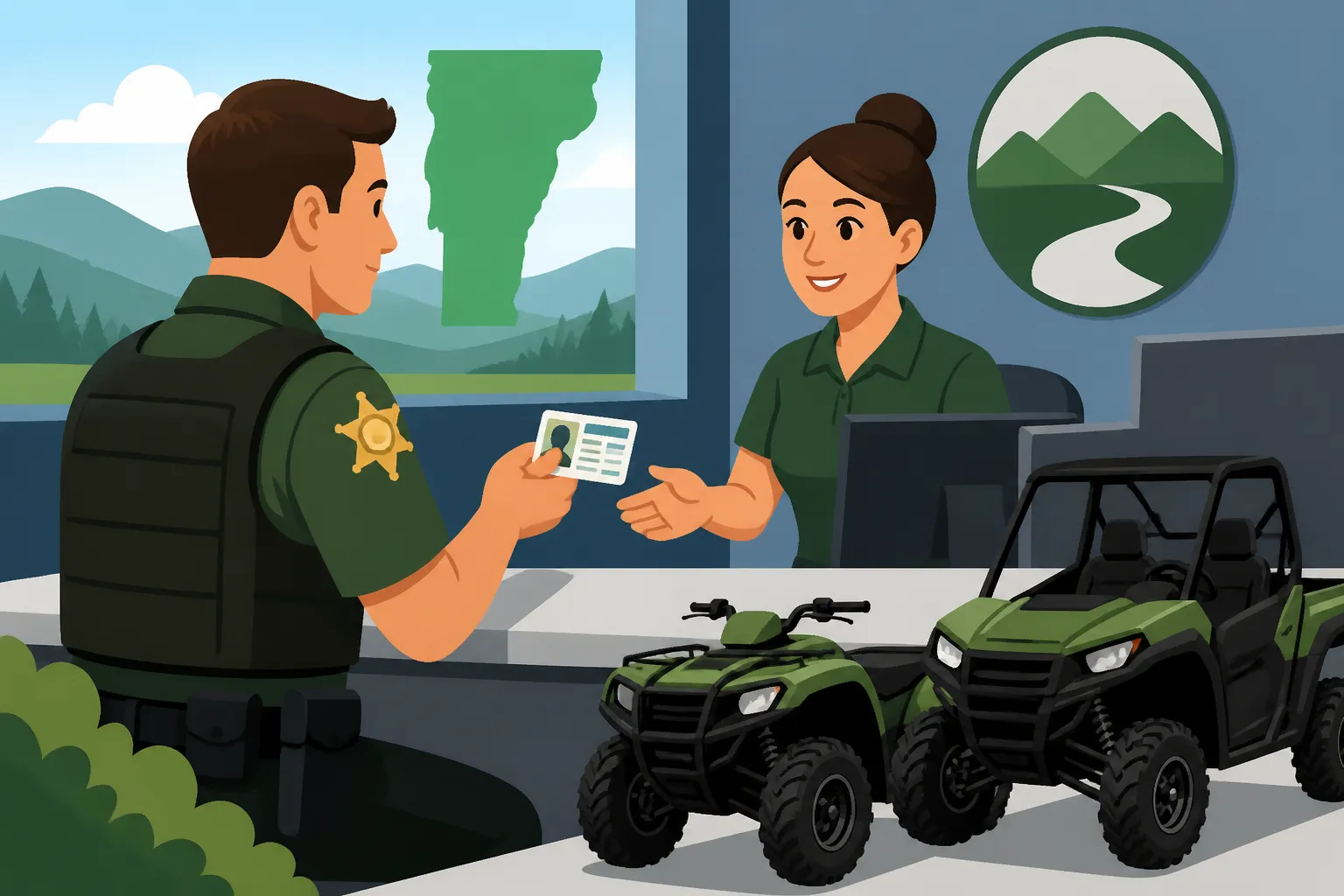
When you arrive at the Vermont DMV, find the correct counter for vehicle registrations. If you've made an appointment, you'll likely be seen faster. Once it's your turn, greet the clerk and clearly state that you're there to register a new ATV or UTV and apply for a title. Hand over your meticulously prepared MCO, along with your sales invoice, proof of insurance, Vermont identification, and your completed registration application form.
The clerk will carefully review each document. They'll verify the VIN on your MCO against the application, confirm your identity, and ensure all required fields are filled out. This is their chance to cross-reference all the information. If everything matches and is complete, they will then input your vehicle's details into the state's system, officially recording your ownership and initiating the registration process. If any document is missing, or if there's a discrepancy, they will inform you and explain what needs to be corrected or provided before they can proceed.
Understanding Fees, Taxes, and What Comes Next
Once your paperwork is verified, the clerk will calculate the total fees due. This will typically include the ATV registration fee, which can be either [The $45 One-Year Fee] or [The $90 Two-Year Fee], depending on which option you choose. You'll also be assessed the Vermont Purchase and Use Tax, which is calculated based on the purchase price listed on your sales invoice. This tax is a one-time payment due at the time of your initial registration. Lastly, there will be a separate fee for your ATV title application, detailed as [The $27 Title Fee], which covers the cost of officially titling your machine in your name. For a comprehensive breakdown, you can review [Vermont ATV Registration Costs and Terms].
After you've paid all applicable fees and taxes, the clerk will typically issue you a temporary registration document and a receipt. This temporary registration allows you to legally operate your ATV or UTV while you await the official documents. Your permanent registration, along with your physical ATV plate, will be mailed to you, usually within a few weeks. The official title for your off-road vehicle will also be processed and mailed separately. It’s important to know [Where Vermont Mails Your New ATV Plate] so you can keep an eye out for it.
Common MCO-Related Issues and Troubleshooting
Even with careful preparation, sometimes unexpected issues can arise with an MCO. Knowing how to address these common problems can prevent major headaches and get you back on track to enjoying your new ATV or UTV. The key is to understand the limitations of the DMV and where to seek resolutions.
Lost or Damaged MCOs
One of the most frustrating situations can be realizing your MCO is lost or severely damaged before you've had a chance to register your machine. Because the MCO is the original proof of ownership for a new vehicle, it's not something the DMV can simply reproduce. If this happens, your first and only course of action is to immediately contact the dealership where you purchased the ATV or UTV.
The dealership will need to work with the manufacturer to request a duplicate or re-issued MCO. This process can be lengthy and often involves additional paperwork and fees. The manufacturer is the sole entity that can create a new MCO, so be prepared for some waiting time. Do not attempt to register without it, as the DMV simply won't have the foundational document they need. This makes keeping your MCO in a safe place until after registration absolutely critical.
Errors on the MCO
As mentioned earlier, even a small error on your MCO – a misspelled name, an incorrect address, or a wrong VIN digit – can halt your registration process. If you discover an error, do not try to correct it yourself by writing on the document. Any alteration will void the MCO's validity. Instead, you must contact your selling dealership right away.
The dealership will be responsible for obtaining a corrected MCO from the manufacturer or providing an official affidavit that explains and rectifies the error. The Vermont DMV clerks are not authorized to make corrections directly on an MCO; they can only process documents as they are presented. Waiting for a corrected MCO can cause delays, so it’s always best to thoroughly inspect the document as soon as you receive it from the dealer.
When an MCO Isn't Enough Older Machines or Private Sales
It's important to reiterate that the MCO is specifically for new ATVs and UTVs purchased from a dealership. If you're buying a used machine, whether it's from a private seller or an out-of-state dealer, an MCO is not the appropriate proof of ownership. For these situations, you will need a previously issued title, or in some cases, a robust bill of sale paired with other forms of proof if the machine predates Vermont's titling requirements for off-road vehicles.
Attempting to present an MCO for a used machine won't work, as it wouldn't accurately reflect the vehicle's history. For private sales of used machines, you’ll typically need a properly endorsed title from the previous owner and a bill of sale. If you're buying or selling a used ATV privately, a comprehensive bill of sale is invaluable. Tools like LawDepot can help you create legally sound documents for such transactions, ensuring all parties are protected and the transfer of ownership is clear. If you're looking to register a machine bought from a previous owner, check out [Vermont Registration After a Private Sale] or [Vermont Title for an Off-Road Vehicle] for more specific guidance.
Disclaimer
This article is for general informational purposes only and does not constitute professional advice. Laws, prices and regulations vary by location and change over time. Consult a qualified professional for guidance on your specific situation.