Buying a Two-Year Period Up Front
Dealing with annual paperwork for your recreational vehicles can feel like a never-ending cycle, especially when you just want to hit the trails. Many Vermont ATV and ASV owners find themselves juggling registration deadlines year after year, worrying about lapsing coverage or missing out on precious riding time because their sticker isn't current. This guide is here to walk you through the often-overlooked convenience of purchasing a two-year registration period upfront for your ATV or ASV in Vermont, helping you cut down on administrative hassle and keep your machine legal on the trails with less fuss.
Understanding Vermont's ATV and ASV Registration Periods
When you're looking to register your off-road machine in the Green Mountain State, you've got a couple of options for how long that registration will last. It's not just a one-size-fits-all annual deal, and knowing your choices can save you some headaches down the road. Vermont understands that riders appreciate flexibility, and that's why they offer both a one-year and a two-year registration period for both ATVs (All-Terrain Vehicles) and ASVs (All-Terrain Side-by-Side Vehicles).
The standard, most common choice is the one-year registration. It's straightforward: you pay your fee, get your plate and sticker, and you're good for approximately twelve months, usually expiring on the last day of the month you registered. For some, this works perfectly, aligning with annual budgets or perhaps a shorter season of riding they anticipate. However, for those of us who are committed to hitting the trails year after year, that annual renewal notice can feel like it comes around far too quickly. It’s a little like a constant hum in the back of your mind – "Did I renew? When's it due again?"
That's where the two-year option really shines. It's designed to give you a longer window of legal riding without the immediate pressure of an upcoming renewal date. Instead of marking your calendar for next year, you get an extra year of peace of mind. This means fewer trips to the DMV (or fewer online transactions), less paperwork to keep track of, and more time focused on planning your next adventure. Whether you have a traditional ATV or a larger side-by-side that falls under the ASV Class, the option to go for two years is there, offering a significant convenience factor. You'll find specific details on the costs associated with these different classes, like the [Vermont ASV Two-Year Registration at $211] which highlights the fee structure for side-by-sides.
What Defines an ATV Versus an ASV for Registration?
Before diving into the fees, it's really important to know which category your machine falls into. Vermont has specific definitions, and these definitions directly impact your registration costs and the fees you’ll pay for either a one-year or a two-year period. An ATV, or All-Terrain Vehicle, is generally what most people picture as a quad: a motor vehicle designed for off-highway use, traveling on low-pressure tires, with a seat designed to be straddled by the operator. They typically have handlebars for steering.
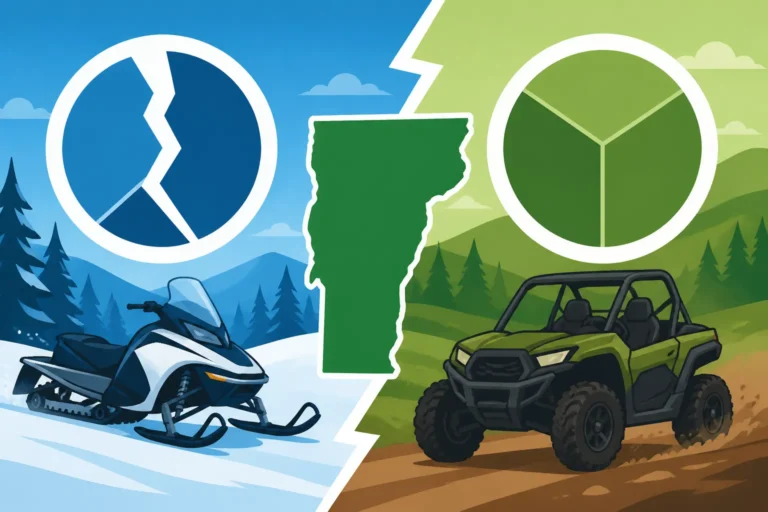
An ASV, or All-Terrain Side-by-Side Vehicle (sometimes just called a UTV), is a bit different. These are also off-highway vehicles, but they are designed to carry passengers side-by-side, often with a steering wheel and foot pedals, and usually have rollover protection systems. Think of those multi-seat utility vehicles or sport side-by-sides you see on the trails. Vermont specifically defines them and usually assigns them to a Class A designation. The difference isn't just semantic; it's a financial one, which is why understanding the [Vermont ATV Versus ASV Classes] is crucial to ensure you're paying the correct fee. Historically, ASVs have carried a slightly higher registration fee due to their size, capacity, and the resources required for trail maintenance that accommodates them.
Knowing which category your machine fits into is the first step in figuring out your registration costs, especially when considering the two-year option. It’s not uncommon for new riders or those new to Vermont to accidentally categorize their machine incorrectly, leading to confusion or even issues down the line. If you're unsure, checking your vehicle's manufacturer specifications or even visiting a Vermont DMV office with your vehicle's information can help clarify.
The Financial Sense of Buying a Two-Year Period Up Front
When you’re looking at your budget, you might wonder if paying for two years of registration at once really makes financial sense. It’s a valid question, especially when every dollar counts. In Vermont, the fees for a two-year ATV or ASV registration are essentially double the one-year rate. So, it's not like you're getting a huge discount for paying in advance, but the real value comes from the sheer convenience and peace of mind.
Let's break down the typical costs. For a standard ATV, a one-year registration is $45. If you opt for the two-year period, it's $90. As you can see, $45 multiplied by two years equals $90, so there's no "bulk discount" on the fee itself. However, think about the time and effort saved. You're not just paying for the sticker; you're paying for the process of getting that sticker. This includes postage if you mail it in, the time spent filling out forms, or the gas and time to drive to a DMV office. Over two years, avoiding that entire renewal process once can be quite valuable. For ASV owners, the one-year fee is typically $108, making the two-year option $211. Again, it's roughly double, but the same convenience factor applies. These figures are important to keep in mind when planning your [Vermont ATV Registration Costs and Terms].
Consider the possibility of late fees or penalties. Life gets busy, and it's easy to forget a renewal date. An expired registration can lead to fines if you're caught riding on designated trails or roads. By registering for two years, you significantly reduce the chance of accidentally letting your registration lapse. You gain an extra year of knowing your machine is legally covered, which means you're less likely to run into trouble with wardens or law enforcement who enforce [Vermont Penalties for Riding Unregistered]. It's not always about saving money directly on the fee, but about avoiding potential costs, both financial and in terms of aggravation, that come from an oversight.
| Vehicle Type | One-Year Registration Cost | Two-Year Registration Cost | Annual Savings (2-Year vs. 2x 1-Year) | Key Benefit |
|---|---|---|---|---|
| ATV (All-Terrain Vehicle) | The $45 One-Year Fee | The $90 Two-Year Fee | No direct fee savings | Convenience, fewer renewals, peace of mind |
| ASV (All-Terrain Side-by-Side) | The $108 ASV One-Year Fee | The $211 ASV Two-Year Fee | No direct fee savings | Convenience, fewer renewals, peace of mind |
This table clearly shows that the financial benefit isn't in a lower annual rate but in the administrative ease and reduced risk of an expired registration.
When Convenience Outweighs a Discount
For many riders, the primary driver for choosing a two-year registration isn't about saving a few dollars (since there generally isn't a direct discount) but about maximizing convenience. Imagine this scenario: it's early spring, the trails are just starting to dry out, and you're itching to get your machine out for the first ride of the season. The last thing you want to remember is that your registration expired last month, and now you have to wait for the DMV to process your renewal before you can legally hit the VASA trails.
Opting for the two-year registration pushes that renewal date out significantly, often meaning you won't even think about it for another 24 months. This is especially beneficial for those who are busy, travel frequently, or simply prefer to consolidate their annual tasks. It’s one less thing to add to your ever-growing to-do list. When you consider the value of your time and the mental energy spent tracking these sorts of deadlines, paying upfront for two years becomes a very appealing option. It’s about streamlining your ownership experience and ensuring you're always ready to ride when the mood strikes or the conditions are perfect.
Furthermore, for those who might be out of state for extended periods or live just across the border but ride in Vermont frequently, reducing the frequency of administrative tasks with the Vermont DMV can be a huge bonus. Even though [Vermont Charges Residents and Visitors the Same] for registration, the less interaction you need to have, the better. It’s about simplifying the process so you can focus on the fun parts of ATV and ASV ownership.
How to Apply for or Renew a Two-Year Vermont Registration
Getting your two-year ATV or ASV registration in Vermont is a pretty straightforward process, whether you're registering a machine for the very first time or just renewing an existing registration. The core steps are quite similar to a one-year registration, but you simply indicate your preference for the longer period and pay the corresponding fee. It’s not some special, complex pathway; it’s an integrated option available to all eligible riders.
For a new registration, you'll need the usual proof of ownership documents, like a manufacturer's certificate of origin (MCO) or a bill of sale, along with proof of identity and Vermont residency (if applicable). When filling out the registration form, often the VD-119, you'll see a clear option to select either a one-year or two-year period. You simply check the box for the two-year option and submit the higher fee. It’s vital to ensure all your paperwork is in order to avoid delays. Make sure you understand [Vermont Registration Paperwork Checklist] before you go.
For renewals, it's even simpler. When your renewal notice arrives, or you go online to renew, you'll be given the choice. Just select the two-year option, pay the updated fee, and you're set for another couple of years. This cuts down on the annual chore of [Renewing a Vermont ATV Registration] and ensures your machine stays legally compliant for longer. Whether you handle it by mail or in person, the process is designed to be user-friendly. Just remember to attach your payment for the correct two-year amount, and you’ll receive your new registration card and sticker in the mail, ready for your machine.
Required Documents for a Two-Year Registration
The documents needed for a two-year registration are no different from what you'd need for a one-year registration, but it's always good to have them all in order. For a brand-new machine purchased from a dealership, the dealer will often handle much of the initial registration paperwork for you, including filing the title and registration application. You’ll usually just need to sign forms and provide payment.
If you’re registering a machine purchased privately or from out of state, you’ll typically need:
- Proof of Ownership: This could be an MCO for a new machine, a clear title (if the state requires titles for ATVs/ASVs), or a bill of sale. A well-written bill of sale is crucial, especially for private sales. Resources like LawDepot can provide templates for drafting legally sound bills of sale, ensuring all necessary details are included for the Vermont DMV.
- Proof of Identity: A valid driver's license or state-issued ID.
- Proof of Residency: If you're a Vermont resident, a utility bill or similar document showing your Vermont address might be requested.
- Payment: The appropriate fee for the two-year period, either by check, money order, or credit/debit card if renewing online or in person.
- Registration Application Form (VD-119): This form needs to be accurately filled out with all your vehicle's details, including the VIN, make, model, and the selection for a two-year registration period.
Getting all these ducks in a row before you head to the DMV or mail in your application can significantly speed up the process and reduce the chances of your application being returned for missing information. This attention to detail ensures your [Vermont ATV Registration Processing Time] is as quick as possible.
Where to Submit Your Application
Vermont offers a few convenient ways to submit your registration application, whether you're going for one year or two.
- In Person: You can visit any Vermont Department of Motor Vehicles (DMV) office. This is often the best option if you have questions, need to clarify any details, or prefer immediate processing (though you still won't walk out with a plate on the spot for a new registration, it usually gets mailed). The staff can guide you through the forms and ensure everything is correct. It's a good idea to check if your local DMV requires an appointment for certain transactions.
- By Mail: For renewals or new registrations where you have all your paperwork perfectly organized, mailing your application is a convenient option. You’ll send the completed VD-119 form, all supporting documents, and your payment to the Vermont DMV headquarters. Be sure to use certified mail or a tracking service so you have proof of delivery. This is a common method for many, and the DMV is well-versed in processing applications this way.
- Online: For renewals, the Vermont DMV often has an online portal. This is arguably the easiest and fastest way to renew, allowing you to select the two-year option from the comfort of your home. You'll typically pay with a credit or debit card, and your new documents will be mailed to you. Check the official Vermont DMV website for specific online renewal availability for ATVs and ASVs.
No matter which method you choose, make sure to clearly indicate that you want the two-year registration period and include the correct fee. Once processed, your new registration certificate and plate (if it’s a new registration and your old one isn't transferred) will be sent to the address on file. This will typically happen within a few weeks, allowing you to focus on planning your rides with confidence, knowing your paperwork is squared away for a good long while.
What Happens If You Sell Your Machine Early
Life changes, and sometimes you might find yourself needing to sell your ATV or ASV before your two-year registration period has expired. This is a common question and a valid concern for anyone investing in a longer registration period. The good news is that Vermont has provisions for this, so your upfront payment isn't entirely lost.
When you sell your machine, the registration itself is tied to you, the owner, not just the vehicle. This means you generally have a couple of options: you can transfer the remainder of the registration period to a new machine you purchase, or you can let it expire if you're not getting another ATV/ASV right away. The key thing to remember is that the registration and its associated costs are generally non-refundable once issued, but their value can often be applied elsewhere.
The process of selling a registered ATV in Vermont involves providing the new owner with a proper bill of sale and, if applicable, the vehicle's title. You'll want to ensure you have a clear paper trail, and once again, templates from services like LawDepot can be incredibly helpful for drafting a comprehensive bill of sale that protects both buyer and seller. Informing the DMV of the sale isn't strictly required in the same way it is for cars, but transferring your registration is.
Transferring the Remainder of a Period
If you sell your registered ATV or ASV and then purchase another one, Vermont allows you to transfer the unexpired portion of your two-year registration to your new machine. This is a great benefit, as it means you don't have to pay a full new registration fee right away. There is a nominal transfer fee, which is a flat rate regardless of how much time is left on your registration. This fee is typically very modest, like the [Vermont Registration Transfer for $10] fee, making it a very cost-effective way to keep your riding legal without double-paying for registration time.
To perform a transfer, you'll need to visit the DMV or mail in the appropriate forms. You'll need proof of sale for your old machine (the bill of sale you gave the buyer), and proof of ownership for your new machine (e.g., MCO or bill of sale). The DMV will then update their records, associate the remaining registration time with your new vehicle, and issue you new registration paperwork. This process ensures continuity of your legal riding status and maximizes the value of your initial two-year payment. It's a thoughtful provision that acknowledges that riders often upgrade or change their machines over time.
What If You Don't Buy a New Machine Immediately?
Sometimes, you sell your ATV or ASV and don't immediately replace it. Maybe you're taking a break from riding, or you're waiting for a specific model to come out. In such cases, the unexpired portion of your two-year registration will typically just run its course. As mentioned, Vermont ATV/ASV registrations are generally non-refundable. So, while you can't get a cash refund for the unused months, the ability to transfer it to a future machine provides flexibility.
It's also worth noting that once you no longer own the registered vehicle, you aren't responsible for it being ridden unregistered by someone else, assuming you’ve properly transferred ownership with a bill of sale. Your primary concern here would be making sure any outstanding time on the plate doesn't somehow become an issue, which is rare when you've sold the machine. However, keep your copy of the bill of sale safe, as it’s your definitive proof that you no longer own the vehicle. The DMV is there to help with any specific questions you might have about your registration status if you find yourself in this situation. The key takeaway is that choosing the two-year option provides significant convenience and a straightforward transfer process if your riding plans change down the line.
Disclaimer
This article is for general informational purposes only and does not constitute professional advice. Laws, prices and regulations vary by location and change over time. Consult a qualified professional for guidance on your specific situation.