Keeping a Plate Readable in Mud
Riding the trails of Vermont on your ATV or UTV is an incredible experience, offering stunning scenery and thrilling adventures. But let's be real, those adventures often come with a healthy dose of mud, especially during spring thaw or after a good rain. One of the biggest headaches this creates for riders is keeping that all-important registration plate visible, which can quickly become a caked-on mess, leading to potential legal trouble and unnecessary stress. This guide will walk you through why a clean plate is crucial and provide practical, real-world strategies to help you conquer the mud and keep your plate readable, ensuring your Vermont rides stay fun and worry-free.
Why a Readable Plate Matters in Vermont
You've got your machine registered, you've paid your fees, and you're ready to hit the VASA trails or approved town roads. But if your plate gets obscured by mud, it's almost as if you didn't register at all. It's a common frustration, but one with real consequences that every rider needs to understand.
The Law and Your Plate
Vermont law is pretty clear on this: your registration plate needs to be visible and legible at all times. This isn't just a suggestion; it's a legal requirement designed to ensure accountability and aid in enforcement. When a warden or local police officer spots an ATV or UTV, they need to be able to quickly and easily read that plate to verify registration and ownership. If they can't, it raises a red flag immediately.
Think about it from their perspective. An unreadable plate could mean a machine is unregistered, stolen, or involved in a violation. While you know you're doing everything right, a mud-covered plate prevents law enforcement from verifying that quickly. You could be stopped, questioned, and even issued a warning or a ticket. The hassle of explaining a muddy plate, even if you just came off a particularly sloppy section of trail, can put a real damper on your day. While the fines for an unreadable plate might not be as severe as for an entirely unregistered machine, the stop itself is an inconvenience you want to avoid. Just like the general topic of [What a Warden Can Ask to See], they'll definitely be looking at your plate.
Safety and Courtesy on the Trail
Beyond the legal aspect, a readable plate plays a significant role in safety and trail etiquette within Vermont's extensive ATV and UTV network. Most of Vermont's trails exist through the incredible generosity of private landowners, managed by volunteer clubs under the VASA system. This means that maintaining good relationships and following rules is paramount.
When you're out on the trails, especially on shared corridors, other riders, landowners, or even emergency services might need to identify your machine. In the event of an accident, a breakdown, or simply to report an issue, a clear plate makes it much easier to relay accurate information. It's also a matter of courtesy. When you pass a landowner's property or share a section with hikers or equestrians, a clearly visible plate demonstrates that you are a responsible, registered rider, fostering trust and good will. Obscured plates can inadvertently contribute to negative perceptions of ATV riders, which can jeopardize future trail access. Remembering [Vermont Trail Etiquette on Private Land] often starts with displaying your legal credentials clearly.
Common Causes of Muddy Plates and How to Prevent Them
It often feels like mud is an inevitable part of ATV and UTV riding in Vermont, and in many ways, it is! But understanding why your plate gets covered can help you strategize better ways to keep it clean. It's not just about hitting a puddle; there's often a combination of factors at play.
Riding Conditions and Their Impact
Vermont is known for its beautiful, rugged terrain, and that often means varied ground conditions. [Vermont Riding in Spring Mud] is a classic example. After a spring thaw, or a period of heavy rain, many trails become slick, muddy, and full of standing water. Stream crossings, even small ones, can kick up significant amounts of water and sediment.
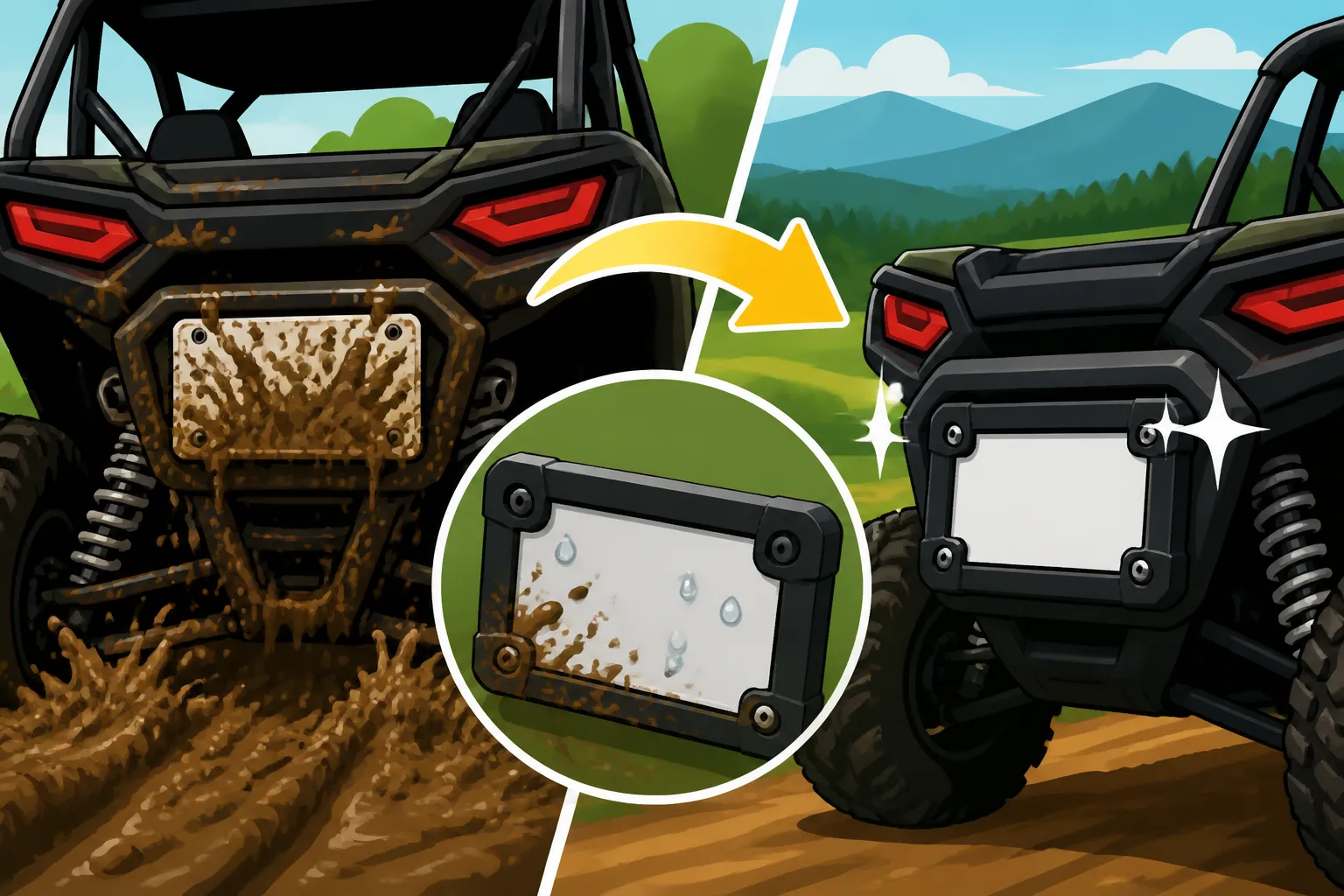
The primary culprit for a muddy plate is often the "roost" from your own tires. As your wheels spin through mud or loose dirt, they fling debris backward and upward. Given that ATV and UTV plates are almost universally mounted on the rear of the machine, they are perfectly positioned to catch all that airborne muck. The faster you go, the more aggressive your tires are, and the deeper the mud, the more severe the plate obscuring will be. Even when not directly in a puddle, riding on a wet, sandy trail can create a fine, sticky spray that quickly coats everything behind your tires.
Machine Design and Plate Placement
The design of your specific ATV or UTV also plays a significant role. Most manufacturers place the registration plate on the rear fender or tailgate, which, as mentioned, is in the direct line of fire for tire spray. The shape and length of your machine's fenders directly impact how much protection your plate receives. Some machines have shorter fenders or minimal mudguards, offering little defense against flung mud.
Furthermore, the exhaust pipe's location can sometimes contribute. While not directly spraying mud, the heat from the exhaust can sometimes bake on mud more quickly, making it harder to clean. It's a double whammy: the mud gets flung, and then it gets hardened onto the plate. This combination makes it particularly challenging to keep that plate pristine. Understanding [Vermont Plate Mounted on the Rear] helps explain why it's such a frequent target.
Practical Strategies for Keeping Your Plate Clean
Alright, now that we understand the problem, let's talk solutions. You don't have to choose between hitting the trails and having a readable plate. With a little foresight and some practical adjustments, you can significantly reduce the amount of mud that accumulates.
Pre-Ride Preparations and Modifications
Before you even hit the throttle, there are several steps you can take to protect your plate. These range from simple additions to more involved modifications.
-
Mud Flaps and Fender Extenders: This is perhaps the most straightforward and effective method. Just like on a truck, mud flaps or fender extenders work by intercepting the spray from your tires before it reaches your plate. You can find aftermarket mud flaps specifically designed for ATVs and UTVs, or you can get creative with heavy-duty rubber, plastic, or even old conveyor belt material to create your own. Attaching them to the bottom edge of your rear fenders can make a world of difference.
-
Plate Relocation: Moving the plate to a less exposed area can be a game-changer. Some riders fabricate brackets to move their plate higher up on the rear fender, or even onto a rear cargo rack or the roll cage of a UTV. The key here is to ensure that wherever you move it, the plate remains visible from a reasonable distance and angle, especially from the rear. Be mindful of Vermont's specific regulations regarding plate placement; while many states allow some flexibility, always ensure your new placement adheres to visibility requirements. Moving it too high or tucking it away might solve the mud problem but create a new legal issue. Make sure you're still [Mounting a Bracket That Meets the Rule].
Protection Method Pros Cons Best For Mud Flaps Highly effective for tire spray Can affect aesthetics, might get snagged Preventing direct splash from tires Fender Extenders Blend better with machine, good protection Less flexible than flaps, might not catch all spray Moderate mud conditions, subtle protection Plate Relocation Moves plate out of direct spray Requires fabrication, ensure legality, potential new hazards Heavily muddy areas, customized machines Clear Plate Covers Easy to install, cheap Can scratch, obscure in direct sunlight, trap moisture Light splash, road dust, short-term solution -
Clear Plate Covers: A clear plastic cover over your plate can offer some protection from direct mud accumulation, making it easier to wipe clean. However, choose these carefully. Some covers can become cloudy or scratched, reducing visibility, and others might trap moisture and dirt underneath, making the problem worse. Always ensure they are truly transparent and don't create glare that obscures the plate number.
-
Pre-treatment: Before a muddy ride, you can apply a layer of automotive wax, ceramic coating, or even cooking spray to your plate. This creates a slick surface that mud has a harder time sticking to, making it much easier to wipe off later. It's not a foolproof solution, but it certainly helps with the post-ride cleanup!
On-Trail Maintenance and Habits
Even with the best pre-ride preparations, Vermont's trails can be notoriously muddy. That's where some smart on-trail habits come in.
- Carry Cleaning Supplies: A small spray bottle filled with water, a dedicated rag or micro-fiber cloth, and a soft brush (like a toothbrush or small utility brush) are your best friends. Stash them in a cargo box or backpack. When you stop for a break, or whenever you notice your plate is getting particularly caked, a quick spray and wipe can clear it up in seconds. It's a small effort that saves a big headache later.
- Frequent Checks: Make it a habit to glance back at your plate periodically, especially after crossing particularly muddy sections or streams. If you're riding with friends, ask them to give you a heads-up if your plate starts looking unreadable.
- Riding Style: Believe it or not, your riding style can make a difference. While it's tempting to blast through every mud puddle, exercising a bit more throttle control in extremely wet areas can reduce the amount of spray flung backward. Sometimes, going a little slower or [Riding Around a Wet Section] (when safe and permissible) can save your plate from getting completely obliterated. Of course, sometimes getting muddy is part of the fun, but for designated crossings or long, sloppy stretches, a more controlled approach can help.
- Post-Ride Cleaning: As soon as your ride is over, before the mud has a chance to fully dry and harden, give your plate a thorough cleaning. Dried, caked-on mud is much harder to remove and can require more aggressive scrubbing, potentially damaging the plate or its finish. A quick rinse with a hose and a soft brush right after you get off the trail will keep your plate looking good and ready for your next adventure.
Choosing the Right Plate Bracket and Accessories
Sometimes, the factory plate mounting just isn't cutting it for Vermont's mud-heavy trails. That's where aftermarket solutions can really shine, giving you more control over your plate's visibility.
Aftermarket Brackets for Better Placement
There's a whole world of aftermarket brackets designed to solve the muddy plate problem. These range from simple extensions to complex relocation kits. The goal is often to move the plate out of the direct line of fire from your rear tires.
- Higher Mounting Points: Many riders opt for brackets that elevate the plate a few inches higher on the rear fender. This small change can sometimes be enough to get it above the worst of the tire spray.
- Integrated into Cargo Racks: For ATVs with rear cargo racks, you might find brackets that allow you to securely mount the plate to the rack itself. This often provides a much higher and more protected position, especially if the rack is above the level of the rear tires.
- UTV Roll Cage Mounts: For side-by-sides, brackets can attach the plate to the rear of the roll cage. This gets the plate significantly higher and further away from wheel spray. When choosing such a bracket, prioritize durability and secure mounting. You don't want your plate rattling loose or falling off on a bumpy trail. Also, always double-check local regulations regarding height and angle of plate display, as some jurisdictions might have specific rules for vehicles like UTVs.
LED Plate Lights and Visibility Enhancements
Beyond simply keeping the mud off, you can enhance your plate's visibility, especially if you find yourself riding after dusk, which is common on longer trail rides.
- Integrated LED Lighting: Many aftermarket plate brackets come with integrated LED lights to illuminate the plate. This is essential for night riding, as a poorly lit plate is just as problematic as a muddy one in terms of visibility. Even during the day, a well-lit plate can stand out more, especially in shaded or low-light conditions on a wooded trail. Ensure any lighting chosen is durable and waterproof for the harsh conditions of off-road riding. [Vermont Headlight and Tail Light Rules] also apply to the plate illumination.
- Reflective Accents: While you can't alter the plate itself, adding reflective tape to the bracket or the surrounding area of your machine can increase overall rear visibility. This isn't about making the plate itself readable, but about making your machine more noticeable to others, which is an important safety consideration, especially when on town connectors. For more detail on legal requirements, you might want to look into [Vermont Plate Visibility on the Road].
Ultimately, the best approach is often a combination of these strategies. A good set of mud flaps, combined with a diligent cleaning routine and perhaps a pre-treatment, will give you the best chance of keeping your Vermont ATV or UTV registration plate clear and readable, ensuring your adventures are legally compliant and enjoyable for everyone on the trail.
Disclaimer
This article is for general informational purposes only and does not constitute professional advice. Laws, prices and regulations vary by location and change over time. Consult a qualified professional for guidance on your specific situation.