Vermont ATV Registration Renewal
There's nothing quite like the freedom of hitting Vermont's scenic trails on your ATV or UTV, but that sense of adventure can quickly turn to dread when you realize your registration is about to expire, or worse, already has. Dealing with paperwork and state requirements can feel like navigating a muddy, rock-strewn trail blindfolded. This comprehensive guide is here to smooth out that path, walking you through everything you need to know about renewing your Vermont ATV registration so you can keep riding legally and worry-free.
Why Renewing Your Vermont ATV Registration is So Important
Let's be honest, nobody loves paperwork. But when it comes to keeping your ATV or UTV legal and ensuring you can enjoy Vermont's incredible trail system, renewing your registration isn't just a suggestion—it's absolutely essential. Ignoring that renewal notice can lead to some real headaches and unnecessary costs that no rider wants to face.
Keeping Your Riding Legal and Fun
Imagine planning an epic weekend ride with your buddies, loading up the rig, driving for hours to your favorite trailhead in the Northeast Kingdom, only to be stopped by a game warden or local law enforcement. "Sorry, your registration is expired." Talk about a buzzkill! This isn't just a hypothetical scenario; it's a very real possibility if you let your registration lapse. Riding an unregistered ATV in Vermont isn't just frowned upon; it carries specific penalties. You could face fines, and in some situations, your machine might even be impounded. That's a huge dent in your wallet and a major disruption to your riding plans, not to mention the potential stress and hassle of recovering your machine. We've all heard stories, and nobody wants to be the star of that particular cautionary tale.
Beyond the legal aspect, a current registration is your ticket to accessing the vast network of designated ATV trails across the state. Clubs and VASA (Vermont ATV Sportsman's Association) work tirelessly with landowners to maintain these trails, and part of that system relies on riders being properly registered. An expired registration means you're technically not allowed on those trails, putting you at risk of fines if encountered by a warden. It strips away the "fun" part of riding, replacing it with anxiety about being caught. Staying current means you're contributing to the system and upholding the trust between riders, landowners, and the state. Don't let a simple piece of paper keep you off the trails you love. You can learn more about the consequences by reading about [Vermont Penalties for Riding Unregistered].
Understanding Vermont's Annual Renewal Cycle
Vermont's ATV registrations typically operate on an annual cycle. This means your registration is valid for a specific period, usually one year from the month of issuance. So, if you registered your machine in July, you can expect your renewal to be due the following July. While it might seem straightforward, it's easy to lose track, especially if you have multiple machines or if your registration date doesn't align with other annual renewals like car insurance or property taxes.
The state's Department of Motor Vehicles (DMV) usually tries to send out renewal notices by mail well in advance of your expiration date. This notice is your friendly reminder, a beacon in the sea of everyday mail, letting you know it's time to act. It typically includes pre-filled information about your ATV, the current fees, and instructions on how to renew. However, life happens! Mail gets lost, emails get overlooked, or maybe you've moved and haven't updated your address with the DMV. Relying solely on that notice can sometimes leave you in a lurch. It's always a good idea to mark your calendar or set a digital reminder for a month or two before your registration is due, just to give yourself a buffer. While [Vermont Registration Valid One Year] is the standard, sometimes things shift, and being proactive is always the best approach to avoid any last-minute scrambling or, worse, riding on an expired plate.
The Nitty-Gritty: How to Renew Your Registration
Okay, so we've established why it's important. Now, let's dive into the practicalities of how you actually get that ATV registration renewed. The good news is that Vermont offers a few different ways to do this, giving you some flexibility based on your preferences and schedule.
Online, Mail, or In-Person: Choosing Your Method
When it comes to renewal, you've got options, each with its own set of advantages and disadvantages.
- Online Renewal: This is often the quickest and most convenient method for many riders. If your information hasn't changed significantly (like your address or the machine itself), you can usually renew right from your computer or smartphone. You'll typically need your current registration information, a valid credit or debit card for payment, and an internet connection. The benefits are clear: no waiting in lines, no postage stamps, and you can do it anytime, day or night. Plus, you get immediate confirmation, which can be reassuring. The downside might be if you have complex issues or need to make changes that the online system can't handle.
- Mail Renewal: For those who prefer a more traditional approach, or if your renewal notice came pre-populated and you just need to sign and send, renewing by mail is a perfectly valid option. You'll fill out the necessary information on your renewal notice, include a check or money order for the fee, and mail it to the Vermont DMV. The biggest advantage here is simplicity if you're comfortable with paperwork. The main drawback is the time it takes. You're at the mercy of mail delivery times, both for sending your application and receiving your new decal and plate. Plan well in advance if you choose this route to avoid any lapse.
- In-Person Renewal: If you live close to a Vermont DMV office, prefer face-to-face interaction, or have a more complicated situation (like needing to update information, ask specific questions, or resolve an issue), renewing in person can be the best choice. You'll bring all your documents to a DMV office, speak with a clerk, and often leave with your renewed registration and decal on the same day. The immediate gratification and ability to get questions answered are big positives. The obvious downside is the potential for waiting in lines, especially during peak hours. You can find more details on these methods in articles like [Registering by Mail Versus in Person].
Here's a quick comparison of the renewal methods:
| Method | Pros | Cons | Best For |
|---|---|---|---|
| Online | Fast, convenient, 24/7 access, instant confirmation | Limited for complex changes, requires internet | Tech-savvy riders with straightforward renewals |
| Simple, traditional, no lines | Slow processing, mail delays, no immediate confirmation | Those who prefer paper, less urgent renewals | |
| In-Person | Immediate assistance, quick resolution of issues, same-day decal | Potential wait times, limited office hours | Complex cases, urgent renewals, direct questions |
Essential Documents and Information You'll Need
Regardless of which method you choose, having your ducks in a row with the required documents and information will make the process much smoother. Nobody wants to make multiple trips or suffer through delays because a crucial piece of paper is missing.
First and foremost, you'll need your current ATV registration certificate. This document contains all the vital information about your machine and your existing registration number, which is necessary for the renewal process. If you don't have the original handy, sometimes the renewal notice itself will suffice, but it's always best to have the original if possible.
Next up is proof of insurance. Vermont law requires all ATVs operating on public trails or designated roads to have liability insurance. You'll need to show proof that your policy is current and meets the state's minimum requirements. This usually means your insurance card or a copy of your policy declaration page. Make sure the dates are valid! This is a non-negotiable item, so double-check your coverage before starting the renewal process. For more on this, check out [Vermont ATV Insurance Requirements].
Finally, be ready with your payment for the renewal fees and a valid form of personal identification, especially if you're renewing in person. A driver's license or state ID card is usually sufficient. Having a [Vermont Registration Paperwork Checklist] handy can save you a lot of hassle.
Calculating and Paying Your Renewal Fees
The cost of renewing your Vermont ATV registration can vary slightly depending on a few factors, primarily whether you're renewing for one year or opting for a two-year period, and whether your machine is classified as an ATV or an ASV (All-Terrain Vehicle vs. All-Snow Vehicle).
Vermont typically offers both one-year and two-year registration options. Opting for a two-year renewal can sometimes save you a bit of money in the long run and, perhaps more importantly, saves you the hassle of renewing again next year! The fees are established by the state and can change over time, so while I can't provide exact figures, you'll find the most current rates on your renewal notice or the Vermont DMV website. Generally, ATVs have a standard one-year fee, often around the cost of [The $45 One-Year Fee], with a proportionally higher fee for two years, similar to [The $90 Two-Year Fee]. ASVs, which are technically a different class of machine, usually have a slightly different fee structure.
When it comes to payment, the DMV is pretty flexible. Online renewals typically accept credit or debit cards. If you're mailing in your renewal, a check or money order made out to the Vermont Department of Motor Vehicles is standard. For in-person renewals, most DMV offices accept cash, checks, money orders, and credit/debit cards. Always verify the accepted payment methods with your specific DMV office beforehand if you're going in person, just to be safe. It’s also wise to keep a copy of your payment confirmation or canceled check for your records. For a broader overview of costs, you can refer to [Vermont ATV Registration Cost].
Common Renewal Hurdles and How to Overcome Them
Life throws curveballs, and sometimes that means a perfectly good intention to renew your ATV registration on time gets derailed. Don't panic! Even if you've missed a deadline or lost some paperwork, there are usually ways to get back on track.
What If Your Registration Has Already Expired?
Oops! It happens to the best of us. You're riding along, enjoying the trail, and suddenly realize your plate has an outdated sticker. If your Vermont ATV registration has already expired, you're technically riding illegally. The good news is that Vermont generally allows you to renew an expired registration without having to start the entire initial registration process from scratch. However, there might be consequences.
First, the primary concern is that you're liable for [Penalties for an Expired Plate] if caught riding. These can range from a warning to a fine, and if things escalate, impoundment of your machine. It's best to cease riding until your registration is current. To renew an expired registration, you'll typically follow the same steps as a regular renewal, whether online, by mail, or in person. The DMV will still process your renewal, and you'll pay the standard fees. However, depending on how long it's been expired, you might face additional late fees or have to explain the lapse. It's crucial to address an expired registration as soon as you realize it. The longer you wait, the more complicated it can become, and the higher the risk of being cited. Articles like [What Happens When Registration Lapses] can give you more context.
Dealing with Lost or Damaged Registration Documents
It's an unfortunate truth: paper documents have a way of disappearing. Maybe your registration certificate got wet on a particularly muddy ride, or perhaps it's simply vanished into the abyss of your filing cabinet. Whatever the reason, if your original registration certificate or decal is lost or damaged, you still need to renew.
If you have your renewal notice, that often contains enough information for the DMV to locate your record and process the renewal. If you don't have that either, you might need to provide your VIN (Vehicle Identification Number) or previous registration number. The Vermont DMV has procedures for dealing with lost documents. For a lost decal or plate, you might need to apply for a replacement, which can sometimes be done during the renewal process or as a separate step. This might involve a small fee for the replacement item. The important thing is not to let the lack of original documents deter you from renewing. Get in touch with the DMV, either by phone or in person, and they can guide you through the specific steps to verify your ownership and process the renewal. For lost plates, specifically, there's help in [Vermont Plate Replacement].
Changes to Your ATV, Address, or Ownership
Life is dynamic, and sometimes things change between renewal periods. You might have moved to a new address, made significant modifications to your ATV that change its classification, or even transferred ownership of your machine. Each of these scenarios requires special attention during renewal.
- Address Change: If you've moved, updating your address with the Vermont DMV is crucial. Your renewal notices, new decals, and plates are all mailed to the address on file. If your address isn't current, you might not receive these important documents, leading to an expired registration without you even realizing it. Most DMVs allow you to update your address online, by mail, or in person, often as part of the renewal process or as a separate transaction. Don't forget to update this information immediately after moving. You can find more specific guidance on [Vermont Registration Address Change].
- Machine Changes: While less common for routine renewals, if you've modified your ATV in a way that changes its classification (e.g., making it wider than 72 inches or heavier than 2,500 pounds, potentially pushing it into the ASV category), you might need to report these changes. This could affect the fees you pay or even require a new type of registration. When in doubt, it's always best to contact the DMV to ensure your machine is correctly classified and registered.
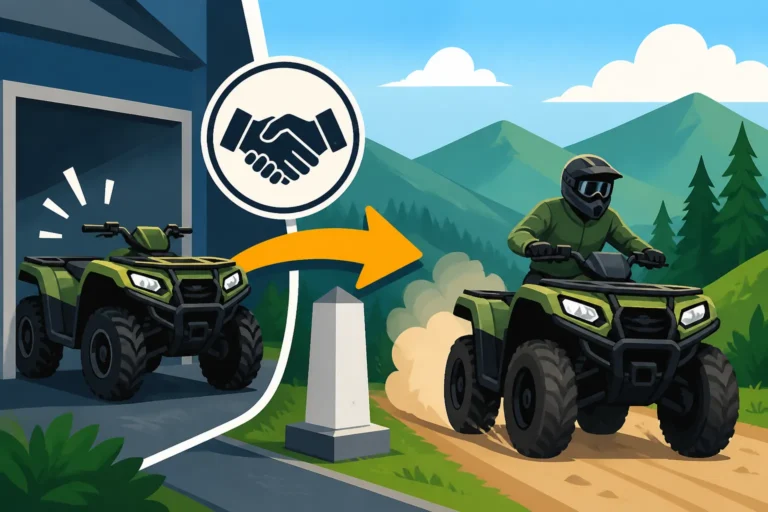
- Ownership Changes: If you've recently sold your ATV and are renewing, ensure the new owner has properly transferred the registration into their name. If you've bought an ATV and are now renewing for the first time, you'll need to make sure the original transfer of ownership was completed correctly. This often involves a bill of sale and possibly a title transfer. If you're ever in a private sale situation and need to ensure your paperwork is legally sound for future renewals, services like LawDepot can provide customizable templates for bills of sale and other legal documents, helping you cover all your bases. Accurate ownership records are vital for a smooth renewal. If you transferred your registration to a new machine during the year, there’s a small fee for [Moving a Vermont Registration to a New Machine for $10].
Beyond the Basics: What Happens Next?
You've done the work, submitted your forms, and paid your fees. Now what? The process isn't quite over until you have your new proof of registration in hand and understand how it integrates with other aspects of Vermont ATV riding, like the essential Trail Access Decal.
Receiving Your New Decal and Plate
After successfully renewing your registration, the Vermont DMV will process your request and mail out your updated registration certificate and, most importantly, your new annual decal. This decal is usually a small sticker that you affix to your existing ATV license plate, indicating the current year of validity.
The turnaround time can vary. If you renewed online, processing might be quicker, but mail delivery still takes time. If you renewed by mail, factor in both the mailing time to the DMV and the mailing time back to you. Typically, you can expect to receive your new documents and decal within a few weeks. However, during peak seasons or due to unforeseen delays, it could take longer. If a reasonable amount of time has passed and you haven't received anything, it's a good idea to contact the Vermont DMV to check on the status. Keep any confirmation numbers or copies of your renewal application handy. Knowing [Where Vermont Mails Your New ATV Plate] can help you track it mentally.
Once you receive your new decal, remember to apply it correctly to your ATV plate. It needs to be clearly visible and replace any expired decals. This little sticker is your visual proof of current registration when you're out on the trails or roads.
Understanding the Trail Access Decal (TAD)
This is a crucial distinction that sometimes confuses new and even experienced riders. Your Vermont ATV registration and your Vermont Trail Access Decal (TAD) are not the same thing, but they are both required to ride on the VASA trail system.
- ATV Registration: This is your official registration with the state's Department of Motor Vehicles. It proves your machine is legal to operate in Vermont and ensures you've paid any necessary taxes and fees to the state.
- Trail Access Decal (TAD): This decal, issued by VASA and its member clubs, is what grants you legal access to the vast network of private and public land trails managed by VASA. It typically includes your VASA membership and club dues, which directly support the maintenance, signage, and insurance for these trails.
You must have both a current Vermont ATV registration and a current TAD to ride on VASA trails. Having one without the other means you're not fully compliant and could face fines. Think of it this way: your registration lets you own and operate the ATV legally, while the TAD lets you access the specific trails that VASA manages. It's an additional step, but one that directly supports the incredible riding opportunities we have in Vermont. For a deeper dive into this, check out [Vermont TAD: The Trail Access Decal Explained] and remember that [Vermont Requires Registration Plus a TAD] to hit those trails.
Don't let the thought of renewal deter you from enjoying all that Vermont's ATV trails have to offer. With a little planning and understanding of the process, you can keep your machine legally registered and your adventures flowing smoothly year after year.
Disclaimer
This article is for general informational purposes only and does not constitute professional advice. Laws, prices and regulations vary by location and change over time. Consult a qualified professional for guidance on your specific situation.