Vermont Course Exceptions on Family Land
Vermont’s family-land ATV course exception is limited to specific property and rides; check supervision, road, trail, and registration rules separately.
Your sticker stops at the state line.
Non-resident permits, what they cost and how long they last, and which states honor each other’s — or, increasingly, none at all.
Vermont’s family-land ATV course exception is limited to specific property and rides; check supervision, road, trail, and registration rules separately.
Vermont’s instructor-supervision exception covers supervised ATV training, not ordinary rides; know when a young rider still needs a safety certificate.
Vermont’s online ATV safety course is listed at $34.95, but riders should verify the current fee, eligibility, and certificate rules before enrolling.

Vermont’s minimum ATV safety course age is 12, but certification, supervision, registration and trail access remain separate requirements for young riders.
Vermont ATV safety course rules continue through age 17: turning 16 changes supervision, not the under-18 certificate requirement for riders.

Vermont recognizes valid Maine ATV registrations, but visitors still need to check trail decals, insurance, safety rules, and local route access before riding.
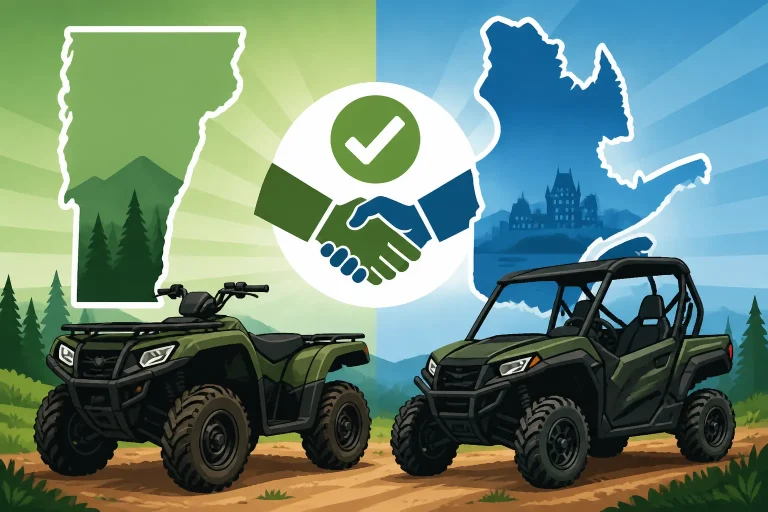
Vermont recognizes valid Quebec ATV registrations for visiting riders, but registration alone does not provide trail access, insurance, or town-road permission.
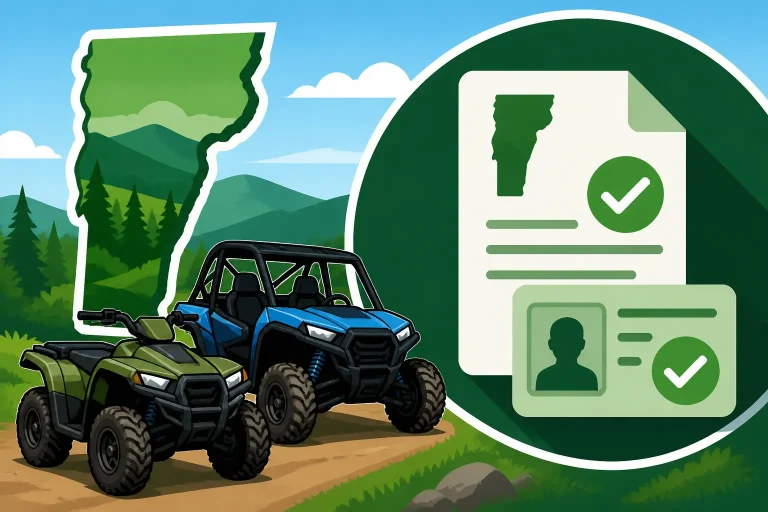
Vermont ATV and UTV riders need registration and a Trail Access Decal for VASA trails; each credential serves a different purpose.
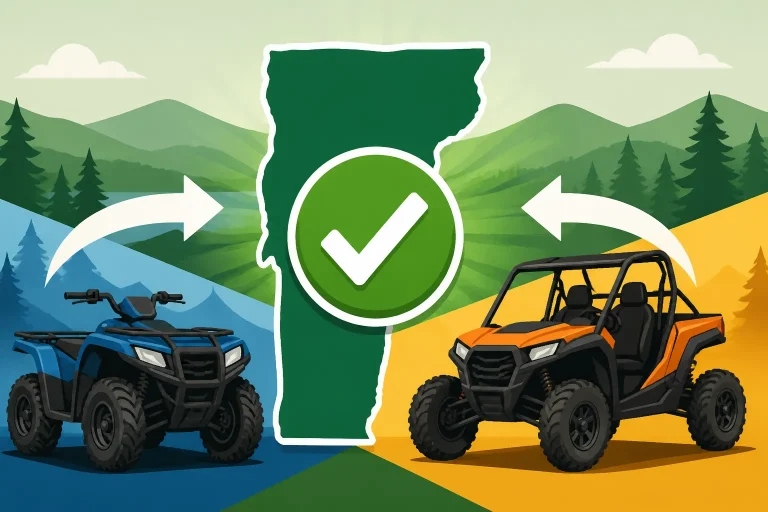
Vermont out-of-state ATVs and UTVs need a TAD for VASA trails; home registration may be recognized, but it does not replace trail access.

Multiple Vermont trail access decals purchased together require correct machine details because each decal links to one specific vehicle.