Best Vermont ATV Trails for Beginners
Vermont can be a wonderful place to learn trail riding, but finding a genuinely beginner-friendly route takes more than choosing a scenic town on a map. Many riding corridors cross private land, conditions change, and access depends on current club permissions. This guide explains where to start, how to judge a route, and what to confirm before unloading your ATV or UTV.
Where beginners can start looking in Vermont
There isn’t one official, permanently easy trail that suits every new rider. Vermont’s riding opportunities are largely tied to club-maintained corridors, and a route that feels manageable in dry weather may become difficult after rain. Treat the areas below as starting points for research—not a promise that every nearby trail is open, easy, or appropriate for your machine.
Island Pond and the Northeast Kingdom
Island Pond is a useful place to begin planning because it sits in a region known for organized ATV riding and club-managed trail connections. That does not mean every corridor near town is a beginner route. Some sections may include uneven ground, narrow passages, hills, water, or conditions that are challenging for a first-time rider. Ask which specific open segment is most suitable for your experience and machine, and whether it has any features you would prefer to avoid.
The Northeast Kingdom’s scale can also make a beginner ride feel more demanding than expected. A route may look short on a screen, but a slow pace, stops, changing surfaces, and detours around closures can stretch the day. Start with a modest out-and-back or a short loop that you can turn around on if the terrain or your comfort level changes. For a closer look at the area, see [Island Pond ATV Riding in Vermont](Island Pond ATV Riding in Vermont).
Before you head out, check the local club’s current information rather than relying on an old screenshot or a route shared in a group chat. Clubs maintain corridors with landowner permission, and access can change. [Finding the VASA Club That Maintains Your Local Trail](Finding the VASA Club That Maintains Your Local Trail) can help you identify who to ask about the route you have in mind.
Newport and Derby as planning bases
The Newport and Derby area can work well as a base for a riding trip, especially if you want to plan around local lodging, services, or a group outing. The key is not to assume that a trail near a town is automatically easy—or that a town provides a continuous ATV route. Access depends on the specific corridor, club information, local rules, and any road sections involved.
For a first ride, ask about the character of the exact route rather than asking only whether it is “beginner friendly.” Useful questions include whether there are steep climbs, tight turns, exposed rocks, water crossings, narrow bridges, or long stretches without an easy place to stop. Also ask how the route connects to other corridors. A simple-looking starting section can lead into terrain that is a poor fit for a new rider if you keep going.
Newport and Derby are better thought of as places to organize a ride than as guarantees of a particular trail experience. Review [Newport Area ATV Trails in Vermont](Newport Area ATV Trails in Vermont) and [Derby as a Riding Base](Derby as a Riding Base), then confirm the current route with the club responsible for it. For riders who want a quieter first outing, a corridor near a village may feel more approachable, but proximity to a village does not establish that a route is open or uncomplicated. [Vermont ATV Trails Near a Village](Vermont ATV Trails Near a Village) offers another angle for comparing possible starting points.
| Planning area | Why it may suit a beginner’s trip | What to verify before riding |
|---|---|---|
| Island Pond and the Northeast Kingdom | Organized riding area with local clubs and corridor information to consult | The specific open segment, terrain, current conditions, and club access requirements |
| Newport area | A practical base for researching local corridors and services | Whether the intended route is open and suitable for your machine and experience |
| Derby area | A possible base for a planned outing with nearby riding connections | Which club maintains the route and whether any connecting roads are designated |
| Any Vermont riding area | Lets you plan around a short ride and a clear turnaround point | Current maps, trail access requirements, weather, machine fit, and closures |
How to tell whether a Vermont trail is beginner friendly
Trail labels can be useful, but they are not a substitute for a specific description of the ground. A new rider may be comfortable on a smooth, gradual route and uneasy on a rocky descent, while a passenger or a wide side-by-side changes what feels manageable. Use route information as a starting point, then match the ride to the least experienced person in your group.
Look beyond a route name or map line
A map can show where a corridor goes without telling you how it feels to ride. Check whether the route includes elevation changes, tight turns, rough surfaces, water crossings, or narrow sections. Ask whether the path is maintained, whether there are known obstacles, and where a beginner can safely stop or turn around. If the answer is vague, choose a shorter route or wait until you can get clearer details.
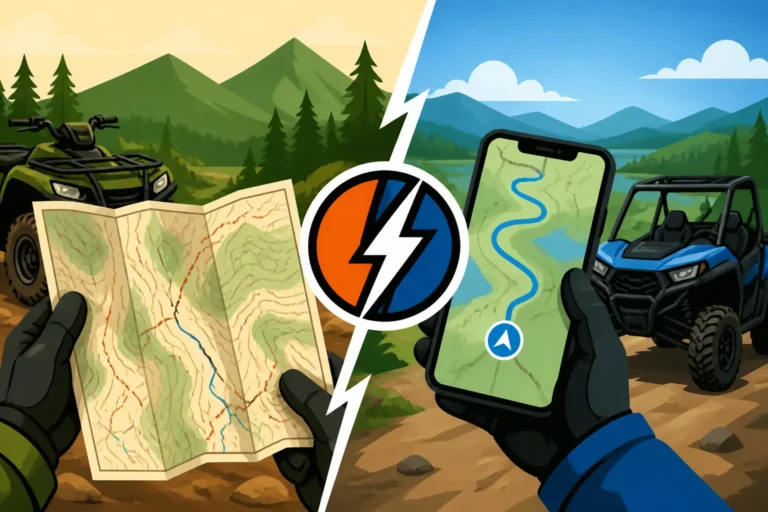
Digital mapping tools, including onX Offroad, can help with advance planning and orientation. They are useful for reviewing an area, saving information for offline use where available, and keeping a group aware of its intended route. But a mapped line alone is not proof that a Vermont corridor is currently open, that you have permission to ride it, or that it is suitable for your vehicle. Compare any digital map with current club information and posted signs. Start with [Vermont ATV Trail Map Downloads](Vermont ATV Trail Map Downloads), then verify the route with the club.
A sensible first ride is one where you have choices. Prefer a route with a clear starting point, a manageable distance, and a practical way to return without committing to a long loop. If you are new to riding, don’t let a more experienced friend’s confidence set the pace. The person who needs the most time should help decide how far the group goes.
Match the route to your ATV or UTV
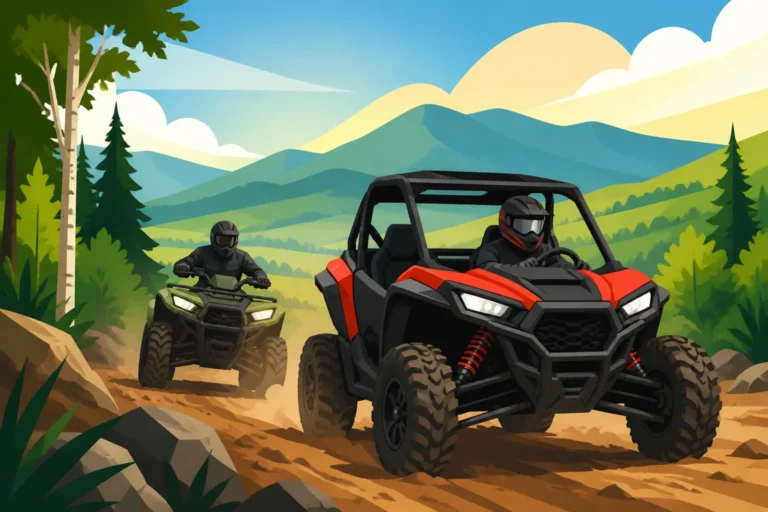
A trail that feels roomy on an ATV may feel tight in a wider UTV. Check your machine’s width against the route’s restrictions and ask about narrow gates, bridges, or other pinch points. A full-size side-by-side may need more room to turn around than a small ATV, and carrying passengers can make a slow or uneven section feel more stressful. If you are riding a UTV, ask specifically whether the corridor is suitable for that machine—not just whether “ATVs” are allowed.
Also consider how familiar you are with your machine. New riders often find it easier to learn on open, relatively predictable terrain than on a busy or technical section where they must manage throttle, braking, steering, and other riders at once. Practice basic controls in a safe, permitted area before joining a longer route. Make sure every rider knows how to stop, signal, and regroup if someone falls behind.
Do not use a GPS track as permission to leave a marked corridor. Vermont’s trail system depends on landowner cooperation, and riding around a wet spot, closed gate, or obstacle can create a new problem for the landowner and the club. [Vermont Trail Etiquette on Private Land](Vermont Trail Etiquette on Private Land) is useful reading before you go.
Prepare for a first Vermont trail ride
The best beginner ride is one that starts with realistic expectations. A short route, good preparation, and a willingness to turn back are more valuable than trying to cover as much ground as possible. Sort out access and required documents before the ride day so that the first surprise is not at a trailhead.
Confirm access, registration, and trail requirements
Vermont riding can involve more than registering the machine. Riders should understand the difference between state registration and the trail access requirements for the routes they plan to use. Check the current requirements for your machine and situation before traveling, and do not assume that an out-of-state plate alone grants access to every corridor. Start with [Vermont Requires Registration Plus a TAD](Vermont Requires Registration Plus a TAD) and confirm the details with the appropriate club or program.
If you are bringing a machine from outside Vermont, check what applies to visitors before you leave home. Keep required documents accessible, and make sure the rider, machine, and planned route all meet the relevant requirements. Families with young riders should review age, training, and supervision rules in advance; [Vermont ATV Safety Course Required Under 18](Vermont ATV Safety Course Required Under 18) is a useful starting point.
Trail access and road access are not interchangeable. A corridor may connect to a road, but that does not mean you can ride along the road or use it to reach another trail. Road rules can depend on town designations and local restrictions. If your planned route includes a town road, verify that road’s status separately rather than assuming a trail map settles the question.
Check weather, closures, and your gear
Rain can change a ride quickly, particularly on muddy or uneven ground. Before towing, check the trail club’s latest updates and ask about recent weather, wet sections, maintenance work, or landowner-requested closures. If the club says a corridor is closed, choose another open route instead of trying to skirt the closure. For practical planning, review [Vermont Trail Conditions Before You Tow](Vermont Trail Conditions Before You Tow).
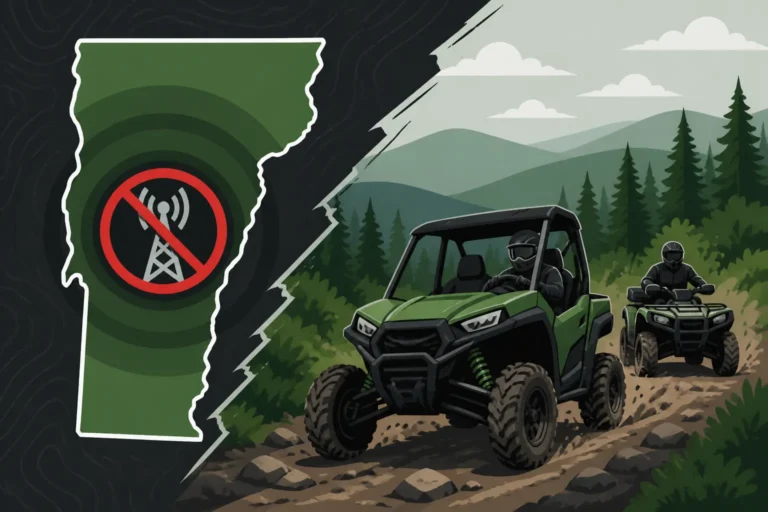
Wear a helmet and appropriate riding clothing, and bring water, food, a basic first-aid kit, and a way to communicate with your group. Pack for a longer day than you expect: a slow pace, an unexpected stop, or a change of route can keep you out longer. A phone with a saved map can be helpful, but dead zones are possible, so agree on a meeting point and what to do if riders get separated. onX Offroad or another navigation app can support that plan, but it should not replace current access information or sound judgment.
If you are riding with children or other new riders, keep the group small enough that everyone can be supervised and heard. Set expectations before starting: stay on the marked corridor, leave gates as you found them, do not race, and stop somewhere safe if someone needs help. A beginner should never feel pressured to continue just to keep up.
A simple plan for your first ride
A little structure can make the day less intimidating. Rather than choosing a long trip first and trying to solve problems along the way, plan a route with a clear beginning, a short goal, and a backup option.
Use this pre-ride checklist
- Choose the area, then identify the exact corridor. Start with a riding base such as Island Pond, Newport, or Derby, but select a specific route only after checking current club information.
- Ask about terrain in plain terms. Find out whether the route has steep grades, rocks, water, narrow bridges, or sections that may be difficult for a new rider or wider machine.
- Confirm that the route is open and permitted. Check current club updates, signs, and any required access credentials. Do not assume that a line on a digital map means a corridor is open.
- Check your machine and documents. Make sure your ATV or UTV is suited to the route and that you understand applicable registration, trail access, safety, and insurance requirements.
- Set a short turnaround goal. Agree in advance that the group can stop or head back at any point. For a first outing, finishing comfortably is a better result than pushing into unfamiliar terrain.
- Plan for weak cell service. Save useful navigation information before leaving, tell someone where you expect to ride, and decide where the group will regroup if separated.
- Recheck conditions on ride day. Weather and trail access can change. If a route is closed or too wet, choose another permitted option rather than forcing the plan.
Keep your first outing enjoyable
A beginner-friendly ride does not have to be dramatic to be worthwhile. A short, steady outing gives you time to get used to steering, braking, terrain changes, and group communication without turning every mile into a test. Pause before a difficult-looking section and decide together whether it is appropriate. It is perfectly reasonable to turn around.
Afterward, note what worked and what did not. Maybe the route was comfortable but longer than expected, or perhaps your UTV needed more space than you anticipated. That information makes the next trip easier to plan. You can also ask the local club which nearby corridor might be a logical next step, rather than guessing based on a map.
For Vermont beginners, the most useful rule is simple: choose a current, permitted route that matches the least experienced rider and the largest machine in your group. Use maps and apps such as onX Offroad to help organize your plan, but confirm trail access and conditions with the people maintaining the corridor. That extra check can prevent a frustrating detour—and help protect the landowner relationships that keep Vermont riding opportunities available.
Disclaimer
This article is for general informational purposes only and does not constitute professional advice. Laws, prices and regulations vary by location and change over time. Consult a qualified professional for guidance on your specific situation.