Documents to Bring to a Vermont DMV Office
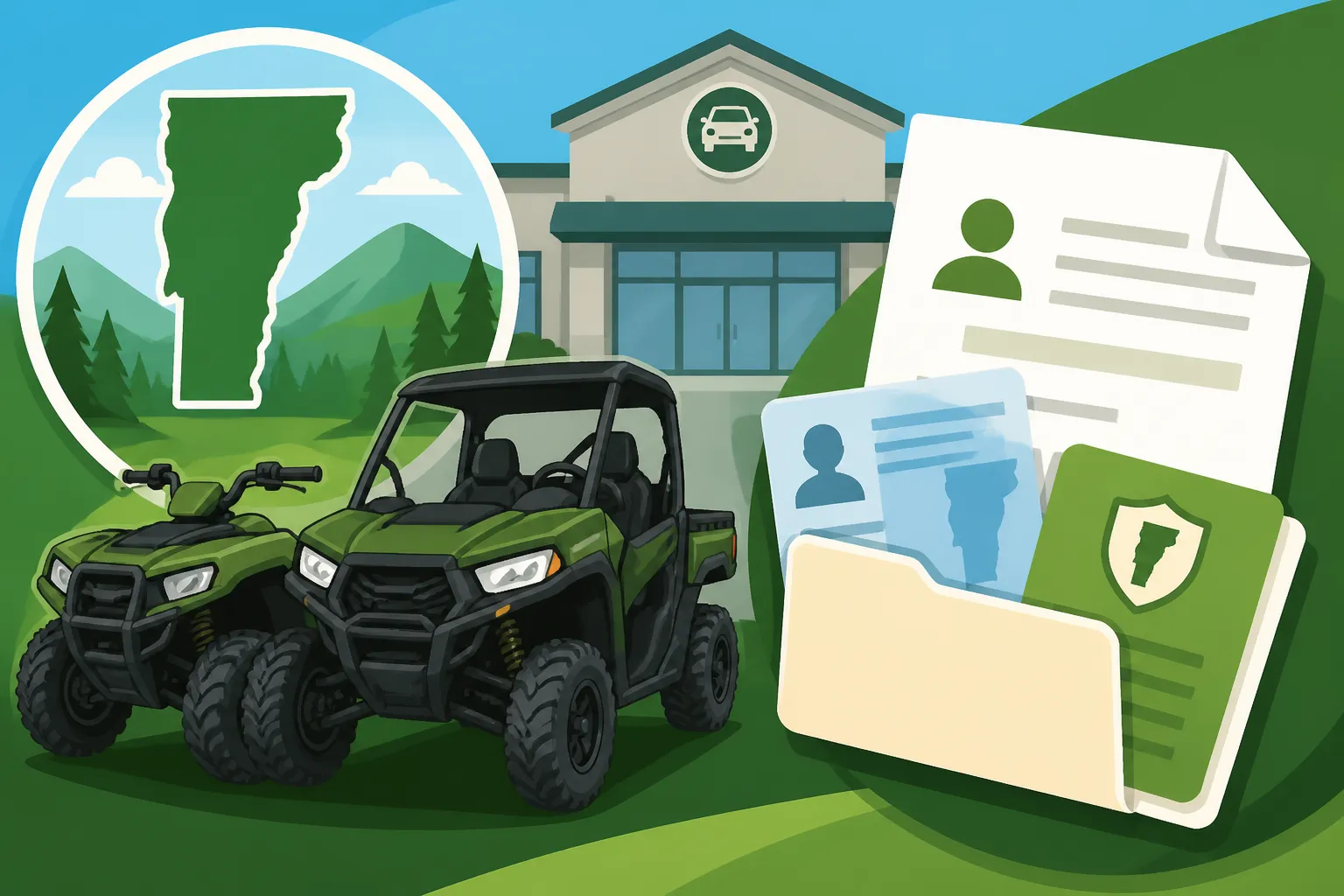
There's nothing quite as frustrating as taking time out of your busy schedule, driving all the way to a Vermont Department of Motor Vehicles (DMV) office, waiting your turn, and finally getting to the counter, only to be told you're missing a crucial piece of paperwork. It's a waste of time, gas, and energy, and it leaves you feeling defeated. This guide is designed to ensure that doesn't happen when you go to register and title your ATV or UTV in the Green Mountain State. We'll walk you through every document you'll need, why it's important, and how to get it ready, so your visit is smooth and successful.
The Core Documents for Any Vermont ATV Registration
No matter if you're registering a brand-new side-by-side or an older ATV you just bought from a neighbor, there are fundamental documents that the Vermont DMV will always ask for. These pieces of paper are the backbone of proving ownership, ensuring the machine is properly identified, and confirming you're eligible to register it in Vermont. Skimping on any of these will send you right back home.
Proof of Ownership: Why It's Your Foundation
This is arguably the most critical document you'll need. The DMV needs to confirm that you are the legal owner of the ATV or UTV you're trying to register. Without solid proof of ownership, they simply cannot process your application. This isn't just a formality; it protects you and future owners from fraud and ensures clear title to the vehicle.
If you're buying a brand-new machine from a dealership, your proof of ownership will typically be a Manufacturer's Certificate of Origin (MCO) or a Manufacturer's Statement of Origin (MSO). This document is essentially the "birth certificate" for your ATV or UTV, showing its first transfer from the manufacturer to the dealer, and then to you. The dealer should provide this to you at the time of purchase. Ensure all the information on it, like the Vehicle Identification Number (VIN) and your name, is accurate before you leave the lot. Bringing [An MCO at the Vermont DMV Counter] correctly filled out will make your life much easier.
For those purchasing a used ATV or UTV through a private sale, a properly executed Bill of Sale is absolutely non-negotiable. This document details the transaction between you and the seller, including the purchase price, date of sale, the VIN of the machine, and the full names and addresses of both parties. It needs to be signed by both the buyer and the seller. The Vermont DMV is quite particular about what constitutes a valid bill of sale, so don't just scribble something on a napkin. You can find templates online, some free, some paid, from sources like LawDepot, which can help you create a formal document that meets state requirements. It's truly worth the effort to ensure you are [Writing a Bill of Sale the Vermont DMV Accepts].
What happens if you've inherited an ATV or UTV? This can be a bit more complex, but it's certainly manageable. In addition to proving ownership of the machine itself, you'll need to provide documents that establish your legal right to inherit it. This usually includes a certified copy of the death certificate of the previous owner, a copy of the will (if one exists) that names you as the beneficiary of the vehicle, or an affidavit of heirship if there's no will. The DMV needs to see a clear chain of custody from the deceased owner to you. We have a whole guide on [Registering an ATV You Inherited in a Will] that can walk you through the specifics.
If you bought your ATV or UTV out of state, the process for proving ownership is similar but with an added layer of verification. You'll typically need the original title from the previous state, properly assigned to you by the seller, along with a bill of sale. Vermont will want to see the official document that shows the vehicle was legally transferred to you in its prior jurisdiction. Sometimes, an out-of-state bill of sale might need to be notarized, depending on the state of origin and Vermont's current regulations. For more detailed insights, check out [Vermont Registration for a Machine Bought Out of State]. Remember, the goal is always to provide clear, undeniable [Proof of Ownership Vermont's DMV Will Accept].
Vermont's Title Requirements
Beyond proving ownership, many ATVs and UTVs in Vermont also require a title. The title is a separate, official document issued by the state that legally establishes who owns the vehicle. It's different from registration, which permits you to operate the machine.
For new machines purchased from a dealer, you'll generally apply for the title at the same time you register the ATV or UTV. The MCO or MSO serves as the initial document, and the DMV will use that to issue your new Vermont title. This is usually a seamless process handled as part of the initial registration paperwork.
When it comes to used machines, whether a title is required can sometimes depend on the age of the vehicle. Generally, Vermont requires titles for most ATVs and UTVs. If the machine you're buying already has a Vermont title, the seller must sign it over to you in the designated area. If it's an out-of-state machine, you'll need to submit the original out-of-state title. The DMV will then issue you a new Vermont title in your name. You can find comprehensive details about the process in [Vermont Title Application Steps].
There is a separate fee for obtaining a title, which is distinct from your registration fee. While this figure can change, historically it has been a modest amount, such as [The $27 Title Fee]. It's a one-time cost, but it's essential to factor into your budget.
One important consideration when buying a used ATV or UTV is checking for any liens on the title. A lien means that another party (like a bank or finance company) has a legal claim to the vehicle until a debt is paid off. If you buy a machine with a lien, you could inadvertently become responsible for that debt, or at least have a hard time getting a clear title in your name. Always ask the seller for a clear title. If there's a lien, ensure it's formally released by the lienholder before you finalize the purchase. Understanding [Buying a Machine Whose Title Names a Lienholder] is crucial to avoid future headaches.
Identification, Residency, and Payment Essentials
Once you've got your ownership documents in order, the next set of papers focuses on you, the registrant. The Vermont DMV needs to confirm your identity, your residency status (if applicable), and ensure you're ready to pay all the necessary fees and taxes.
Proving Who You Are
This one seems straightforward, but it's surprising how many people overlook it. You'll need a valid, government-issued photo identification. For most Vermont residents, this means your current Vermont driver's license or a Vermont State ID card. If you're new to the state, an out-of-state driver's license is usually acceptable, though you might be asked for additional proof of Vermont residency.
It's absolutely vital that the name on your photo ID matches the name on all your other documents—your bill of sale, MCO, and application forms. Even minor discrepancies can cause delays. If your name has changed due to marriage, divorce, or any other reason, make sure your ID reflects your current legal name, or bring supporting legal documents (like a marriage certificate or court order) that explain the discrepancy. The DMV clerks are sticklers for consistency, and for good reason—it prevents fraud.
Establishing Vermont Residency
If you're registering an ATV or UTV in Vermont, the DMV needs to verify your current Vermont address. This is important for determining certain fees and for mailing your registration documents and plate. Your valid Vermont driver's license or state ID card will often fulfill this requirement if it shows your current address.
However, if your ID doesn't have your current Vermont address, or if you're a new resident, you'll need to bring additional proof. This can include a utility bill (electric, gas, water) in your name at your Vermont address, a lease agreement, a property tax bill, or a bank statement. Usually, they'll ask for two forms of proof if your ID isn't current. For a more exhaustive list of acceptable documents, look up [Vermont Registration and Proof of Address].
Now, what about non-residents? While many visitors simply buy a Vermont Trail Access Decal (TAD) and ride their out-of-state registered machine, it is possible for non-residents to register an ATV in Vermont, especially if they own property here or spend significant time in the state. In such cases, you would still follow the same documentation process as a resident, but you might need to show proof of connection to Vermont other than residency, such as a property deed or utility bills for a Vermont property. The rules can be a bit nuanced, so if you're a non-resident considering full Vermont registration, it's wise to clarify the specific requirements with the DMV ahead of time. You can find more information about this at [Vermont ATV Registration for Nonresidents].
Payment for Fees and Taxes
This might seem obvious, but having your payment method ready is crucial. You'll be paying for two main things: registration fees and, in many cases, Vermont Purchase and Use Tax.
Vermont ATV and UTV registration fees vary based on the type of machine (ATV vs. ASV, which is Vermont's term for "All-Terrain Vehicle" including UTVs, side-by-sides, etc.) and the duration of the registration. You can typically choose between a one-year or a two-year registration period. For instance, a standard ATV registration might cost [The $45 One-Year Fee] or [The $90 Two-Year Fee]. However, if your machine falls under the "ASV" category (often wider and heavier side-by-sides), the fees are generally higher, such as [The $108 ASV One-Year Fee] or [The $211 ASV Two-Year Fee]. Always check the most current fee schedule, as these figures are subject to change.
The Vermont Purchase and Use Tax is essentially Vermont's sales tax on vehicles. If you bought your ATV or UTV from a dealer or a private seller, you will likely need to pay this tax when you first register the machine, unless you qualify for an exemption. This tax is calculated based on the purchase price of the vehicle. There are certain [Vermont Purchase and Use Tax Exemptions], such as if the machine was a bona fide gift between family members, or if you've already paid a similar sales tax in another state that has reciprocity with Vermont. Be prepared to provide documentation (like the bill of sale or gift affidavit) that supports any exemption claim. If you need to pay, understanding [Vermont Purchase and Use Tax on an ATV] beforehand can save you surprises.
When it comes to payment methods, most Vermont DMV offices accept cash, checks, money orders, and major credit/debit cards. However, it's always a good idea to confirm their accepted payment methods before your visit, especially for larger transactions like paying the Purchase and Use Tax. Having multiple options available is a smart move. For a detailed list, consult [Vermont ATV Registration Payment Methods].
Additional Paperwork and Important Considerations
Even with the core documents in hand, there are a few more items and scenarios you should be prepared for to ensure your ATV or UTV registration process goes off without a hitch. These include the official application form, proof of insurance, and understanding how to handle missing documents.
The Registration Application Form: VD-119
The Vermont DMV uses a specific form for registering ATVs and UTVs, typically known as Form VD-119, the "Application for Vermont Registration and Title." You can usually download and print this form from the Vermont DMV website before your visit, or you can pick one up at any DMV office.
It's highly recommended to fill out as much of the form as you can beforehand. This includes your personal information, vehicle details (VIN, make, model, year, engine size), and any lienholder information if applicable. Filling it out neatly and accurately will speed up your time at the counter. Make sure all information on the form is consistent with your supporting documents. A detailed walkthrough can be found in [Filling Out Vermont's Form VD-119].
The DMV also provides instructional guides for their forms. For VD-119, there's often a corresponding VD-119i document. This instructional guide explains each section of the form in detail, clarifying what information is needed and why. Reading through [VD-119i and What It Explains] can help you avoid common errors and ensure your application is complete.
Insurance Requirements
Vermont law mandates that all ATVs and UTVs operated on public land, trails, or designated roads within the state must carry liability insurance. This isn't just a suggestion; it's a legal requirement that protects you and others in the event of an accident.
When you register your machine, the DMV will ask for proof of this insurance. This usually means providing a copy of your insurance card or a declaration page from your policy that clearly shows the policy number, effective dates, the insured vehicle's VIN, and the liability coverage limits. Vermont has specific minimum liability coverage amounts, typically [Vermont's $25,000 Bodily Injury Minimum] for one person, [Vermont's $50,000 Two-Person Minimum] for two or more, and [Vermont's $10,000 Property Damage Minimum] for property. Ensure your policy meets or exceeds these requirements. More details can be found in [Vermont ATV Insurance Requirements].
It’s a good practice to have this proof of insurance readily available, not just for the DMV, but whenever you’re riding, as law enforcement (including game wardens) can ask to see it.
What If You're Missing Something?
Life happens, and sometimes a document might be lost, damaged, or never existed in the first place (like a bill of sale for an old machine gifted years ago). While it's always best to have all the required paperwork, the Vermont DMV does have provisions for certain situations.
If you don't have a bill of sale for a machine you acquired years ago, or for a very old model, you might be able to use an ownership affidavit. This is a sworn statement, often requiring notarization, that details how and when you acquired the machine, why you don't have traditional proof of ownership, and attests to your legal ownership. The DMV will review these on a case-by-case basis. Learning about [Filing an Ownership Affidavit at the Vermont DMV] can guide you if you find yourself in this situation. Similarly, if you don't have a title for an older machine, the affidavit process might be an option.
It's crucial to be honest and provide as much detail as possible in any affidavit. The DMV wants to ensure legitimate ownership and prevent fraud. Sometimes, they may ask for additional supporting evidence, such as old registration cards or photographs of the machine.
One of the biggest frustrations for both riders and DMV staff comes from common mistakes on paperwork. These can include misspelled names, incorrect VINs, missing signatures, or overlooked sections on forms. Double-checking everything before you head to the DMV can save you a world of trouble. Clerks at the DMV see a lot of these errors, and understanding [Registration Mistakes Vermont Clerks See] can help you avoid becoming one of them. Take your time, use black or blue ink, and if you're unsure about a section, leave it blank and ask the clerk when you get to the counter. It's better to ask than to make a mistake that requires a whole new form or another trip.
Here's a quick summary table of the essential documents to keep handy:
| Document Type | Required For | Specific Notes |
|---|---|---|
| Photo ID | All Registrations | Valid driver's license or state ID. Must match names on all other documents. |
| Proof of Residency | VT Residents | Driver's license with current address, utility bill, lease agreement, etc. (often 2 forms needed if ID is not current). |
| MCO/MSO | New Machine | Original document from the dealer, correctly assigned to you. |
| Bill of Sale | Used Machine (Sale) | Must include VIN, purchase price, date, seller/buyer info, signatures. Consider templates from LawDepot. [Writing a Bill of Sale the Vermont DMV Accepts] is key. |
| Previous Title | Used Machine (Titled) | Original title, properly signed over by the seller. Required for most titled machines. |
| Death Certificate/Will | Inherited Machine | Certified copy of death certificate, relevant sections of will, or affidavit of heirship. [Registering an ATV You Inherited in a Will] has more info. |
| Form VD-119 | All Registrations | Application for Vermont Registration and Title. Fill out as much as possible beforehand. [Filling Out Vermont's Form VD-119] is critical. |
| Proof of Insurance | All Registrations | Insurance card or declaration page showing VIN, policy dates, and liability coverage meeting VT minimums. [Vermont ATV Insurance Requirements] are important. |
| Payment for Fees/Tax | All Registrations | Cash, check, money order, or credit/debit card. Be ready for registration fees ([The $45 One-Year Fee], [The $90 Two-Year Fee]) and Purchase and Use Tax [Vermont Purchase and Use Tax on an ATV]. |
| Ownership Affidavit | Missing Documents | If no bill of sale or title for older machines, a sworn, notarized statement may be accepted. See [Filing an Ownership Affidavit at the Vermont DMV]. |
Getting your ATV or UTV registered and titled in Vermont doesn't have to be a headache. By understanding the requirements and gathering all your documents in advance, you can ensure a smooth, efficient process at the DMV. A little preparation goes a long way in getting you out of the office and onto the trails faster.
Disclaimer
This article is for general informational purposes only and does not constitute professional advice. Laws, prices and regulations vary by location and change over time. Consult a qualified professional for guidance on your specific situation.