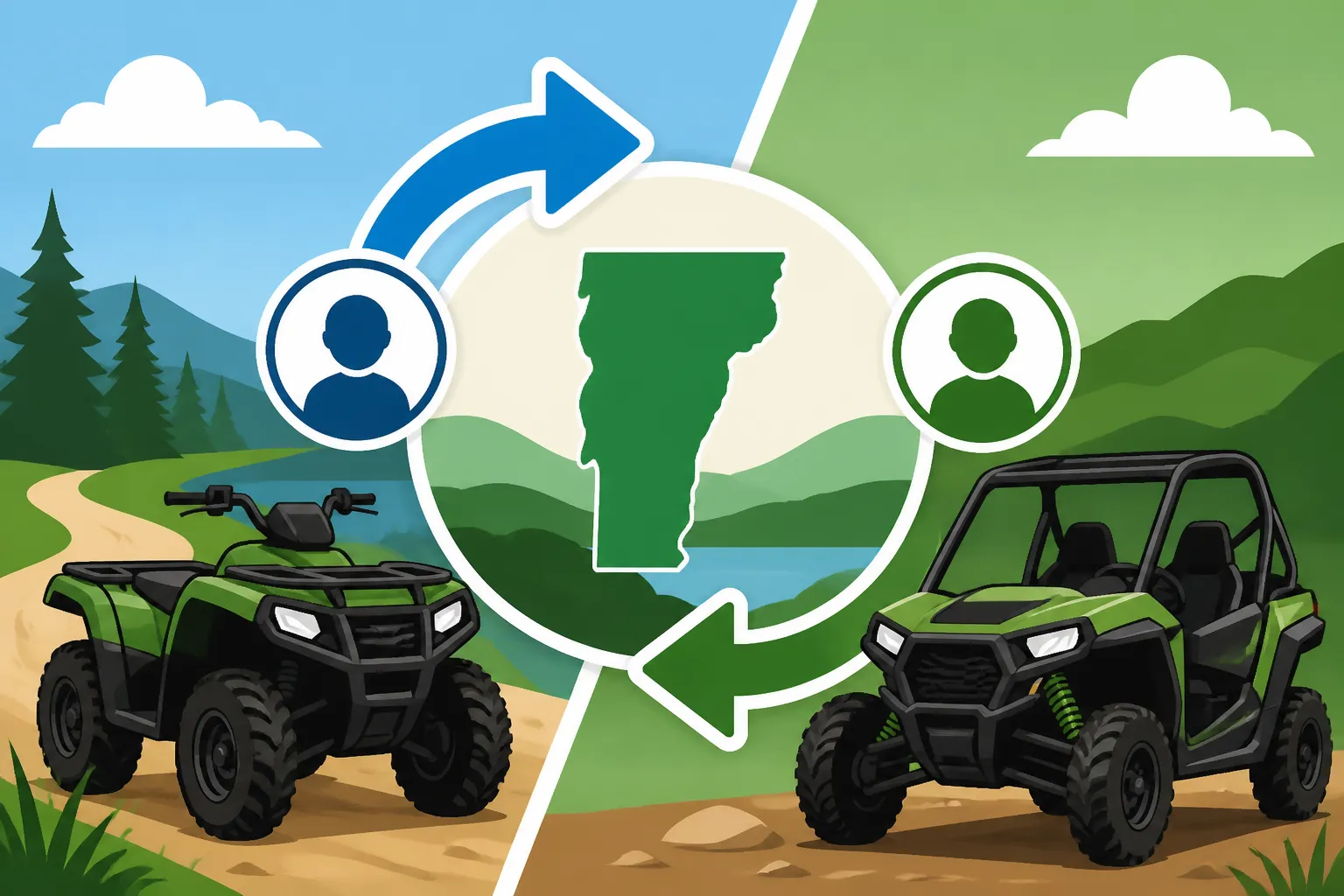
Transferring the Remainder of a Period
It’s a familiar story for many of us who love hitting the trails in Vermont: you’ve invested in a great ATV or UTV, you’ve paid your registration fee, and then, a few months later, the perfect upgrade comes along. Maybe you found a fantastic deal on a side-by-side with more seating for the family, or you decided to step up to a more powerful machine. Whatever the reason, you’re left wondering if you’ve just "wasted" the remaining months on your old machine's registration. The good news is, Vermont understands this dilemma, and they offer a practical solution. This guide will walk you through exactly how to transfer the unused portion of your ATV or UTV registration period to a new machine, saving you both time and money.
The Basics of Vermont's Registration Transfer Policy
When you upgrade your ATV or UTV in Vermont, the idea of having to pay for a whole new registration when your previous one still has months left on it can be a real headache. Thankfully, the state has a policy that acknowledges this common situation, allowing you to essentially move the remaining time from your old machine's registration to your new one. It's a thoughtful approach that helps riders manage their recreational vehicle expenses a little more efficiently.
What "Transferring the Remainder of a Period" Actually Means
Let's clarify what this transfer really entails. When we talk about "transferring the remainder of a period" for your ATV or UTV registration in Vermont, we're not talking about taking your old physical license plate off one machine and slapping it onto another. That's a common misconception, and it's definitely not how it works! Instead, this process is about transferring the value of the remaining registration time. Imagine you had six months left on your old ATV's registration. When you transfer, those six months are credited to your new machine, and you pay a small administrative fee, which in Vermont is a modest [Vermont Registration Transfer for $10]. This means your new machine gets a fresh registration certificate and a brand-new license plate, but it's valid for the same remaining duration as your previous one. It's an excellent way to avoid paying full freight for a new registration just because you upgraded mid-year.
This policy is really a testament to Vermont's understanding of the needs of its riders. It acknowledges that people's machines change, but their commitment to legal and responsible riding remains. Rather than penalizing you for changing vehicles, it offers a way to utilize the fees you've already paid. It's a small but significant detail in the overall [Vermont ATV Registration Costs and Terms] that can make a big difference, especially if you tend to upgrade your machines every few years.
Why Vermont Offers This Option
Vermont's decision to allow the transfer of registration periods stems from a desire to make it easier and more affordable for residents and even non-residents who register their machines here to stay compliant. They know that purchasing an ATV or UTV is a significant investment, and the associated costs, while necessary, can add up. By providing this transfer option, the state reduces the financial burden on individuals who are actively participating in the riding community and keeping their machines properly registered. It encourages continuous registration rather than having riders let a registration lapse, feeling like they've already paid too much.
This policy also streamlines the process when you're selling one machine and buying another. Without it, you might feel compelled to wait until your old registration expired before making a move, which could mean missing out on a great deal or a prime riding season. Instead, you have the flexibility to upgrade when it makes sense for you, knowing that your prior investment in registration won't go to waste. It’s a pragmatic approach that benefits both the rider and the state's goal of having all eligible machines properly documented.
Eligibility for Transferring Your Registration
So, who is eligible to take advantage of this convenient transfer? Generally, the key condition is that the owner of the registration must be the same person or entity. This means if you sell your old ATV and buy a new one for yourself, you can transfer the remaining period. If, however, you sell your ATV to your neighbor, and then you buy a new one, your neighbor cannot transfer your old registration to their name; they'd need a completely new registration for their newly acquired machine. The transfer is tied to the individual registrant, not just the machine itself.
It's also important that the previous registration was active and valid at the time you acquired your new machine. You can't transfer an expired registration period. The process is designed for seamless transitions between machines when you, the owner, are simply changing what you ride. This applies whether you're moving from one ATV to another, an ATV to a UTV, or vice-versa, as long as both machines fall under the state's definition of an ATV or ASV (all-terrain vehicle or all-terrain utility vehicle). The goal is to keep you, the rider, continuously registered, even if the vehicle under you changes.
Essential Documents for a Seamless Transfer
The Vermont Department of Motor Vehicles (DMV) requires specific documentation to process any registration, and a transfer of a registration period is no different. Gathering everything you need before heading to the DMV or mailing your application can save you a lot of time and potential frustration. Think of it like packing for a long ride: you don't want to get halfway there only to realize you forgot your helmet!
Proof of Ownership for Your New Machine
This is arguably the most critical piece of documentation you’ll need. For your new ATV or UTV, you must provide clear and irrefutable proof that you are the legal owner. What exactly does the Vermont DMV consider acceptable? For a brand-new machine, this will typically be the Manufacturer's Certificate of Origin (MCO). If you’re buying a used machine from a private seller, you’ll need a properly executed bill of sale, and ideally, the previous owner’s title. The bill of sale should clearly list the buyer and seller, the machine's make, model, year, and VIN (Vehicle Identification Number), and the purchase price.
It’s crucial that the names on the proof of ownership match the name on your existing registration that you wish to transfer. If you're looking for a reliable template for a [Writing a Bill of Sale the Vermont DMV Accepts], many online resources, including services like LawDepot, offer customizable bill of sale forms that can help ensure you cover all the necessary legal bases. Having this document in order is paramount for the DMV to acknowledge your ownership of the new machine and allow the [Vermont Registration Transfer for $10] to proceed smoothly. Without solid proof of ownership, the DMV simply cannot register the machine in your name, let alone transfer a previous registration period to it.
Your Current Vermont Registration
To transfer the remainder of a registration period, the DMV needs to see proof of the existing registration you're trying to move. This means you'll need the current registration certificate for the ATV or UTV you are replacing. This document shows the validity period, the registration number, and the details of the machine and its current owner. It serves as proof of the unused portion you are looking to transfer. Even if you've already sold the old machine, if its registration was still active at the time of sale, you can typically use that certificate to facilitate the transfer to your new vehicle.
It's a good idea to bring the original certificate, but always make a photocopy for your own records before you go. This current registration allows the DMV clerk to verify how much time is remaining on the period you've already paid for, which is the core of what you're transferring. They'll use this information to calculate the new expiration date for your new machine's registration, applying the unused portion. This process directly applies the credit from your existing, valid registration to your newly acquired ATV or UTV.
Completing the Transfer Application Form
While the act of transferring a registration period doesn't always involve a completely separate, dedicated "transfer application" form in the same way a new registration does, you'll still be completing paperwork at the DMV. Often, this involves filling out a standard Vermont registration application form (like the VD-119, Application for Vermont Registration and Title) for your new machine, but you will indicate during the process that you are also performing a registration transfer. The key is to clearly communicate to the DMV clerk that you wish to transfer the remainder of your existing registration period from your old machine to this new one.
You’ll typically provide the details of both the old and new machines, along with the required ownership documents for the new machine. The clerk will guide you through marking the appropriate boxes or sections to indicate the transfer. Don't hesitate to ask questions if you're unsure. The goal is to ensure all your information is correctly entered so that the transfer is processed accurately, and you receive your new registration certificate reflecting the correct expiration date, plus your new [Vermont ATV Plates and Where They Go]. This step is crucial for ensuring the financial credit of your unused registration time is properly applied.
The Step-by-Step Process at the DMV
Navigating the Department of Motor Vehicles can sometimes feel like a trek through an unfamiliar trail – a bit daunting, but totally manageable if you know the route. Whether you plan to visit in person or handle things by mail, understanding the sequence of steps will help ensure a smooth transfer of your ATV or UTV registration period in Vermont.
Preparing for Your Visit or Mail-In
Before you even think about heading out the door or sealing that envelope, your best bet is to organize all your documents. Create a checklist and tick off each item as you gather it: your new machine's proof of ownership (MCO, title, or a solid bill of sale from a source like LawDepot), your existing, active Vermont ATV/UTV registration certificate, and your form of payment for the [Vermont Registration Transfer for $10] fee. Make sure all documents are originals, or certified copies if originals aren't available, and consider making photocopies of everything for your personal records.
If you plan to visit a DMV office, check their website for current hours, locations, and whether appointments are required or recommended. Some offices, especially in busier towns, might have specific times for ATV/UTV registrations or require you to schedule ahead. Going prepared means you'll spend less time waiting and more time planning your next ride. If mailing in, ensure everything is legible and that you include a self-addressed, stamped envelope for the return of your new registration and plate. For more details on these options, you might find our guide on [Registering by Mail Versus in Person] helpful.
The Transaction: What to Expect
When you approach the counter, be clear with the DMV clerk about your intention: you want to transfer the remainder of a registration period from your old ATV/UTV to your new one. Present all your carefully prepared documents. The clerk will review your proof of ownership for the new machine, verify the VIN, and check the validity and remaining term of your old registration certificate. They'll also ensure all names and details align. This is where the magic happens; they'll calculate the unused portion of your previous registration and apply it to your new vehicle.
Once everything is verified and entered into their system, you'll pay the nominal [Vermont Registration Transfer for $10] fee. This fee covers the administrative cost of processing the transfer and issuing new documents. It's a small price to pay to avoid the full cost of a new annual or biennial registration, especially if you have a significant amount of time left on your old one. Ensure you get a receipt for your payment. This stage is straightforward if all your paperwork is in order, allowing you to quickly move on to anticipating your new registration and plate.
Receiving Your New Plate and Registration
After your transfer transaction is complete, the DMV will process your new registration. In many cases, if you apply in person, you might walk out with a temporary registration document. Your official new registration certificate and your shiny new physical [Vermont ATV Plates and Where They Go] will typically be mailed to your address on file. The waiting time can vary, but generally, you can expect them to arrive within a couple of weeks. Make sure the mailing address the DMV has for you is current to avoid any delays.
Once you receive your new plate, remember to properly mount it on the rear of your ATV or UTV, ensuring it's clearly visible. This new plate is specific to your new machine and its updated registration. The old plate, if you still have it, should either be surrendered to the DMV or, in some cases, you might be instructed to destroy it. The key takeaway here is that you're getting a fresh start with your new machine, but without having to pay for the full registration period again, thanks to Vermont's transfer policy. [Where Vermont Mails Your New ATV Plate] covers what to expect.
Common Scenarios and Practical Tips
The world of ATV and UTV ownership isn't always a straight line from purchase to perpetual riding. Life happens, upgrades beckon, and sometimes you find yourself navigating specific situations that require a bit more thought. Understanding these common scenarios can help you utilize Vermont's registration transfer policy to your best advantage.
Upgrading to a Different Class of Machine
One common question is whether you can transfer a registration period if you're upgrading from, say, a traditional ATV to a larger side-by-side, which Vermont might classify as an ASV (All-Terrain Utility Vehicle). The good news is that generally, yes, you can transfer the remainder of the period. However, there's a crucial point to consider: the registration fees for an ASV are typically higher than for a standard ATV. For example, [Vermont ASV Registration at $108 a Year] is higher than the standard ATV fee.
If you're moving from an ATV to an ASV, the DMV will credit you for the unused portion of your ATV registration. However, because the ASV registration itself costs more, you will likely need to pay the difference in cost for the remaining period, in addition to the [Vermont Registration Transfer for $10] fee. This ensures you're paying the correct fee for the specific class of machine you now own. It's a fair system that ensures you only pay for what you've used on the old machine and the appropriate rate for the new, larger one. Understanding [Vermont ATV Versus ASV Classes] is key here.
Dealing with Purchase and Use Tax
When you acquire a new ATV or UTV, even if you're transferring a registration period, the issue of Vermont's Purchase and Use Tax still applies to the new machine. The transfer of the registration period itself doesn't exempt you from this tax. The tax is typically calculated based on the purchase price of your new machine. If you bought it from a dealer, they'll usually collect this at the time of sale. If it's a private sale, you'll pay it to the DMV when you register the vehicle.
There are specific scenarios where you might be exempt from this tax, such as if the machine was a bona fide gift from a direct family member. However, for most purchases, expect to pay the tax. The good news is that if you traded in your old machine as part of the purchase of the new one, Vermont typically offers a tax credit for the value of your trade-in. So, while the transfer saves you on registration fees, it's wise to budget for the [Vermont Purchase and Use Tax on an ATV] when acquiring your new ride.
Selling Your Old Machine and Buying a New One
The timing of selling your old machine and buying a new one can feel like a juggling act. Ideally, you’d want to sell your old machine, then immediately acquire your new one, allowing for a seamless transfer of the registration period. However, life rarely works that perfectly. What if you sell your old ATV and then it takes a few weeks or months to find the perfect replacement?
You generally have a window of time to complete the transfer once you acquire your new machine. It's not an open-ended offer, but it doesn't have to happen on the same day. The key is that your old registration must have been valid and active when you sold the machine or when you stopped riding it. Keep the registration certificate from your old machine safe, along with the bill of sale for its disposition, as you'll need them for the transfer process. This foresight allows you to take advantage of the [Vermont Registration Transfer for $10] even if there's a slight gap between vehicles.
What if You Don't Have a New Machine Yet?
This is a scenario where the "transferring the remainder of a period" policy has its limitations. If you sell your ATV or UTV and don't immediately buy a replacement, you cannot simply "bank" the unused registration period indefinitely. The transfer is intended to move an active registration period from one specific machine to another specific machine that you now own. If you don't have a new machine to register, there's nothing to transfer the period to.
In this situation, the registration for your old machine will simply run its course. You won't get a refund for the unused time, nor can you hold onto that "credit" for some nebulous future purchase. This highlights the importance of timing your transactions if maximizing your registration fee savings is a priority. If you know you'll be replacing your machine, try to make the old and new purchases relatively close together to ensure you can utilize the [Vermont Registration Transfer for $10] effectively. Otherwise, your best bet is to ensure you sell your registered machine to someone who will continue to use it. Our guide on [Selling a Registered ATV in Vermont] has more details.
Avoiding Pitfalls and Staying Legal
As with any official process, understanding the nuances of transferring your ATV or UTV registration in Vermont is essential to avoid common mistakes and ensure you remain fully compliant with state law. A little bit of knowledge and attention to detail can prevent future headaches and potential penalties.
Understanding Plate vs. Registration Period
One of the most frequent misconceptions we hear from riders is thinking that "transferring a registration" means taking the old license plate and putting it on the new machine. Let's be absolutely clear: this is not how it works in Vermont, and attempting to do so is illegal. Each physical license plate is specifically issued for a particular vehicle identification number (VIN) and machine. When you transfer the remainder of a registration period, you are effectively moving the credit for the unused time.
Your new ATV or UTV will be issued a new registration certificate and a new physical license plate. The old plate belongs with the old machine or should be returned to the DMV or properly disposed of. Using an old plate on a new machine could lead to confusion for law enforcement and potential fines. Always remember: new machine, new plate, even if the registration period is transferred. This distinction is vital for staying on the right side of the law and is covered in depth in [Vermont ATV Plates and Where They Go].
The Importance of Timely Transfer
It might seem obvious, but it bears repeating: once you acquire your new ATV or UTV, you must complete the registration transfer promptly. Riding a newly acquired machine that isn't properly registered, even if you intend to transfer a period, can lead to significant issues. Vermont law requires all ATVs and UTVs operated on designated trails or roads to be registered. There's no grace period for "I just bought it and haven't had time to transfer the registration."
Riding an unregistered machine can result in fines and other penalties, which can quickly erase any savings you hoped to achieve by transferring the registration period. Plan to complete your paperwork as soon as possible after taking ownership of your new vehicle. It’s part of responsible ownership and ensures you can enjoy your ride without worrying about legal repercussions. Our article on [Penalties for Riding Unregistered] outlines exactly what you could face.
Double-Checking All Paperwork
Accuracy is paramount when dealing with official documents. Before you submit your paperwork for a registration transfer, take a moment to double-check everything. Are the VINs correct? Do the names and addresses match on all documents? Is the purchase price accurately reflected on the bill of sale? Even a small typo can lead to delays or rejection of your application, meaning more trips to the DMV or more waiting.
If you're using a bill of sale, ensure it includes all the details Vermont requires. Tools like LawDepot can provide templates that help ensure all necessary fields are covered, reducing the chance of oversight. This attention to detail ensures your [Vermont Registration Transfer for $10] goes through without a hitch, saving you valuable time and preventing potential bureaucratic snags. It’s a simple step that can make a big difference in the efficiency of the process.
No Out-of-State Reciprocity for This Specific Transfer
It's important to understand that Vermont's policy for transferring the remainder of a registration period is specific to Vermont registrations and applies only within the state's system. If you had an ATV registered in New Hampshire and then moved to Vermont and bought a new machine, you couldn't transfer the unused portion of your New Hampshire registration to your new Vermont machine. Each state has its own registration laws and systems, and they don't typically interoperate in this specific way.
If you're a new resident to Vermont and bringing an ATV or UTV with you, you'll follow the process for [Vermont ATV Registration for a New Resident], which is essentially registering a new machine in the state. While Vermont does have some reciprocity agreements for operating out-of-state registered machines on its trails (provided you have a Vermont Trail Access Decal), this particular transfer benefit is exclusively for machines already within Vermont's registration framework. It's a Vermont benefit for Vermont-registered machines.
Disclaimer
This article is for general informational purposes only and does not constitute professional advice. Laws, prices and regulations vary by location and change over time. Consult a qualified professional for guidance on your specific situation.